
15 Creative Toddler Color Activities to Try Today
 By Speech Blubs Team•Mar 25, 2026•13 min.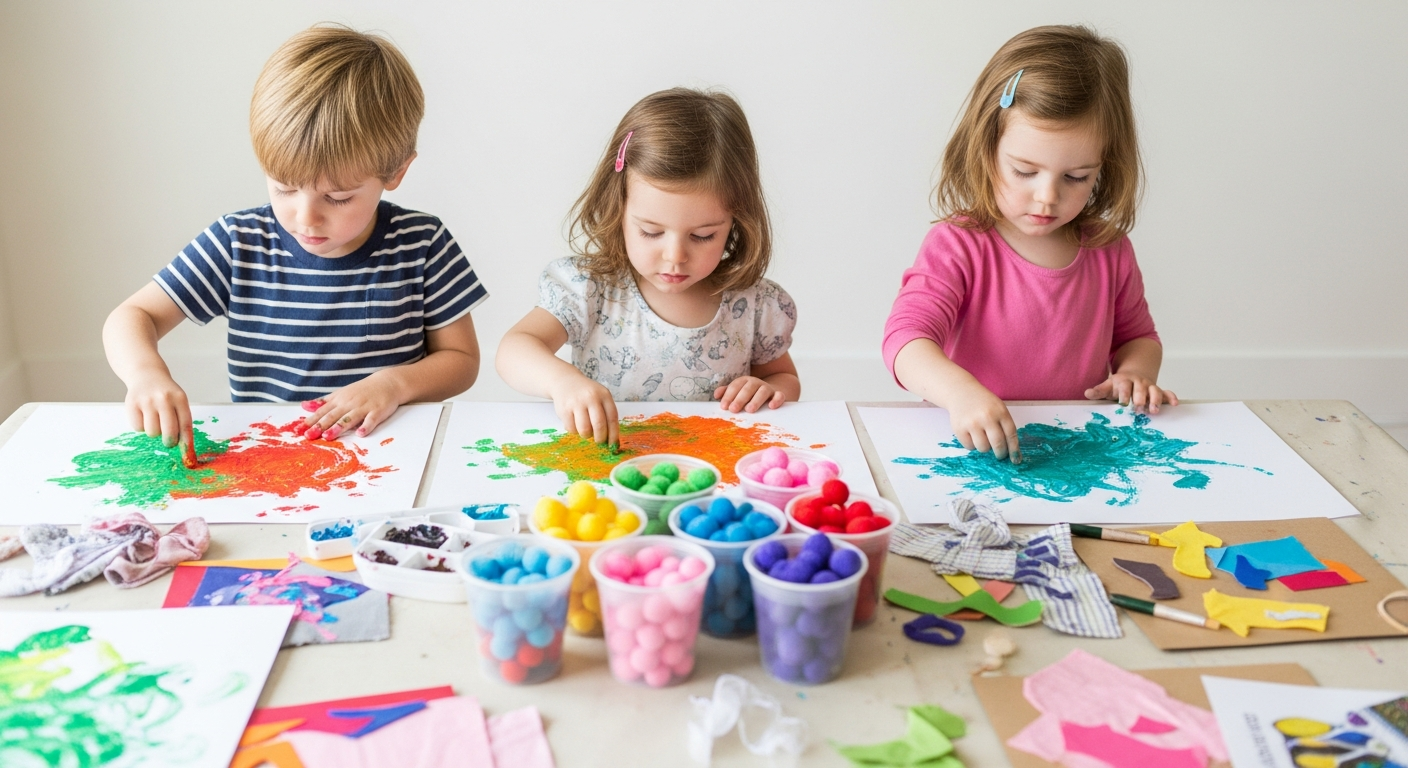
Table of Contents
- Introduction
- The Importance of Color Recognition in Early Development
- Sensory-Based Toddler Color Activities
- Movement-Based Color Games
- Creative Arts and Fine Motor Skills
- STEM and Logic Activities
- Everyday Natural Learning
- How Speech Blubs Enhances Color Learning
- Choosing the Right Plan for Your Family
- Setting Realistic Expectations
- Supporting Late Talkers
- Conclusion
- Frequently Asked Questions
Introduction
Have you ever noticed your toddler pointing at a bright red fire truck or a vibrant yellow banana with wide-eyed wonder, only to call everything "blue"? If so, you aren’t alone. While babies begin to perceive colors as early as four months old, the ability to name them and sort them accurately is a complex developmental milestone that usually flourishes between ages two and four. At Speech Blubs, we believe that learning these foundational concepts shouldn't feel like a chore or a series of drills. Instead, it should be a joyful exploration of the world around them.
Our mission is to empower every child to "speak their minds and hearts." This goal is deeply personal to us; our founders all grew up with various speech challenges and set out to create the "smart screen time" tool they wish they’d had as kids. We know that for the 1 in 4 children who need speech support, traditional learning can sometimes feel frustrating. That is why we advocate for blending scientific principles with the magic of play.

In this post, we will explore a variety of hands-on toddler color activities that you can do at home. We’ll cover sensory play, movement-based games, and creative arts that help bridge the gap between seeing a color and naming it. We will also discuss how our unique video modeling methodology uses peer-to-peer imitation to help children master complex communication skills. Whether your child is a "late talker" or simply a curious explorer, these activities are designed to foster confidence and a love for learning.
The Importance of Color Recognition in Early Development
Learning colors is about more than just vocabulary. It is a gateway to cognitive development, helping children categorize the world, recognize patterns, and develop descriptive language. When a child learns to distinguish "the green apple" from "the red apple," they are practicing essential visual discrimination skills that will later help them distinguish between letters like 'b' and 'd'.
At Speech Blubs, we focus on "smart screen time" that encourages active participation rather than passive viewing. While cartoons might entertain, they don't always invite a child to engage. Our approach encourages children to observe their peers—other children—performing speech exercises and identifying objects. This activates "mirror neurons," which are the brain cells that fire both when we perform an action and when we see someone else do it. By incorporating the toddler color activities listed below alongside your Speech Blubs practice, you are creating a multi-sensory learning environment that supports both speech and cognitive growth.
Sensory-Based Toddler Color Activities
Sensory play is one of the most effective ways for toddlers to learn. When a child touches, smells, and sees a color simultaneously, the neural pathways in their brain become stronger.
1. Rainbow Rice Sensory Bin
Rice is a fantastic, low-mess alternative to sand. It offers a distinct texture that is fascinating for little fingers to explore.
- How to make it: Pour a cup of white rice into a ziplock bag. Add a teaspoon of white vinegar and a few drops of liquid food coloring. Seal and shake until the color is even. Repeat with different colors. Once dry, layer the colors in a bin.
- The Learning Goal: Encourage your child to find "hidden" toys of a specific color within the rice. For example, "Can you find the yellow dinosaur hiding in the blue rice?"
2. Colored Shaving Foam "Paint"
If you don't mind a little mess, shaving foam is an incredible sensory medium.

- The Activity: Squirt several piles of shaving cream onto a plastic tray. Add one drop of food coloring to each pile and let your toddler mix them with their hands or a paintbrush.
- Why it works: This is an excellent way to introduce color mixing. When the red foam touches the yellow foam, they can watch the orange appear in real-time.
3. Scented Color Jars
Engage the sense of smell by pairing colors with scents.
- The Activity: Use clear jars filled with items that match a specific color and scent—lemon peels for yellow, dried lavender for purple, or cinnamon sticks for brown.
- The Benefit: This builds "associative memory." A child might remember the word "yellow" more easily if they associate it with the bright, zesty smell of a lemon.
Movement-Based Color Games
Toddlers are natural movers. Incorporating physical activity into learning helps burn off energy while reinforcing new concepts.
4. Color Hop
This is a perfect activity for a sunny day on the driveway or a rainy day in the hallway.
- How to play: Use sidewalk chalk (or colored construction paper taped to the floor) to create large circles of different colors. Call out a color and have your child jump to that spot.
- Pro Tip: To keep it engaging, vary the instructions: "Crawl to the green circle!" or "Spin like a top on the red circle!"
5. The Living Room Scavenger Hunt
This requires zero prep and can be played anywhere.
- The Activity: Give your child a "color basket." Ask them to run around the room and find three things that are blue.
- Real-World Scenario: For a parent whose 3-year-old "late talker" loves vehicles, you might focus the hunt specifically on cars. "Can you find the red truck?" The motivation of finding a favorite toy makes the speech practice feel like a win. You can even find similar activities within the Speech Blubs app to reinforce these words afterward.
6. Balloon Volleyball
Inflate several balloons of different colors. The goal is to keep them in the air, but there’s a catch: you can only hit the color that is called out.
- Why it works: This develops hand-eye coordination and rapid color recognition. It’s also a high-joy activity that builds a positive association with learning.
Creative Arts and Fine Motor Skills
Combining color learning with fine motor practice prepares children for writing and more complex tasks.
7. Sticker Sorting Gallery
Stickers are a toddler's best friend. This activity is great for quiet time or even travel.
- The Setup: Draw large colored squares on a piece of paper. Give your child a sheet of multi-colored dot stickers. Their job is to place the red stickers in the red box, the blue in the blue box, and so on.
- The Benefit: Peeling stickers is excellent for developing the "pincer grasp," which is vital for holding a pencil later on.
8. Paint-Dyed Water Play
Water play is inherently calming for many children.
- The Activity: Fill several clear containers with water. Use a tiny bit of washable paint or food coloring to dye each container a primary color (red, blue, yellow). Provide empty cups and let your child "pour and mix" to create new colors.
- Building Confidence: As your child successfully "creates" green by mixing blue and yellow, they feel a sense of agency and pride. You can see this same joy in testimonials from other parents who have watched their children gain confidence through interactive play.
9. DIY Color Books
Fold several pieces of paper and staple them together. On each page, focus on one color. Help your child find pictures in old magazines or catalogs that match the color of the page and glue them in.
- The Speech Blubs Connection: While making the book, you can use the app to hear how other children pronounce the names of the objects you are gluing. Download Speech Blubs on the App Store to get started with this peer-led learning.
STEM and Logic Activities
It is never too early to introduce basic scientific concepts through color.
10. Walking Rainbow Experiment
This is a classic "wait and see" project that teaches about capillary action and color blending.
- How to do it: Place six jars in a circle. Fill every other jar with water and add red, yellow, and blue food coloring. Connect the jars with folded paper towel strips. Over a few hours, the colored water will "walk" up the towels and into the empty jars, mixing to create purple, orange, and green.
- The Learning: This encourages patience and observation—key skills for any young learner.
11. Frozen Color Bombs
Freeze water dyed with food coloring into ice cube trays.
- The Activity: Place the colored ice cubes in a warm bath or a bowl of warm water. As they melt, the colors swirl together.
- Engagement Tip: Ask your child to "predict" what will happen. "What color will the water turn if we add the red cube and the blue cube?"
12. Magnetic Tile Sorting
If you have magnetic building tiles, they are perfect for color sorting.
- The Activity: Ask your child to build "towers" of only one color.
- Logic Skill: This helps children understand that objects can be grouped by their attributes, which is a foundational math skill.
Everyday Natural Learning
You don't always need a specific "activity" to teach colors. Some of the best learning happens in the gaps of your daily routine.
13. The "Which One?" Grocery Game
When you are at the store, ask your child to help you pick out items. "Can you find the yellow bananas?" or "Should we get the green grapes or the red grapes?"
- Empowering Voice: This gives your child a choice and a voice in the family’s activities, which is central to our mission of helping kids speak their hearts.
14. Laundry Sort
Believe it or not, laundry can be a toddler color activity! Ask your child to help you find all the white socks or the blue shirts.
- Practical Life: This teaches them that colors have real-world applications and that they are capable of contributing to the household.
15. The Colorful Snack Plate
Create a "rainbow snack" with strawberries (red), oranges (orange), cheese (yellow), grapes (green), and blueberries (blue/purple).
- The Benefit: It makes healthy eating fun and provides a natural context for naming colors as they eat.
How Speech Blubs Enhances Color Learning
While hands-on activities are essential, supplemental tools can provide the structure and repetition some children need to thrive. At Speech Blubs, we don't just show a picture of a color; we show a child—a peer—talking about that color.
When your child sees another child successfully naming a "red apple," it reduces the pressure they might feel when an adult asks them the same question. This peer-to-peer connection is the heart of our scientific methodology. If you are unsure where your child stands in their development, we recommend taking our quick 3-minute preliminary screener. It involves just 9 simple questions and provides you with a personalized assessment and a next-steps plan.
"Our approach turns screen time into an active, vocal experience. We want children to be shouting at the screen, imitating sounds, and ultimately, using those words in the real world."
Choosing the Right Plan for Your Family
We are committed to being a long-term partner in your child’s development. To provide the best experience, we offer two straightforward pricing options.
- Monthly Plan: For $14.99 per month, you get full access to the Speech Blubs app and its vast library of activities.
- Yearly Plan (Best Value): At $59.99 per year, this breaks down to just $4.99 per month. This is our most popular option because it includes several exclusive benefits that the monthly plan does not:
- A 7-day free trial to explore everything we offer.
- The Reading Blubs app, which helps transition your child from speaking to reading.
- Early access to all new updates and features.
- Priority 24-hour support response time.
We recommend the Yearly plan for families who want a comprehensive toolset for their child's language journey. You can create your account and begin your 7-day free trial today to see the difference for yourself.
Setting Realistic Expectations
It’s important to remember that every child’s timeline is unique. We don't promise that your child will be a master of the color wheel overnight. Instead, we focus on the joy of the process. By using toddler color activities and "smart screen time," you are:
- Building their confidence to try new sounds.
- Reducing the frustration that comes from not being able to communicate their needs.
- Creating meaningful bonding moments between you and your child.
The goal isn't perfection; it’s progress. Whether they say "red" perfectly or just point to it with a smile, every step forward is a victory worth celebrating.
Supporting Late Talkers
For parents of late talkers, teaching colors can sometimes feel like an uphill battle. If your child isn't yet using words, focus on the "sorting" and "matching" aspects of these activities first. This builds the cognitive framework for the language that will come later.
In the Speech Blubs app, the 'Animal Kingdom' section is a great place to start. For a child who loves animals, practicing the "moo" of a black and white cow or the "chirp" of a yellow bird can be more motivating than simply naming the colors. By meeting your child where their interests lie, you unlock their natural desire to communicate.
Conclusion
Teaching colors is one of the most vibrant chapters of early childhood. Through a combination of sensory bins, active games, and creative play, you can help your child navigate this milestone with ease and laughter. Remember, you are your child's first and most important teacher, and tools like Speech Blubs are here to support you in that role.
Our mission to help children "speak their minds and hearts" is fueled by the success of millions of families worldwide. We invite you to join our community and turn screen time into a powerful tool for connection.
Ready to start your journey? Download Speech Blubs on the App Store or Google Play today. Don't forget to select our Yearly plan to take advantage of the 7-day free trial, the Reading Blubs app, and the best overall value for your family. Let's make learning a colorful adventure together!
Frequently Asked Questions
1. At what age should my toddler know their colors?
Most children begin to recognize and distinguish between colors by 18 months to 2 years. However, the ability to consistently name them usually develops between ages 3 and 4. If your child is struggling, focus on one color at a time and use high-interest activities to keep them engaged.
2. Is it better to teach primary colors first?
Yes, it is generally easier for toddlers to start with the most distinct colors: red, blue, and yellow. Once they have mastered these, you can introduce secondary colors like green, orange, and purple. Using high-contrast items helps them see the differences more clearly.
3. How does Speech Blubs help with color learning?
Speech Blubs uses a "video modeling" technique where your child watches other children name and interact with colorful objects. This encourages imitation and helps children associate the sound of the word with the visual of the color in a fun, pressure-free environment.
4. What should I do if my child calls every color the same name?
This is a very common phase in toddler development! It often means they understand that objects have a color, but they haven't yet mapped the specific names to the specific hues. Continue to model the correct names naturally during play, and avoid correcting them harshly, which can discourage their willingness to speak.
About the author