
15 Creative Toddler School Activities for Playful Learning
 By Speech Blubs Team•Mar 18, 2026•13 min.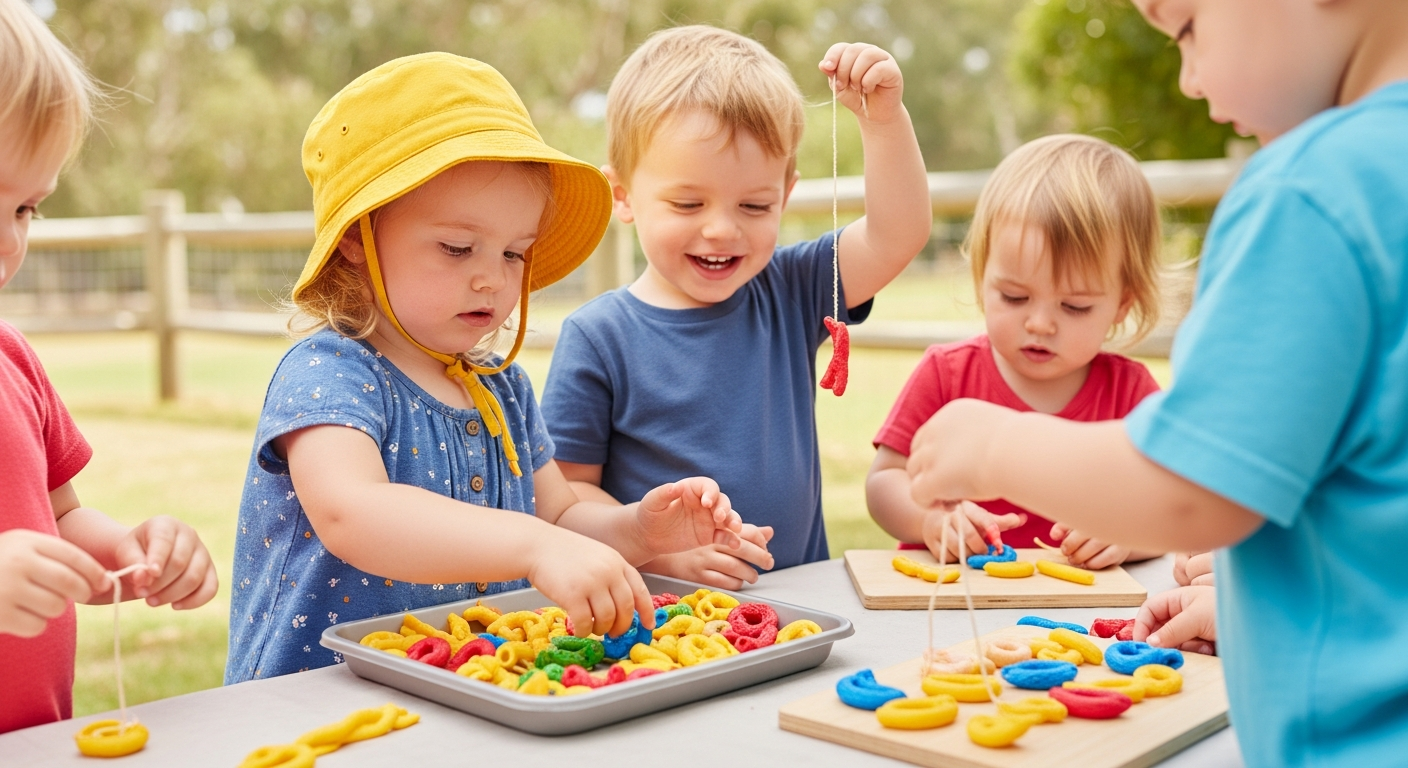
Table of Contents
- Introduction
- The Power of Play-Based Learning
- Sensory Activities: Exploring the World Through Touch
- Fine Motor Skills: Strengthening Little Hands
- Gross Motor Skills: Learning Through Movement
- Language and Communication: Finding Their Voice
- Creative Arts: Encouraging Self-Expression
- Social-Emotional Learning: Preparing for the School Day
- Why "Smart Screen Time" Matters
- Choosing the Right Plan for Your Family
- Practical Tips for Success at Home
- Frequently Asked Questions
- Conclusion
Introduction
Did you know that by the time a child reaches age three, their brain has already formed about 85% of its core structure? This incredible window of growth is why the years between one and four are so vital for development. As parents, we often find ourselves wondering if we are doing enough to prepare our little ones for the classroom. Are they learning their colors? Can they hold a crayon? Will they be able to follow a routine? The transition to "big kid school" can feel daunting, but the truth is that the most effective toddler school activities aren’t found in a textbook—they happen right on your living room floor.
In this post, we are going to explore a wide variety of hands-on, engaging, and scientifically-backed activities designed to foster language, fine motor skills, and emotional confidence. We will cover everything from sensory "messy play" to "smart screen time" strategies that turn passive viewing into active learning. At Speech Blubs, our mission is to empower children to "speak their minds and hearts," and we believe that every moment is an opportunity for connection and growth.

Our goal today is to provide you with a roadmap for creating a "home school" environment that feels like pure play. By the end of this article, you’ll have a toolkit of practical ideas to reduce frustration and build a lifelong love for communication.
The Power of Play-Based Learning
Before we dive into the specific activities, it is important to understand why we focus on play. For a toddler, play is work. It is how they test hypotheses, develop muscle memory, and learn the nuances of social interaction. When we engage in toddler school activities, we aren't just "killing time"; we are building the foundational blocks of literacy, numeracy, and speech.
We often see parents who are concerned about their child’s progress, particularly if they seem like a "late talker." Our founders at Speech Blubs understand this feeling deeply—they all grew up with speech challenges themselves and created the tool they wished they had as children. This personal history fuels our commitment to providing joyful, effective solutions. If you are ever unsure about where your child stands in their development, you can take our quick 3-minute preliminary screener. It involves just 9 simple questions and provides an assessment and a next-steps plan to give you peace of mind.
Sensory Activities: Exploring the World Through Touch
Sensory play is often the most popular category of toddler school activities because it engages multiple parts of the brain simultaneously.
1. The "Bubbling" Water Table
Water play is a classic for a reason. To turn it into a school-ready activity, add a squirt of dish soap and a whisk or a hose to create a mountain of bubbles.
- The Learning Angle: As your child scoops and pours, they are learning about volume and cause-and-effect.
- Speech Tip: Practice descriptive words like "slippery," "wet," "bubbly," and "pop!"
2. Frozen Pom-Pom Rescue
Freeze colorful pom-poms in an ice cube tray with water. Give your child a warm bowl of water and a spoon to "rescue" the pom-poms.
- The Learning Angle: This introduces basic science concepts like temperature and melting while keeping them occupied for a long stretch.
- Fine Motor Connection: Using a spoon to transfer the melting cubes into a bowl builds hand-eye coordination.
3. The Dried Bean "Construction Site"
Fill a large plastic bin with dried black beans, pinto beans, and chickpeas. Add small toy trucks and shovels.

- The Learning Angle: This is an incredible tool for children who need tactile input to focus.
- Realistic Expectations: Remember, it's okay if it gets a little messy! Laying down a towel beforehand turns the cleanup into a "sorting" game you can do together.
Fine Motor Skills: Strengthening Little Hands
Fine motor skills are the precursors to writing. Without strong hand muscles, holding a pencil in kindergarten becomes much harder.
4. Pasta Threading
Give your child a handful of rigatoni pasta and some sturdy pipe cleaners or straws stuck into a lump of playdough. Ask them to "thread" the pasta onto the "poles."
- The Learning Angle: This requires precision and concentration.
- Activity Scenario: For a parent whose 3-year-old "late talker" loves animals, you can pretend the pasta pieces are "food" for their toy giraffes or elephants. This turns a simple motor task into a storytelling opportunity.
5. Jumbo Crayon Masterpieces
Instead of standard thin crayons, opt for jumbo, triangular crayons.
- The Learning Angle: These crayons encourage a proper "tripod grip" early on.
- Smart Screen Time Tie-In: After coloring a picture of a lion, you could open the Speech Blubs app on the App Store and find the "Animal Kingdom" section to practice the lion's roar together.
6. Sticker Peeling
Give your child a sheet of stickers and a piece of paper. Let them peel and stick to their heart's content.
- The Learning Angle: Peeling a sticker off a sheet is actually a complex motor task for a two-year-old! It builds the pincer grasp used for buttoning clothes and zipping jackets.
Gross Motor Skills: Learning Through Movement
Children learn and remember things better when they are up and moving. Physical activity helps regulate their nervous systems, making them more receptive to learning.
7. The Back-to-School Scavenger Hunt
Hide items your child might use at school—a backpack, a lunchbox, a favorite book—around the house. Give them clues to find each one.
- The Learning Angle: This builds spatial awareness and the ability to follow multi-step directions.
8. Animal Walks
Call out an animal and have your child mimic its movement. "Jump like a frog!" "Stomp like an elephant!" "Slither like a snake!"
- Why it Works: This activity is a physical version of our "video modeling" methodology. In our app, we use videos of real children—not cartoons—to show your child how to make sounds and movements. When children see their peers doing something, their "mirror neurons" fire, making them more likely to imitate. You can learn more about the science behind this on our research page.
Language and Communication: Finding Their Voice
At the heart of all toddler school activities is the desire to help our children communicate. Whether they are using words, signs, or gestures, building a bridge between their thoughts and the world is our primary goal.
9. Peer-to-Peer Imitation
Children are naturally fascinated by other children. Instead of a parent saying "Say 'Apple'," a child is much more motivated when they see another child enjoying an apple and saying the word.
- Speech Blubs Method: We leverage this through "smart screen time." Our app features over 1,500 activities where "Blubbers" (the kids in our videos) lead the way. This peer-to-peer approach is designed to be a joyful, screen-free alternative to passive cartoons. It’s a tool for family connection, meant to be used with an adult to spark conversation.
10. Shaving Cream Alphabet
Spread a thin layer of shaving cream on a baking sheet. Use your finger to draw a letter or a shape and have your child "erase" it or try to copy it.
- The Learning Angle: Sensory input combined with letter recognition makes the alphabet feel less like a chore and more like a magic trick.
11. Storytime with a Twist
When reading a book, don't just read the words. Ask questions: "What do you think the bear is feeling?" or "Can you find something blue on this page?"
- The Learning Angle: This builds "active listening" and reading comprehension skills that are essential for future schooling.
Creative Arts: Encouraging Self-Expression
Creativity is about the process, not the product. For toddlers, the goal isn't to make a refrigerator-worthy painting; it's to see what happens when blue and yellow mix.
12. Bubble Wrap Stomp
Tape a large piece of bubble wrap to the floor over a piece of paper with drops of paint on it. Let your child stomp across it.
- The Learning Angle: This is a "mess-free" way to explore color mixing and provides excellent sensory feedback (the "pop!").
13. Apple Stamping
Cut an apple in half, dip it in paint, and use it as a stamp.
- The Learning Angle: This is a perfect "back to school" craft that introduces patterns and shapes.
Social-Emotional Learning: Preparing for the School Day
School isn't just about ABCs; it's about being away from home, following a schedule, and managing "big feelings."
14. The "First Day" Roleplay
Set up a "classroom" with stuffed animals. Practice "circle time," eating a snack, and saying "see you later" to a caregiver.
- The Learning Angle: Practicing the routine helps reduce the anxiety of the unknown. It builds confidence and helps your child feel in control.
15. The First Day Sign
Involve your child in making a "First Day of School" sign. Let them choose the colors and stickers.
- The Learning Angle: This marks a milestone and helps them feel proud of their growth. You can see how other parents celebrate these milestones and find success stories in our testimonials section.
Why "Smart Screen Time" Matters
We know that modern parenting often involves a balance between physical play and digital tools. However, not all screen time is created equal. Passive viewing—like watching hours of repetitive cartoons—doesn't require a child to think, speak, or interact.
At Speech Blubs, we provide a "smart screen time" experience. Our app is designed to be an immediate, effective, and joyful solution for the 1 in 4 children who need speech support. By blending scientific principles with play, we help children develop complex communication skills. It’s not a replacement for professional therapy or face-to-face play, but a powerful supplement that fosters a love for communication.
"Our mission is to help every child speak their mind and heart. We believe that when a child can communicate, their frustration goes down and their confidence goes up."
Choosing the Right Plan for Your Family
We want to be transparent about how you can access these tools to support your toddler school activities. To get the most out of Speech Blubs, we recommend our Yearly plan. While we offer a monthly option, the Yearly plan is designed to provide the best long-term value for your child’s development.
Our Pricing Plans:
- Monthly Plan: $14.99 per month. This is a great way to test the waters.
- Yearly Plan: $59.99 per year. This breaks down to just $4.99 per month, saving you 66% compared to the monthly rate.
Why the Yearly Plan is the Best Choice: The Yearly plan isn't just more affordable; it includes several exclusive, high-value features that are not available in the monthly plan:
- 7-Day Free Trial: You can explore everything we offer risk-free for a full week.
- Reading Blubs App: Access to our additional app focused specifically on early literacy and reading skills.
- Priority Support: You’ll receive a 24-hour support response time.
- Early Access: Be the first to try new updates and features as we roll them out.
If you are ready to start this journey, you can create your account and begin your 7-day free trial today.
Practical Tips for Success at Home
When implementing these toddler school activities, keep these three tips in mind:
- Follow Their Lead: If you set up a bean bin but your child just wants to count the trucks, let them! The goal is engagement, not a specific outcome.
- Set Realistic Expectations: Some days will be full of "Aha!" moments, and other days will be full of tantrums. Both are a normal part of development. Our app is a tool to create joyful learning moments, not a magic wand for overnight public speaking!
- Co-Play is Key: Whether you are painting or using the app, your presence is the most important ingredient. Use these activities as a way to connect and talk with your child.
Frequently Asked Questions
1. What is the best age to start these toddler school activities?
Most of these activities are designed for children between the ages of 18 months and 4 years. However, every child develops at their own pace. You can adapt these ideas—for example, a younger toddler might just splash in the water, while an older one might practice "washing" their toy cars.
2. My child has a short attention span. How long should these activities last?
At this age, an attention span of 3 to 5 minutes per year of age is standard. A two-year-old might only engage for 6 to 10 minutes. That is perfectly normal! The goal is to provide a variety of short, engaging "bursts" of learning throughout the day.
3. How can I manage the mess associated with sensory play?
Preparation is everything. Use a "mess mat" or an old shower curtain under your activity bin. If the weather is nice, take the "messy" activities outside. Remember that the sensory experience of "mess" is actually a vital part of their brain development!
4. Is the Speech Blubs app safe for my toddler?
Yes! Speech Blubs is designed to be a safe, educational environment. We focus on "smart screen time," which means the app encourages your child to look away from the screen, make sounds, and interact with you. It is ad-free and built on scientific principles like video modeling.
Conclusion
Creating a world of toddler school activities at home doesn't require a teaching degree or a massive budget. It simply requires a bit of curiosity and the willingness to get down on the floor and play. Whether you are "rescuing" frozen pom-poms, stomping on bubble wrap, or mimicking a peer's "Roar!" in an app, you are doing the hard work of building your child's future.
By focusing on sensory exploration, fine motor strength, and language development, you are giving your child the tools they need to "speak their minds and hearts." We are honored to be a part of that journey with you.
Ready to take the next step? Give your child a head start on their communication journey. Download Speech Blubs on Google Play or the App Store to begin. We highly recommend choosing the Yearly plan to unlock your 7-day free trial, the Reading Blubs app, and the full suite of features that will support your child's growth all year long. Let’s make learning a joyful adventure together!
About the author