
17 Fun Toddler Activities for St. Patrick’s Day
 By Speech Blubs Team•Mar 18, 2026•15 min.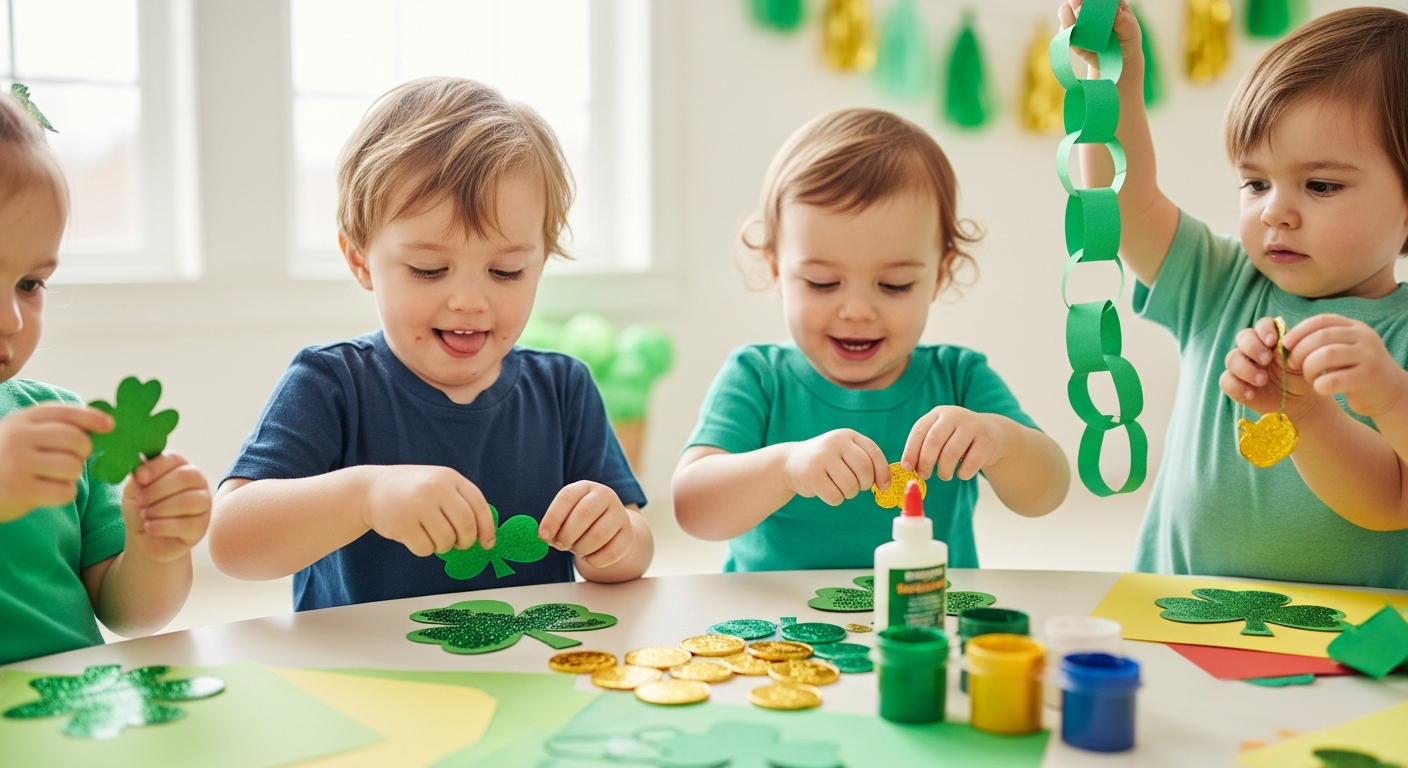
Table of Contents
- Introduction
- The Power of Sensory Play for Language Development
- Creative Art Projects for Tiny Hands
- Gross Motor Games: Leprechaun Movement
- Science and Magic: St. Paddy’s Style
- Why "Smart Screen Time" Matters During the Holidays
- Real-Life Success: A Parent’s Story
- Setting Realistic Expectations
- Choosing the Right Plan for Your Family
- More Toddler Activities for St. Patrick's Day
- How Speech Blubs Fits Into Your Holiday
- Conclusion
- FAQ
Introduction
Did you know that by the age of three, a child’s brain is twice as active as an adult’s brain? This incredible window of development is fueled by one thing above all else: play. As St. Patrick’s Day approaches, the world turns a vibrant shade of green, offering a literal pot of gold for parents looking to spark their child’s curiosity and communication skills. Whether it’s the crinkle of green tissue paper, the cold squish of dyed pasta, or the rhythmic "hop, hop, hop" of a little leprechaun, these moments are more than just holiday fun—they are building blocks for a lifetime of learning.
At Speech Blubs, our mission is to empower children to "speak their minds and hearts." We understand the journey of speech development intimately because our founders all grew up with speech challenges themselves. They created the tool they wished they had: a way to turn screen time into "smart screen time" that fosters joy and connection rather than passive consumption.

In this post, we’re going to dive into a treasure trove of toddler activities for St. Patrick’s Day. We’ll explore sensory bins that ignite the senses, art projects that strengthen tiny hands, and movement games that get those wiggles out. More importantly, we’ll show you how to weave language-rich interactions into every activity, helping your little one build the confidence to communicate. We aren't promising that your child will be giving public speeches by April, but we are committed to helping you foster a love for communication and create joyful family learning moments.
The Power of Sensory Play for Language Development
Sensory play is the "secret sauce" of toddler development. When a child engages multiple senses—touch, sight, sound, and sometimes even taste—they create stronger neural pathways in the brain. This is especially true for language. When you describe the "cold, green Jello" or the "shiny, gold coin," you are providing the context your child needs to map words to their physical reality.
1. The Green and Gold Sensory Bin
Sensory bins are a staple in our community for a reason. They provide a contained space for exploration that can keep a toddler engaged for significant stretches of time.
What you need:
- A large plastic bin
- A base (dried green peas, dyed green rice, or even green pasta)
- "Treasures" (plastic gold coins, green felt shamrocks, moss rocks)
- Tools (measuring cups, spoons, or play tweezers)
As your child digs through the bin, use this as a "serve and return" opportunity. If they pick up a coin, you might say, "You found a gold coin! It’s so shiny." If they pour the rice, narrate the sound: "Shhh, listen to the rain." This type of modeling is exactly what we do in the Speech Blubs app through our peer-led video modeling. You can download Speech Blubs on the App Store to see how other children model these simple actions and sounds, encouraging your child to imitate them.
2. Taste-Safe "Gold" Jello Dig
For toddlers who are still in the "everything goes in the mouth" phase, safety is the top priority. A Jello dig is a fantastic, taste-safe alternative to traditional sensory bins.

How to do it: Prepare a batch of lime Jello in a shallow tray. Before it sets, drop in a few large plastic gold coins (ensure they are too big to be a choking hazard). Once set, give your toddler a spoon and let them "rescue" the gold. The sticky, wobbly texture is a sensory delight that often leads to lots of "oohs" and "aahs"—the perfect foundational speech sounds!
3. Lucky Charms Mosaic
If your toddler is ready for a bit of sorting, use a box of Lucky Charms cereal. Have them sort the marshmallows by shape or color. This isn't just a snack; it's an exercise in visual discrimination and categorization, which are essential precursors to reading and complex communication. You can find more about how these skills relate to early literacy on our Reading Blubs section, which is included in our Yearly plan.
Creative Art Projects for Tiny Hands
Art isn't just about the final product; for a toddler, it’s about the process. These activities focus on fine motor skills, which are closely linked to the muscle control needed for speech.
4. Bell Pepper Shamrock Stamping
This is one of our favorite toddler activities for St. Patrick’s Day because it uses a natural "tool" that fits perfectly in a toddler's palm.
The Process: Cut a green bell pepper in half. Notice the shape? It looks just like a shamrock! Dip the cut end into green washable paint and stamp it onto white construction paper.
Pro Tip: While your child stamps, practice the "sh" sound for "shamrock" or the "p" sound for "pepper." Simple, repetitive sounds are the easiest for late talkers to mimic.
5. Tissue Paper Shamrock Collage
Tearing and scrunching paper is an excellent way to build the small muscles in the fingers.
Steps:
- Cut out a large shamrock shape from green cardstock.
- Provide strips of light and dark green tissue paper.
- Let your child tear the paper into small pieces (this is the fun part!).
- Apply a little non-toxic glue to the shamrock and let them press the pieces down.
For a parent whose 2-year-old struggles with "pincer grasp" (using the thumb and index finger), this activity is a game-changer. It’s a low-pressure way to practice a skill that will eventually help them hold a pencil—or manipulate the buttons on a screen.
6. Rainbow Finger Painting
St. Patrick’s Day wouldn't be complete without a rainbow. Finger painting allows children to feel the friction and temperature of the paint. As they move their fingers in an arc, they are practicing "gross-fine motor" movements. Use this time to name colors: "Here comes Red! Now let’s add Yellow."
If you’re unsure whether your child’s color naming or motor skills are on track, we recommend taking our quick 3-minute preliminary screener. It involves 9 simple questions and provides an assessment and a next-steps plan to help you support your child's unique developmental path.
Gross Motor Games: Leprechaun Movement
Toddlers need to move. Incorporating gross motor play into your St. Patrick’s Day celebration helps with coordination, balance, and following multi-step directions.
7. The Shamrock Balance Beam
Use green painter's tape to create a "path" on your floor. You can add "shamrock" cutouts along the way that they have to step on. This encourages "motor planning," which is the brain’s ability to conceive, organize, and carry out a sequence of unfamiliar actions. In the speech world, we call this "apraxia" when it affects the mouth, but practicing motor planning with the whole body can be very beneficial for overall neurological development.
8. The Great Green Scavenger Hunt
Give your toddler a small bucket or bag and ask them to find five green things in the house. This activity is fantastic for "receptive language"—their ability to understand and act on your words.
- "Find the green ball."
- "Where is the green sock?"
This mirrors the interactive challenges found within the Speech Blubs app, where kids are encouraged to find and interact with objects on the screen. Download Speech Blubs on Google Play to bring this type of guided play into your digital routine.
9. Leprechaun "Freeze Dance"
Play some lively Irish folk music and have a dance party! When the music stops, everyone has to freeze like a leprechaun guarding their gold. This teaches impulse control and listening skills, both of which are foundational for successful social communication.
Science and Magic: St. Paddy’s Style
Toddlers are natural scientists. They love to see cause and effect in action.
10. Fizzy Shamrocks
This is a classic baking soda and vinegar experiment with a festive twist.
Setup: Place some drops of green food coloring at the bottom of a muffin tin. Cover the coloring with a layer of baking soda. Give your child a dropper or a small spoon and a bowl of white vinegar. When they drop the vinegar onto the "magic" white powder, it will fizz up into green bubbles!
The "wow" factor here is huge. These "wow" moments are when children are most likely to spontaneously use language to express excitement. This "smart screen time" approach is what we aim for: providing a spark that leads to real-world interaction.
11. The Walking Water Rainbow
Line up six clear cups. Fill the 1st, 3rd, and 5th with water and red, yellow, and blue food coloring. Place folded paper towels connecting the cups. Over a few hours, the colors will "walk" into the empty cups and mix to create a full rainbow. This is a great exercise in patience and observation.
Why "Smart Screen Time" Matters During the Holidays
As a parent, you might feel guilty about using a tablet or phone to keep your child occupied while you prepare a St. Patrick’s Day meal. We want to change that narrative. Not all screen time is created equal. Watching passive cartoons is like eating candy; it’s okay in moderation, but it doesn't provide much "nutritional" value for the brain.
Speech Blubs is different. Our approach is based on video modeling. In our app, your child won't see a talking cartoon; they will see another child—a peer—making sounds, saying words, and performing actions. This triggers "mirror neurons" in your toddler’s brain, making them much more likely to try the sound themselves. It’s a scientifically backed method that places us in the top tier of speech apps worldwide. You can read more about the science and research behind our method here.
For example, if your child is playing with the green play-dough from our activities list, you can open the app to the "Color" section. As they see a peer say "Green," they are prompted to do the same. This creates a bridge between the digital world and the physical world, fostering a more robust learning experience.
Real-Life Success: A Parent’s Story
We often hear from parents who felt overwhelmed by "late talking." One mother, Sarah, shared how her 30-month-old son, Leo, was barely using ten words. She started using Speech Blubs for 10 minutes a day, alongside sensory activities like the ones we’ve discussed.
"Leo loved the 'Animal Kingdom' section," Sarah told us. "But the real magic happened when we were doing a St. Patrick’s Day rice bin. He picked up a green dinosaur and, for the first time, looked at me and said 'Green!' clearly. He had been watching the kids in the app say it all morning. It was like a lightbulb went off."
Stories like Leo’s are why we do what we do. You can see more parent success stories and testimonials here. We want every child to have that "lightbulb" moment.
Setting Realistic Expectations
It’s important to remember that every child develops at their own pace. Some children are "gatherers"—they soak up information for months before they start speaking in sentences. Others are "explorers" who try out every sound as soon as they hear it.
Our goal at Speech Blubs isn't to turn your child into a prodigy overnight. It’s to:
- Foster a genuine love for communication.
- Build the confidence to try new sounds.
- Reduce the frustration that comes from not being understood.
- Create joyful, shared moments between you and your child.
The activities listed here are meant to be a supplement to your child’s overall development. If your child is in professional speech therapy, Speech Blubs is a powerful tool to use between sessions to keep the momentum going.
Choosing the Right Plan for Your Family
We want to be transparent about how you can best access our tools. We offer two main ways to join the Speech Blubs family:
- Monthly Plan: At $14.99 per month, this is a great way to test the waters.
- Yearly Plan: At $59.99 per year, this is the clear best choice for most families. It breaks down to just $4.99 per month—a 66% savings compared to the monthly option.
Why the Yearly Plan is the gold at the end of the rainbow:
- 7-Day Free Trial: You can try everything out risk-free.
- Reading Blubs: You get full access to our second app, designed to jumpstart early reading skills.
- Priority Support: You get a 24-hour response time from our support team.
- Early Access: You’ll be the first to receive new updates and features.
The Monthly plan does not include the free trial or the Reading Blubs app. We highly encourage parents to create an account and start the 7-day free trial on the Yearly plan to get the full suite of benefits.
More Toddler Activities for St. Patrick's Day
12. "Gold" Coin Threading
If you have plastic gold coins with holes in them (often sold as necklaces), have your toddler thread them onto a green pipe cleaner. This is a quiet, focused activity that builds hand-eye coordination.
13. Shamrock Suncatchers
Using clear contact paper, let your child stick bits of green tissue paper and green sequins onto a shamrock-shaped cutout. Hang it in the window and watch how the green light fills the room. Talk about the "light" and the "dark" colors you see.
14. Magic Milk Experiment
Put a few drops of green food coloring in a shallow dish of milk. Dip a cotton swab in dish soap and touch the center of the green drops. The colors will "explode" and swirl. This is a fantastic way to practice the "m" sound for "milk" and "magic."
15. St. Patrick’s Day Story Time
Books are a gateway to language. Look for titles like Ten Lucky Leprechauns or The Itsy Bitsy Leprechaun. As you read, point to the pictures and wait. See if your child fills in the blanks or points to something they recognize from their sensory play.
16. Green Play-Doh Sculpting
Make a batch of homemade green play-dough (flour, salt, water, cream of tartar, oil, and green food coloring). Give your child shamrock cookie cutters and plastic "gold" gems to press into the dough. This tactile experience is incredibly grounding for toddlers.
17. Sensory Bottle "Calm Down" Jar
Fill a clear plastic bottle with water, a bit of corn syrup (to slow down the movement), green glitter, and small gold sequins. Glue the cap shut. When your toddler needs a moment of quiet, they can shake the bottle and watch the "magic" settle. This is a great tool for emotional regulation.
How Speech Blubs Fits Into Your Holiday
We know that holidays can be hectic. Between the cooking, the decorating, and the family visits, it’s easy for routines to fall by the wayside. Speech Blubs is designed to fit into those "in-between" moments. Whether you’re waiting for the potatoes to boil or sitting in the car on the way to Grandma’s, 10 minutes of Speech Blubs can make a world of difference.
Our unique approach of teaching through peers means your child isn't just staring at a screen; they are interacting with a "friend." This is why we call it a "one-of-a-kind smart screen time experience." It’s a screen-free alternative to passive viewing because it requires active participation and vocalization.
Conclusion
St. Patrick’s Day is a wonderful opportunity to celebrate growth, luck, and the joy of family. By incorporating these toddler activities for St. Patrick’s Day into your week, you are doing so much more than just making crafts; you are building a foundation for your child to speak their mind and heart.
From the tactile joy of a sensory bin to the scientific wonder of fizzy shamrocks, every moment is an opportunity for connection. And when you need a little extra support, Speech Blubs is here to provide an immediate, effective, and joyful solution.
Ready to see the difference for yourself? Don’t miss out on the best value for your child’s development. Download Speech Blubs on the App Store or Google Play today.
We highly recommend choosing the Yearly plan to unlock your 7-day free trial, the Reading Blubs app, and all our premium features for just $59.99/year. Let’s make this St. Patrick’s Day the start of a beautiful communication journey!
FAQ
1. Are these activities safe for a 2-year-old who still puts things in their mouth?
Many of the activities, like the Jello Dig, the Magic Milk experiment, and the Lucky Charms sorting, are designed to be taste-safe. However, always use large gold coins that do not pose a choking hazard and provide constant adult supervision during any sensory or craft activity.
2. How much screen time is appropriate for a toddler?
The American Academy of Pediatrics suggests limiting screen time for children ages 2 to 5 to one hour per day of high-quality programming. We recommend using Speech Blubs for 10-15 minutes a day, ideally as a "co-play" activity where you interact with your child while they use the app.
3. My child isn't talking yet. Will these activities really help?
Yes! Language development starts with sensory input, fine motor control, and receptive understanding (understanding what you say). These activities build those foundational skills. When combined with a tool like Speech Blubs, which uses video modeling to encourage imitation, you are providing a very supportive environment for speech to emerge.
4. What is the difference between the Monthly and Yearly Speech Blubs plans?
The Monthly plan costs $14.99 per month and does not include a free trial or the Reading Blubs app. The Yearly plan is $59.99 per year (which is only $4.99/month), saving you 66%. It also includes a 7-day free trial, the Reading Blubs app, and priority 24-hour support.
About the author