
50 Best DIY Outdoor Toddler Activities for Creative Play
 By Speech Blubs Team•Mar 18, 2026•14 min.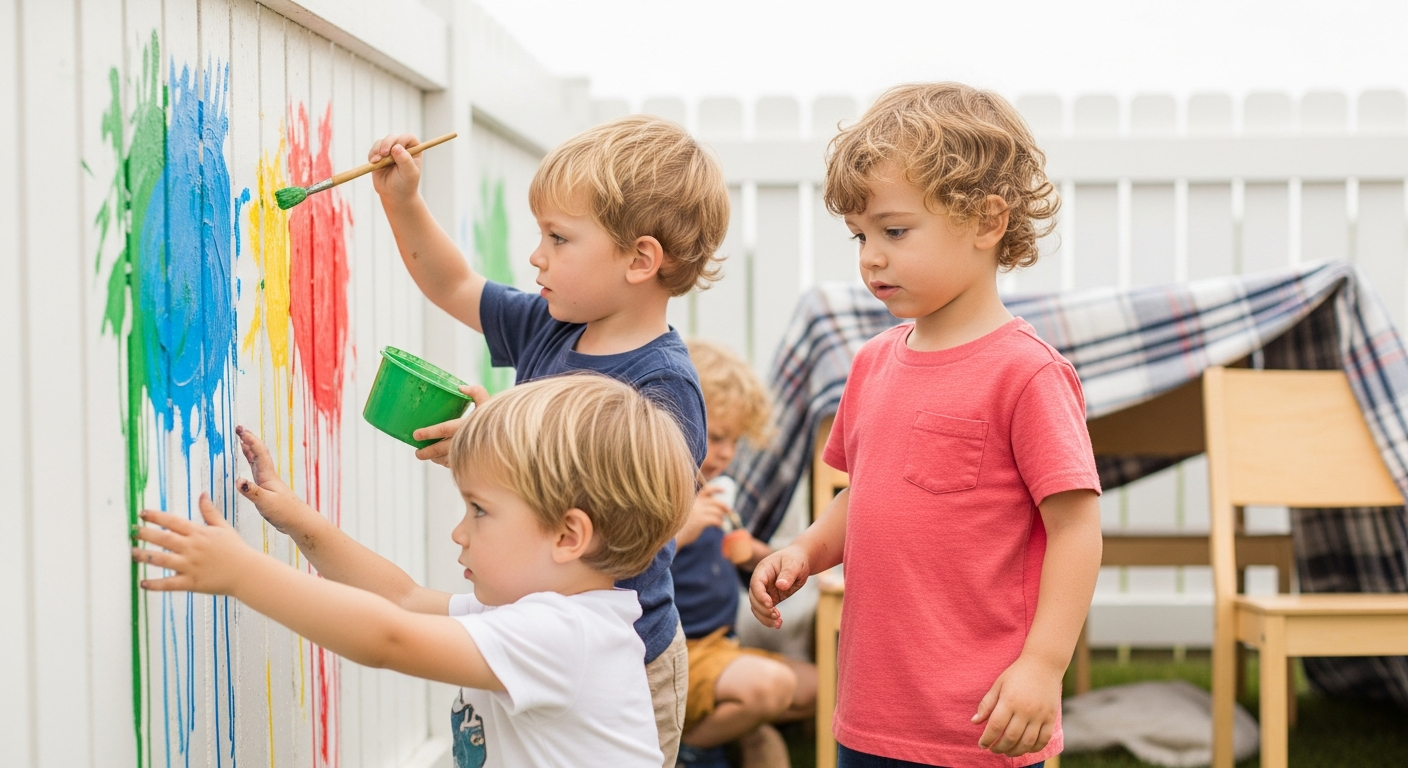
Table of Contents
- Introduction
- The Developmental Magic of the Great Outdoors
- Sensory and Water Play: DIY Cooling Fun
- Creative Arts and Sidewalk Masterpieces
- Nature Exploration and STEM for Little Ones
- Active Movement: Building Strength and Coordination
- Bridging Play and Learning with Speech Blubs
- More Fun DIY Activities to Keep Them Busy
- Choosing the Right Plan for Your Family
- Conclusion
- Frequently Asked Questions
Introduction
Have you ever noticed how a toddler can find more joy in a plain cardboard box than in the most expensive, battery-operated toy under the tree? There is a profound lesson in that simple observation: children don’t need high-tech gadgets to learn; they need opportunities to explore, imagine, and interact with the world around them. When we take that curiosity outside, the possibilities for development explode. Whether it’s the texture of a crunchy leaf, the sparkling ripples in a water bucket, or the vibrant colors of sidewalk chalk, the outdoors is the most comprehensive classroom ever built.
At Speech Blubs, our mission is to empower children to "speak their minds and hearts." We understand the importance of play because our company was born from the personal experiences of our founders, who all grew up with speech challenges. They created the tool they wished they had—one that blends scientific principles with pure, unadulterated joy. This post is designed to give you 50 creative, low-cost, and high-impact diy outdoor toddler activities that foster a love for communication, build confidence, and create joyful family moments.

From sensory bins to backyard "safaris," we will cover everything you need to turn your patio or yard into a developmental haven. We’ll also show you how to bridge the gap between physical play and "smart screen time" to support your child’s speech and language journey. By the end of this guide, you’ll have a toolkit of ideas to help your little one thrive in the fresh air.
The Developmental Magic of the Great Outdoors
Outdoor play isn't just about "burning off energy," though that is a fantastic side effect. For a toddler, every minute spent outside is a sensory workout. When they walk on uneven grass, they are developing proprioception and balance. When they pick up a tiny pebble, they are honing their fine motor skills. Most importantly, the outdoors is a rich environment for language acquisition.
Think of all the "action words" (verbs) and "descriptive words" (adjectives) that occur naturally outside: splash, dig, crunchy, slimy, bright, windy. These experiences provide the context your child needs to attach meaning to sounds. If you are ever unsure where your child stands in their developmental journey, we invite you to take our quick 3-minute preliminary screener. It involves 9 simple questions and provides a personalized assessment and next-steps plan to help you support your child's growth.
Sensory and Water Play: DIY Cooling Fun
Water is the ultimate toddler magnet. It’s versatile, cooling, and offers endless opportunities for "cause and effect" learning.
- The Plastic Container Water Table: You don’t need to buy a $100 water table. Grab a few large plastic storage bins, prop them up on milk crates or a sturdy low table, and fill them with water.
- Frozen Toy Rescue: The night before, freeze small plastic animals or cars in ice cube trays or Tupperware. Give your toddler a spray bottle of warm water or a small toy hammer to "rescue" the toys from the ice.
- Sponge Toss: Set up buckets at different distances and have your child soak sponges and try to toss them into the targets. This builds hand-eye coordination and gross motor strength.
- Color-Themed Water Play: Add a few drops of food coloring to your DIY water table. Give your child toys that match that color for a fun sorting lesson.
- The "Car Wash": Bring out the toy trucks and a bucket of soapy water. Let your toddler scrub the "dirt" (or just bubbles) off their favorite vehicles with an old rag.
- Squeeze and Pour: Provide various sizes of recycled containers—yogurt cups, berry baskets, and plastic bottles. Let them practice the complex task of pouring water from one to another.
- Ice Painting: Freeze water mixed with food coloring in ice cube trays with popsicle sticks. Your toddler can "paint" the sidewalk as the ice melts.
- Mud Kitchen: If you don't mind a little mess, designate a corner of the yard for dirt and water. Give them old pots and spoons to make "mud pies."
- Floating vs. Sinking: Gather various items (a rock, a leaf, a plastic toy, a cork) and ask your child to guess if they will float or sink before dropping them in a tub of water.
- Bubble Foam Fun: Mix water, dish soap, and a little food coloring in a blender to create thick, colorful foam. Pour it into a bin for a unique sensory experience.
Creative Arts and Sidewalk Masterpieces
Artistic expression outside means you don't have to worry about the carpet! These diy outdoor toddler activities encourage creativity without the stress of a messy cleanup.

- Sidewalk Chalk City: Use painter's tape to create a "grid" of roads and buildings on the driveway. Let your child color them in and then "drive" their toy cars through the city.
- Nature Rubbings: Place a piece of paper over tree bark or a large leaf and show your toddler how to rub a crayon over it to see the pattern appear.
- Outdoor Easel: Tape a large piece of cardboard or craft paper to a fence or the side of the house. This allows your child to paint while standing up, which is great for core stability.
- Rock Painting: Collect smooth stones on a walk and use washable paints to turn them into "pet rocks" or colorful garden decorations.
- Nature Paintbrushes: Instead of plastic brushes, tie a bundle of pine needles, a large leaf, or a bunch of long grass to a stick. Explore the different textures each "brush" makes.
- Chalk Paint: Mix equal parts cornstarch and water with food coloring. This "paint" goes on wet and dries into vibrant chalk art that washes away with the next rain.
- Sun Prints: Place interesting leaves or toys on dark-colored construction paper and leave them in the bright sun for several hours. The sun will fade the exposed paper, leaving a "print" behind.
- Box Painting: Give your child a large cardboard box and some paint. Let them decorate their "spaceship" or "house" from the inside out.
- Water Painting: Give your toddler a bucket of plain water and a large paintbrush. They can "paint" the fence or the driveway and watch it disappear as it dries.
- Nature Collage: Use a piece of cardboard with double-sided tape or contact paper. Let your child stick the "treasures" they find (leaves, flower petals, grass) onto it to create art.
Nature Exploration and STEM for Little Ones
Toddlers are natural scientists. They love to observe, categorize, and discover how the world works.
- The Egg Carton Scavenger Hunt: Paint the bottom of each compartment in an egg carton a different color. Ask your toddler to find something in nature that matches each color.
- Bug Hotel: Stack some old wood, hollow reeds, and stones in a quiet corner of the garden. Check back every day to see which "guests" have moved in.
- Bird Feeder DIY: Cover a pinecone in peanut butter (or sunflower butter) and roll it in birdseed. Hang it from a low branch and watch the birds together.
- Shadow Play: On a sunny day, stand on the sidewalk and look at your shadows. Try making "shadow monsters" by moving your arms and legs in silly ways.
- Worm Digging: Find a damp, shady spot in the garden and help your child gently dig for worms. It’s a great lesson in being gentle with living things.
- Seed Planting: Use clear plastic cups so your child can see the roots grow. Quick-growing seeds like beans or sunflowers are perfect for impatient toddlers.
- Nature Sorting: Gather a basket of items and help your child sort them into "hard" vs. "soft" or "big" vs. "small."
- Leaf Matching: Collect two of several different types of leaves. Lay them out and see if your child can find the matching pairs.
- Wind Direction: Tie some colorful ribbons to a stick and "plant" it in the ground. Talk about which way the wind is blowing the ribbons.
- Stick Stacking: Encourage your child to see how many sticks they can stack before the "tower" falls over. This is great for fine motor control and patience.
Active Movement: Building Strength and Coordination
Physical activity is vital for a child's overall health and helps regulate their sensory systems, making them more ready for learning.
- Chalk Obstacle Course: Draw a line to follow, circles to hop into, and a "spiral" to spin on. This is a classic for a reason—it’s pure fun!
- Animal Adventure: Use your imagination to move like animals. "Crawl like a bear," "hop like a frog," or "slither like a snake."
- Follow the Leader: Take turns being the leader as you walk around the yard, incorporating big steps, tiny steps, and silly arm movements.
- Pool Noodle Hurdles: If you have pool noodles, bend them into arches and secure them with garden stakes. Your toddler can crawl under or jump over them.
- Ball Toss: Use a laundry basket as a target and practice throwing soft balls or beanbags into it.
- Bubble Pop: Blow bubbles and encourage your child to pop them using different body parts—their nose, their elbow, or their toes!
- Outdoor Dance Party: Bring a portable speaker outside and let them wiggle. This is a great way to practice "stop" and "go" with freeze dance.
- Tree Climbing: Under close supervision, find a sturdy, low-hanging branch. Climbing helps build confidence and physical strength.
- Nature Walk "I-Spy": Walk around the block and play I-Spy. "I spy something... green!" "I spy something... that flies!"
- Tricycle or Scooter Race: Set up a start and finish line with chalk and let them zoom.
Bridging Play and Learning with Speech Blubs
While outdoor activities are essential, we also recognize that today’s parents need "smart screen time" options that are more than just passive entertainment. This is where Speech Blubs becomes a powerful supplement to your child's daily routine.
Imagine this scenario: Your 3-year-old "late talker" has spent the afternoon outside pretending to be a farm animal. They’ve been "mooing" at the grass and "clucking" at the bugs. To reinforce this vocabulary, you open the "Animal Kingdom" section of the Speech Blubs app. Our unique video modeling methodology allows your child to watch their peers—real kids, not cartoons—making the "moo" and "baa" sounds.
This approach is rooted in science. When children watch other children, their "mirror neurons" fire, making them much more likely to imitate the sounds and facial movements they see. It’s a joyful, effective way to turn screen time into an active learning session. Our method is backed by research and has placed us in the top tier of speech apps worldwide, earning high marks on the MARS scale for quality and engagement.
Don't just take our word for it—see what thousands of other parents are saying about how our app has helped their children find their voices. By blending the physical experience of a "mud kitchen" or a "chalk city" with the peer-led video modeling in our app, you are creating a multi-sensory learning environment that supports every facet of their development.
More Fun DIY Activities to Keep Them Busy
- Puddle Jumping: If it has recently rained, put on the boots and let them splash. It’s a sensory delight.
- Flower Picking: If you have wildflowers or a garden, show them how to gently pick a few to make a "bouquet" for the kitchen table.
- Outdoor Story Time: Bring a blanket and some favorite books outside. Reading under a tree feels like a brand-new adventure.
- Water Blaster Target Practice: Set up plastic cups on a wall or table and let your toddler knock them down with a water blaster.
- Stone Skipping: If you are near a pond, show them how to toss stones into the water to make "plops" and ripples.
- Backyard Picnic: Sometimes just changing the location of lunch can make the day feel special. Let them help pack the basket!
- Flashlight Tag: If it's getting close to dusk, use flashlights to "catch" each other’s beams on the grass.
- Caterpillar Hunt: Look under leaves for caterpillars. Use this as a chance to talk about how they turn into butterflies!
- Hula Hoop Play: They might not be able to hula hoop yet, but they can roll them, jump in and out of them, or use them as "steering wheels."
- Sand Castle Building: Even if you aren't at the beach, a small sandbox or even a bin of sand provides hours of fine motor play.
Choosing the Right Plan for Your Family
We want to be transparent about how you can best access our "smart screen time" tools. While we offer a variety of options, we always recommend the plan that provides the most comprehensive support for your child's journey.
- Monthly Plan: For $14.99 per month, you get full access to the Speech Blubs app and its vast library of peer-led video modeling activities.
- Yearly Plan (Best Value): For $59.99 per year, which breaks down to just $4.99 per month, you get the most value for your investment.
When you choose the Yearly plan, you aren't just saving 66%. You also get access to exclusive features that the monthly plan does not include:
- A 7-day free trial: Test the app with your child to see the joy it brings before you commit.
- Reading Blubs: You get our additional app designed to help toddlers transition from speaking to early reading skills.
- Early Access: You’ll be the first to receive new updates and modules.
- Priority Support: Enjoy a 24-hour response time from our dedicated support team.
We encourage you to Download Speech Blubs on the App Store or get it on Google Play to start your journey today.
Conclusion
The beauty of diy outdoor toddler activities lies in their simplicity. You don't need a Pinterest-perfect backyard or a massive budget to foster your child’s development. Whether you are letting them splash in a plastic bin of water, count pebbles on the sidewalk, or watch a peer "moo" like a cow in the Speech Blubs app, you are providing the building blocks for a lifetime of confident communication.
Remember, the goal isn't perfection; it's connection. It’s about those giggles when a bubble pops on a nose and the look of pride when they finally "rescue" a toy from the ice. These moments build the foundation for your child to "speak their minds and hearts."
We invite you to make the most of this season. Combine the fresh air and sunshine with the scientific methodology of our app to give your child the best start possible. Ready to join our community of over 5 million parents? Create your account and begin your 7-day free trial today. For the best experience and full suite of features—including the Reading Blubs app—be sure to select the Yearly Plan. Let’s make learning a joyful, outdoor adventure!
Frequently Asked Questions
1. How do outdoor activities specifically help with speech delay? Outdoor activities provide a "low-pressure" environment rich in sensory input. When a child is physically engaged—touching grass, feeling wind, or splashing water—their brain is more primed for learning. These activities also provide "natural consequences" and many opportunities for "mand training" (requesting things), such as asking for more bubbles or help with a water toy.
2. Is the Speech Blubs app a replacement for professional speech therapy? No, Speech Blubs is designed to be a powerful supplement to professional therapy and a tool for general developmental support. It provides "smart screen time" that uses video modeling to encourage imitation. If your child is in therapy, our app is an excellent way to practice at home between sessions in a fun, non-clinical way.
3. What if my toddler gets bored with these activities quickly? That’s perfectly normal! Toddlers have short attention spans. The key is "toy rotation" and "activity switching." Don't put out all 50 ideas at once. Choose two or three for the week. If they lose interest, move on to the next one. The goal is exposure and joy, not completing a task.
4. Why is the Yearly plan better than the Monthly plan? Beyond the significant cost savings (66% off), the Yearly plan is designed for long-term success. Language development is a marathon, not a sprint. The Yearly plan includes the Reading Blubs app, which supports the next stage of development, along with a 7-day free trial to ensure it’s the right fit for your family.
About the author