
Best Engaging Activities for Toddlers on a Plane
 By Speech Blubs Team•Mar 18, 2026•13 min.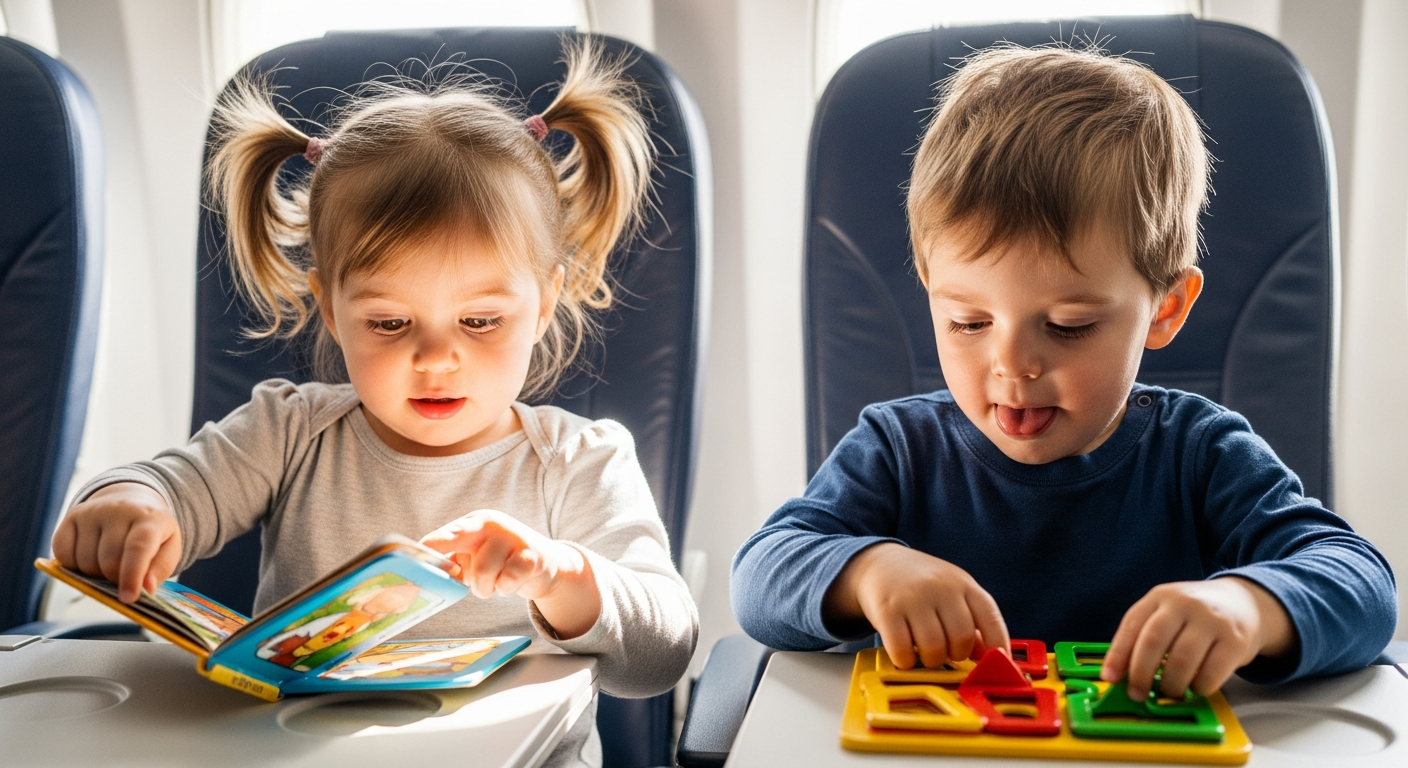
Table of Contents
- Introduction
- The Psychology of Toddler Travel: Why Activity Choice Matters
- Creative Low-Mess Arts and Crafts
- Fine Motor Skill Powerhouses
- Imaginative Play and Social Interaction
- Transforming Screen Time into "Smart Screen Time"
- Essential "Snacktivities"
- Managing the "Big Feelings" Mid-Flight
- Making the Most of Your Flight with Speech Blubs
- A Practical Timeline for Travel Success
- Final Thoughts on Toddler Travel
- FAQs
Introduction
Have you ever found yourself standing in an airport terminal, clutching a diaper bag like a shield, and watching a group of business travelers eye your energetic two-year-old with a mixture of pity and dread? You aren't alone. For many parents, the thought of being confined in a pressurized metal tube at 30,000 feet with a toddler is enough to trigger a full-blown panic attack. We know this feeling intimately. At Speech Blubs, our founders grew up with speech challenges themselves, and we’ve dedicated our lives to creating the tools we wish we had as kids. We understand that travel isn't just about getting from point A to point B; it’s about managing transitions, supporting development, and, quite frankly, surviving the journey with your sanity intact.
The reality is that 1 in 4 children will face some form of speech or developmental delay, and travel can often exacerbate the frustration these little ones feel when they can't communicate their needs. Whether your child is a "late talker" or a social butterfly, the key to a successful flight lies in preparation. In this guide, we are going to dive deep into a curated list of activities for toddler on plane travel that go beyond mere distraction. We will explore how to turn "dead time" into "smart time," utilizing everything from low-tech sensory toys to our scientifically-backed "video modeling" methodology. Our goal is to help you move away from the stress of passive screen time toward joyful, interactive learning that fosters a love for communication and builds confidence. By the time we’re done, you’ll have a customized "survival kit" designed to keep your little one happy, engaged, and learning every mile of the way.

The Psychology of Toddler Travel: Why Activity Choice Matters
Before we pack the bags, it is helpful to understand what is happening in a toddler’s brain during a flight. Airplanes are sensory minefields. The roar of the engines, the change in air pressure, and the lack of physical space can be overwhelming. When a child feels overwhelmed and lacks the vocabulary to express it, they often resort to the only "language" they have left: a tantrum.
By providing specific, engaging activities for toddler on plane rides, you are doing more than just "killing time." You are providing a sense of agency and control. Choosing between a red sticker and a blue sticker might seem trivial to us, but for a toddler, it’s a powerful moment of decision-making. We believe in empowering children to "speak their minds and hearts," and that empowerment starts with small, successful interactions.
Creative Low-Mess Arts and Crafts
One of the biggest hurdles of flying is the mess. You don't want to be the parent scrubbing glitter out of the airline upholstery or chasing rolling crayons under the seat of a disgruntled passenger in row 14. Here are our favorite mess-free creative solutions.
Water-Reveal Books
These are a perennial favorite for a reason. Using a pen filled with plain water, your child can "paint" the pages to reveal hidden colors and characters. As the water dries, the image disappears, making the activity infinitely reusable. This is excellent for fine motor control and can be used to practice naming objects. For a parent whose 3-year-old "late talker" loves animals, the "Animal Kingdom" section of a water-reveal book offers a fun, motivating way to practice "moo" and "baa" sounds while they paint.
LCD Writing Tablets
Imagine a digital Etch-A-Sketch that weighs less than a notebook. These tablets allow children to draw with a stylus and erase the entire screen with the press of a single button. They are perfect for playing "guess the drawing" or practicing early literacy skills. Unlike traditional tablets, they don't emit blue light and aren't overstimulating, providing a calm way to pass the time.

Triangle Crayons and Painter’s Tape
If you prefer traditional coloring, always opt for triangle-shaped crayons. They won't roll off the tray table! Combine these with a roll of blue painter's tape. Toddlers find tape fascinating. They can tape their drawings to the window or create "roads" on their tray table for toy cars. Best of all, painter’s tape leaves no residue and is easy for little fingers to peel off, which is a fantastic finger-strengthening exercise.
Fine Motor Skill Powerhouses
Keeping little hands busy is the secret to keeping little minds quiet. Fine motor activities require concentration, which naturally leads to "quiet time."
Tegu Magnetic Wooden Blocks
These aren't your average building blocks. Each piece has a hidden magnet inside, allowing your child to build gravity-defying structures that won't fall apart when the plane hits a bit of light turbulence. They are small enough to fit into a diaper bag and offer hours of open-ended play.
Suction Cup Spinners
These are a "must-have" for the window seat. These colorful spinners have suction cups that stick to the window or the tray table. They provide a satisfying sensory experience and are nearly impossible for a toddler to accidentally drop. Watching the colors blur as they spin can be very soothing for a child who is feeling anxious about the flight.
Pipe Cleaners and a Spice Jar
This is a DIY classic. Take a handful of colorful pipe cleaners and an empty, clean spice jar with large holes in the lid. Show your toddler how to poke the "fuzzy sticks" through the holes. This simple task requires immense focus and hand-eye coordination. It’s a great example of how simple, everyday items can become the best activities for toddler on plane journeys.
Imaginative Play and Social Interaction
Communication is at the heart of everything we do. Using toys that encourage storytelling and peer-to-peer interaction is a great way to prepare your child for more complex social skills.
Finger Puppets and Figurines
Small animal figurines or finger puppets are lightweight and perfect for "acting out" stories. You can use these to explain the flying process: "The little cow is putting on her seatbelt! Now she's having a snack." This narrative play helps reduce anxiety. At Speech Blubs, we use a similar "video modeling" technique. In our app, children watch videos of their peers performing actions and making sounds. This peer-based learning is incredibly effective because kids are naturally wired to imitate other children. You can replicate this on the plane by "modeling" play with your finger puppets.
Reusable Sticker Scenes
Standard stickers are great, but reusable ones are better. These stickers are made of a thicker material that can be moved around on a glossy background. Your child can create a "farm scene" or a "city scene" over and over. This is a great opportunity to work on prepositions: "Can you put the bird on top of the house?" or "Put the car next to the tree."
Transforming Screen Time into "Smart Screen Time"
Let’s be honest: almost every parent will reach for a tablet at some point during a long-haul flight. However, not all screen time is created equal. Passive consumption of loud, fast-paced cartoons can often lead to overstimulation and "tablet tantrums" when the device is finally put away. We advocate for what we call "smart screen time."
Speech Blubs was designed to be a powerful tool for family connection, even in the cramped quarters of an airplane. Our app uses a scientifically-backed approach that encourages children to actively participate rather than passively watch. Through the use of "video modeling," your child sees other children making sounds and saying words, which triggers their mirror neurons and encourages them to join in.
Imagine your child sitting on your lap, watching a peer on the screen make a "pop" sound with a bubble. Your child tries to copy them, you cheer, and suddenly, the flight isn't a chore—it’s a joyful learning session. This is the difference between "distraction" and "development." If you are unsure where your child stands in their communication journey, we recommend taking our 3-minute preliminary screener before your trip. It provides a simple assessment and a next-steps plan to help you focus on the skills your child needs most.
Essential "Snacktivities"
Food is more than just fuel; it’s an activity. When planning your snacks, think about "longevity." You want snacks that take a long time to eat and provide a bit of a challenge.
- Cereal Necklaces: Threading O-shaped cereal onto a piece of clean string or yarn is a fun activity that ends with a wearable snack.
- The "Snackle Box": Use a divided craft box or a clean pill organizer to provide tiny portions of many different foods—blueberries, goldfish crackers, raisins, and cheese cubes. The novelty of opening the different compartments keeps them engaged.
- Ice Cubes: Ask the flight attendant for a cup of ice and an empty cup. Moving the ice from one cup to the other with a spoon is a fantastic sensory activity (and very cold!).
Managing the "Big Feelings" Mid-Flight
Even with the best activities for toddler on plane travel, things can go sideways. If a meltdown occurs, the most important thing to remember is to stay calm yourself. Your child is looking to you to see how they should react.
- Change the Scenery: If the "fasten seatbelt" sign is off, a quick walk to the back of the plane can do wonders.
- The "Surprise Bag": Keep one or two brand-new, wrapped toys hidden away. The act of unwrapping a new toy provides a hit of dopamine that can often reset a child's mood.
- Empathy and Redirection: Validate their feelings. "I know it’s hard to sit still for so long. You’re doing such a great job. Do you want to see what the little dinosaur is doing?"
Our mission is to help children speak their minds and hearts, and that includes the difficult moments. We’ve seen incredible results from parents who use our tools to build their child's confidence. You can read some of our parent success stories to see how other families have used these strategies to overcome challenges.
Making the Most of Your Flight with Speech Blubs
We want to make sure you have every advantage possible for your upcoming trip. While the activities listed above are fantastic, having a structured, expert-led tool in your pocket can make all the difference. We offer two main ways to access our full library of over 1,500 activities:
- Monthly Plan: $14.99 per month. This is a great way to try us out for a single trip.
- Yearly Plan (Best Value): $59.99 per year. This breaks down to just $4.99 per month—a 66% savings compared to the monthly plan.
We highly recommend the Yearly plan for traveling families. Not only is it more cost-effective, but it also includes exclusive features that are perfect for travel, such as:
- A 7-day free trial to test everything out before you fly.
- Access to the Reading Blubs app, which helps toddlers transition from sounds to early reading skills.
- Early access to new updates and a 24-hour support response time for any questions you might have.
You can create your account and start your 7-day free trial today to ensure you’re fully prepared for takeoff. Our science behind our method is what sets us apart, ensuring that your child is getting the absolute best "smart screen time" available.
A Practical Timeline for Travel Success
To make your trip as smooth as possible, follow this simple timeline:
One Week Before Takeoff
- Download the Speech Blubs app on Google Play or the App Store.
- Let your child play with the app for 10-15 minutes a day so they are familiar with the characters and the interface.
- Gather your "busy bag" items—Tegu blocks, stickers, and painter's tape.
The Day Before
- Charge all devices.
- Pack your "snackle box."
- Wrap two "surprise toys" in bright paper.
At the Airport
- Let your toddler burn off as much energy as possible. Many airports now have play areas specifically for this purpose.
- Explain the "airplane rules" one more time: "We stay in our seats, we use quiet voices, and we have lots of fun!"
On the Plane
- Start with low-tech toys (stickers, tape).
- Save the "smart screen time" with Speech Blubs for when they need a boost in engagement or during a long stretch where they need to stay seated.
- Use the "surprise toys" as a last resort for the final hour of the flight.
Final Thoughts on Toddler Travel
Flying with a toddler doesn't have to be a nightmare. With the right set of activities for toddler on plane travel, you can transform a stressful day into a series of joyful family learning moments. Remember that your child is learning how to navigate the world, and every flight is a classroom. Whether you are building with magnetic blocks, "painting" with water, or practicing new words with our peer-modeling videos, you are building the foundation for a lifetime of confident communication.
We are here to support you every step of the way. Our founders’ personal experiences drive our commitment to providing an immediate, effective, and joyful solution for the millions of children who need speech support. By choosing "smart screen time" and engaging in co-play, you are giving your child the greatest gift possible: the ability to speak their mind and heart.
Ready to turn your next flight into a fun-filled adventure? Download Speech Blubs on the App Store or Google Play today. Don't forget to choose the Yearly plan to unlock your 7-day free trial and the Reading Blubs app. We can't wait to be a part of your family’s journey!
FAQs
What are the best activities for a 2-year-old on a plane?
For 2-year-olds, focus on sensory and fine motor activities. Suction cup spinners, reusable sticker books, and "smart screen time" like Speech Blubs are excellent choices. At this age, they love imitating others, so our video modeling methodology is particularly effective for keeping them engaged and vocal.
How do I prevent ear pain for my toddler during takeoff and landing?
Encourage your child to swallow or chew. For toddlers, this can be done by offering a snack, a drink from a straw, or a pacifier. You can also turn it into a game—ask them to make big "fish faces" or "yawn like a lion," which helps open the Eustachian tubes.
Is screen time okay for toddlers on long flights?
Yes, but we recommend "smart screen time" over passive viewing. Instead of just watching cartoons, use interactive apps like Speech Blubs that encourage your child to speak, imitate, and learn. This keeps their brain active and reduces the likelihood of the "meltdown" that often follows hours of passive screen consumption.
What should I do if my toddler has a tantrum on the plane?
Stay calm and try to redirect their attention. Use a "surprise toy" you've kept hidden, offer a favorite snack, or use a calming activity like drawing on an LCD tablet. Remember, the passengers around you have likely been there too—focus on your child's needs, not the opinions of others.
About the author