
Can Sensory Issues Cause Speech Delay? What to Know
 By Speech Blubs Team•Mar 5, 2026•15 min.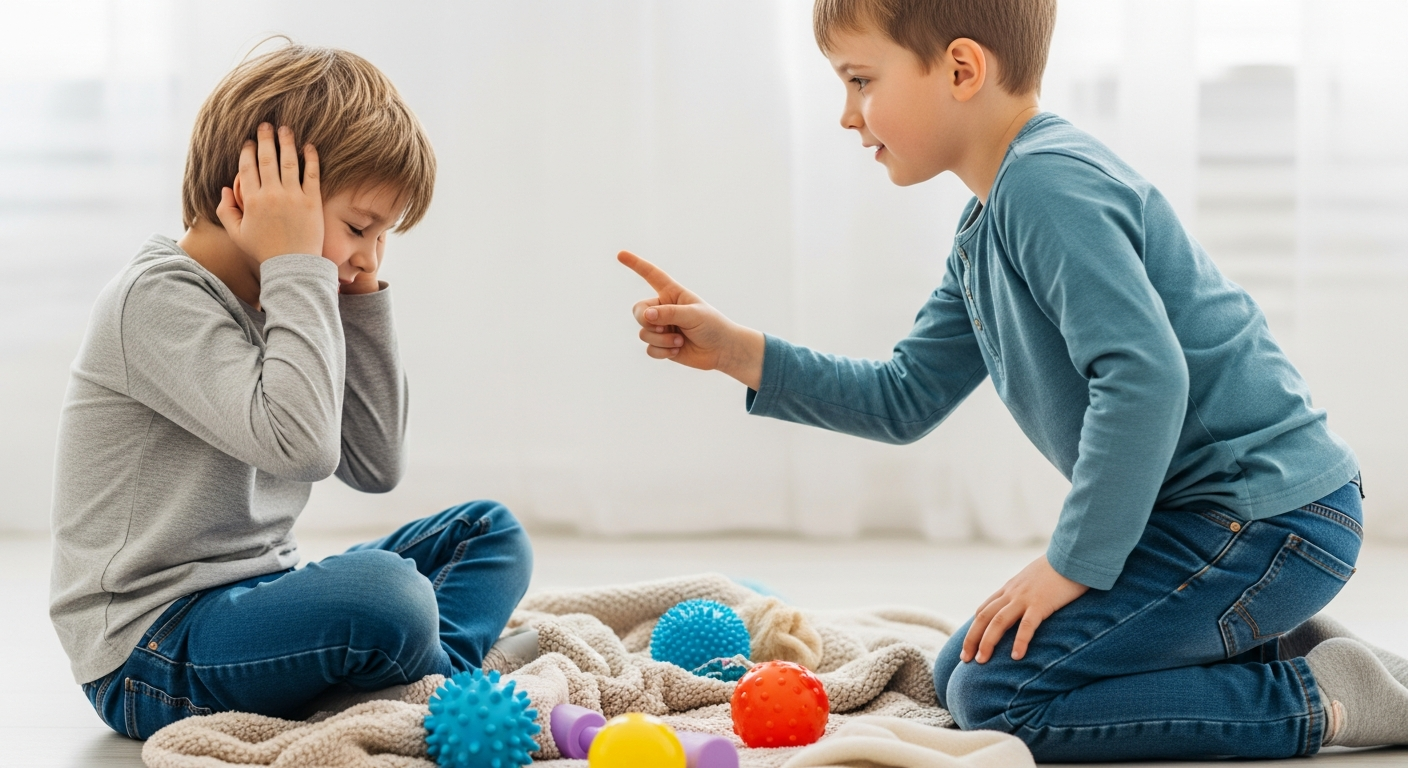
Table of Contents
- Introduction
- Understanding the Link: Can Sensory Issues Cause Speech Delay?
- The Eight Senses and Their Impact on Communication
- Signs of Sensory Processing Issues in Toddlers
- Differentiating Between SPD, Autism, and Isolated Speech Delay
- Why Speech Blubs is a Game-Changer for Sensory Seekers
- Practical Strategies for Parents at Home
- The Importance of Professional Support
- Speech Blubs Pricing and Value
- Conclusion
- FAQ
Introduction
Imagine your toddler is playing in a room filled with colorful toys, but instead of joining in the fun, they are covering their ears because the hum of the refrigerator feels like a jet engine. Or perhaps they refuse to wear that soft cotton t-shirt you just bought because the tiny tag on the neck feels like a bed of needles against their skin. For many parents, these "quirky" behaviors are the first signs of Sensory Processing Disorder (SPD). But as time goes on, a new concern often emerges: while other children their age are starting to put sentences together, your little one is struggling to produce even single words.
This leads to a question we hear frequently: can sensory issues cause speech delay? The short answer is that while sensory issues themselves are not a direct "block" on the vocal cords, they create a neurological "traffic jam" that makes it incredibly difficult for a child to focus on the complex task of learning to speak. At Speech Blubs, our mission is to empower children to "speak their minds and hearts." We understand this journey intimately because our founders all grew up with speech problems and created the tool they wished they had. We know that for the 1 in 4 children who need speech support, understanding the "why" behind their delay is the first step toward progress.

In this blog post, we will explore the deep-rooted connection between sensory processing and language development. We will break down how the eight different sensory systems influence communication, how to tell the difference between isolated speech delay and sensory-driven challenges, and how "smart screen time" can be a powerful ally in your child’s development. Our goal is to provide you with empathetic expertise and practical strategies to foster a love for communication in your home.
Understanding the Link: Can Sensory Issues Cause Speech Delay?
To understand how sensory issues impact speech, we first need to look at how the brain prioritizes information. The human brain is a "read and react" system. It is constantly scanning the environment for sensory input—sounds, sights, smells, and internal feelings—to ensure safety and comfort.
The Neurological "Traffic Jam"
When a child has Sensory Processing Disorder, their brain has difficulty regulating and organizing these inputs. Think of it like a busy intersection where the traffic lights have stopped working. Information is coming in from all directions, but it isn’t being routed correctly. If a child is physically uncomfortable because their socks feel too tight or they are terrified by the sound of a vacuum cleaner three rooms away, their brain enters a state of "fight or flight."
In this state, the brain’s primary goal is survival and regulation, not learning. Higher-level cognitive functions, such as language acquisition and social communication, take a backseat. If a child is busy seeking sensations (like crashing into walls) or avoiding them (like hiding from lights), they simply don't have the "bandwidth" to attend to the subtle sounds of speech or the social cues of a conversation.
Perception and Coordination
Speech is one of the most complex motor tasks the human body performs. it requires the perfect coordination of the lungs, vocal cords, tongue, lips, and jaw. This coordination relies on accurate sensory perception. If a child cannot properly perceive the "vibratory sensations" that speech production creates in their own mouth, they may struggle to mimic sounds correctly. Some children are actually hypersensitive to the feeling of their own voice vibrating in their throat, leading them to avoid speaking altogether or to use sound substitutions that feel "safer" or less intense.

If you are curious about where your child stands in their development, you can take our quick 3-minute preliminary screener. It involves 9 simple questions and provides an assessment and next-steps plan to help you understand your child’s unique needs.
The Eight Senses and Their Impact on Communication
Most of us were taught that we have five senses: sight, sound, smell, taste, and touch. However, in the world of child development, we recognize eight sensory systems that act as the foundation for all learning, including speech.
1. Auditory (Hearing)
The connection here is obvious—if you can't process sound, you can't learn language. But for children with sensory issues, it's not about if they hear, but how they process what they hear. Children who are hypersensitive to sound may find a normal classroom environment physically painful, leading them to "tune out" everyone, including their parents and teachers.
2. Visual (Sight)
Visual processing allows a child to watch a speaker’s mouth and facial expressions. This is a core component of our "video modeling" methodology at Speech Blubs. If a child is visually overwhelmed by bright lights or cluttered rooms, they may avoid eye contact or fail to notice the non-verbal cues that give language meaning.
3. Tactile (Touch)
The mouth is a highly sensitive tactile zone. Children who are over-responsive to touch may have "oral defensiveness." They might be picky eaters because certain textures feel unbearable, and this same sensitivity can make the movements required for speech feel intrusive or uncomfortable.
4. Olfactory (Smell) and 5. Gustatory (Taste)
While these may seem unrelated to speech, they impact a child’s overall state of regulation. A strong smell can trigger a meltdown, and a child in the middle of a sensory meltdown is not in a state to learn new words.
6. Vestibular (Balance and Movement)
Located in the inner ear, this system tells us where our head is in space. Interestingly, the vestibular and auditory systems work closely together. A child with a sluggish vestibular system may appear "floppy" or clumsy, and because this system helps regulate the brain’s level of alertness, it can directly impact how well a child "tunes in" to spoken language.
7. Proprioception (Body Awareness)
This sense comes from our muscles and joints. It tells us how much force to use and where our body parts are without looking at them. For speech, proprioception is vital for "knowing" where the tongue is in the mouth. If a child has poor proprioception, they might struggle with the motor planning needed to transition from a "k" sound to an "ah" sound.
8. Interoception (Internal Senses)
This is the ability to feel what is happening inside the body—hunger, thirst, or the need to use the bathroom. If a child is constantly distracted by an internal feeling of "disquiet" that they can't identify, they will struggle to focus on social interaction.
Signs of Sensory Processing Issues in Toddlers
Recognizing sensory issues early can be life-changing for a family. At Speech Blubs, we advocate for "smart screen time" as a joyful solution that bridges the gap between play and therapy. You can download Speech Blubs on the App Store to see how our peer-led videos can engage even the most sensory-sensitive children.
Common red flags that a speech delay might be linked to sensory issues include:
- Extreme reactions to grooming: Screaming during hair brushing, nail clipping, or tooth brushing.
- Oral behaviors: Chewing on clothing, toys, or fingers long after the teething phase has ended.
- Movement seeking: A child who is constantly "on the go," spinning, jumping, or crashing into furniture.
- Avoidance of "messy" play: Refusing to touch sand, play-dough, or finger paint.
- Difficulty with transitions: Having a meltdown when it's time to move from one activity to another, often because the sensory environment is changing.
- Atypical pain threshold: Either crying over a tiny scratch or not noticing when they have a significant bump or bruise.
Differentiating Between SPD, Autism, and Isolated Speech Delay
It is important to note that sensory processing issues are often seen in children with Autism Spectrum Disorder (ASD) and ADHD, but they can also exist entirely on their own. Parents often worry that a speech delay automatically means autism. While there is overlap, there are key distinctions.
Isolated Speech Delay
A child with an isolated speech delay typically has a strong desire to communicate. They will use gestures, pull you toward what they want, make eye contact, and show you their toys. They are socially "present," even if their words aren't there yet.
Sensory Processing Disorder (SPD)
A child with SPD may seem "checked out" or avoidant, not because they lack social interest, but because the environment is overwhelming. Once the sensory "noise" is reduced, these children often show a much higher level of social engagement.
Autism Spectrum Disorder (ASD)
In autism, the speech delay is usually accompanied by challenges in "joint attention" (sharing an interest in an object with another person) and repetitive behaviors. Sensory issues are a recognized symptom of autism, but they are just one piece of a larger diagnostic puzzle.
Regardless of the "label," the goal is the same: building foundational communication skills. Our method is backed by science, placing us in the top tier of speech apps worldwide. We focus on video modeling, where children learn by watching and imitating their peers, which is a powerful way to bypass sensory barriers.
Why Speech Blubs is a Game-Changer for Sensory Seekers
Many parents are hesitant to use screens with a child who has sensory issues, fearing it will lead to "overstimulation." However, there is a massive difference between passive viewing (like watching loud, fast-paced cartoons) and the active, educational engagement provided by Speech Blubs.
Peer-to-Peer Video Modeling
Children are naturally drawn to other children. Our app features thousands of videos of real kids (our "Blubbers") performing speech exercises. For a child with sensory issues, watching a peer make a sound is much less intimidating than a large adult leaning into their personal space. This "video modeling" triggers mirror neurons in the brain, encouraging the child to try the sounds themselves in a low-pressure environment.
A Practical Scenario: The Animal Kingdom
Consider a parent whose 3-year-old "late talker" is obsessed with animals but gets overwhelmed in loud, crowded places. In a traditional therapy setting, the child might shut down. However, using the "Animal Kingdom" section in Speech Blubs, the child can sit in their favorite "sensory nook" at home. They watch a peer dressed as a lion say "Roar!" The visual is clear, the sound is controlled, and the child feels safe. This joyful moment of imitation builds the confidence needed to try more complex words.
To see the impact for yourself, you can start your 7-day free trial today by signing up on our website.
Practical Strategies for Parents at Home
If you suspect sensory issues are contributing to your child's speech delay, you don't have to wait for a formal appointment to start helping. You can create a "communication-rich" environment that respects your child’s sensory needs.
1. Create a "Sensory Diet"
Consult with an Occupational Therapist (OT) to create a "sensory diet"—a series of physical activities tailored to your child’s needs. For a "seeker," this might include jumping on a mini-trampoline before a speech practice session. For an "avoider," it might mean 10 minutes of quiet time in a darkened room with a weighted blanket to "reset" their nervous system.
2. Use "Heavy Work"
Activities that push or pull against the body (like carrying a basket of laundry or "wall push-ups") provide intense proprioceptive input. This is grounding for many children and can help them feel more in control of their bodies, making it easier to focus on producing speech sounds.
3. Simplify the Environment
When you want to work on speech, try to minimize distractions. Turn off the TV, dim the bright overhead lights, and sit on the floor at your child’s level. The fewer things their brain has to process, the more energy they can put into listening to your words.
4. Co-Play with Speech Blubs
Don't just hand the tablet to your child. Sit with them! Use the fun filters in the app to "become" a monkey or a robot together. This turns "screen time" into "connection time." You are modeling that communication is fun, social, and rewarding. You can find more tips and see what other parents are saying on our testimonials page.
The Importance of Professional Support
While at-home strategies and apps are powerful tools, they are most effective when used as part of a comprehensive development plan. If you are asking "can sensory issues cause speech delay," the best professionals to consult are a Speech-Language Pathologist (SLP) and an Occupational Therapist (OT).
- The SLP will focus on the mechanics of speech, vocabulary, and social communication.
- The OT will focus on the underlying sensory integration issues, helping the child’s brain and body work together more efficiently.
When these two professionals work together, the results can be remarkable. The OT "primes" the child’s nervous system so that the SLP’s speech techniques can actually "stick." We always frame Speech Blubs as a powerful supplement to this professional therapy, providing a way to practice the skills learned in clinic through fun, daily play.
Speech Blubs Pricing and Value
We are committed to being a transparent and affordable resource for families. Quality speech support shouldn't be out of reach. We offer two main plans to fit your family's needs:
- Monthly Plan: $14.99 per month. This is a great way to test the waters and see how your child responds to our video modeling method.
- Yearly Plan: $59.99 per year. This is our best value option, breaking down to just $4.99 per month—a 66% savings compared to the monthly rate.
We highly recommend the Yearly Plan because it is designed to support long-term developmental growth. When you choose the Yearly plan, you receive:
- A 7-day free trial to explore the app with zero risk.
- Access to the Reading Blubs app, which helps transition your child from speech to literacy.
- Early access to new updates and features.
- Priority 24-hour support response time from our team.
Ready to give your child the tools they need? Get Speech Blubs on Google Play or the App Store and select the Yearly plan to unlock the full suite of features.
Conclusion
Navigating a speech delay can be a lonely and frustrating experience for both parent and child. When you add sensory processing challenges into the mix, it can feel like you are trying to solve a puzzle with missing pieces. However, understanding that sensory issues can indeed lead to speech delay is a powerful realization. It shifts the perspective from "my child won't talk" to "my child’s brain is busy processing the world, and I can help them find their way through the noise."
By addressing the sensory foundations—whether through occupational therapy, environmental changes, or engaging tools like Speech Blubs—you are clearing the path for communication. Remember, the goal isn't just to get your child to say words; it's to foster a lifelong love for connecting with others.
Every child develops at their own pace, and every small win is worth celebrating. Whether it’s a new sound, a purposeful gesture, or a shared laugh over a silly face filter, you are building the bridge to your child’s "mind and heart."
Take the first step today. Download Speech Blubs, start your 7-day free trial, and choose the Yearly plan for the best value and most comprehensive support. Let’s start this journey together.
FAQ
1. Can a child have sensory issues without having autism?
Yes, absolutely. While sensory issues are a common symptom of autism, many children have Sensory Processing Disorder (SPD) as a standalone condition. They may also appear in children with ADHD, anxiety, or those who have had certain early childhood experiences like birth trauma. It is entirely possible for a child to be "sensory-defensive" or a "sensory-seeker" while meeting all their social and emotional milestones.
2. How does an Occupational Therapist help with speech delay?
While it might seem strange to see an OT for a speech problem, they are experts in "neurological regulation." An OT helps a child’s brain better organize sensory input. By improving a child's body awareness (proprioception) and balance (vestibular system), they help the child reach a "ready to learn" state. This makes the work of the Speech-Language Pathologist much more effective.
3. Is it okay to use an app if my child is already overstimulated?
The key is the type of digital content. High-speed, high-contrast cartoons can be overstimulating. However, Speech Blubs uses calm, peer-led video modeling that focuses on one sound or word at a time. This "smart screen time" is designed to be a focused, interactive experience. We recommend using it in a quiet, comfortable environment and engaging in co-play with your child to ensure it remains a calming and productive activity.
4. What are some "heavy work" activities I can do at home?
"Heavy work" is great for grounding sensory-seeking children. Simple ideas include:
- Having your child push a laundry basket filled with books.
- "Sandwiching" your child between two soft pillows (gentle pressure).
- Animal walks (crawling like a bear or hopping like a frog).
- Helping to carry groceries. These activities provide the deep pressure input that helps calm the nervous system and improves focus for speech practice.
About the author