
Differentiating Autism and Speech Delay in Toddlers
 By Speech Blubs Team•Mar 9, 2026•15 min.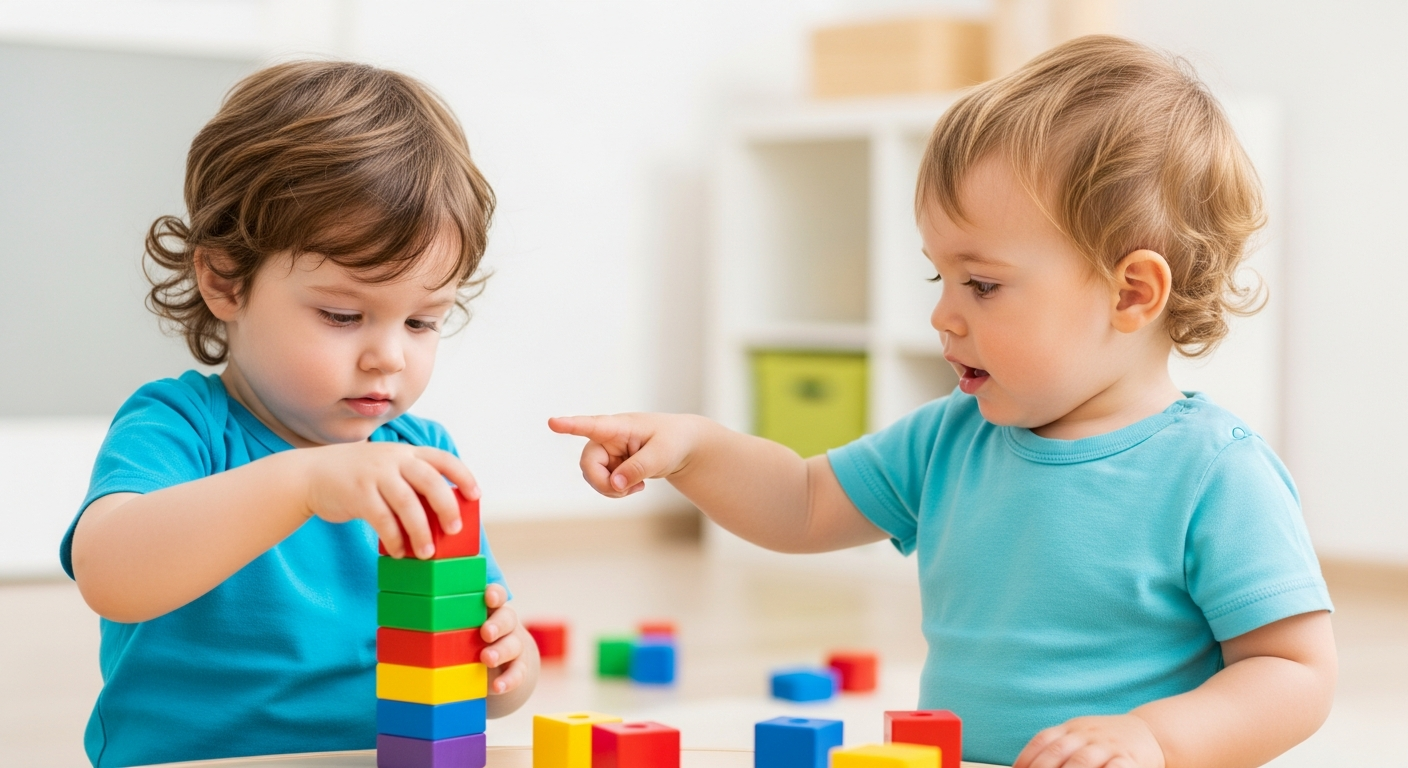
Table of Contents
- Introduction
- Defining the Terms: Speech Delay vs. Autism
- The Biggest Differentiator: Social Motivation and Intent
- Understanding Speech Milestones: When to Act
- Why Video Modeling is a Game-Changer
- Recognizing the Behavioral Signs of Autism
- Real-World Scenarios: How Speech Blubs Supports Every Child
- Creating a Joyful Family Learning Moment
- Choosing the Right Plan for Your Journey
- Realistic Expectations: The Path Forward
- Summary: How to Differentiate Autism and Speech Delay
- Conclusion
- FAQ
Introduction
The silence in a home where a toddler should be chattering can be heavy. Every parent looks forward to that magical "first word"—the moment their child finally connects their inner world to yours. However, statistics show that nearly 1 in 10 preschool-aged children experience some form of speech or language difficulty. When those milestones start to slip past, it is only natural for your mind to race toward the big questions: Is my child just a "late talker"? Or is this something more complex, like Autism Spectrum Disorder (ASD)?
At Speech Blubs, we understand this anxiety deeply. Our company was born from the personal experiences of our founders, who all grew up with speech problems and set out to create the tool they wished they had. We know that the journey to understanding your child's development is filled with both hope and uncertainty. The purpose of this guide is to help you navigate the nuances of communication development, providing clarity on how to differentiate autism and speech delay so you can take the next best step for your family.

While speech delays are a hallmark of autism, they do not always indicate it. By observing how your child interacts, plays, and attempts to connect, you can begin to see the difference between a child who is simply catching up and a child who experiences the world through the lens of neurodiversity. Our mission is to empower children to "speak their minds and hearts," and that begins with understanding exactly what support they need.
Defining the Terms: Speech Delay vs. Autism
To understand the difference, we must first look at these two concepts individually. While they often overlap, they originate from different developmental roots.
What is a Speech Delay?
A speech delay is a developmental lag where a child is not meeting the typical milestones for producing sounds or using language. This can be broken down into two main categories:
- Expressive Language Delay: The child understands what is being said (receptive language) but struggles to vocalize their thoughts, use enough words, or put words together into sentences.
- Speech Motor Delay: The child knows what they want to say, but the physical coordination of the lips, tongue, and jaw makes it difficult to produce clear sounds.
Children with isolated speech delays are often highly motivated to communicate. They might lead you by the hand to the refrigerator, point enthusiastically at a dog in the park, or use elaborate gestures to tell you they want more juice. Their "social engine" is running at full speed; they just lack the verbal "fuel" to express themselves.
What is Autism Spectrum Disorder (ASD)?
Autism is a broader neurodevelopmental condition. While speech delay is a common symptom, autism also involves differences in social communication, sensory processing, and behavioral patterns. In the context of autism, the delay isn't just about the words; it is about the intent to share an experience with another person.
For a child with autism, the challenge may not be the physical ability to speak, but rather understanding the "why" and "how" of social interaction. They may not see the value in pointing out a bird to you or may not realize that calling your name is the best way to get your attention.

The Biggest Differentiator: Social Motivation and Intent
When we look at how to differentiate autism and speech delay, the most critical factor is not how many words the child has, but how they use their body and eyes to connect with you.
Non-Verbal Communication and Gestures
Children with a typical speech delay are masters of the "workaround." If they can’t say "ball," they will find a ball, bring it to you, look you in the eyes, and point to it with a clear "Look at this!" expression. This is known as joint attention—the ability to share a focus on an object with another person.
In contrast, a child with autism may struggle with joint attention. They might play with the ball intensely but not feel the need to show it to you. They may use your hand as a tool—grabbing your wrist and placing it on a jar they want opened—without ever making eye contact or acknowledging you as a communication partner.
The "Late Talker" vs. The "Socially Distanced" Learner
A "late talker" usually seeks out your company. They want to be heard, and they often get frustrated when you don't understand their gestures. This frustration is actually a positive sign; it shows they have a strong desire to be understood.
A child with autism may appear content to play alone for long periods. They might not respond to their name, not because they can’t hear it, but because they haven't yet learned that their name is a social bridge between them and you. If you are concerned about your child's specific behaviors, we encourage you to take our quick 3-minute preliminary screener to get a better sense of where they stand and receive a tailored next-steps plan.
Understanding Speech Milestones: When to Act
Early identification is everything. Because a child’s brain is incredibly "plastic" in the first few years, early intervention can make a massive difference in their long-term ability to communicate. Here is a breakdown of what we typically look for:
12 to 18 Months
- Typical/Speech Delay: Pointing to objects, waving "bye-bye," imitating simple sounds (like "muuu" for cow), and responding consistently to their name.
- Autism Red Flags: Not responding to their name, lack of pointing to show interest, or a "regression" where they used to babble but suddenly stopped.
18 to 24 Months
- Typical/Speech Delay: A vocabulary of at least 50 words, beginning to put two words together (e.g., "More milk"), and following simple two-step instructions.
- Autism Red Flags: Repeating words or phrases out of context (echolalia), preferring to line up toys rather than play with them "functionally" (like pretending to feed a doll), or unusual reactions to sounds and textures.
3 Years and Beyond
- Typical/Speech Delay: Sentences are becoming longer, and they can be understood by strangers about 75% of the time.
- Autism Red Flags: Difficulty sustaining a back-and-forth conversation, even if they have many words. They may talk at you about a specific interest (like trains or numbers) rather than with you.
If you find that your child is missing these milestones, it is a great time to start exploring supportive tools. You can download Speech Blubs on the App Store or Google Play to begin a journey of joyful, play-based learning that bridges these gaps.
Why Video Modeling is a Game-Changer
At Speech Blubs, we don't just provide "screen time"; we provide "smart screen time." Our unique approach is based on a scientifically proven methodology called video modeling.
The Science of Mirror Neurons
Research shows that children learn best by watching other children. When a child sees a peer on a screen making a "b" sound or saying "apple," their "mirror neurons" fire. These are the parts of the brain that help us learn through imitation. For a child with a speech delay, seeing a peer do it makes the task feel achievable and fun.
For children with autism, video modeling is particularly effective because it provides a predictable, low-pressure environment. Social interactions in the real world can be overwhelming and unpredictable. A video of a child smiling and saying a word can be watched over and over again until the child feels comfortable enough to try it themselves. Our method is backed by science and research, placing us in the top tier of speech apps globally.
Bridging the Gap with Play
"We believe that play is the highest form of research for a child. When we turn speech practice into a game, the frustration of 'not being able to say it' melts away, replaced by the joy of connection."
Consider a parent whose 3-year-old "late talker" is obsessed with the zoo. In our "Animal Kingdom" section, the child watches other kids make animal sounds. Instead of a parent saying, "Say 'monkey'," the child naturally wants to imitate the peer on the screen. This reduces the pressure and fosters a genuine love for communication.
Recognizing the Behavioral Signs of Autism
While speech is often the first thing parents notice, autism involves a "constellation" of other behaviors. If you are trying to differentiate the two, look for these patterns:
- Repetitive Behaviors: This might include hand-flapping, rocking, or an intense obsession with specific objects (like spinning the wheels on a toy car instead of "driving" the car).
- Sensory Sensitivities: A child who covers their ears at the sound of a vacuum or who is extremely picky about the texture of their clothing may be experiencing sensory processing differences common in autism.
- The Need for Sameness: Many autistic children find great comfort in routine. A sudden change in the route to daycare or a different color plate at dinner might cause significant distress.
- Atypical Speech Patterns: Some children with autism may speak with a "sing-song" voice or a very flat, robotic tone. They might also refer to themselves in the third person.
If these behaviors are present alongside a speech delay, it is important to seek a professional evaluation. However, remember that these are just pieces of a puzzle. Many parents find comfort in reading about others' journeys; you can see what other parents are saying about navigating these challenges and how they found support.
Real-World Scenarios: How Speech Blubs Supports Every Child
To make this practical, let's look at how our app serves different needs:
Scenario A: The "Late Talker" with High Social Drive Imagine little Maya. She is 24 months old and has about 10 words. She is constantly pointing, pulling her dad's sleeve, and trying to communicate, but the words just aren't coming. Her parents use the "Yummy Time" section in Speech Blubs. Maya sees a boy her age eating an apple and saying "Mmm!" and "Apple." Because she is so socially motivated, she mimics him immediately. For Maya, the app is the "bridge" that helps her vocalize what she's already trying to say.
Scenario B: The Child with Autism and Sensory Needs Now imagine Leo. Leo is 3 and prefers to play alone with his blocks. He doesn't make much eye contact and gets overwhelmed by loud noises. His parents use Speech Blubs as a quiet, controlled way to practice "smart screen time." They choose the "Early Sounds" section. Leo feels safe watching the children on the screen because they don't demand a response from him right away. Slowly, he starts to imitate the mouth movements he sees. For Leo, the app is a "safe space" to build foundational communication skills without the sensory overload of a crowded classroom.
Whether your child is more like Maya or more like Leo, the goal is the same: building confidence and reducing frustration. Ready to get started? Create your account and begin your 7-day free trial today.
Creating a Joyful Family Learning Moment
One of the core values at Speech Blubs is family connection. We don't want our app to be something you hand to your child so you can go do the dishes. Instead, we frame it as a tool for "co-play."
When you sit with your child and use our digital face filters—which turn your child into a lion or a fire truck—you are creating a shared experience. You are laughing together, imitating sounds together, and showing your child that communication is a source of joy, not a chore. This adult-supported play is essential for both children with simple speech delays and those on the autism spectrum.
Choosing the Right Plan for Your Journey
We want to be transparent about our pricing because we believe in building a relationship of trust with our community. We offer two main ways to access our comprehensive library of over 1,500 activities:
- Monthly Plan: $14.99 per month. This is a great way to test the waters and see if your child enjoys the video modeling approach.
- Yearly Plan: $59.99 per year.
The Yearly Plan is our most popular and highest-value option. When you choose the yearly route, it breaks down to just $4.99 per month—a 66% savings compared to the monthly rate.
More importantly, the Yearly Plan includes exclusive features designed to support your child’s long-term growth:
- A 7-day free trial so you can explore the app with zero risk.
- The Reading Blubs app, which helps transition speech skills into early literacy.
- Early access to all our newest updates and content.
- 24-hour support response time from our dedicated team.
The Monthly plan does not include the free trial or the Reading Blubs app. We encourage families to start their free trial on the Yearly plan to ensure they have every tool possible at their fingertips.
Realistic Expectations: The Path Forward
It is important to set realistic expectations. Speech development is a marathon, not a sprint. We do not suggest that your child will be giving public speeches in a month. Every child’s brain works differently, and progress often happens in small, beautiful increments.
Our focus is on:
- Fostering a love for communication: Making the child want to talk.
- Building confidence: Helping them feel proud of the sounds they can make.
- Reducing frustration: Giving them a way to express basic needs.
- Developing foundational skills: Mastering the mouth movements and sounds that lead to words.
Speech Blubs is a powerful supplement to your child's development and is often used alongside professional speech therapy. If you suspect autism, professional intervention is essential. Our app can be a joyful part of that overall therapy plan, providing a consistent way to practice at home.
Summary: How to Differentiate Autism and Speech Delay
As you observe your child, keep these key points in mind:
- Social Intent: Does your child want to share things with you? (Speech Delay: Yes; Autism: Sometimes less so).
- Gestures: Does your child point, wave, and use their body to communicate? (Speech Delay: Usually; Autism: Often limited).
- Response to Name: Does your child consistently turn when called? (Speech Delay: Yes; Autism: Inconsistent).
- Play Style: Is their play imaginative and social, or repetitive and solitary?
- Joint Attention: Do they look at what you are pointing at?
No matter what the cause of the delay is, the answer is the same: don't wait. The "wait and see" approach is often outdated. Providing your child with a stimulating, language-rich environment now will only benefit them, regardless of an eventual diagnosis.
Conclusion
Understanding the differences between a speech delay and autism is the first step toward becoming your child’s best advocate. While the journey may feel daunting, remember that you are not alone. Whether your child is a "late talker" who just needs a little extra push or a neurodivergent learner who sees the world in a unique and wonderful way, they have a voice that deserves to be heard.
At Speech Blubs, we are honored to be a part of your family’s story. Our mission to help children "speak their minds and hearts" is what drives us every day to create better, smarter, and more joyful experiences. We invite you to take action today.
Download Speech Blubs on the App Store or get it on Google Play to begin. Remember to select the Yearly plan to take advantage of the 7-day free trial, the Reading Blubs app, and the best overall value for your child’s future. Let’s start talking!
FAQ
1. Can a child have both a speech delay and autism?
Yes. In fact, many children diagnosed with autism spectrum disorder also have a significant speech delay. However, they are two separate diagnostic categories. A child can have a speech delay without being autistic, but it is rare for a young autistic child not to have some form of communication delay or difference.
2. Is it true that boys talk later than girls?
While there is some research suggesting that, on average, boys may develop certain language milestones slightly later than girls, the difference is usually measured in weeks or a few months. A significant delay (like not speaking by age 2) should never be dismissed simply because the child is a boy. It is always better to evaluate than to wait.
3. How do I know if the Speech Blubs app is right for my child?
The best way to find out is to try it! Because we use "video modeling" with real children, most kids find the app immediately engaging. If your child enjoys watching other kids and likes interactive games, they will likely love Speech Blubs. We recommend starting with our 3-minute screener to see where your child's skills currently lie.
4. What should I do if my child stops talking after they have already started?
A "regression" in skills—where a child loses words or social gestures they previously had—is a significant red flag that warrants an immediate conversation with your pediatrician. While regression doesn't always mean autism, it is a key indicator that your child needs a professional developmental evaluation to rule out various medical or neurological concerns.
About the author