
Do Sippy Cups Cause Speech Delay? A Parent's Guide
 By Speech Blubs Team•Mar 5, 2026•14 min.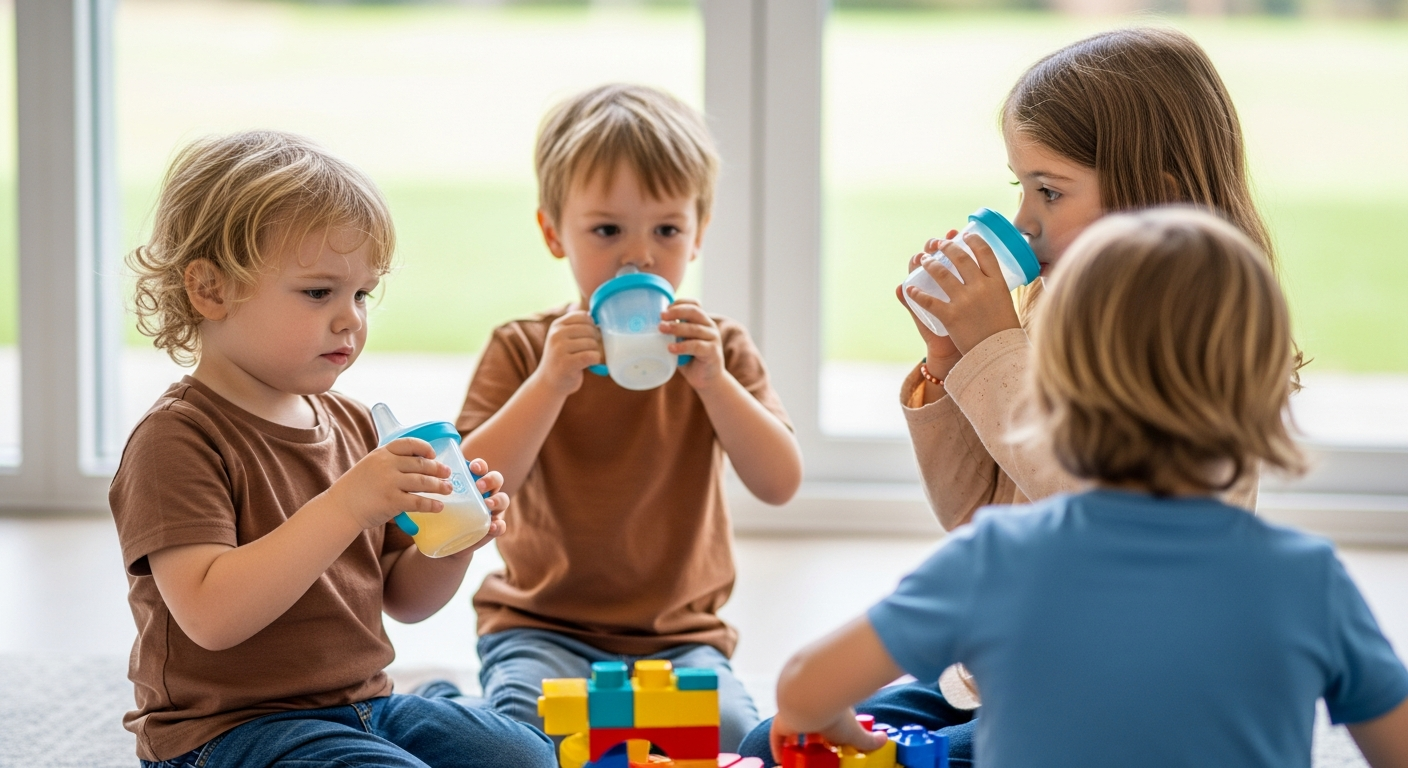
Table of Contents
- Introduction
- The Evolution of Swallowing: From Birth to Toddlerhood
- The Sippy Cup Dilemma: Convenience vs. Development
- How Oral Motor Skills Translate to Clear Speech
- The Straw Cup Advantage
- Practical Transitions: Moving Away from the Spout
- Beyond the Cup: Fostering Communication
- Smart Screen Time: The Speech Blubs Approach
- Understanding the Investment in Your Child's Future
- When to Call an Expert
- Practical Scenarios: Speech Blubs in Action
- Conclusion
- Frequently Asked Questions
Introduction
Did you know that the simple act of choosing a toddler’s cup could potentially influence how clearly they say their first words? It is a question that keeps many parents up at night: do sippy cups delay speech? As you browse the aisles of your local baby store, the "no-spill" promise of a traditional sippy cup seems like a dream come true for your white carpets and sanity. However, behind that convenient hard spout lies a complex interaction of oral muscles that are also responsible for the magic of communication.
At Speech Blubs, we believe in empowering every child to speak their minds and hearts. Our team of experts understands that the journey from the first bottle to the first full sentence is paved with small, daily habits. In this comprehensive guide, we will dive deep into the science of oral motor development, explore the "sippy cup vs. straw" debate, and explain how the way your child drinks can impact their ability to form clear speech sounds. We will also provide practical strategies to support your child's communication journey, including how our unique "smart screen time" experiences can complement your child’s physical development.

While sippy cups are a ubiquitous part of modern parenting, understanding the mechanics of swallowing and speech can help you make informed choices that foster a love for communication and build your child's confidence.
The Evolution of Swallowing: From Birth to Toddlerhood
To understand why speech-language pathologists (SLPs) are often wary of traditional sippy cups, we first have to look at how a human baby learns to swallow. It is a process that changes significantly during the first year of life.
The Suckling Reflex
When babies are born, they possess a "suckling" reflex. This is the instinctive way they nurse or take a bottle. In this stage, the tongue moves in an "anterior-posterior" motion—basically, a rhythmic front-to-back wave. The tongue stays relatively flat and forward in the mouth, often sitting under the nipple to compress it against the roof of the mouth. This is perfectly healthy for an infant, but it is an "immature" pattern of swallowing.
Moving Toward a Mature Swallow
As a child approaches their first birthday, their oral anatomy begins to change. They gain more control over their jaw, lips, and tongue. A "mature" swallow involves the tip of the tongue elevating to touch the "bumpy ridge" behind the top front teeth, known as the alveolar ridge. Instead of pushing forward, the tongue moves in a wave-like motion to propel liquid or food backward toward the throat.
This transition is crucial. If a child continues to use an immature swallowing pattern for too long, it can lead to a "tongue thrust," where the tongue pushes forward against or between the teeth during swallowing and speech. This is where the sippy cup comes into play.
The Sippy Cup Dilemma: Convenience vs. Development
Why is the question "do sippy cups delay speech" so common? It’s because the traditional hard-spouted sippy cup essentially mimics a bottle.
How the Spout Interferes
When a child uses a sippy cup with a hard, protruding spout, that spout sits right where the tongue needs to go. To get liquid out, the child must keep their tongue low and forward, often pushing it against the spout to create the necessary suction. This reinforces the immature "suckling" reflex rather than encouraging the tongue tip to lift toward the roof of the mouth.

The Impact on Muscle Strength
Speech is essentially a fine motor skill for the mouth. Just as a child needs to build hand strength to hold a pencil, they need to build oral muscle strength to talk. Traditional sippy cups don’t ask much of the lips or the cheeks. The child can often bite down on the spout or use their tongue for stability, which means the surrounding muscles aren't getting the "workout" they need to become strong and coordinated.
How Oral Motor Skills Translate to Clear Speech
You might wonder how swallowing a sip of milk relates to saying "Mama" or "Ball." The reality is that the muscles used for eating and drinking are the exact same muscles used for speaking.
The Alveolar Ridge and "T, D, L" Sounds
As we mentioned, a mature swallow requires the tongue tip to hit the alveolar ridge. This is the exact same spot the tongue needs to touch to produce sounds like "T" (as in "Top"), "D" (as in "Dada"), and "L" (as in "Lion"). If a child is habitually resting their tongue low and forward because of a sippy cup spout, they may struggle to find the correct placement for these sounds, leading to a lisp or a "mushy" quality to their speech.
Lip Strength and "M, P, B" Sounds
Think about the sounds "M," "P," and "B." To make these "bilabial" sounds, your lips have to come together firmly. A child who primarily uses a sippy cup may not develop the lip strength (known as "labial seal") required for these early consonant sounds. On the other hand, drinking from a straw or an open cup requires the lips to round and tighten, providing excellent exercise for these muscles.
For a parent whose 3-year-old "late talker" loves animals, practicing these lip-rounding sounds is essential. In the "Animal Kingdom" section of the Speech Blubs app, children can watch their peers make these sounds, providing a fun and motivating way to practice "moo" and "baa" sounds that build that very lip strength. If you're curious about where your child stands, you can take our 3-minute preliminary screener to get a quick assessment and start a free trial.
The Straw Cup Advantage
Many speech-language pathologists recommend skipping the traditional spout cup altogether and moving straight from a bottle or breast to a straw cup or an open cup.
Why Straws are "Smart"
- Tongue Retraction: To suck liquid through a straw, the tongue must pull back into the mouth, which is the opposite of the "tongue thrust" motion encouraged by spouts.
- Lip Seal: A straw requires the child to seal their lips tightly around the tube. This builds the orbicularis oris muscle, which is vital for speech clarity.
- Cheek Strength: The suction required for a straw engages the buccinator muscles in the cheeks, which help keep food and liquid (and air for speech) centered in the mouth.
Tips for Using Straws Correctly
To get the most benefit, the straw shouldn't be too long. If the straw goes halfway back into the child's mouth, they can still "lazy drink" by biting on it or using their tongue for support. Ideally, only about a quarter to a half-inch of the straw should be in the mouth—just enough for the lips to wrap around it. You can even buy "lip blocks" for straws to ensure proper placement.
Practical Transitions: Moving Away from the Spout
Transitioning away from bottles and sippy cups can feel daunting, but it doesn't have to be a battle. Here is a step-by-step approach to making the switch.
Introduce Open Cups Early
Believe it or not, most babies can start practicing with an open cup around 6 months of age with a lot of help. Using a small, shot-glass-sized cup with just a tiny bit of water allows them to feel the rim on their lips and learn the coordination of sipping versus sucking.
The "360" Cup Alternative
If you aren't ready for the mess of a standard open cup, "360-degree" cups are a fantastic bridge. These cups have a lid that allows the child to sip from any side of the rim, but they won't spill when tipped over. They require the child to use their top lip to break the seal, which mimics the mechanics of drinking from a real glass.
Making the Switch Fun
If your child is already attached to their sippy cup, try introducing a "special" straw cup for their favorite drink (like a little bit of juice or a smoothie). Praise them for being a "big kid" and use the transition as a moment for family connection.
Beyond the Cup: Fostering Communication
While physical tools like cups are important, speech development is about much more than just muscles. It’s about the joy of connection and the desire to share thoughts and feelings. Our mission at Speech Blubs is to provide an immediate, effective, and joyful solution for the 1 in 4 children who need speech support.
Our company was born from the personal experiences of our founders, who all grew up with speech problems. They created the tool they wished they had—one that turns speech practice into a game rather than a chore.
The Power of Video Modeling
We use a scientifically-backed method called "video modeling." When children watch videos of other children (their peers) making sounds and saying words, it triggers "mirror neurons" in their brains. This makes them much more likely to try to imitate the sound themselves. It’s a powerful tool for building foundational communication skills while keeping the experience lighthearted and fun.
If you want to see how this works in action, you can Download Speech Blubs on the App Store or get it on Google Play to begin your journey today.
Smart Screen Time: The Speech Blubs Approach
In an age where parents are often told to avoid screens, we offer a different perspective. We provide a screen-free alternative to passive viewing (like watching mindless cartoons) by creating "smart screen time." Our app is designed for adult co-play. It’s not meant to be a digital babysitter; it’s a tool for you and your child to use together.
Scientific Principles Meets Play
Our methodology is rooted in science, but our execution is pure play. We don't overpromise; we don't say your child will be giving public speeches in a month. Instead, we focus on:
- Fostering a love for communication.
- Building confidence in their ability to be understood.
- Reducing the frustration that often comes with speech delays.
- Developing the key foundational skills needed for later academic success.
Our high rating on the MARS (Mobile App Rating Scale) and the thousands of parent success stories we receive are a testament to our commitment to quality. You can learn more about the science behind our method on our dedicated research page.
Understanding the Investment in Your Child's Future
We believe in transparency and providing value to our community. Supporting your child's development is an investment, and we want to make it as accessible as possible.
We offer two main ways to join the Speech Blubs family:
- Monthly Plan: $14.99 per month. This is a great way to test the waters and see how your child responds to our "smart screen time."
- Yearly Plan: $59.99 per year. This is the clear best choice for most families, breaking down to just $4.99 per month (a savings of 66%!).
The Yearly plan isn't just more affordable; it includes exclusive, high-value features that are not available on the monthly plan:
- 7-Day Free Trial: You can explore everything we have to offer completely risk-free for a full week.
- Reading Blubs App: Access to our additional app focused on early literacy and reading skills.
- Early Access: Be the first to try our new updates and features.
- Priority Support: A 24-hour support response time to ensure you always have the help you need.
Ready to get started? Create your account and begin your 7-day free trial today.
When to Call an Expert
While transitioning from a sippy cup to a straw cup is a great proactive step, it is not a replacement for professional medical advice. If you have significant concerns about your child's speech, feeding, or development, we always recommend consulting with a Speech-Language Pathologist (SLP).
Signs to Look For
- Your child is over 12 months and still has a very strong "tongue thrust" while eating.
- Your child is struggling to transition to textured foods.
- You notice persistent mouth breathing.
- Your child is not reaching their speech milestones (e.g., no first words by 15 months).
- Your child's speech is very difficult for even close family members to understand.
An SLP can provide a comprehensive evaluation and create a tailored plan for your child. Speech Blubs is a powerful supplement to professional therapy, providing a way to keep the "homework" fun and engaging between sessions.
Practical Scenarios: Speech Blubs in Action
Let’s look at a relatable scenario. Imagine "Leo," a 2-year-old who has used a hard-spout sippy cup since he was 9 months old. His mom, Sarah, noticed that Leo tends to say "tat" instead of "cat" and often lets his tongue peek out between his teeth.
After reading about the "do sippy cups delay speech" debate, Sarah decides to swap his old cup for a weighted straw trainer cup. To help Leo practice the sounds he's struggling with, she opens the Speech Blubs app and heads to the "Mouth Gym" section. Together, they make funny faces, stick their tongues out, and try to touch their noses. Because Leo sees other kids doing it, he giggles and tries his best. Over the next few weeks, as his tongue muscles get stronger from the straw and he continues to play with the app, Sarah notices he's starting to lift his tongue more often when he speaks. It's a joyful learning moment that builds Leo's confidence one "meow" at a time.
This is the heart of what we do. We take the stress out of development and replace it with connection.
Conclusion
So, do sippy cups delay speech? While they aren't a "guaranteed" cause of speech delay, the scientific consensus among speech experts is that prolonged and frequent use of traditional hard-spouted cups can hinder the development of the mature swallowing and oral motor patterns necessary for clear communication. By prioritizing straw cups and open cups, you are giving your child's mouth the workout it needs to master complex sounds.
Remember, every child's journey is unique. Your role is to provide the environment, the tools, and the encouragement they need to thrive. Whether it's choosing a better cup or incorporating "smart screen time" into your daily routine, every small step makes a difference.
We invite you to join our community and start your journey toward clearer, more confident communication. Our Speech Blubs homepage is full of resources to help you along the way.
Ready to see the difference for yourself? Choose the Yearly plan to unlock your 7-day free trial, the Reading Blubs app, and early access to all our latest features. It is the best value for your child’s development, costing less than a single fancy coffee per month.
Sign up now and start your 7-day free trial!
Frequently Asked Questions
1. At what age should I take away the sippy cup?
Most experts recommend transitioning away from bottles and traditional spouted sippy cups by 12 months of age. By this time, children are developmentally ready to start practicing with straws and open cups, which better support their growing oral motor skills.
2. My child refuses to use a straw. What should I do?
Learning to use a straw is a new skill! You can try a "honey bear" trainer cup where you can gently squeeze the liquid up the straw to help them understand the concept. Alternatively, you can use a "360" cup, which provides the spill-proof benefits of a sippy cup while encouraging the lip movement used with an open glass.
3. Can a sippy cup cause a lisp?
It is possible. If a child habitually uses a hard spout, their tongue may learn to stay low and forward (a tongue thrust). This forward positioning is a primary cause of an "interdental lisp," where the tongue pushes between the teeth during sounds like "S" and "Z."
4. Is Speech Blubs a replacement for speech therapy?
No, Speech Blubs is a powerful supplement to professional therapy, not a replacement. While it is designed with scientific principles and can significantly help build foundational skills and confidence, children with diagnosed delays should always be under the care of a licensed Speech-Language Pathologist.
About the author