
Dyslexia and Speech Delay: Identifying the Signs and Solutions
 By Speech Blubs Team•Mar 12, 2026•14 min.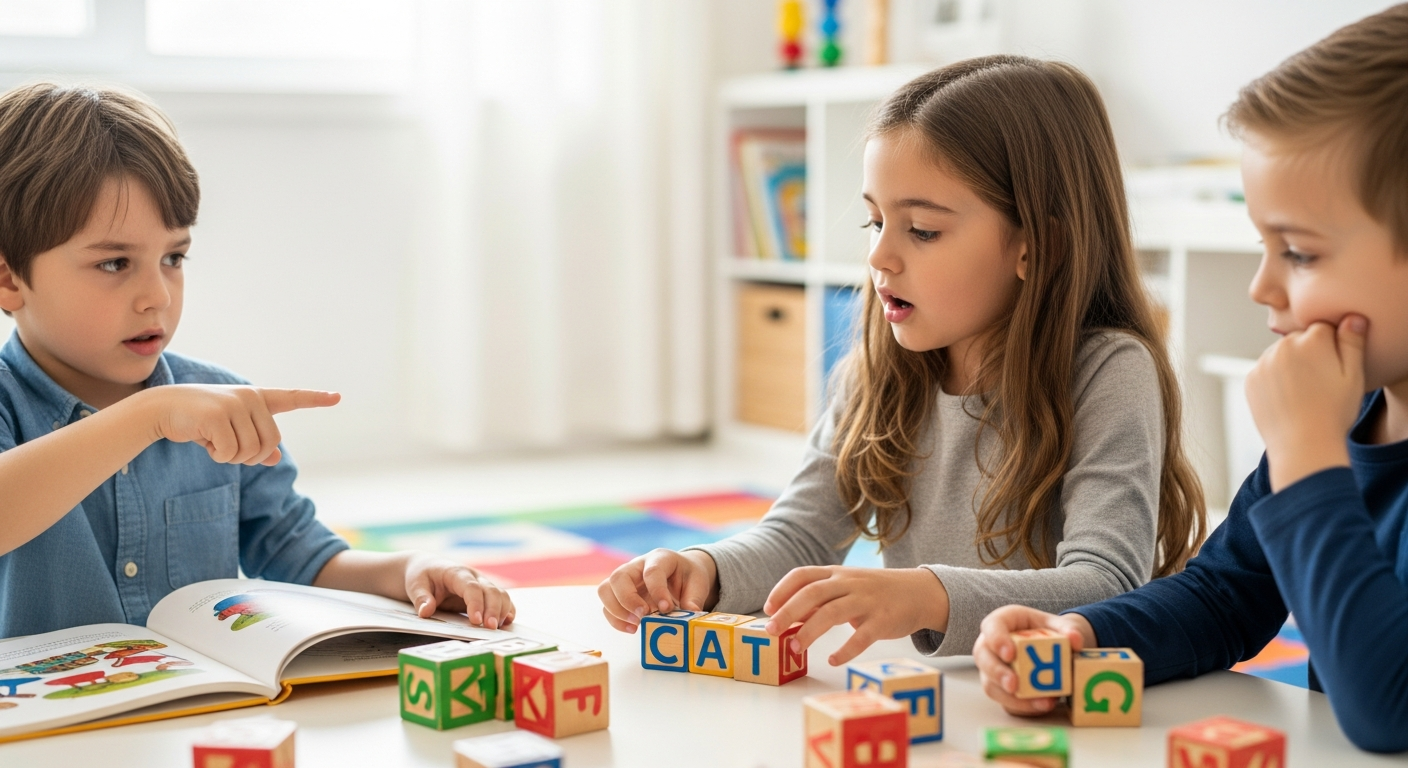
Table of Contents
- Introduction
- Understanding the Connection: Dyslexia as a Language-Based Disorder
- Early Warning Signs: Dyslexia and Speech Delay
- The Role of Phonological Awareness and Memory
- Turning Screen Time into "Smart Screen Time"
- Practical Strategies for Supporting Your Child at Home
- Setting Realistic Expectations
- The Financial Value of Investing in Your Child's Future
- Navigating the Path to Literacy
- Frequently Asked Questions (FAQ)
- Conclusion
Introduction
Did you know that approximately 1 in 4 children will face a challenge with their speech or language development at some point during their early years? For many parents, the journey begins with a simple observation: a child who isn’t quite hitting their talking milestones as quickly as their peers. While every child grows at their own pace, a persistent delay in speech can sometimes be an early indicator of other language-based learning differences, most notably dyslexia.
At Speech Blubs, our mission is to empower every child to "speak their minds and hearts." This goal is deeply personal to us. Our founders all grew up with various speech problems and created the tool they wished they had—a bridge between the frustration of not being understood and the joy of confident communication. We understand the worry that comes when a child struggles to find their words, and we are here to provide a joyful, effective, and science-backed solution.

In this post, we will explore the intricate connection between dyslexia and speech delay. We will dive into why these two often go hand-in-hand, how to identify the early warning signs in your little one, and practical strategies you can use at home to support their growth. We will also discuss how our unique approach to "smart screen time" can turn a challenging journey into an opportunity for family connection and playful learning. By the end of this article, you will have a clearer understanding of how to support your child’s communication journey and why early intervention is the most powerful tool in your parenting toolkit.
Understanding the Connection: Dyslexia as a Language-Based Disorder
When most people hear the word "dyslexia," they immediately think of reading or writing. They might picture a child flipping letters or struggling to decode a sentence in a book. While reading difficulties are the hallmark of dyslexia, the roots of the condition actually lie much deeper in the way the brain processes sounds.
Dyslexia is fundamentally a language-based learning difference. It primarily affects the brain's ability to recognize and manipulate "phonemes"—the smallest units of sound that make up words. For example, to say the word "cat," a child’s brain must be able to segment the sounds /k/, /a/, and /t/. If a child has difficulty breaking words down into these components, they will likely struggle with both spoken and written language.
Because the same neural pathways used for reading are used for speaking, it is very common for children with dyslexia to experience early speech delays. If a child's brain takes longer to process the sounds they hear, it will naturally take them longer to produce those sounds themselves. This is why many "late talkers" eventually receive a dyslexia diagnosis once they reach school age. At Speech Blubs, we focus on these foundational sound-building skills to help children bridge the gap between hearing a sound and saying it out loud.
Early Warning Signs: Dyslexia and Speech Delay
Identifying the signs of dyslexia and speech delay early on can make a world of difference. While a diagnosis usually doesn't happen until a child is in school, there are "clues" that parents can watch for as early as age one or two.

1. Late Onset of Speech
Most children produce their first words between 9 and 18 months. If your child has not reached this milestone by 15 months, or isn't putting simple phrases together by age two, they may have a higher risk of developing dyslexia later on. It’s important to remember that not all late talkers are dyslexic, but speech delay is a primary signal to pay close attention to their language development.
2. Difficulty with Rhyming and Word Play
Does your child struggle to recognize that "bat" rhymes with "cat"? Phonological awareness—the ability to hear and play with sounds—is often limited in children with dyslexia. They might find nursery rhymes confusing or lose interest in songs that involve changing sounds (like "The Name Game" or "Apples and Bananas").
3. Mispronouncing Familiar Words
Many children use "baby talk," but children with dyslexia may continue to muddle sounds well into their preschool years. You might hear them say "flutterby" instead of "butterfly" or "sgabetti" instead of "spaghetti." They may also struggle with multi-syllabic words, finding it hard to sequence the sounds correctly.
4. Word Recall Challenges
Have you ever seen your child struggle to find a word that they clearly know? This is known as the "tip-of-the-tongue" phenomenon. A child might call a "lampost" a "lampshade" or simply stall in the middle of a sentence because they can't retrieve the specific noun they need. This can lead to frustration and a decrease in their confidence to speak in social settings.
If you are noticing these patterns, you don't have to wait and wonder. You can take our quick 3-minute preliminary screener, which involves 9 simple questions to help you get an assessment and a next-steps plan for your child’s development.
The Role of Phonological Awareness and Memory
To understand why dyslexia and speech delay are linked, we have to look at how the brain stores and retrieves information. Two key concepts here are phonological awareness and the "phonological loop."
Phonological Awareness
As mentioned, this is the ability to hear and manipulate sounds. For a child with dyslexia, the boundaries between sounds can feel "fuzzy." If they can't clearly distinguish the difference between a "b" sound and a "p" sound, it becomes incredibly difficult to reproduce those sounds correctly in speech or recognize them when learning to read.
The Phonological Loop
This is a component of our short-term memory that acts like a "sound-bite" recorder. It allows us to hold onto a string of sounds long enough to understand them or repeat them. For example, when you tell a child, "Put the toys in the box and then put the box on the shelf," they use their phonological loop to hold that instruction. Children with dyslexia often have a reduced capacity for this, making it hard to follow multi-step directions or repeat new, complex words.
This is where the video modeling methodology of Speech Blubs comes into play. By watching other children (peers) pronounce sounds and words on screen, your child is stimulated by "mirror neurons." This scientific principle suggests that watching an action makes the brain react as if the child is performing the action themselves, which helps strengthen these sound-processing pathways.
Turning Screen Time into "Smart Screen Time"
In a world full of passive cartoons and mindless scrolling, many parents are understandably wary of screen time. However, there is a significant difference between passive viewing and "smart screen time." At Speech Blubs, we’ve designed an experience that is active, educational, and, most importantly, joyful.
Instead of your child sitting silently while a character on screen does all the work, our app encourages them to be the protagonist. Through our peer-led video modeling, children see other kids their age making faces, practicing mouth exercises, and sounding out words. This creates a powerful social connection and removes the pressure often felt in traditional therapy settings.
For a parent whose 3-year-old "late talker" loves animals, the "Animal Kingdom" section of the app offers a fun, motivating way to practice "moo" and "baa" sounds. The child sees a peer making the sound, receives a fun digital "sticker" or effect (like a lion’s mane appearing on their own face via the camera), and is motivated to imitate. This turns a potentially frustrating learning moment into a game.
Ready to see the difference for yourself? You can download Speech Blubs on the App Store or Google Play to begin your journey.
Practical Strategies for Supporting Your Child at Home
While professional support from a Speech-Language Pathologist (SLP) is invaluable, the most consistent support your child receives happens within the walls of your home. Here are some evidence-based strategies to help a child dealing with dyslexia and speech delay:
1. Shadow Reading
When reading a book together, read a line aloud and then have your child "shadow" you by repeating it. This helps reinforce vocabulary and gives them a safe space to practice pronunciation without the pressure of decoding the letters themselves.
2. Multisensory Learning
Engagement is higher when more senses are involved. If you are practicing the letter "S," have your child draw an "S" in a tray of sand or make the shape out of playdough while making the "sss" sound. This helps "anchor" the sound in their memory through touch and sight.
3. Use Filler Phrases
For children who struggle with word recall, provide them with "filler phrases" like, "I’m thinking of the word..." or "It’s that thing that..." This buys them time to process the information without feeling the anxiety of silence, which can often lead to further speech blockages.
4. Focused Drill Play
Repetition is the key to mastery for a dyslexic brain. Use high-frequency words and drill them in a fun way. You can use image-based flashcards or the targeted sections within Speech Blubs to repeat sounds until they become automatic. Many parents have shared their success stories on our testimonials page, noting how consistent, playful practice helped their children find their voices.
Setting Realistic Expectations
It is important for parents to understand that there is no "quick fix" for dyslexia or speech delay. These are lifelong differences in how the brain processes information. Our goal is not to "cure" these differences, but to provide children with the tools, confidence, and strategies they need to thrive.
Progress may feel slow at times. There will be "good days" and "bad days" for no apparent reason. One day your child might perfectly articulate a new word, and the next day, they might struggle with a basic sound. This is normal. By focusing on fostering a love for communication and reducing the frustration associated with speech, we build the foundational skills necessary for later academic success.
Speech Blubs is a powerful supplement to your child's overall development plan. Whether used alongside professional therapy or as a primary tool for early support, it provides a joyful way for families to connect through learning. We encourage parents to engage in "co-play"—sitting with your child while they use the app, mimicking the sounds together, and celebrating every small victory.
The Financial Value of Investing in Your Child's Future
We believe that high-quality speech support should be accessible and transparent. When you choose to support your child's journey with us, we want you to have the best possible experience and value.
We offer two main ways to access the full suite of Speech Blubs features:
- Monthly Subscription: $14.99 per month. This is a great way to test the waters and see how your child responds to the video modeling approach.
- Yearly Subscription: $59.99 per year. This is our most popular option because it breaks down to just $4.99 per month, offering a massive 66% saving compared to the monthly rate.
Why the Yearly Plan is the Best Choice: The Yearly plan isn't just about the lower price; it is designed to provide a comprehensive support system for your child. When you choose the Yearly plan, you receive:
- A 7-day free trial to explore all the content without commitment.
- Access to the Reading Blubs app, which is specifically designed to help children transition from spoken language to reading skills—a critical step for children at risk for dyslexia.
- Early access to all new updates and content releases.
- Priority 24-hour support response time from our dedicated team.
The Monthly plan does not include the 7-day free trial or the Reading Blubs app, making the Yearly plan the clear winner for families looking for a long-term solution. You can create your account and start your 7-day free trial today to see the benefits first-hand.
Navigating the Path to Literacy
The bridge between speech and reading is built on phonological awareness. If a child can't hear the sounds in a word, they will struggle to map those sounds onto letters. This is why addressing speech delay early is one of the best ways to prepare a child for the challenges of dyslexia in school.
When a child starts to read, they must "decode" words by associating sounds with letters. For a dyslexic child, this process is exhausting. By using tools that strengthen their oral language and sound recognition early on, we are essentially "pre-teaching" the skills they will need for literacy.
Our approach helps children build a rich "mental lexicon"—a library of words they understand and can produce. The larger this library is, the easier it will be for them to recognize those words when they see them in print. This is why we focus on high-frequency vocabulary and real-world concepts that children encounter every day.
Frequently Asked Questions (FAQ)
1. Does a speech delay always mean my child has dyslexia?
No, not necessarily. While many children with dyslexia have a history of speech delay, there are many other reasons a child might be a "late talker." Speech delay can also be associated with other conditions like autism, hearing issues, or simply a slower developmental pace. However, it is an important "red flag" that warrants closer monitoring of their language development.
2. Can Speech Blubs replace traditional speech therapy?
Speech Blubs is a powerful tool designed to supplement and enhance a child's development. It is an effective solution for early support and a great way to practice between therapy sessions. However, for children with significant delays or diagnosed conditions, it should be used as part of a comprehensive plan that includes consultation with a licensed Speech-Language Pathologist.
3. How long should my child use the app each day?
We recommend short, consistent bursts of "smart screen time." About 10 to 15 minutes a day of active co-play is usually more effective than long, passive sessions. The goal is to keep the experience joyful and engaging rather than making it feel like "work."
4. What is "video modeling" and why is it effective for dyslexia?
Video modeling is a teaching method where children learn by observing others perform a task. In Speech Blubs, children watch their peers pronounce sounds and words. This is effective because children are naturally motivated by other children. Scientifically, this engages "mirror neurons" in the brain, helping children with dyslexia better process and imitate the sounds of language.
Conclusion
Navigating the world of dyslexia and speech delay can feel overwhelming, but you are not alone on this journey. Understanding that these challenges are rooted in language processing is the first step toward providing the right support. By identifying the signs early—such as late talking, difficulty with rhyming, or word recall struggles—you can intervene during the most critical years of brain development.
At Speech Blubs, we are committed to making that intervention a joyful and bonding experience for your family. Our peer-led video modeling approach, backed by scientific principles and inspired by personal experience, offers a unique way for your child to find their voice and build the confidence they need to succeed. We focus on the process of learning, fostering a love for communication, and creating those precious "aha!" moments that every parent lives for.
Your child’s potential is limitless, and with the right tools, they can overcome the hurdles of speech and literacy. Don't wait to give them the support they deserve. Download Speech Blubs today on the App Store or Google Play and begin your 7-day free trial. Remember to select the Yearly plan to unlock the best value, including early updates, the Reading Blubs app, and the full suite of "smart screen time" experiences designed to help your child speak their mind and heart.
About the author