
Effective Homeschool Curriculum for Speech Delay Ideas
 By Speech Blubs Team•Mar 9, 2026•14 min.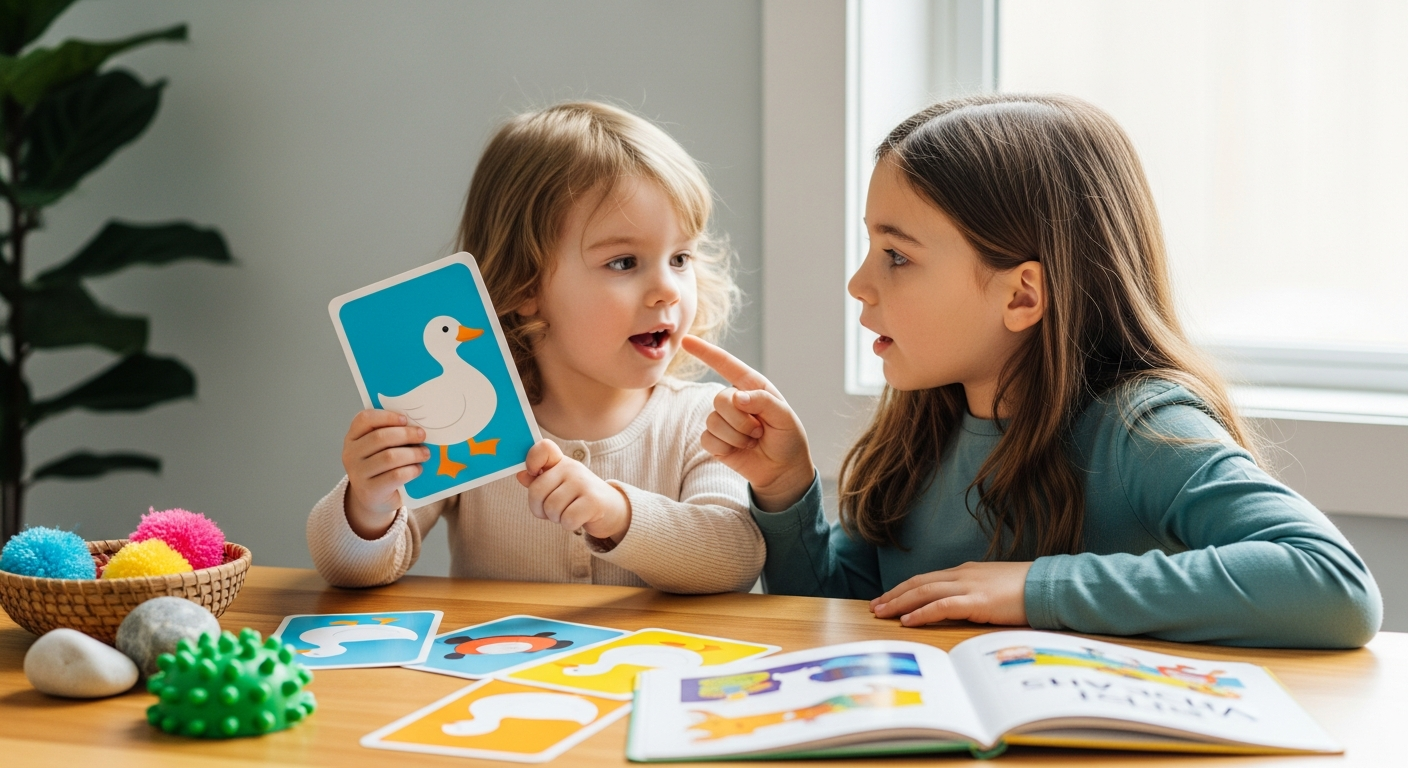
Table of Contents
- Introduction
- Understanding the Need for a Tailored Approach
- Building Your Homeschool Curriculum for Speech Delay
- Practical Activities for Home Instruction
- Why Speech Blubs is a Game-Changer for Homeschoolers
- Choosing the Right Plan for Your Family
- Integrating Technology Safely and Effectively
- Supporting Your Child's Social Growth
- Monitoring Progress and Staying Encouraged
- The Role of Oral Motor Skills
- Frequently Asked Questions
- Conclusion
Introduction
Did you know that approximately 1 in 4 children will face some form of speech or language challenge during their early development? For many parents, realizing their child is struggling to communicate can be a heartbreaking experience. You might notice your little one shying away from social interactions at the park, or perhaps you see the visible frustration in their eyes when they have a thought "on the tip of their tongue" but can’t quite find the words to express it. These moments are exactly why we do what we do. At Speech Blubs, our mission is to empower children to speak their minds and hearts. We understand these challenges intimately because our founders all grew up with speech problems themselves. They created the tool they wished they had—a joyful, effective solution that turns "screen time" into "smart screen time."

Choosing a homeschool curriculum for speech delay is a deeply personal journey. It requires a blend of patience, scientific methodology, and a lot of play. In this post, we will explore how to build a language-rich homeschooling environment, how to identify specific areas where your child needs support, and how to integrate evidence-based tools like video modeling into your daily routine. We will cover practical activities you can start today, the importance of fostering confidence over perfection, and how to use modern technology as a supplement to professional therapy. Our goal is to provide you with a clear roadmap so you can move from frustration to connection, creating joyful family learning moments along the way.
Understanding the Need for a Tailored Approach
When a child struggles with speech and language, it affects every facet of their life, not just their "schoolwork." In a traditional classroom, a child with a speech delay might feel pressured to keep up with peers, leading to anxiety and withdrawal. This is where homeschooling becomes a powerful advantage. You have the unique opportunity to create a safe, low-pressure environment where your child feels secure enough to take risks with their vocalizations.
Putting a Name on the Challenge
The first step in any successful homeschool curriculum for speech delay is observation. You might notice that your child isn't answering questions with the same detail as their siblings did at the same age, or they might avoid certain sounds entirely. One common scenario involves a child who is tired of repeating themselves because people don't understand them. This frustration can lead to a "shut down" where the child stops trying to communicate with strangers or even family members.
Acknowledging the problem is not about labeling your child as "behind." It is about identifying the specific hurdles so you can jump over them together. If you are unsure where to start, we recommend taking our quick 3-minute preliminary screener. It involves 9 simple questions and provides an assessment and a next-steps plan to help you tailor your homeschooling efforts.

The Emotional Aspect of Speech Delays
It is vital to remember that children who struggle with language are often acutely aware of their difficulty. They may feel "stupid" or anxious when put on the spot. As their parent and teacher, your most important job is to build their confidence. When you get frustrated, it can exasperate the problem. Instead, explain new words with a smile and celebrate every "approximation"—those sounds that are almost right but not quite there yet. The more open and safe your student feels, the easier it will be to move forward.
Building Your Homeschool Curriculum for Speech Delay
A robust curriculum doesn't have to be a stack of expensive textbooks. In fact, for speech delay, the best "curriculum" is often rooted in multisensory play and daily interaction. Here are the core components you should look for:
1. Multi-Sensory Instruction
Children with speech delays often benefit from engaging multiple senses at once. This means seeing a word, hearing it, touching an object associated with it, and moving their bodies while saying it. For example, if you are teaching the word "jump," have your child jump while shouting the word. This physical reinforcement helps the brain make stronger connections.
2. Peer Video Modeling
One of the most scientifically backed methods for helping children with speech delays is video modeling. Our scientific methodology is centered on this principle. Research shows that children are more motivated to imitate their peers than adults. When a child sees another child on a screen making a "b" sound or saying "apple," their mirror neurons fire, making them much more likely to attempt the sound themselves. This peer-to-peer connection reduces the "teacher-student" pressure and turns learning into a social, imitative game.
3. Visual Schedules and Prompts
Visual aids are a lifesaver in a homeschool setting. Using picture cards or language prompts helps bridge the gap when a child can't find the right word. You might have a jar of "language prompts" where the child pulls out a card and describes what they see. This encourages them to speak clearly and loudly in a fun, game-like setting.
Practical Activities for Home Instruction
Integrating speech therapy into your daily life makes the learning feel natural rather than like a chore. Here are some activities that can be seamlessly added to your homeschool curriculum for speech delay:
The "What’s in the Bag?" Game
This is a simple yet incredibly effective vocabulary builder. Put a household item—like a whisk, a toy car, or a soft brush—into a secret bag. Have your child pull it out and ask them questions:
- What is the name of this item?
- What is it used for?
- How does it feel? (Use adjectives like "scratchy" or "smooth").
- Where does this item live in our house?
If your child doesn’t know the name, tell them, and then ask them to go put it in a specific place (e.g., "Put the whisk on the bottom shelf of the pantry"). This works on both expressive language (speaking) and receptive language (understanding directions).
Sensory Bin "Search and Say"
Create a sensory bin filled with rice, beans, or kinetic sand. Hide small toys inside that represent specific sounds you are working on. For a parent whose 3-year-old "late talker" loves animals, hiding plastic farm animals is a great way to practice. As the child finds the cow, you can practice the "moo" sound together. This turns a speech exercise into a treasure hunt.
Mirror Play
Sit in front of a mirror with your child and make silly faces. Work on blowing bubbles, sticking out your tongues, or making exaggerated "O" and "E" shapes with your mouths. This helps the child become aware of their "speech helpers"—their lips, tongue, and teeth—and how they move to create different sounds.
Why Speech Blubs is a Game-Changer for Homeschoolers
We designed Speech Blubs to be a powerful supplement to your child's overall development plan. It is not a passive viewing experience like watching cartoons; it is an interactive "smart screen time" tool designed to foster family connection.
Video Modeling and Mirror Neurons
Our app utilizes over 1,500 activities based on video modeling. When your child uses the app, they see real children performing speech exercises. This triggers mirror neurons in your child’s brain, encouraging them to mimic the facial movements and sounds they see. It is a joyful, low-stress way to practice foundational communication skills. You can see how this has worked for thousands of families by reading our testimonials.
Fostering Confidence, Not Just Correctness
Our focus isn't on creating perfect speakers overnight. We focus on building the confidence that allows a child to want to communicate. By reducing the frustration associated with speech, we help children find the joy in sharing their thoughts. Whether your child is working on early sounds, expanding their vocabulary, or learning to follow multi-step directions, the app provides a structured yet playful path forward.
Choosing the Right Plan for Your Family
We believe in transparency and providing the best possible value for homeschooling families. We offer two main ways to access our comprehensive library of speech-building tools:
- Monthly Plan: For $14.99 per month, you get full access to the Speech Blubs app and its library of 1,500+ activities.
- Yearly Plan: For $59.99 per year (which breaks down to just $4.99/month), you receive the best value and several exclusive benefits.
We highly recommend the Yearly plan for homeschoolers because it includes:
- A 7-day free trial to ensure it’s the right fit for your child.
- The Reading Blubs app, which helps transition speech skills into early literacy.
- Early access to new updates and a 24-hour support response time.
The Monthly plan does not include the free trial or the extra Reading Blubs app, making the Yearly plan the clear choice for families looking for a comprehensive, long-term homeschool curriculum for speech delay. You can start your journey by signing up on our web page or downloading the app directly.
Integrating Technology Safely and Effectively
One of the biggest concerns for homeschooling parents is the amount of "screen time" their children receive. At Speech Blubs, we advocate for "co-play." This means that instead of handing the tablet to your child and walking away, you sit with them.
The Power of Co-Play
When the app asks your child to say "Lion," and they make a roaring sound, you should roar too! High-five them when they try a difficult sound. Use the app as a springboard for real-world conversation. If you just finished the "Yummy Time" section in the app, head to the kitchen and talk about the real fruits and vegetables you have in the fridge. This transition from digital to physical is where the real magic happens.
Creating a Routine
Consistency is key in any homeschool curriculum for speech delay. We suggest setting aside 15 to 20 minutes a day for dedicated speech practice. Because our activities are bite-sized and fun, they don't feel like a heavy lesson. This consistency helps build the neural pathways necessary for speech development without overwhelming the child.
Supporting Your Child's Social Growth
Speech delay can often impact a child’s ability to develop social skills. If a child can’t express their needs, they might resort to pushing or grabbing in a group setting. Your homeschooling curriculum should include "Social Stories" and role-playing.
Role-Playing Social Scenarios
Use stuffed animals to act out common social situations, like asking a friend for a toy or saying "hello" to a neighbor. Practice the specific words your child might need in these moments. This rehearsal gives them a "script" to follow, which can significantly reduce social anxiety.
Group Activities
While homeschooling provides a great one-on-one environment, it’s also important to gradually introduce structured group activities. Local library story times or homeschool co-ops provide excellent opportunities for your child to practice their emerging speech skills in a controlled, supportive social setting.
Monitoring Progress and Staying Encouraged
One of the challenges of homeschooling is wondering, "Is this working?" It’s important to set realistic expectations. You might not see public speaking skills in a month, but you might notice your child using more eye contact, showing less frustration during transitions, or attempting a new "s" sound they used to avoid.
Tracking Milestones
Keep a simple journal of "Speech Wins." Note when your child uses a new word spontaneously or when they successfully follow a direction without needing it repeated. These small victories add up to big progress over time. If you feel like your child has hit a plateau, it might be time to revisit our resources or consult with a professional speech-language pathologist (SLP). We always frame our app as a powerful supplement to—not a total replacement for—professional therapy when needed.
Using the Preliminary Screener Regularly
Our screener isn't just for the beginning of your journey. You can use it periodically to see how your child’s needs are evolving. As they master early sounds, their "next steps" will shift toward more complex communication tasks like storytelling and social nuances.
The Role of Oral Motor Skills
Sometimes, a speech delay is linked to the physical strength and coordination of the muscles used for speaking. You can incorporate "mouth exercises" into your homeschool day that feel like play:
- Straw Games: Use a straw to blow a pom-pom across the table.
- Whistle Play: Blowing toy whistles helps build breath control.
- Licking Exercises: Putting a tiny bit of peanut butter or jam on the corners of the child’s lips and asking them to lick it off helps with tongue coordination.
These physical activities support the work your child is doing in the Speech Blubs app, ensuring that their muscles are as ready to speak as their minds are.
Frequently Asked Questions
1. Can I really homeschool a child with a speech delay without being a specialist?
Yes! While you aren't a speech-language pathologist, you are the world's leading expert on your own child. By using evidence-based tools like Speech Blubs and following a structured, language-rich routine, you can make significant strides in your child’s communication skills. Your one-on-one attention and emotional support are things a classroom teacher simply cannot provide at the same level.
2. How much time should we spend on speech activities each day?
Consistency is more important than duration. Aim for 15–20 minutes of dedicated "speech time" using the app or specific games, but try to weave language-building into your entire day. Talk about what you're doing while you cook, describe the colors you see on a walk, and read together every night.
3. Is the Yearly plan really worth it over the Monthly plan?
We believe so. The Yearly plan at $59.99 (which is $4.99/month) is 66% cheaper than the monthly option. More importantly, it includes the 7-day free trial, the Reading Blubs app, and early access to updates. For a homeschooling family, having the extra literacy support of Reading Blubs is a massive advantage as speech and reading are closely linked.
4. What if my child gets frustrated with the app?
Frustration is a natural part of learning. If your child is struggling, go back to a section they've already mastered—like "Early Sounds" or "Animal Kingdom"—to build their confidence back up. Remember to use the app together; your encouragement and participation make all the difference in turning a challenge into a joyful achievement.
Conclusion
Creating a homeschool curriculum for speech delay is about more than just teaching words; it's about giving your child the tools to connect with the world around them. By focusing on a multisensory approach, utilizing the power of peer video modeling, and maintaining a patient, encouraging atmosphere, you are setting the stage for lifelong communication success. Remember that every child's journey is unique, and progress often comes in waves.
At Speech Blubs, we are honored to be a part of your homeschooling journey. We invite you to join our community of families who are seeing their children find their voices every single day. Whether you are just starting to notice a delay or you are looking for new ways to support your child's progress, we are here to help.
Ready to see the difference for yourself? You can download Speech Blubs on the App Store or get it on the Google Play Store to begin your 7-day free trial. We highly recommend choosing the Yearly plan to unlock the full suite of features, including Reading Blubs and priority support, for the best possible value. Let’s work together to help your child speak their mind and heart!
About the author