
Effective Speech Language Delay Therapy for Toddlers
 By Speech Blubs Team•Mar 9, 2026•13 min.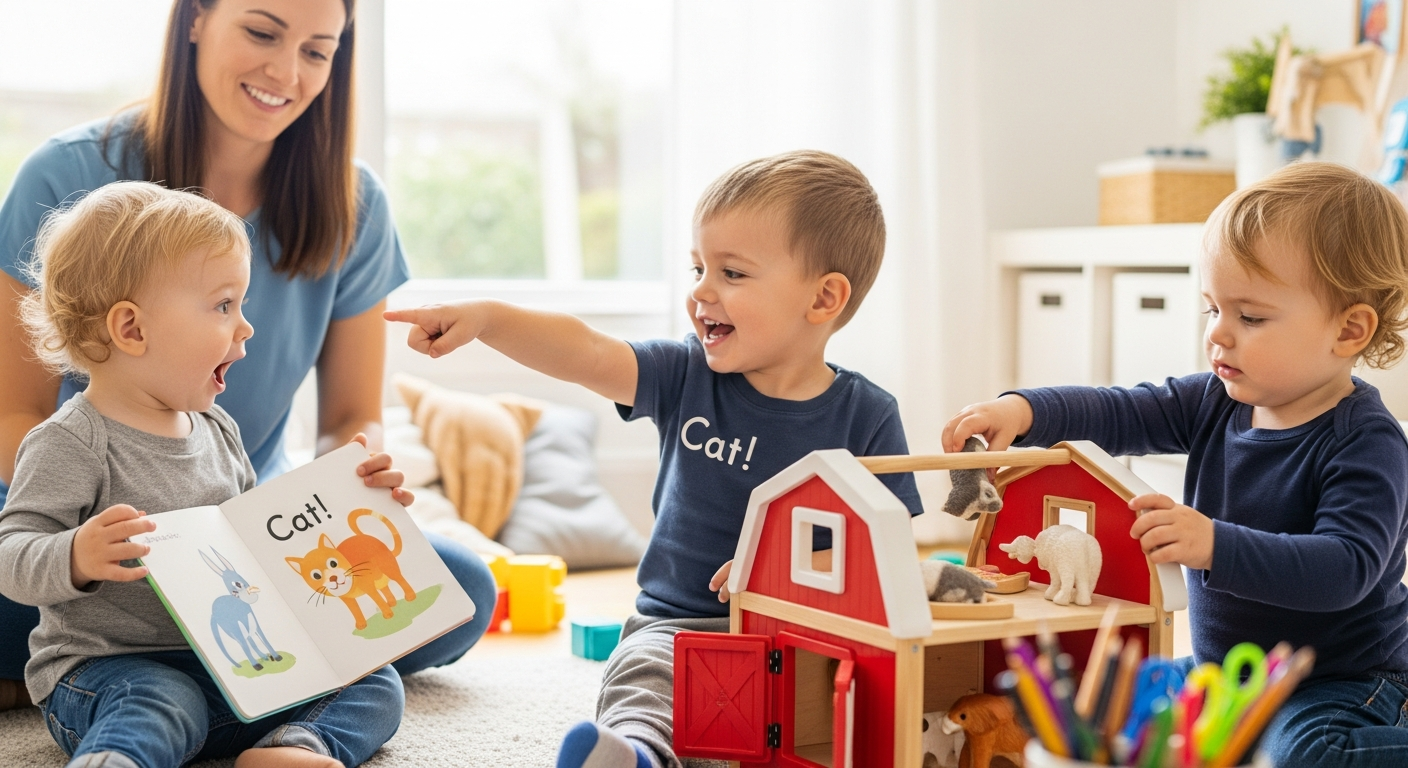
Table of Contents
- Introduction
- Understanding the Basics: Speech vs. Language
- Developmental Milestones: Is Your Toddler on Track?
- Identifying Red Flags: When to Seek Help
- The Science of Progress: Why Our Methodology Works
- Play-Based Therapy Techniques to Try at Home
- Navigating the Professional Path: SLPs and Audiologists
- Turning Daily Routines into Learning Opportunities
- Realistic Expectations: Celebrating Every Small Win
- Choosing the Right Path: Value and Commitment
- Conclusion
- Frequently Asked Questions
Introduction
Imagine sitting at a playgroup, watching other two-year-olds chatter about their juice boxes and toy trucks while your little one remains quiet, perhaps pointing or tugging at your sleeve to communicate their needs. You might find yourself wondering, "Is this just a phase, or should I be doing more?" If you are feeling a mix of concern and uncertainty, you are far from alone. Statistics suggest that nearly 1 in 4 children will face some form of speech or language challenge during their early development.
At Speech Blubs, we understand this journey intimately. Our founders all grew up with speech problems themselves and created the very tool they wished they had as children. Our mission is to empower every child to speak their minds and hearts, turning the frustration of a "late talker" into the joy of a confident communicator.

In this post, we will explore the nuances of speech language delay therapy for toddlers, breaking down the milestones you should look for, the red flags that warrant attention, and practical, play-based strategies you can start using today. Our goal is to provide you with an empathetic roadmap that blends scientific principles with the magic of play, ensuring your child’s developmental journey is as joyful as it is effective.
Understanding the Basics: Speech vs. Language
Before diving into therapy techniques, it is essential to understand exactly what we are addressing. While often used interchangeably, "speech" and "language" refer to two distinct parts of communication.
What is Speech?
Speech is the physical act of producing sounds. It involves coordination between the tongue, lips, jaw, and vocal tract to articulate specific sounds and words. A child with a speech delay might understand everything you say and have a vast internal vocabulary but struggle to physically form the words clearly enough for others to understand.
What is Language?
Language is the system of symbols—words, signs, or gestures—that we use to share information. It is divided into two categories:
- Receptive Language: The ability to understand what others are saying. This includes following directions, pointing to body parts when asked, and understanding "no."
- Expressive Language: The ability to convey messages to others. This includes naming objects, putting words together into phrases, and using gestures to ask for help.
A child might have a language delay if they can pronounce words clearly but only use a handful of them, or if they struggle to put two words together to form a basic request like "more milk."
Developmental Milestones: Is Your Toddler on Track?
Children develop at their own pace, but there are general guidelines that help us identify when a little extra support might be needed. Recognizing these milestones is the first step in effective speech language delay therapy for toddlers.
By 12 Months
At one year old, most babies are becoming social communicators. They should be responding to their names, waving "bye-bye," and using simple gestures like pointing. You should hear a variety of babbling that sounds like "conversation," and they should likely have their first specific word, such as "Mama" or "Dada."

By 18 Months
This is a period of rapid growth. An 18-month-old should typically follow simple, one-step directions (like "get your shoes") and have a vocabulary of at least 3 to 10 words. They should also be imitating sounds and words they hear from you.
By 24 Months
By the second birthday, a "word spurt" often occurs. Most toddlers can say between 50 and 100 words and begin to join two words together, such as "Daddy go" or "All gone." At this age, caregivers should be able to understand about half of what the child says.
By 36 Months (3 Years)
By age three, your child’s speech should be mostly intelligible to strangers. They should be using three-word sentences and asking "who, what, where" questions. Their vocabulary should have expanded to hundreds of words.
If you are unsure where your child stands, we offer a quick 3-minute preliminary screener consisting of 9 simple questions. It provides an immediate assessment and a personalized next-steps plan to give you peace of mind.
Identifying Red Flags: When to Seek Help
While the "wait and see" approach is common advice from well-meaning relatives, experts in the field emphasize that early intervention is the gold standard for success. Here are specific red flags that suggest you should consult a professional or start a more structured therapy plan:
- No Pointing or Gesturing: If your child isn't using gestures to communicate by 12 months.
- Preference for Gestures Over Sounds: If your 18-month-old prefers to pull you toward an object rather than making a vocal attempt.
- Lack of Imitation: If your toddler does not try to copy your sounds or actions.
- Limited Vocabulary: Having fewer than 50 words by age two.
- Loss of Skills: If a child stops using words or social skills they previously had, this requires immediate medical consultation.
- Hypernasality or Unusual Tone: If the voice sounds very raspy or like they are speaking through their nose constantly.
If these signs resonate with you, it is time to move from observation to action.
The Science of Progress: Why Our Methodology Works
At Speech Blubs, we don't just provide "screen time"—we provide "smart screen time." Our approach is rooted in the proven scientific methodology of video modeling.
Research shows that children are highly motivated to learn by watching their peers. When a toddler sees another child on a screen making a "moo" sound or saying "apple," their mirror neurons—specialized brain cells—fire in a way that mimics the action they are seeing. This makes them significantly more likely to attempt the sound themselves compared to watching an adult or a cartoon character.
Our app acts as a powerful supplement to professional therapy, focusing on building the foundational skills of imitation and confidence. We believe that communication should be joyful, not a chore. By transforming therapy into a series of engaging "Blubs," we help reduce the frustration that often accompanies speech delays. You can learn more about the evidence behind our approach on our research page, where we detail why we are rated so highly on the MARS scale for educational apps.
Play-Based Therapy Techniques to Try at Home
Effective speech language delay therapy for toddlers doesn't have to happen in a clinical setting. In fact, the most profound progress often happens right in your living room. Here are several techniques you can implement today:
1. The "Pause and Wait" Method
Often, as parents, we are so tuned in to our children's needs that we anticipate them before they even speak. If your child wants a snack, wait a few seconds before giving it to them. Look at them expectantly. This "communication temptation" creates a space where they feel the need to use a sound, a gesture, or a word to get what they want.
2. Parallel Talk and Self-Talk
Narrate your day like a sportscaster.
- Self-talk: "Mommy is washing the apple. Scrub, scrub, scrub. Now the apple is clean!"
- Parallel talk: "You are building a big tower. Up, up, up! Oh no, the tower fell down!" This constant stream of simple, clear language helps your toddler map words to actions without the pressure of having to "perform."
3. Using Motivating Themes
For a parent whose 3-year-old "late talker" loves animals, the "Animal Kingdom" section of our app offers a fun, motivating way to practice "moo" and "baa" sounds. When a child is genuinely interested in the subject, their desire to communicate naturally increases. You can mirror this at home by playing with toy farm animals and exaggerating the sounds they make.
4. Expansion and Extension
If your child says a single word, like "Car," expand it into a short phrase: "Yes, big car!" If they say "Blue car," extend it with more information: "Blue car is fast!" This shows them how to take the next step in language complexity.
To see these techniques in action and begin your journey, you can download Speech Blubs on the App Store or find us on Google Play.
Navigating the Professional Path: SLPs and Audiologists
While home-based activities are vital, they often work best in tandem with professional guidance.
The Speech-Language Pathologist (SLP)
An SLP is a trained professional who can diagnose the specific root of a delay. They will assess your child's receptive and expressive language, their oral-motor skills (how the mouth muscles move), and their social-pragmatic skills.
The Importance of a Hearing Test
Sometimes, a speech delay is actually a hearing issue. Chronic ear infections can cause "muffled" hearing, making it difficult for a toddler to hear the subtle differences between sounds like "p" and "b." An audiologist can perform a quick, non-invasive test to ensure your child’s "equipment" is working correctly.
Early Intervention Programs
In many regions, government-funded "Birth to Three" programs provide free or low-cost evaluations and therapies. Do not hesitate to reach out to your local school district or health department. These programs are designed to help your child reach their full potential before they ever set foot in a classroom.
Turning Daily Routines into Learning Opportunities
You don't need a special "therapy hour" to help your toddler. Every routine is an opportunity for speech language delay therapy for toddlers.
- Bath Time: Use the water to teach action words like "splash," "pour," and "wash." Use bubbles to practice the "p" and "b" sounds by saying "pop, pop, pop!"
- Grocery Shopping: Point to different fruits and vegetables. "Look, red apple. Should we get the banana? Yellow banana!"
- Getting Dressed: This is perfect for learning body parts and clothing items. "Sock on foot. Shirt over head."
- Mealtime: Offer choices to encourage vocalization. Instead of just giving juice, ask, "Do you want juice or milk?" Even if they just point, you can model the word for them.
These moments turn "passive" time into active learning. Unlike cartoons that offer passive viewing, our goal is to create a screen-free alternative where the app encourages the child to look away from the screen and interact with you. We frame every activity with the understanding that co-play with an adult is where the real magic happens.
Realistic Expectations: Celebrating Every Small Win
It is important to set realistic expectations for your child's progress. Speech development is a marathon, not a sprint. We don't promise that your child will be giving public speeches in a month. Instead, we focus on fostering a love for communication and building foundational skills.
Progress might look like:
- Increased eye contact and joint attention.
- More frequent use of gestures like pointing or waving.
- An attempt to imitate a sound, even if it isn't perfect.
- Reduced frustration because they feel understood.
Every "ba" that eventually becomes "ball" is a victory worth celebrating. Our app is designed to be a powerful supplement to your child's overall development plan, providing joyful family learning moments that build confidence one "Blub" at a time.
Choosing the Right Path: Value and Commitment
We believe that every child deserves access to high-quality speech support. To make our tools accessible, we offer flexible plans designed to fit your family's needs.
- Monthly Plan: For $14.99 per month, you get full access to our library of video-modeling activities.
- Yearly Plan: For $59.99 per year, which breaks down to just $4.99 per month, you receive the best value for your child's journey.
The Yearly Plan is the clear choice for families committed to long-term growth. It includes:
- A 7-day free trial to ensure the app is a perfect fit for your toddler.
- The Reading Blubs app, which helps transition speech skills into early literacy.
- Early access to all new updates and content.
- 24-hour support response time from our dedicated team.
By choosing the yearly option, you save 66% compared to the monthly rate and ensure your child has a consistent, supportive tool throughout their most critical developmental years. You can create your account and start your free trial here.
Conclusion
Navigating a speech language delay can feel overwhelming, but remember that you are your child's best advocate and most important teacher. By combining professional advice, consistent home strategies, and "smart" tools, you are giving your toddler the best possible start.
At Speech Blubs, we are honored to be a part of your family’s story. We have seen firsthand how the right support can transform a frustrated toddler into a joyful, expressive child. Don't wait for your child to "outgrow it"—start building their communication bridge today.
Ready to take the first step? Download Speech Blubs on the App Store or Google Play to begin. We highly recommend selecting the Yearly plan to unlock your 7-day free trial and the full suite of features, including Reading Blubs. Let's work together to help your child speak their mind and heart.
Frequently Asked Questions
1. Can screen time really help with speech delays?
Yes, when it is "smart screen time." Unlike passive cartoons, Speech Blubs uses video modeling, where children learn by watching and imitating their peers. This is an active, engaging experience designed to be used alongside a parent to encourage real-world interaction and imitation.
2. My child is bilingual; is that why they are talking later?
Bilingualism does not cause speech delays. While bilingual children might say fewer words in each individual language initially, their total vocabulary across both languages usually matches that of monolingual peers. If a bilingual child shows a delay, they likely have a delay that would exist regardless of the number of languages spoken.
3. How do I know if my child needs an SLP or just more practice at home?
If your child is missing major milestones (like no words by 16 months or less than 50 words by age 2), a professional evaluation is recommended. You can start with our 3-minute screener to get a better sense of where they stand compared to developmental norms.
4. What makes the Yearly plan better than the Monthly plan?
The Yearly plan offers a 66% discount, making it only $4.99/month. Most importantly, it includes a 7-day free trial, the Reading Blubs app for early literacy, and 24-hour support. The Monthly plan does not include the free trial or the extra app, making the Yearly plan the superior choice for most families.
About the author