
Engaging Christmas Activities With Toddler to Do at Home
 By Speech Blubs Team•Mar 18, 2026•14 min.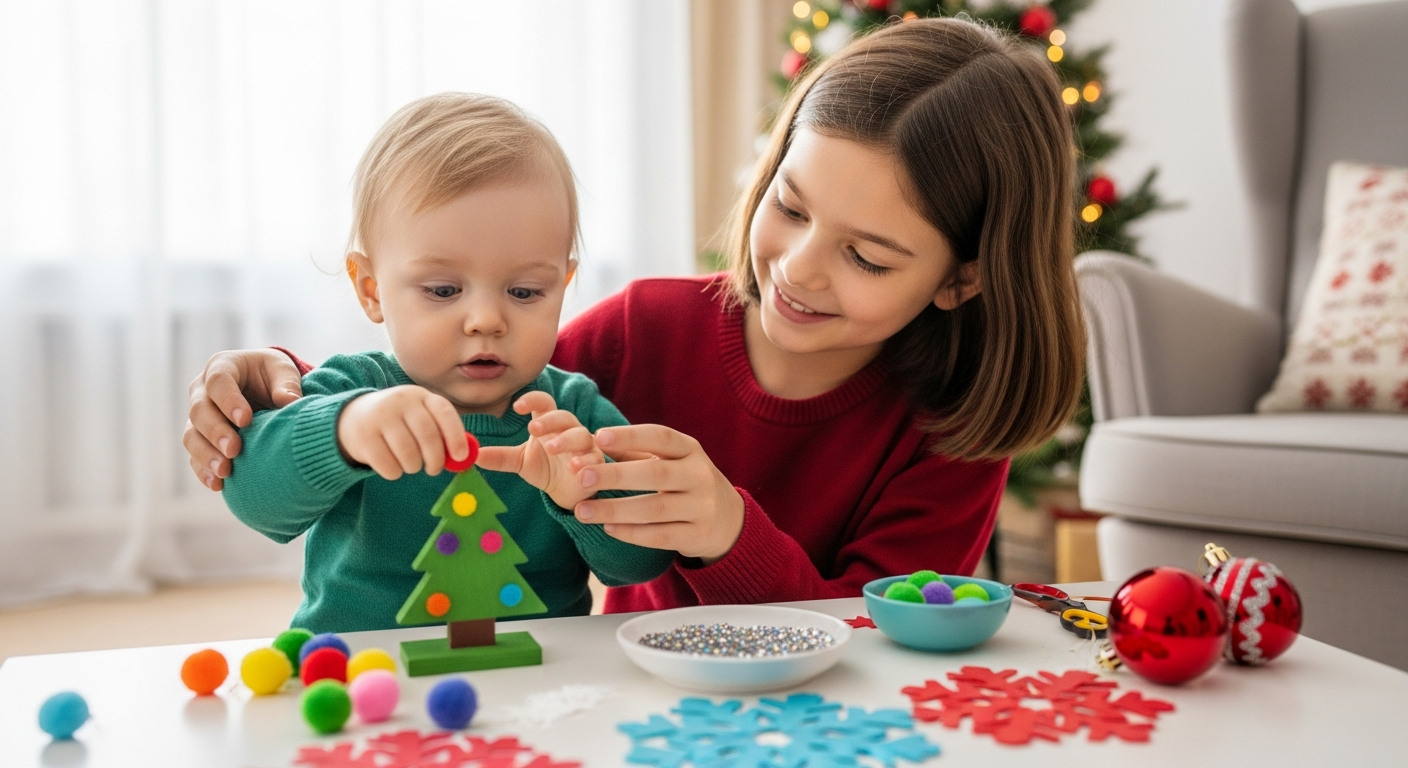
Table of Contents
- Introduction
- The Importance of Play-Based Learning During the Holidays
- Active Christmas Games for High-Energy Toddlers
- Sensory and Fine Motor Christmas Crafts
- Language-Building Activities for the Holiday Season
- Holiday Kitchen Fun: Cooking and Connecting
- Traditions That Foster Empathy and Connection
- Why Speech Blubs is the Perfect Holiday Companion
- Understanding the Value: Choosing the Right Plan
- A Toddler Christmas Bucket List
- Setting Realistic Expectations
- The Science of Success: Video Modeling
- Creating Lasting Memories
- Summary of Key Takeaways
- Conclusion
- Frequently Asked Questions
Introduction
Imagine the scene: the twinkling lights are up, the scent of pine is in the air, and your toddler is currently trying to climb the Christmas tree like a small, determined squirrel. The holiday season is a whirlwind of sensory experiences, but for a parent, it can also feel like a marathon of "nos" and "don't touch thats." At Speech Blubs, we believe the holidays shouldn't just be about managing chaos; they should be about creating joyful connection and fostering the skills your little one needs to thrive.
Whether you are looking for ways to keep a busy two-year-old occupied during a family gathering or you want to use the festive spirit to encourage your "late talker" to find their voice, the right activities make all the difference. This post will walk you through a curated list of Christmas activities with toddler-aged children that are not only fun but also grounded in developmental benefits—from fine motor practice to language building. Our mission is to empower children to speak their minds and hearts, and what better time to practice those skills than during the most wonderful time of the year? By blending play with intentional learning, we can turn holiday traditions into powerful developmental milestones.

The Importance of Play-Based Learning During the Holidays
The holidays offer a unique "language-rich" environment. Think about it: there are new smells (cinnamon, pine), new sights (lights, ornaments), and new routines. For a toddler, this is a massive learning opportunity. However, it can also be overwhelming. This is why we advocate for "smart screen time" and active play rather than passive consumption.
When we engage in Christmas activities with toddler learners, we are doing more than just passing the time until nap time. We are building their vocabulary, improving their hand-eye coordination, and helping them understand social cues. Our founders at Speech Blubs grew up with speech problems themselves, so we know firsthand that the best learning happens when a child is happy, engaged, and playing with the people they love most.
If you are ever unsure where your child stands in their development, taking a moment to check their progress can provide huge peace of mind. You can take our quick 3-minute preliminary screener, which involves just 9 simple questions, to get a personalized assessment and a free 7-day trial of our app.
Active Christmas Games for High-Energy Toddlers
Toddlers have a lot of energy, and during the winter months when outdoor play might be limited, indoor games are a lifesaver. These activities help with gross motor skills and following directions.
The Ornament Spoon Race
This is a classic with a holiday twist. Use unbreakable plastic ornaments and a large wooden spoon. Have your toddler try to walk from one side of the rug to the other without dropping the "egg."
- Speech Tip: Practice "steady," "slow," "oops," and "yay!"
- Modification: If walking is too easy, have them try to stand on one foot or spin in a circle.
Frosty Freeze Dance
Turn on some festive holiday tunes and let your little one wiggle. When the music stops, everyone has to "freeze" like a snowman. This game is excellent for developing "inhibitory control"—the ability to stop an action, which is a key executive function skill.

Snowball Toss
You don’t need real snow for this! Use white socks rolled into balls or inexpensive foam balls from the store. Place a festive gift bag or a laundry basket a few feet away and see how many "snowballs" they can land in the target. This builds hand-eye coordination and can be a great way to practice counting.
Sensory and Fine Motor Christmas Crafts
Fine motor skills—the small movements of the hands and fingers—are the building blocks for writing and self-care later in life. They are also closely linked to brain development.
Stringing Cranberries or Cheerios
This is an old-fashioned tradition that serves as incredible fine motor practice. For younger toddlers, use blunted plastic needles or simply stiffen the end of a piece of yarn with some tape.
- Developmental Benefit: This requires "pincer grasp" and bilateral coordination (using both hands together).
Homemade Play-Dough Creations
There is nothing quite like the smell of peppermint or cinnamon-scented play-dough. You can make a batch at home using flour, salt, cream of tartar, oil, and boiling water, then add holiday scents and green or red food coloring.
- Activity Idea: Give your toddler cookie cutters, rolling pins, and some "loose parts" like buttons or twigs to make "play-dough Christmas trees."
- Speech Blubs Integration: If your child is working on specific sounds, the "Mouth Gym" section of our app can be a great warmup before play-dough time, helping them get those speech muscles ready to narrate their creations.
No-Mess Painted Ornaments
If the idea of paint and a toddler makes you break out in a cold sweat, try this: buy clear plastic globe ornaments, take the cap off, and squirt two colors of washable paint inside. Put the cap back on (securely!) and let your toddler shake and swirl the ornament. The paint stays inside, but the result is a beautiful, marbled decoration for the tree.
Language-Building Activities for the Holiday Season
Christmas is a time of storytelling. Expanding your child's vocabulary during this season can be as simple as changing how you describe the world around you.
The Stocking Stuffer Guessing Game
Place common holiday objects inside a large cloth stocking—a pine cone, a large jingle bell, a cookie cutter, and a candy cane. Let your child reach in (no peeking!) and feel the objects.
- How to Play: Ask them, "Is it hard or soft?" "Is it prickly or smooth?" This encourages the use of adjectives and descriptive language. For a child who is just beginning to speak, simply naming the object after they pull it out is a win.
Reading Christmas Stories Together
Building a "picture book Christmas tree" is a wonderful way to encourage literacy. Wrap 24 books (or just pick 5 favorites to rotate) and let your child "unwrap" one each night.
- Pro Tip: Don't just read the words. Point to the pictures and ask "Where is the reindeer?" or "What color is Santa's hat?"
- The Power of Peer Modeling: At Speech Blubs, we use a unique "video modeling" methodology. Children learn best by watching other children. While you read, you can mirror this by showing your child videos of other kids saying holiday words. This builds confidence and reduces the frustration that often comes with "late talking." You can download Speech Blubs on the App Store to see this science in action.
Holiday Kitchen Fun: Cooking and Connecting
The kitchen is the heart of the home during December, and toddlers love to feel included in the "grown-up" work of cooking.
Decorating Christmas Cookies
You don't need to be a master baker. Even store-bought sugar cookies work perfectly. Set out bowls of icing and sprinkles and let your child go to town.
- Real-World Scenario: For a parent whose 3-year-old is a "late talker" and loves sweets, the "Yummy Time" section of our app offers a fun, motivating way to practice words like "cookie," "milk," and "sweet" before you even start baking. This helps bridge the gap between digital learning and real-world application.
Doughnut Hole Snowmen
For a quick snack, use toothpicks to stack two powdered doughnut holes. Let your toddler help you place "eyes" and "buttons" using tiny chocolate chips or dabs of icing. This activity focuses on sequencing (first the bottom, then the top) and positional words (on top, under, beside).
Traditions That Foster Empathy and Connection
Part of our mission at Speech Blubs is to help children "speak their hearts." This includes learning about giving and community.
Making Cards for Senior Centers
Toddlers can participate in the spirit of giving by creating "masterpieces" with stickers and crayons on cardstock. Explain to your child that these cards will go to someone who might be lonely. It’s a simple way to start the conversation about empathy.
The "Angel Tree" Shop
Take your toddler to the store to pick out a toy for a child in need. Let them choose something they think another boy or girl would love. While they may not fully grasp the concept of charity yet, the act of choosing a gift for someone else is a foundational social-emotional skill.
Why Speech Blubs is the Perfect Holiday Companion
During the holidays, parents are stretched thin. Between shopping, cooking, and visiting relatives, it’s tempting to turn on a passive cartoon just to get twenty minutes of peace. We provide a powerful, "smart screen time" alternative. Our app is a tool for family connection, designed to be used with a parent.
Our method is backed by scientific principles and features peer-to-peer video modeling. When your child sees another child on the screen making a "pop" sound or saying "ho ho ho," their mirror neurons fire, making them much more likely to imitate the sound themselves. We aren't about mindless clicking; we are about active participation.
But don't just take our word for it—see what thousands of other parents are saying about how Speech Blubs helped their children build confidence and communication skills.
Understanding the Value: Choosing the Right Plan
We want to be transparent about our pricing so you can make the best choice for your family. We offer two main paths to joining our community:
- The Monthly Plan: At $14.99 per month, this is a great way to test the waters if you are looking for a short-term boost during the holiday break.
- The Yearly Plan: This is our best value at $59.99 per year, which breaks down to just $4.99 per month.
The Yearly plan isn't just a 66% saving; it’s a comprehensive package for your child's development. When you choose the Yearly plan, you receive:
- A 7-day free trial to explore everything we have to offer.
- The Reading Blubs app, which helps transition your child from speaking to early literacy.
- Early access to all new updates and features.
- Priority 24-hour support response time.
The Monthly plan does not include the free trial or the Reading Blubs app, so we highly recommend the Yearly plan to get the full suite of features and the most effective results for your child. You can create your account and start your trial on our website.
A Toddler Christmas Bucket List
If you're feeling overwhelmed, don't feel like you have to do everything. Pick three or four items from this list to focus on this month:
- Make and play with holiday-scented play-dough.
- Dance to three different Christmas songs.
- Use the Speech Blubs app to learn five new holiday-themed words.
- Go on a "Christmas light walk" around the neighborhood.
- Decorate a batch of cookies (and eat at least one!).
- "Mail" a homemade card to a grandparent or friend.
Setting Realistic Expectations
As a child development expert, my biggest piece of advice for the holidays is this: lower the bar for perfection and raise it for joy. Your toddler will likely have a meltdown at some point. They might refuse to wear the cute reindeer sweater. They might be more interested in the cardboard box than the expensive toy inside.
This is all normal. Our goal with Speech Blubs isn't to create perfect public speakers by New Year’s Day; it’s to foster a love for communication and to reduce the frustration that comes when a child can’t express their needs. By using our app as a supplement to your daily interactions, you are building a foundation of confidence that will last long after the decorations are packed away.
The Science of Success: Video Modeling
Why does Speech Blubs work so well for toddlers? It’s all about the "mirror neuron" system. When a child watches a peer—not an adult or a cartoon character—perform a facial movement or say a word, their brain reacts as if they were doing it themselves.
This is the core of our "smart screen time." Instead of your child zoning out to a bright, fast-paced cartoon, they are engaged in a "call and response" with a friend on the screen. It’s effective, joyful, and designed by experts who understand the nuances of speech therapy.
Creating Lasting Memories
When you look back on this year, you won't remember if the gingerbread house collapsed or if the ornaments were hung in a giant clump on one branch. You will remember the look on your child's face when they finally mastered the "b" sound in "bubble" or when they proudly showed you the card they "wrote" for Grandma.
The holidays are a marathon, but they are also a gift. By choosing Christmas activities with toddler development in mind, you are giving your child the gift of communication. You are helping them find the words to tell you what they see, what they want, and how much they love you.
Summary of Key Takeaways
The holiday season is a prime time for toddler development if we approach it with intention and playfulness. Here are the main points to remember:
- Active Play is Essential: Use games like the Ornament Spoon Race or Snowball Toss to burn off energy and build motor skills.
- Sensory Experiences Drive Learning: Peppermint play-dough and no-mess painting are great ways to engage a toddler's senses.
- Language is Everywhere: Turn everyday holiday moments into vocabulary lessons by using descriptive words and storytelling.
- Smart Screen Time Matters: Replace passive viewing with interactive, scientifically-backed tools like Speech Blubs.
- Value the Yearly Plan: For the best experience, including a free trial and the Reading Blubs app, the Yearly plan is the superior choice for families.
Conclusion
The magic of Christmas isn't found in the store-bought gifts, but in the moments of connection we share with our children. Whether you are stringing cranberries, dancing to festive music, or practicing new words together on your tablet, you are doing the important work of supporting your child's growth.
At Speech Blubs, we are honored to be a part of your family's journey. Our mission is to ensure every child has the tools they need to speak their minds and hearts clearly. This holiday season, give your child a head start on their communication goals while having a blast.
Ready to make this holiday season both merry and bright for your child's development? Download Speech Blubs on the App Store or Google Play today to begin. For the best value, including our 7-day free trial, the Reading Blubs app, and early access to all updates, be sure to select the Yearly plan. Let’s start building those communication skills together, one joyful moment at a time!
Frequently Asked Questions
What are the best Christmas activities for a toddler with a speech delay?
Activities that involve "call and response" or repetitive sounds are best. Try the "Stocking Stuffer" game where you name each object, or use Speech Blubs’ video modeling to help them see how other children form words. Focusing on high-motivation items, like Christmas cookies or bright lights, can also encourage them to use their words to request or comment.
How can I make Christmas crafts less messy for a two-year-old?
Focus on "contained" crafts! The no-mess painted ornaments (where paint stays inside a plastic globe) or using contact paper to make "stained glass" window decorations are great options. You can also use "I-Spy" bottles filled with rice and small holiday charms, which are completely sealed and provide hours of sensory fun without the cleanup.
Is screen time okay for toddlers during the holidays?
Not all screen time is created equal. While passive watching can be overstimulating, "smart screen time" that encourages interaction—like Speech Blubs—is a valuable tool. The key is co-play: sit with your child, mirror the sounds they hear, and use the digital experience as a springboard for real-world activities.
How do I encourage my toddler to participate in holiday traditions?
Keep it simple and follow their lead. If they aren't interested in the gingerbread house, don't force it. Try to incorporate things they already love—like animals or music—into the holiday theme. For example, if they love animals, focus on "reindeer" activities or find the animal sections in the Speech Blubs app to practice holiday-related animal sounds.
About the author