
Engaging Cognitive Toddler Activities for Early Learning
 By Speech Blubs Team•Mar 18, 2026•13 min.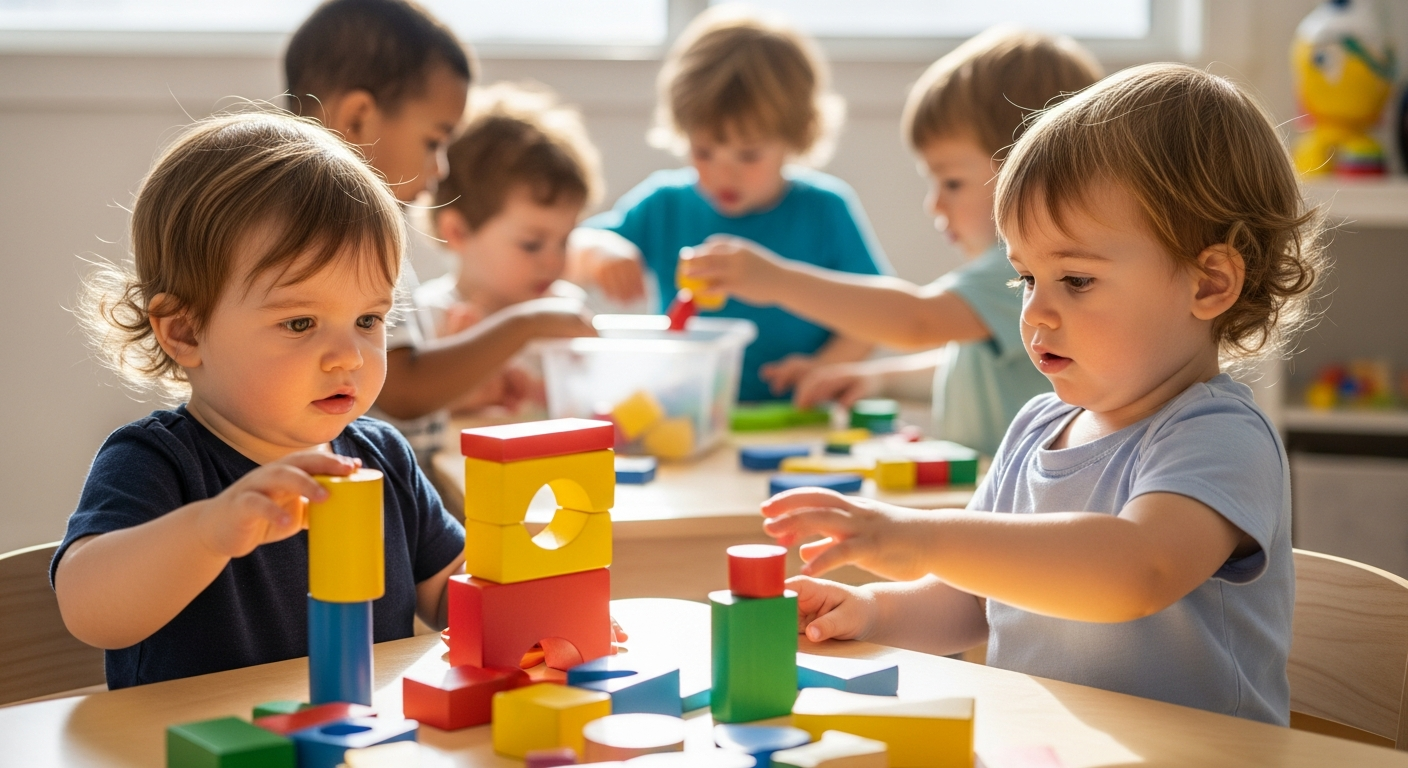
Table of Contents
- Introduction
- Understanding Cognitive Development in Toddlers
- Memory-Boosting Cognitive Toddler Activities
- Logic and Reasoning Activities
- The Power of Imagination and Creative Play
- Introducing Smart Screen Time: The Speech Blubs Approach
- Practical Scenarios: Connecting Play to Progress
- The Role of Environment: Sleep, Nutrition, and Routine
- Building Social-Emotional Intelligence
- How to Choose the Right Plan for Your Family
- Setting Realistic Expectations
- Summary of Key Cognitive Toddler Activities
- FAQ
- Conclusion
Introduction
Did you know that between the ages of two and three, a child’s brain is actually twice as active as an adult's? During these formative years, your little one is busy building a foundation for everything they will ever learn. From the way they process emotions to how they solve a puzzle, their cognitive development is moving at light speed. However, as many parents know, this period can also be a bit of a roller coaster. When a toddler’s drive for self-expression outpaces their language skills, it often leads to those famous "terrible twos" tantrums.
At Speech Blubs, our mission is to empower children to "speak their minds and hearts." We believe that the best way to support this growth is through a blend of scientific principles and joyful play. In this post, we will explore a wide range of cognitive toddler activities designed to boost memory, logic, and imagination. We’ll look at why these activities work, how to integrate them into your daily routine, and how "smart screen time" can be a powerful ally in your child’s developmental journey. By the end of this article, you’ll have a toolbox full of strategies to foster confidence and curiosity in your child.

Understanding Cognitive Development in Toddlers
Cognitive development is essentially the way a child learns to think, explore, and figure things out. It is the development of knowledge, skills, and dispositions which help children to think about and understand the world around them. For a toddler, this means learning how to organize information, remember names and faces, and begin to understand the concept of cause and effect.
Research shows that the first five years are critical because the brain forms over a million neural connections every single second. This is why providing a variety of stimulating experiences is so important. It isn’t about "teaching" in a formal sense; it’s about providing opportunities for the brain to practice its new skills.
When we talk about cognitive toddler activities, we are focusing on four key pillars:
- Memory: The ability to retain and recall information.
- Logic and Reasoning: Understanding how things work and solving simple problems.
- Language Acquisition: Connecting sounds to meanings and using them to communicate.
- Imagination: The ability to think symbolically and creatively.
Memory-Boosting Cognitive Toddler Activities
Memory is like a muscle—it needs regular exercise to grow strong. In toddlers, memory helps them follow multi-step instructions and recognize familiar patterns in their environment.
1. The Classic Game of Hide and Seek (with Objects)
Instead of just hiding themselves, try hiding a favorite toy under a blanket. For a toddler, this reinforces the concept of "object permanence"—the understanding that things still exist even when they can’t be seen. You can take this a step further by shuffling a small toy between two cups and asking them to find it. This builds visual memory and focus.
2. Repetitive Nursery Rhymes and Songs
Repetition is the secret sauce of toddler learning. Songs like "The Wheels on the Bus" or "Itsy Bitsy Spider" use rhythm and rhyme to make information stick. As your child becomes familiar with a song, try pausing before a keyword (e.g., "The wheels on the bus go round and...") and wait for them to fill in the blank. This encourages active recall and builds long-term memory.

3. Nature Walks and "I Spy"
Take your learning outdoors! Outdoor exploration stimulates all the senses, which is a massive boost for brain development. During a walk, play a simple version of "I Spy" based on colors or shapes. "I spy something red!" When they find the red flower, they are practicing visual discrimination and memory.
Expert Tip: Our method at Speech Blubs is backed by science, placing us in the top tier of speech apps worldwide. You can read more about our approach on our research page.
Logic and Reasoning Activities
Logic is about making connections. It’s the "Aha!" moment when a child realizes that the square block doesn’t fit into the round hole.
4. Sorting and Classifying
Sorting is one of the most effective cognitive toddler activities for building mathematical reasoning. You don't need fancy toys for this. You can use socks from the laundry, plastic containers, or even different types of pasta. Ask your child to group items by color, then by size, and then by shape. This teaches them to analyze characteristics and categorize information.
5. Simple Puzzles and Matching Games
Puzzles are fantastic for developing spatial awareness and problem-solving. For a two-year-old, start with chunky wooden puzzles where each piece has its own dedicated spot. As they progress, move to two-piece "matching" puzzles (e.g., matching an animal to its habitat). This requires them to use logic to see how two separate things relate to each other.
6. Encouraging Simple Choices
Cognitive development isn't just about games; it’s about daily life. When you offer your toddler a choice between two shirts or two types of fruit, you are asking them to perform a complex cognitive task: evaluating options and making a decision. This fosters independence and reduces the frustration that leads to tantrums.
The Power of Imagination and Creative Play
Imagination is the bridge to higher-level thinking. When a child pretends a cardboard box is a rocket ship, they are engaging in "symbolic thought," which is the foundation for reading and writing later in life.
7. Pretend Play and Role-Playing
Provide your child with "open-ended" props like old hats, wooden spoons, or fabric scraps. Watch as they emulate your daily routines. For a parent whose 3-year-old "late talker" loves animals, the "Animal Kingdom" section of our app offers a fun, motivating way to practice "moo" and "baa" sounds, which can then be brought into real-world pretend play with toy farm animals.
8. Arts, Crafts, and Sensory Bins
Finger painting, playing with dough, or digging through a bin of rice and hidden buttons are all sensory-rich cognitive toddler activities. These experiences help children learn about textures, gravity, and cause-and-effect (e.g., "What happens if I mix blue and yellow paint?").
9. Storytelling with a Twist
When reading books, don't just read the words. Ask open-ended questions like, "Why do you think the bear is sad?" or "What do you think will happen next?" This encourages critical thinking and helps them understand narrative structures.
Introducing Smart Screen Time: The Speech Blubs Approach
In a world full of passive cartoons, we offer a different path. Speech Blubs was born from the personal experiences of our founders, who all grew up with speech challenges. We wanted to create the tool we wished we had—one that turns screen time into an active, joyful learning experience.
We use a unique "video modeling" methodology. Children are naturally wired to learn by watching and imitating their peers. In our app, your child watches videos of real children (not cartoons) performing activities and making sounds. This triggers "mirror neurons" in the brain, making it much more likely that your child will attempt to imitate the behavior.
It’s a powerful tool for family connection. We always encourage "co-play"—sit with your child, mirror the sounds together, and celebrate every attempt. This isn't just about "speaking"; it's about fostering a love for communication and building the confidence to "speak their minds and hearts."
If you’re ready to see how our science-based approach can help, you can download Speech Blubs on the App Store or get it on the Google Play Store today.
Practical Scenarios: Connecting Play to Progress
We know that every child develops at their own pace. Sometimes, parents feel a sense of worry when their child doesn't seem to be hitting milestones as quickly as others.
Consider a scenario where a toddler is struggling with transitions—moving from playtime to lunchtime. Using a "logic" activity like a "Visual Schedule" (using drawings or photos of the day's routine) can help them understand the concept of time and what comes next. This reduces anxiety and builds cognitive predictability.
Or, think of a child who is a "late talker." They might have all these big ideas in their head but lack the motor skills to express them. Engaging in "Math with Movement" (like jumping three times while counting) helps integrate physical coordination with cognitive concepts, making the learning process feel less like "work" and more like a game.
If you are ever unsure about your child's progress, we recommend taking our quick 3-minute preliminary screener. It consists of 9 simple questions and provides an assessment and a next-steps plan to give you peace of mind.
The Role of Environment: Sleep, Nutrition, and Routine
Cognitive toddler activities are most effective when a child’s physical needs are met. A brain that is tired or hungry cannot learn effectively.
- Nutrition: Foods rich in omega-3 fatty acids, iron, and zinc are essential for brain health. Think of "brain foods" like eggs, fatty fish, and leafy greens.
- Sleep: During sleep, the brain processes the information it learned during the day. A consistent bedtime routine is a cognitive activity in itself, as it teaches your child to recognize patterns and prepare for rest.
- Unstructured Play: While structured activities are great, "boredom" can also be a gift. Giving a child a safe space with no toys and just a few household items (like pots and pans) forces them to use their imagination and problem-solving skills to create their own fun.
Building Social-Emotional Intelligence
Cognitive development is deeply intertwined with social-emotional growth. When a child plays a board game and has to wait for their turn, they are practicing "executive function" skills—specifically, impulse control.
Interactive Reading
Reading together is one of the most powerful things you can do. It’s not just about the words; it’s about the connection. When you read with your child, you are modeling empathy and social cues. See what other parents are saying about how this shared time, combined with Speech Blubs, has transformed their child's confidence and social interactions.
How to Choose the Right Plan for Your Family
We want to make sure every family has access to the tools they need. While we offer a monthly subscription, the Yearly Plan is designed to provide the most comprehensive support for your child’s development journey.
Our Pricing Plans:
- Monthly Plan: $14.99 per month. This is a great way to test the waters if you're looking for a short-term boost.
- Yearly Plan: $59.99 per year. This breaks down to just $4.99 per month, which is a 66% savings compared to the monthly option.
Why the Yearly Plan is our best value:
- 7-Day Free Trial: You can explore everything we have to offer completely risk-free for a full week.
- Reading Blubs App: Access to our companion app designed to help toddlers transition from speaking to reading.
- Early Access: You’ll be the first to receive our new updates and features.
- Priority Support: Enjoy a 24-hour response time from our dedicated support team.
The Monthly plan does not include the free trial or the Reading Blubs app, so we highly recommend the Yearly Plan to ensure you have all the resources necessary to support your child's growth. You can create your account and begin your trial today.
Setting Realistic Expectations
It is important to remember that every child is an individual. Cognitive toddler activities are meant to foster a love for learning and build foundational skills—they are not a "quick fix" or a magic wand. Our app is a powerful supplement to your child’s development and, where applicable, professional therapy.
Instead of focusing on "perfect" results, focus on the joyful family learning moments. Celebrate the first time they sort all the red blocks correctly, or the first time they imitate a sound from a peer in the app. These small wins are the building blocks of a lifetime of communication and confidence.
Summary of Key Cognitive Toddler Activities
To help you get started, here is a quick checklist of activities you can try this week:
- Sort the Laundry: Have your child help you find all the "blue" socks.
- Pause and Play: During a familiar song, stop and let them fill in the missing word.
- Cardboard Creations: Give them a box and see if it becomes a car, a house, or a cave.
- Peers in the App: Spend 10-15 minutes on Speech Blubs practicing new sounds through video modeling.
- Nature Hunt: Find three things that are "smooth" and three things that are "crunchy."
FAQ
What are cognitive toddler activities?
Cognitive toddler activities are play-based exercises designed to help children develop thinking, memory, and problem-solving skills. These can include anything from sorting shapes and playing hide-and-seek to using educational apps that utilize video modeling to encourage imitation and speech.
How do cognitive activities help with speech delay?
Cognitive skills and language are closely linked. Activities that improve memory and logic help a child process language more effectively. For example, our app uses video modeling to help children "see" how sounds are made, which helps bridge the gap between thinking about a word and saying it out loud.
Is screen time bad for a toddler's cognitive development?
Not all screen time is created equal. "Passive" screen time, like watching cartoons, provides little interaction. However, "smart screen time," like Speech Blubs, is interactive and designed based on scientific principles to encourage active participation, imitation, and learning.
When should I be concerned about my toddler’s cognitive progress?
Every child reaches milestones at different times. However, if your child isn't reaching for toys, doesn't respond to their name, or seems to have lost skills they once had, it’s a good idea to consult a pediatrician. Our 3-minute screener is also a great first step for parents who want a quick assessment.
Conclusion
The journey of cognitive development is one of the most exciting phases of parenthood. By engaging in simple, daily cognitive toddler activities, you are giving your child the tools they need to navigate the world with confidence and curiosity. Whether you are sorting socks, singing songs, or exploring the "Animal Kingdom" in our app, you are building a stronger brain and a deeper bond with your little one.
Remember, our mission is to help your child speak their mind and heart. We are here to support you every step of the way with tools that turn learning into a joyful experience.
Ready to jump-start your child's progress? Download Speech Blubs on the App Store or Google Play today. Don’t forget to choose the Yearly Plan to take advantage of your 7-day free trial, the bonus Reading Blubs app, and the best long-term value for your family!
About the author