
Engaging Dinosaur Activities for Toddlers
 By Speech Blubs Team•Mar 18, 2026•13 min.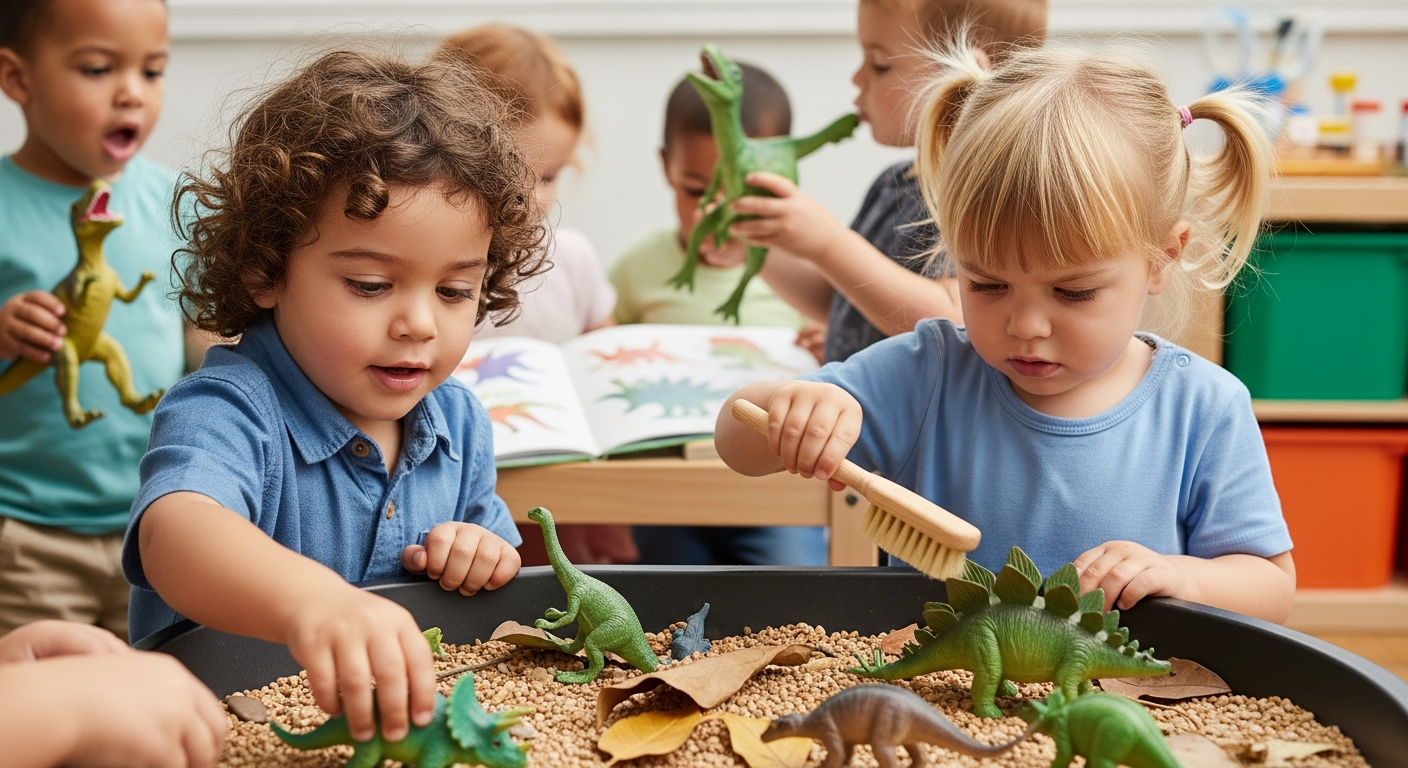
Table of Contents
- Introduction
- The Power of Dinosaur Play for Early Development
- Sensory Dinosaur Activities: Digging into Textures
- Creative Arts and "Dino-mite" Crafts
- Fine Motor and Cognitive Skill Builders
- Language and Literacy: Roaring into Communication
- Prehistoric Science Experiments for Little Learners
- Strengthening Family Connections Through Play
- Managing Realistic Expectations
- Outdoor Dinosaur Adventures
- Smart Screen Time: Why It Matters
- FAQ
- Conclusion
Introduction
Did you know that a child’s intense fascination with dinosaurs—what psychologists often call an "extreme interest"—can actually lead to increased persistence, better attention spans, and enhanced information-processing skills? If your little one is currently obsessed with the mighty Tyrannosaurus Rex or the gentle Brontosaurus, you are holding a golden ticket to their developmental growth. At Speech Blubs, our mission is to empower children to "speak their minds and hearts," and we know that there is no better way to do that than by tapping into the things they already love.
In this post, we are going to dive deep into a world of prehistoric fun, exploring a variety of dinosaur toddler activities designed to spark curiosity and build essential skills. We will cover everything from sensory bins and "dino-mite" crafts to gross motor games and early literacy tools. By the end of this article, you will have a complete toolkit of activities that blend scientific principles with the joy of play. Our goal is to show you how to transform a simple interest in dinosaurs into a powerful engine for building confidence, reducing frustration, and fostering a lifelong love for communication.

The Power of Dinosaur Play for Early Development
Many parents wonder why dinosaurs, of all things, capture the imagination of toddlers so completely. For a two- or three-year-old, dinosaurs represent a world that is big, powerful, and slightly mysterious, yet safe because they no longer roam the earth. This interest provides a perfect bridge for learning. When we engage in dinosaur toddler activities, we aren't just playing; we are working on fine motor skills, language acquisition, and cognitive sorting.
At Speech Blubs, we believe in "smart screen time" that acts as a powerful supplement to a child's overall development plan. Our company was born from the personal experiences of our founders, who all grew up with speech problems and created the tool they wished they had. We know that for the 1 in 4 children who need speech support, finding a motivating topic is half the battle. If your child is a "late talker" who lights up at the sight of a Triceratops, that interest is the key to getting them to practice new sounds and words.
Sensory Dinosaur Activities: Digging into Textures
Sensory play is a foundational element of early childhood education. It encourages children to explore the world through touch, sight, and even smell, building neural pathways in the brain.
1. The Classic Dinosaur Sensory Bin
This is perhaps the easiest and most versatile activity. You can use a variety of bases:
- The "Desert" Dig: Fill a plastic bin with dry rice, sand, or cornmeal. Bury small plastic dinosaur figures and "bones" (you can use large pasta shapes like rigatoni or actual cleaned chicken bones).
- The "Swamp" Explorations: Use water with a few drops of blue or green food coloring. Add some floating logs (sticks from the yard) and plastic dinosaurs.
- The Muddy Wash: For a taste-safe version, use chocolate pudding as "mud." Let your toddler get the dinosaurs messy, and then provide a second bin of soapy water for a "dino wash station."
As your child digs, encourage them to describe what they feel. Is the rice crunchy? Is the pudding "squishy"? These descriptive words are excellent for vocabulary building.

2. Frozen Dinosaur Ice Rescue
This is a fantastic activity for a hot day and a great way to teach patience and scientific observation.
- Place small dinosaur toys inside balloons.
- Fill the balloons with water and tie them off.
- Freeze them overnight.
- Once frozen, peel the balloon away to reveal a dinosaur egg made of ice.
- Provide your child with warm water and a dropper or a small spray bottle.
As they work to "rescue" the dinosaur, they are practicing fine motor control and learning about temperature and states of matter. If you are unsure if your child is hitting their developmental milestones during these types of play, you can take our quick 3-minute preliminary screener to get a simple assessment and a free 7-day trial.
Creative Arts and "Dino-mite" Crafts
Crafting allows toddlers to express their internal world and practice the hand-eye coordination needed for later writing.
3. Dinosaur Footprint Painting
Instead of using brushes, use the dinosaurs themselves! Roll out a long piece of paper and put out several plates of washable paint. Encourage your child to dip the dinosaur's feet into the paint and "walk" them across the paper.
- Talk about size: "Look, the T-Rex made a BIG print! The Raptor made a tiny one."
- Talk about patterns: "Stomp, stomp, slide!"
4. Shape-a-Saurus
Cut out various shapes from construction paper: large ovals for bodies, triangles for spikes, and long rectangles for necks. Help your child glue these shapes together to create their own unique dinosaur. This is a wonderful way to practice shape recognition and spatial awareness. For a child who might find these physical crafts challenging, the "Dino" section in the Speech Blubs app offers a fun, motivating way to practice related sounds and words through digital play. You can download Speech Blubs on the App Store to see how we blend these themes into our video modeling.
Fine Motor and Cognitive Skill Builders
Toddlers are at a stage where they are learning to manipulate their environment with precision. Dinosaur-themed activities can make this hard work feel like a game.
5. Clothespin "Spikes" for Fine Motor
Draw or print a simple dinosaur silhouette on cardstock. Provide your toddler with several clothespins and ask them to give the dinosaur its "spikes" by clipping the pins along the dinosaur's back.
- Why it works: Squeezing a clothespin strengthens the tiny muscles in the hands and fingers, which are essential for the "pincer grasp" and future pencil control.
- Add a layer of learning: Color-code the clothespins and the dinosaur's back for a matching game, or write numbers on the pins to practice counting.
6. Dinosaur Egg Number Match
Take plastic Easter eggs and write a number on one half and draw a corresponding number of dots on the other half. Hide a tiny dinosaur inside each egg. Your child has to match the correct halves to "hatch" the dinosaur. This reinforces the concept of one-to-one correspondence—the idea that a number represents a specific quantity.
Language and Literacy: Roaring into Communication
One of the most exciting parts of a dinosaur obsession is the complex vocabulary that comes with it. Even a three-year-old can learn to say "Paleontologist" or "Stegosaurus" if they are motivated!
7. Video Modeling: The Peer Connection
At Speech Blubs, we use a unique approach called "video modeling." This is based on the scientific principle of mirror neurons—the brain cells that fire both when we perform an action and when we see someone else perform it. In our app, children watch other children making dinosaur sounds and saying dinosaur names. This peer-to-peer connection is much more effective than watching a cartoon.
"Our method is backed by science, placing us in the top tier of speech apps worldwide. By watching peers, children feel more confident and are more likely to imitate sounds and words spontaneously." — Learn more about our scientific research.
8. The "Dino Stomp" Vocabulary Game
Clear a space in your living room and tell your child you are going on a dinosaur hunt. As you "stomp" through the house, use specific action words:
- "We are tiptoeing like a quiet Raptor."
- "We are stretching our long necks like a Brachiosaurus."
- "We are munching on leaves like a hungry herbivore."
Using these rich verbs while performing the actions helps cement the meaning of the words in your child's mind.
Prehistoric Science Experiments for Little Learners
It is never too early to introduce the scientific method! These activities are perfect for curious toddlers who love to ask "why?"
9. Fizzy Dinosaur Eggs
This is a classic "acid-base" reaction that never fails to amaze.
- Mix baking soda with a little water and food coloring until it forms a paste.
- Mold the paste around a small toy dinosaur to create an "egg."
- Let the eggs dry or put them in the freezer for a few minutes to firm up.
- Provide your child with a small bowl of vinegar and a dropper.
- Watch as they "excavate" the dinosaur by making the egg fizz and melt away.
10. DIY Salt Dough Fossils
Create a simple dough using two cups of flour, one cup of salt, and one cup of water. Knead it until smooth, then roll out small circles. Have your child press their dinosaur toys into the dough to create "fossil" impressions. You can bake these at a low temperature (250°F) for about two hours until they are hard.
- The Lesson: This explains how we know what dinosaurs looked like even though they lived millions of years ago. It’s a tangible way to discuss history and the passage of time.
Strengthening Family Connections Through Play
At the heart of all these dinosaur toddler activities is the opportunity for connection. We provide a screen-free alternative to passive viewing (like cartoons) and a powerful tool for family bonding. When you sit on the floor and "roar" with your child, you are telling them that their interests matter.
If you are looking for more ways to engage your child, our Yearly plan is the clear best choice for families. While the Monthly plan is $14.99, the Yearly plan is just $59.99 (which breaks down to only $4.99 per month—a 66% savings).
Choosing the Yearly plan gives you:
- A 7-day free trial to explore all our content.
- Access to the Reading Blubs app, which helps transition your child from sounds to stories.
- Early access to new updates and 24-hour support response time.
Ready to see how video modeling can transform your child’s dinosaur play? You can sign up and start your free trial here.
Managing Realistic Expectations
While dinosaur toddler activities are incredibly beneficial, it’s important to remember that every child develops at their own pace. We don't suggest that your child will be giving public speeches about paleontology in a month. Instead, we focus on the beauty of the process:
- Fostering a love for communication: When a child wants to tell you about their favorite dino, they are practicing the "why" of talking.
- Building confidence: Mastering a "clothespin spike" or "rescuing" a frozen dino gives a child a sense of agency.
- Reducing frustration: Providing a child with the words to describe their play helps them communicate their needs more clearly.
For parents who want to see the real-world impact of this approach, we invite you to read our parent testimonials. These stories from our community highlight how joyful, consistent play can make a world of difference.
Outdoor Dinosaur Adventures
Don't limit the fun to the indoors! The backyard or a local park is the perfect setting for a "Prehistoric Expedition."
11. The Dinosaur Track Trail
Use sidewalk chalk to draw large dinosaur footprints leading to various "stations" in your yard. One station might be a "watering hole" (a bucket of water), and another might be a "nesting ground" (a pile of leaves and sticks). Encourage your child to follow the tracks to find the hidden "dino eggs" (painted rocks).
12. Nature Fossils
Instead of salt dough, take some playdough outside. Have your child find leaves, twigs, and stones to press into the dough. Compare these "nature fossils" to the dinosaur footprints. This helps them connect the concept of fossils to the world they see around them every day.
Smart Screen Time: Why It Matters
We know that modern parenting involves navigating technology. At Speech Blubs, we want to ensure that if a child is using a screen, it is a "smart screen time" experience. Unlike passive videos that can sometimes lead to "zoning out," our app requires active participation. Your child isn't just watching; they are imitating, laughing, and learning.
For a parent whose 3-year-old "late talker" loves dinosaurs, the "Dino" section offers a fun, motivating way to practice sounds like the "Rrrr" of a roar or the "Chomp" of a hungry herbivore. This active engagement is what sets us apart and makes us a valuable supplement to professional therapy or general developmental play. You can also get Speech Blubs on Google Play to start your journey today.
FAQ
1. My toddler only wants to talk about dinosaurs. Is this normal? Yes, absolutely! It is very common for toddlers to develop "intense interests." This is actually a sign of healthy cognitive development and can be used to teach a wide range of skills, from math to social-emotional regulation.
2. How can I use dinosaur play to help my late talker? Use the high motivation of dinosaurs to encourage "vocal play." Practice simple sounds (Roar, Stomp, Chomp) and use the dinosaurs to act out social scenarios, which helps with pragmatic language skills.
3. What is video modeling, and why does Speech Blubs use it? Video modeling is a teaching method where children learn by watching others. We use it because research shows that children are highly motivated to imitate their peers, which helps them learn speech and communication skills more naturally than through traditional instruction.
4. Are these dinosaur activities safe for all toddlers? Most of these activities are designed for ages 2 and up. However, always supervise sensory play, especially with items like rice or small toys that could be choking hazards. For taste-safe options, use edible materials like pudding or flour-based doughs.
Conclusion
Dinosaur toddler activities are more than just a way to pass the time; they are a gateway to discovery, language, and connection. By leaning into your child's passion for the prehistoric, you are providing them with a rich, multi-sensory environment where they can thrive. Whether you are digging in a sensory bin, "stomping" through the backyard, or using the video modeling in Speech Blubs to practice new sounds, you are building the foundation for your child to speak their mind and heart.
Remember, the goal is joy and engagement. Every "roar" is a step toward confidence, and every "fossil" is a lesson in curiosity. We are here to support you every step of the way with tools that make learning feel like the best part of the day.
Ready to take the next step in your child's communication journey? Download Speech Blubs on the App Store or Google Play to begin your 7-day free trial. For the best value and access to all our exclusive features, including the Reading Blubs app, be sure to select the Yearly plan. Let’s make some "dino-mite" memories together!
About the author