
Engaging Life Skills Speech Therapy Activities for Kids
Boost independence with functional life skills speech therapy activities! Learn how to use video modeling and daily routines to help your child thrive. Start
 By Speech Blubs Team•Apr 22, 2026•14 min.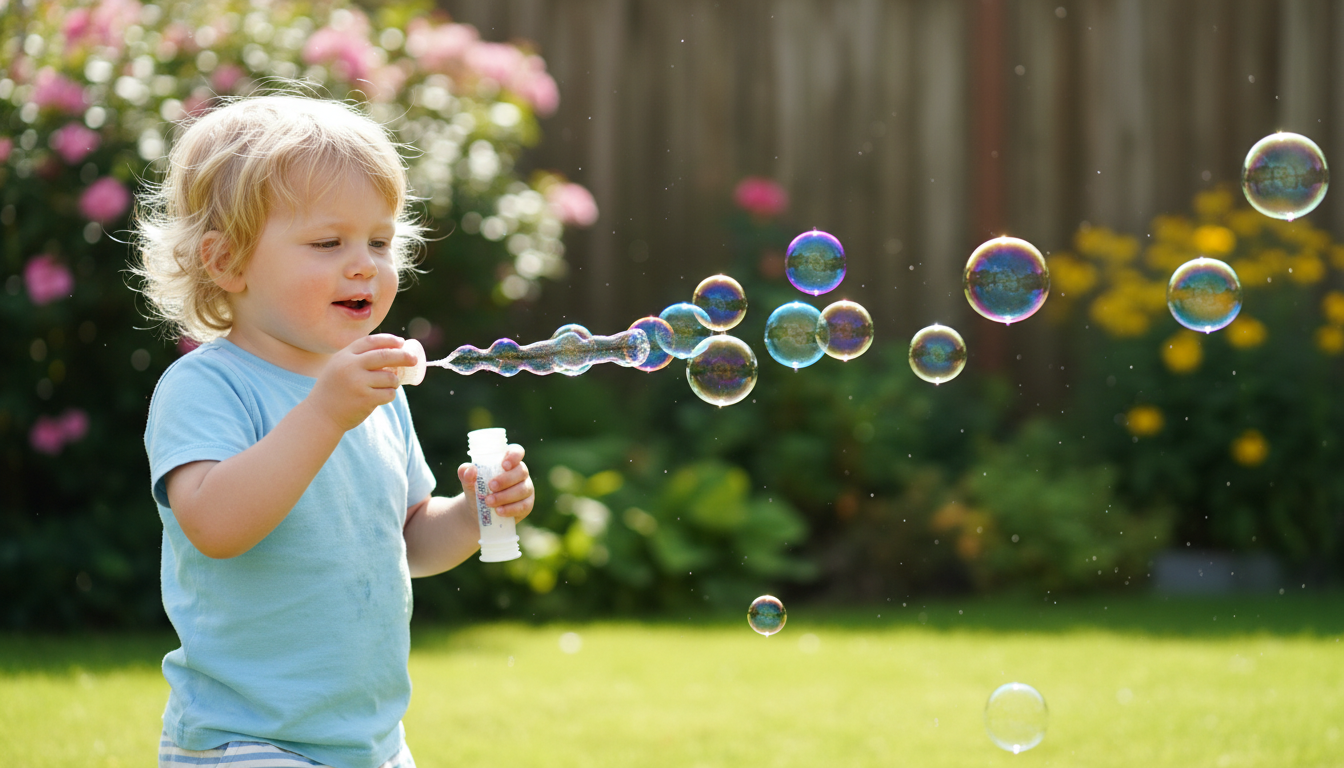
Table of Contents
- Introduction
- What Are Functional Life Skills in Speech Therapy?
- The Speech Blubs Approach: Science and Play
- Life Skills Speech Therapy Activities for Personal Hygiene
- Kitchen and Mealtime Activities
- Community-Based Life Skills Activities
- Household Responsibility and Organization
- Strategies for Different Age Groups
- The Importance of Realistic Expectations
- Why Speech Blubs is a "Smart" Screen Time Choice
- Choosing the Best Plan for Your Family
- Summary of Key Takeaways
- Conclusion
- FAQs
Introduction
Did you know that nearly 1 in 4 children will face some form of speech or language challenge during their developmental years? For many parents, the initial focus of therapy is often on correct pronunciation or building a larger vocabulary. However, there is a deeper layer of communication that serves as the foundation for a child's independence: functional life skills. Imagine a child who can perfectly articulate the word "water" but doesn't know how to ask for a drink when they are thirsty, or a teenager who can read a textbook but struggles to navigate a simple grocery store list. This gap between "knowing words" and "using language for life" is where life skills speech therapy activities become essential.
At Speech Blubs, our mission is to empower every child to speak their minds and hearts. We understand that communication isn't just about sounds; it’s about the ability to connect, survive, and thrive in the world. Our company was born from the personal experiences of our founders, who all grew up with speech problems themselves. They created the tool they wished they had—a joyful, effective solution that blends scientific principles with play.

In this comprehensive guide, we will explore a variety of life skills speech therapy activities designed to bridge the gap between clinical goals and real-world independence. We’ll cover everything from personal hygiene and kitchen safety to navigating the community and social pragmatics. By the end of this article, you will have a robust toolkit of activities and a clear understanding of how to integrate "smart screen time" into your child's developmental journey.
What Are Functional Life Skills in Speech Therapy?
Before diving into specific activities, it is important to define what we mean by "functional life skills" within the context of speech and language development. These are the skills necessary for an individual to live as independently as possible. While traditional speech therapy might focus on specific phonemes or grammatical structures, functional life skills therapy focuses on how those language tools are applied to daily routines.
Functional life skills encompass several domains:
- Self-Care: Communicating needs during dressing, bathing, and grooming.
- Safety: Understanding signs, following emergency directions, and identifying hazards.
- Community Navigation: Ordering food, asking for directions, and understanding public transportation or road signs.
- Social Interaction: Mastering turn-taking, initiating conversations, and interpreting non-verbal cues.
- Vocational/Academic Independence: Following multi-step directions, managing time, and solving problems in a work or classroom environment.
The goal of focusing on these areas is to reduce frustration and build confidence. When a child can successfully navigate a daily routine, their anxiety decreases, and their desire to communicate increases.
The Speech Blubs Approach: Science and Play
At the core of our methodology is "video modeling." This is a science-backed methodology that leverages the power of "mirror neurons." When children watch their peers perform a task or say a word, these neurons in the brain fire as if the child were performing the action themselves. This makes learning feel natural and attainable.

Unlike passive screen time—such as watching cartoons, which can be isolating—Speech Blubs is designed for "smart screen time." It is an interactive experience that encourages imitation and active participation. We prioritize the "kids teaching kids" model because children are naturally more motivated to copy someone who looks and acts like them. This approach is particularly effective for teaching life skills, as it provides a clear, relatable visual of how a specific task or social interaction should look.
Life Skills Speech Therapy Activities for Personal Hygiene
Personal hygiene is often the first frontier of independence for a young child. It involves complex sequencing and a specific vocabulary that is used every single day.
1. The "Step-by-Step" Bathroom Routine
Teaching a child to wash their hands or brush their teeth isn't just about the physical action; it's about the language of sequencing. Use the "Get Ready" section of our app to show your child videos of other kids brushing their teeth.
Activity:
- Visual Schedules: Create a printed chart with pictures for each step: turn on water, apply soap, rub hands, rinse, turn off water, dry.
- Language Focus: Use temporal markers like "First," "Next," and "Last." Ask your child, "What do we do after we get the soap?"
- Real-World Scenario: For a parent whose 3-year-old "late talker" finds the morning routine overwhelming, watching the peer models in Speech Blubs can turn a stressful chore into a fun game of "copy the leader."
2. Identifying Grooming Tools
A child needs to know the names and functions of the objects they use. This is called "object function" in speech therapy.
Activity:
- The "What's in the Bag?" Game: Place a toothbrush, a comb, a bar of soap, and a washcloth in an opaque bag. Have the child reach in, feel an object, and try to name it before pulling it out.
- Function Practice: Once the object is out, ask, "What do we do with this?" Encourage full sentences like, "I use the comb to brush my hair."
Kitchen and Mealtime Activities
The kitchen is a language-rich environment that provides endless opportunities for functional speech therapy.
3. Simple Following-Direction Recipes
Cooking requires following multi-step directions, which is a vital life skill. It also introduces concepts of measurement, temperature, and safety.
Activity:
- Visual Recipes: Use recipes that rely on pictures rather than just text. Making a sandwich or a bowl of cereal is a great start.
- Concept Building: Use the "Yummy Time" section in the app to explore different foods. While you cook, talk about opposites: hot vs. cold, sweet vs. salty, or wet vs. dry.
- Real-World Scenario: If your child loves snacks, involve them in the process. Have them "request" the ingredients. Instead of just giving them the crackers, wait for them to use their words or signs to ask for "more" or "open."
4. Kitchen Safety and Labels
Understanding "Stop," "Hot," and "Danger" is a critical safety skill.
Activity:
- Labeling the Environment: Place "Hot" signs (with a red color cue) on the oven and toaster. Practice the "ouch" sound or the "hot" sign to reinforce the concept.
- Sorting Activity: Have the child sort "Kitchen Tools" from "Toys." This helps them understand that certain items are only for adult use or specific tasks.
Community-Based Life Skills Activities
As children grow, their world expands beyond the home. Navigating the community requires a higher level of social pragmatics and receptive language.
5. Role-Playing the Grocery Store
The grocery store is a perfect place to practice categorization and social interaction.
Activity:
- The Shopping List: Give your child a small list of three items (using pictures if they are not yet reading). Have them lead the way to find the "milk," "apples," and "bread."
- Social Scripting: Practice how to talk to the cashier. "Hello," "Please," and "Thank you" are foundational social skills.
- Expansion: If you aren't sure where to start with your child's current level, you can take our 3-minute preliminary screener to get an assessment and a tailored next-steps plan.
6. Identifying Community Signs
Understanding the world around them helps keep children safe. Signs like "Restroom," "Exit," "Walk/Don't Walk," and "Stop" are essential.
Activity:
- Sign Scavenger Hunt: While walking or driving, have the child look for specific signs. When they find one, discuss what it means. "The red octagonal sign says 'Stop.' It means the cars have to wait."
- Speech Blubs Connection: Use the "Living Things" or "Build a Word" sections to practice the phonemes found in common signs, helping the child recognize the sounds as they see the letters.
Household Responsibility and Organization
Teaching children to help around the house builds a sense of belonging and helps them master categorization and prepositions.
7. Sorting Laundry
This is more than a chore; it is a lesson in attributes and categories.
Activity:
- Sorting by Attribute: Ask the child to put all the "socks" in one pile and all the "shirts" in another. Or, sort by color: "Put the blue clothes here and the white clothes there."
- Preposition Practice: Use the laundry basket to practice spatial concepts. "Put the shirt in the basket," "Put the towel on top of the pile," or "Look under the sock."
8. Setting the Table
Setting the table is a fantastic way to practice one-to-one correspondence and spatial awareness.
Activity:
- The Placemat Map: Draw a simple map on a piece of paper showing where the plate, fork, spoon, and cup go. Have the child match the real items to the drawing.
- Language Prompting: "Where does the spoon go?" "It goes next to the plate." This reinforces functional vocabulary in a natural setting.
Strategies for Different Age Groups
While the core concepts of life skills remain the same, the way we approach these activities changes as a child develops.
Toddlers and Preschoolers (Ages 2–5)
At this age, the focus is on imitation and basic needs.
- Activities should be highly play-based.
- Focus on "Power Words" (Help, Stop, More, Mine).
- Use Speech Blubs to encourage the physical imitation of sounds and facial expressions. Seeing another child blow bubbles or make a "fish face" motivates a toddler to try it too.
- Create your account and start a free trial to explore our "Early Sounds" section.
School-Age Children (Ages 6–12)
For this group, the focus shifts to sequencing and social pragmatics.
- Use barrier games (where one person describes a scene and the other has to draw it without seeing it) to build descriptive language.
- Focus on multi-step directions. "Go to the kitchen, get a spoon, and bring it to the table."
- Work on "problem-solving" scenarios. "What would you do if you spilled your milk?"
Teenagers (Ages 13+)
For teens, the focus is on independence and vocational readiness.
- Role-play job interviews or ordering at a restaurant.
- Practice navigating digital forms and websites.
- Focus on higher-level social skills like understanding sarcasm, perspective-taking, and topic maintenance in conversations.
- The Yearly plan for Speech Blubs includes the Reading Blubs app, which can be a powerful tool for older children who need to bridge the gap between spoken language and literacy—a key component of independent living.
The Importance of Realistic Expectations
It is important for parents to remember that progress in speech therapy is a journey, not a race. You won't see your child giving public speeches in a month, and that's okay. Our goal is to create joyful family learning moments and reduce the frustration that comes with communication barriers.
By using life skills speech therapy activities, you are building foundational skills that will serve your child for the rest of their life. Every small win—like your child remembering to say "wash hands" or identifying a "stop" sign—is a step toward their independence. For more inspiration, you can read through our parent success stories to see how other families have navigated this path.
Why Speech Blubs is a "Smart" Screen Time Choice
In an era where many parents feel guilty about screen time, we want to redefine what that time looks like. Passive viewing, like watching endless loops of cartoons, doesn't require anything from the child. Speech Blubs, however, is a tool for connection.
We encourage "co-playing." This means sitting with your child while they use the app. Ask them questions about what the children on the screen are doing. Imitate the sounds together. Use the "Face Filters" to make the learning process silly and engaging. This turns a digital tool into a powerful medium for family interaction.
Our app is built on the belief that children learn best when they are having fun. By blending scientific video modeling with engaging, high-quality content, we provide an immediate, effective solution for the 1 in 4 children who need speech support.
Choosing the Best Plan for Your Family
We believe in transparency and providing the best possible value for our community. We offer two main paths for accessing our full suite of "smart screen time" experiences:
- Monthly Plan: $14.99 per month. This is a great way to test the waters and see how your child responds to the video modeling methodology.
- Yearly Plan: $59.99 per year. This is our best value option, breaking down to just $4.99 per month.
The Yearly plan is significantly more than just a 66% savings. It is designed to be a comprehensive developmental partner for your child. When you choose the Yearly plan, you receive:
- A 7-day free trial: Perfect for ensuring the app is the right fit for your child before any commitment.
- Reading Blubs: Access to our specialized app designed to foster early literacy skills.
- Priority Support: A 24-hour response time from our dedicated support team.
- Early Access: You’ll be the first to receive new updates and features.
To get started with the full suite of features and the 7-day free trial, we highly recommend the Yearly plan. You can Download Speech Blubs on the App Store or Get Speech Blubs on Google Play today.
Summary of Key Takeaways
Integrating life skills speech therapy activities into your daily routine doesn't require a degree in pathology or hours of preparation. It simply requires a shift in perspective—seeing every daily task as an opportunity for communication.
- Focus on Function: Prioritize skills that lead to independence, such as hygiene, safety, and community navigation.
- Use Video Modeling: Leverage the power of peer imitation to make learning natural and fun.
- Embrace Smart Screen Time: Use Speech Blubs as a tool for active participation and family connection, rather than passive viewing.
- Be Patient: Focus on building confidence and reducing frustration. Celebrate the small victories.
- Start with an Assessment: If you aren't sure where your child stands, use our tools to get a clearer picture of their needs.
"The ability to communicate a basic need—like being hungry, tired, or hurt—is the most fundamental life skill there is. When we give a child the tools to do this, we aren't just teaching them to talk; we are giving them the keys to their own life."
Conclusion
Empowering your child to "speak their minds and hearts" is a beautiful, sometimes challenging, but ultimately rewarding journey. By focusing on life skills speech therapy activities, you are ensuring that your child’s progress in therapy translates directly into a more independent and confident life.
Whether you are just starting to notice a delay or are looking for ways to supplement professional therapy, Speech Blubs is here to support you. Our founders’ personal histories drive our commitment to providing a joyful, scientifically-grounded solution for every family.
Are you ready to take the next step in your child's communication journey? Create your account and start a free trial today. We recommend choosing the Yearly plan to get the best value, including a 7-day free trial, the Reading Blubs app, and priority support. Let's work together to help your child find their voice and master the skills they need for a bright, independent future.
FAQs
1. What are the most important life skills to focus on first?
The most important skills are those related to safety and the communication of basic needs. This includes being able to say "stop" or "help," identifying "hot" or "danger," and knowing their name or a parent's phone number. Once these safety-critical skills are in place, you can move on to self-care routines like hygiene and mealtime activities.
2. Can Speech Blubs replace traditional speech therapy?
Speech Blubs is designed to be a powerful supplement to a child's overall development plan and can be an excellent tool to use alongside professional therapy. It provides extra practice and motivation at home. However, it is not a replacement for a clinical diagnosis or the personalized care of a certified Speech-Language Pathologist (SLP).
3. How often should my child use the app for life skills practice?
We recommend short, frequent sessions—about 10 to 15 minutes a day. The key is consistency and active engagement. It’s better to have a joyful 10-minute session where you play together than an hour of the child using the app in isolation.
4. Is the Yearly plan really worth it compared to the Monthly plan?
Yes, the Yearly plan offers significantly more value. Beyond the 66% cost savings, it includes the Reading Blubs app, which targets literacy—a vital life skill for older children. It also includes a 7-day free trial, allowing you to explore all features risk-free, and ensures you get the fastest support and newest updates.
About the author