
Engaging Social Skills Speech Therapy Activities for Kids
Boost your child's confidence with effective social skills speech therapy activities. Explore video modeling, roleplay, and games to improve social
 By Speech Blubs Team•Apr 14, 2026•13 min.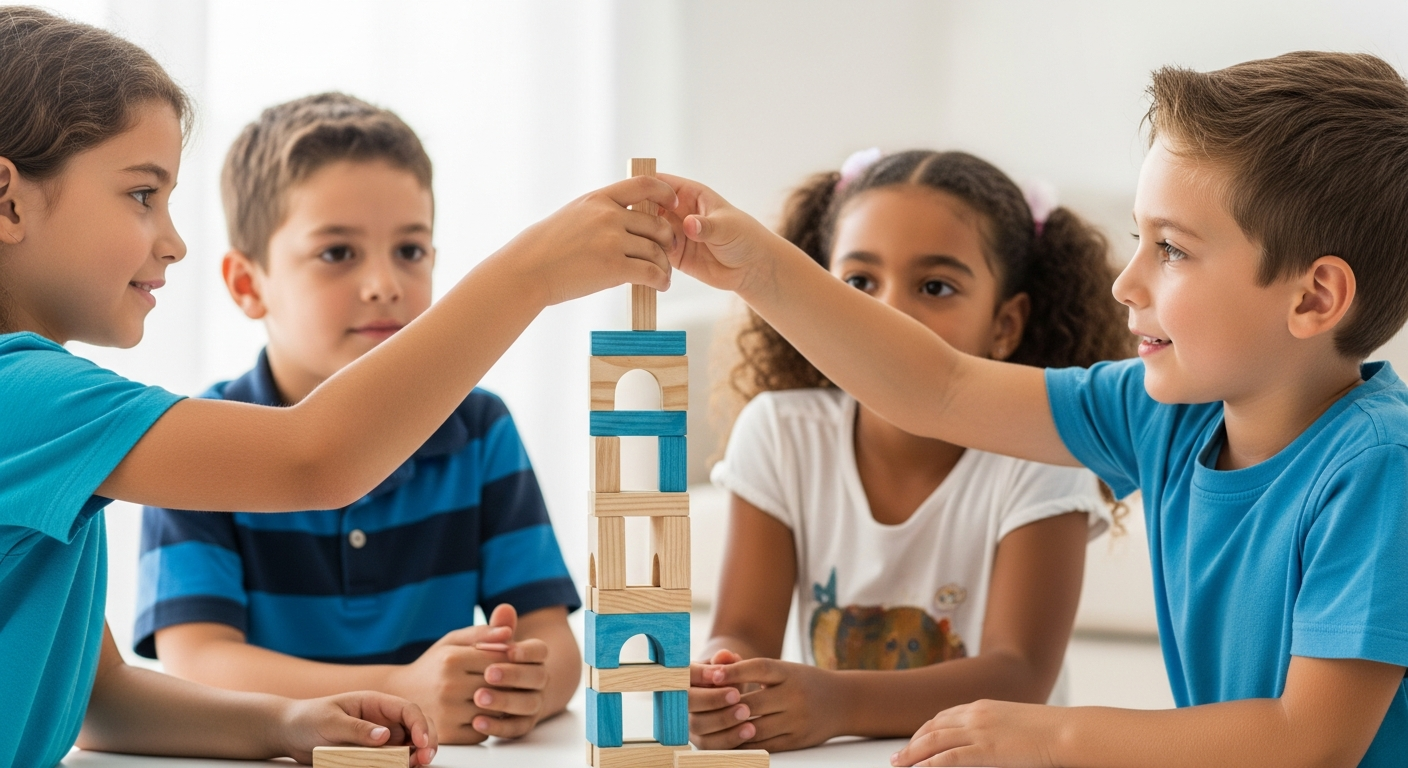
Table of Contents
- Introduction
- Understanding Social Communication and Pragmatics
- The Power of Video Modeling
- Early Social Skills: Building the Foundation
- Social Skills Speech Therapy Activities for Preschoolers
- Advanced Social Skills for Older Children
- Social Skills "In the Wild": Community Activities
- How Speech Blubs Supports Social Development
- Setting Realistic Expectations
- Choosing the Right Plan for Your Family
- Summary of Activities
- Conclusion
- Frequently Asked Questions
Introduction
Have you ever watched your child stand on the edge of a playground, eyes fixed on a group of kids playing tag, yet unable to find the words or the courage to join in? It is a heart-wrenching moment for any parent. We want our children to connect, to laugh, and to build the friendships that define a happy childhood. However, for about one in four children, these social "rules" aren’t picked up naturally. They aren’t just being shy; they are often struggling with the complex world of pragmatics—the social use of language.
At Speech Blubs, we understand this struggle intimately. Our company was born from the personal experiences of our founders, who all grew up with speech challenges themselves. They created the tool they wished they had as children: a joyful, effective way to bridge the gap between silence and connection. Our mission is to empower every child to "speak their minds and hearts," turning what can be a source of frustration into a journey of confidence.

In this post, we will explore a variety of social skills speech therapy activities designed to help your child navigate social waters. We will cover everything from basic responsiveness to advanced perspective-taking, while showing you how our unique "smart screen time" can be a powerful partner in this process. By the end of this article, you will have a comprehensive toolkit of activities to foster your child’s love for communication and build the foundational skills they need to thrive in a social world.
Understanding Social Communication and Pragmatics
Before diving into activities, it is helpful to understand what we are actually practicing. In the world of speech therapy, we often use the term "pragmatics." This simply refers to how we use language to get things done in social situations. It isn’t just about the words we say, but how we say them, to whom, and in what context.
Social communication involves a huge range of skills, including:
- Nonverbal communication: Facial expressions, eye contact, and body language.
- Conversation rules: Taking turns, staying on topic, and knowing how to start or end a chat.
- Adjusting language: Talking differently to a baby than to a teacher, or providing background info to someone who doesn't know the story.
- Understanding perspectives: Realizing that other people have different thoughts and feelings than we do.
When a child struggles with these, it can lead to frustration and isolation. Our goal isn't to change who your child is, but to give them the "social keys" to unlock the doors they want to walk through.
The Power of Video Modeling
One of the most effective ways to teach social skills is through a scientific method called "video modeling." This is the cornerstone of our approach at Speech Blubs. Research shows that children learn incredibly well by watching and imitating their peers. This process triggers "mirror neurons" in the brain, which help children observe an action and then mentally (and physically) rehearse it.
Unlike passive cartoons that children simply watch, our app provides a "smart screen time" experience. We use real children—not animations—to demonstrate speech sounds, facial expressions, and social cues. When your child sees another child their age making a funny face or saying a new word, they are much more motivated to try it themselves. This peer-to-peer connection is powerful because it feels achievable and fun. You can learn more about the science behind our method on our Research page.

Early Social Skills: Building the Foundation
For toddlers and younger children, social skills begin with the absolute basics: noticing that other people exist and are trying to interact with them.
Responding to Their Name
It sounds simple, but responding to a name is the first step in social engagement. If your child is "tuned out," try making it a game. Hide behind a couch and call their name; when they look or move toward you, pop out with a joyful "Peek-a-boo!" This associates their name with a positive, social reward.
Establishing Joint Attention
Joint attention is when two people look at the same thing together. It is the root of all shared experiences.
- Activity: Blow bubbles! Point to a bubble and say, "Look at that big one!" Wait for your child to look at the bubble and then back at you. This "shared look" is a massive milestone in social development.
- Speech Blubs Tip: In the "Animal Kingdom" section of our app, you and your child can look at the animals together. When a child on the screen mimics a monkey, you can both laugh and try to do the same. This shared digital experience translates into a real-world social bond.
Social Skills Speech Therapy Activities for Preschoolers
As children enter the preschool years, the social demands increase. They move from "parallel play" (playing near each other) to "cooperative play" (playing together).
1. Emotion Charades
Understanding facial expressions is a vital social skill. Many children struggle to read the subtle cues that tell them if a friend is sad, angry, or excited.
- How to Play: Take turns acting out an emotion using only your face and body. You might "stomp" for angry or "slump" for sad. Have your child guess the feeling.
- Why it Works: It builds emotional intelligence and perspective-taking. It helps them realize that what they do with their body sends a message to others.
2. The "Roleplay" Restaurant
Practicing social routines in a safe environment reduces anxiety when the real thing happens.
- Activity: Set up a pretend restaurant at home. Give your child a menu and let them be the customer while you are the server, then swap roles.
- Scenario: For a parent whose 4-year-old is hesitant to speak to strangers, practicing "I would like the juice, please" in a living-room cafe can build the "muscle memory" needed for a real trip to a restaurant.
- Focus on: Eye contact when ordering, saying "thank you," and waiting for the "server" to finish talking.
3. Collaborative Board Games
Board games are essentially social skill "gyms." They require following rules, taking turns, and—most importantly—managing the emotions of winning and losing.
- Activity: Choose simple games like "Candy Land" or "Chutes and Ladders."
- The Strategy: Instead of just playing, narrate the social process. "It's your turn now. I have to wait. It’s hard to wait, but I can do it!" If they lose, model a "good sport" reaction: "I’m sad I didn't win, but I had fun playing with you! Good game."
Advanced Social Skills for Older Children
As children grow, social interactions become more nuanced. They involve figurative language, staying on topic during long conversations, and making "inferences" about what people mean.
4. Perspective-Taking with Stories
Understanding that people have different points of view is a high-level skill.
- Activity: Read a book together and stop at a critical moment. Ask, "How do you think that character feels right now? Why do they feel that way?"
- The Challenge: Try to imagine what a character doesn't know. "Does the pig know the wolf is outside the door? No? How does that change what the pig is doing?" This helps children understand that others have different information and thoughts than they do.
5. Topic Maintenance: The "Conversation Train"
Some children struggle to stay on topic, often jumping to a favorite subject (like dinosaurs or trains) regardless of what the other person is saying.
- Activity: Use blocks to build a "conversation train." Every time someone says something related to the topic, add a block to the train. If someone says something completely unrelated, the train stops.
- Goal: See how long you can make the train! This visual representation helps children see how a conversation "grows" when we listen and respond to each other.
Social Skills "In the Wild": Community Activities
Sometimes the best speech therapy happens outside the house. Real-world practice is essential for generalizing the skills learned in therapy or through apps.
6. The Neighborhood Scavenger Hunt
- The Activity: Create a list of things to find (a red door, a blue car, a person walking a dog).
- The Social Twist: Include an item that requires interaction. "Find someone and ask them what their dog's name is," or "Wave and say hello to a neighbor."
- Why it Works: It provides a structured, low-pressure reason to initiate a social interaction.
7. Going Out to Lunch
Dining out is a goldmine for social practice. It involves a sequence of social events: greeting the host, ordering, waiting patiently, and paying.
- The Plan: Before you go, discuss the plan. "First, we will say 'Table for three, please.' Then, we will look at the menu."
- Empowerment: Encourage your child to order for themselves. Even if they only point and say the name of the food, it is a win for self-advocacy and social confidence.
How Speech Blubs Supports Social Development
While physical activities are vital, the digital tools you choose can either be a distraction or a catalyst for growth. At Speech Blubs, we believe in "smart screen time" that encourages interaction rather than passive consumption.
Our app is designed to be a bridge. We don't want your child to disappear into a screen; we want the screen to give them the tools to interact with you. Our "video modeling" methodology means your child is constantly watching real human faces. They see how mouths move to form words, how eyes crinkle in a smile, and how expressions change.
If you are unsure where to start, we highly recommend taking our quick 3-minute preliminary screener. It consists of 9 simple questions that provide you with an initial assessment and a personalized next-steps plan. It’s a great way to see which areas of communication your child might need the most support in.
Setting Realistic Expectations
It is important to remember that social skills are a marathon, not a sprint. You won't see your child become the "life of the party" overnight, and that shouldn't be the goal. Instead, we focus on:
- Building Confidence: Reducing the "scary" factor of social interactions.
- Fostering a Love for Communication: Making talking and playing feel like a reward in itself.
- Reducing Frustration: Giving them the tools to express their needs so they don't have to rely on tantrums or withdrawal.
- Creating Joyful Moments: Social skills are ultimately about connection. Every time you play a game together or share a laugh over a Speech Blubs video, you are strengthening that connection.
Our app is a powerful supplement to your child’s development. Whether they are working with a professional speech-language pathologist or you are looking for ways to support them at home, we are here to help. See what other parents are saying about their journey on our Testimonials page.
Choosing the Right Plan for Your Family
We want to make our tools accessible and effective for every family. We offer two main ways to join the Speech Blubs family, and we want to be transparent about which offers the most value for your child’s progress.
- Monthly Plan: For $14.99 per month, you get full access to the Speech Blubs language therapy app.
- Yearly Plan (Best Value): For $59.99 per year—which breaks down to just $4.99 per month—you receive the most comprehensive support.
By choosing the Yearly Plan, you save 66% compared to the monthly rate and unlock exclusive features that aren't available on the monthly plan:
- 7-Day Free Trial: Try everything risk-free for a full week.
- Reading Blubs App: A complete additional app focused on early literacy and reading skills.
- Priority Support: 24-hour response time from our support team.
- Early Access: Be the first to try new updates and features.
To get started with your 7-day free trial and give your child the full suite of communication tools, you can create your account on our website.
Summary of Activities
To help you keep track, here is a quick summary of the social skills speech therapy activities we’ve discussed:
ActivityGoalBest For
Peek-a-Boo Name Call
Responsiveness
Toddlers / Early Learners
Bubble Play
Joint Attention
Toddlers / Preschoolers
Emotion Charades
Nonverbal Cues
Preschoolers / School Age
Pretend Restaurant
Social Routines
Preschoolers / School Age
Conversation Train
Topic Maintenance
Older Children
Neighborhood Walk
Social Initiation
All Ages
Speech Blubs App
Imitation & Modeling
All Ages
Conclusion
Social skills are the threads that weave the fabric of a child’s life. They are what allow our kids to share their thoughts, make friends, and navigate the world with confidence. While some children find these skills challenging, they are absolutely skills that can be learned, practiced, and mastered through play and patience.
By incorporating social skills speech therapy activities into your daily routine—whether it’s a game of emotion charades, a roleplay session before lunch, or "smart screen time" with Speech Blubs—you are giving your child a priceless gift. You are helping them move from the sidelines of the playground into the heart of the action.
Remember, our mission is to help your child "speak their mind and heart." We’ve been where you are, and we are committed to providing a joyful, scientifically-backed solution for the families who need us most.
Ready to see your child's confidence grow? Download Speech Blubs today on the Apple App Store or Google Play Store. For the best experience and the most value, be sure to select our Yearly Plan to enjoy your 7-day free trial, the bonus Reading Blubs app, and early access to all our latest features. Let’s start this journey toward better communication together!
Frequently Asked Questions
1. Does my child need an autism diagnosis to benefit from social skills activities?
Absolutely not. While social communication challenges are a hallmark of autism, many children struggle with these skills for other reasons, such as language delays, social anxiety, or simply needing more practice. Our activities and the Speech Blubs app are designed to help any child who needs a boost in their communication confidence.
2. How much screen time is "too much" for speech therapy?
We advocate for "smart screen time." This means the time spent on the screen is active, educational, and encourages real-world imitation. We generally recommend short sessions of 10 to 15 minutes a few times a day, always with an adult nearby to co-play and reinforce what the child is learning on the screen.
3. Can these activities replace professional speech therapy?
Our app and these activities are powerful tools, but they are intended to be a supplement to, not a replacement for, professional therapy when it is needed. If you have significant concerns about your child's development, we always recommend consulting with a licensed Speech-Language Pathologist (SLP). Many SLPs actually use Speech Blubs in their sessions!
4. Why is the Yearly plan better than the Monthly plan?
The Yearly plan is designed to support long-term growth. Not only is it significantly cheaper (saving you 66%), but it also includes the Reading Blubs app, which helps with the next stage of communication: literacy. Plus, the 7-day free trial is only available with the Yearly plan, allowing you to explore the full benefits before committing.
About the author