
Engaging Toddler Food Activities for Playful Learning
 By Speech Blubs Team•Mar 18, 2026•14 min.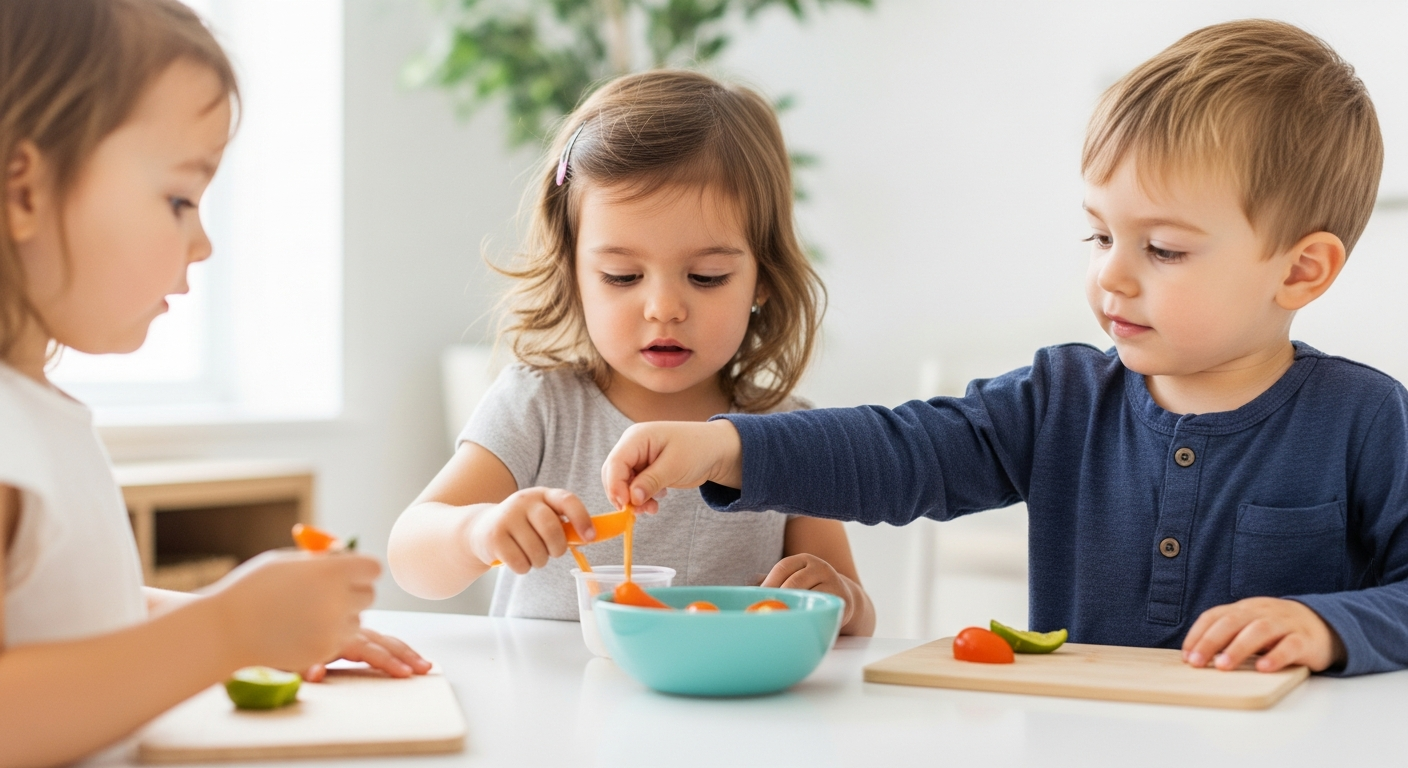
Table of Contents
- Introduction
- Why Food Play is Essential for Development
- Kitchen Helper: Real-World Activities
- Edible Arts and Crafts
- Overcoming Picky Eating Through Play
- The Language of Food
- Choosing the Right Tools and Environment
- Making the Most of "Smart Screen Time"
- Summary of Toddler Food Activity Ideas
- Conclusion
- Frequently Asked Questions
Introduction
Have you ever looked at your kitchen floor after a toddler’s meal and felt like you were standing in the middle of a modern art installation? There are smears of yogurt on the chair, a lonely broccoli floret across the room, and perhaps a dusting of cereal under the table. It is easy to view these moments as a messy chore, but at Speech Blubs, we see something much more exciting: a child who is actively learning about their world.
The transition from a baby who eats everything to a toddler who suddenly develops strong opinions (and maybe a fear of anything green) is a universal parenting challenge. However, what if we told you that "playing with food" is actually one of the most powerful tools in your developmental toolkit? In this post, we are going to explore a variety of toddler food activities that go far beyond just filling bellies. We will dive into sensory play, kitchen-based learning, and creative food arts that foster fine motor skills, reduce picky eating, and—most importantly—encourage the communication skills your little one needs to thrive.

Our mission at Speech Blubs is to empower every child to "speak their minds and hearts." We believe that every interaction is an opportunity for a "smart screen time" moment or a joyful family connection. By the end of this article, you will have a full menu of ideas to turn your kitchen into a classroom of delicious discovery.
Why Food Play is Essential for Development
Before we jump into the "how," let’s talk about the "why." You might have been told as a child to "stop playing with your food," but modern research suggests we should be doing the exact opposite. Food play is a recommended strategy for children who are hesitant eaters or those who struggle with sensory processing.
When a child interacts with food outside the high-pressure environment of "it’s time to eat," they are free to explore. They can learn that a mushroom feels spongy, that a lemon smells sharp, and that yogurt is delightfully squishy. This sensory exploration builds a foundation of comfort. Our scientific methodology emphasizes that children learn best through joyful, low-pressure engagement. Just as we use "video modeling" to show kids their peers successfully communicating, food play allows them to see and feel the properties of food without the demand to swallow it immediately.
By engaging in toddler food activities, you are helping your child:
- Build Confidence: Making choices and manipulating objects fosters independence.
- Develop Motor Skills: Squeezing, pouring, and stirring are excellent for hand-strength.
- Expand Vocabulary: Describing textures, colors, and tastes builds a rich language base.
- Reduce Frustration: When a child feels in control of their environment, they are more likely to stay calm during transitions like mealtimes.
If you are curious about where your child stands in their developmental journey, you can take our quick 3-minute preliminary screener. It involves just 9 simple questions and provides you with a personalized assessment and a free 7-day trial of our app.
Kitchen Helper: Real-World Activities
Toddlers crave autonomy. They want to do what you are doing. Instead of trying to keep them out of the kitchen while you cook, try bringing them into the process. This "real work" is a core principle of many educational philosophies and is a fantastic way to bond.

1. The Washing Station
Most toddlers are naturally drawn to water. Give them a safe step stool or a learning tower, fill the sink with a little bit of cool water, and let them wash the produce.
- The Activity: Give them a clean sponge or a soft brush and a pile of potatoes, apples, or thick-skinned oranges.
- The Benefit: This is a fantastic tactile experience. As they scrub, you can narrate: "Wash, wash, wash. The potato is bumpy! The apple is smooth."
- Speech Connection: This is the perfect time to practice action words. In our app, we focus on helping kids "speak their minds" by connecting actions to sounds. You can find similar themes in our "Yummy Time" section, where kids learn about different foods through play.
2. The Great Stir-Off
Whether you are making a batch of muffins or just a simple salad dressing, let your toddler be the "Master Mixer."
- The Activity: Use a large, sturdy bowl and a wooden spoon. If you’re worried about the mess, place a towel or a "splat mat" under the bowl. Let them stir dry ingredients like flour or oats before you add the liquids.
- The Benefit: Stirring requires bilateral coordination—using both sides of the body together. One hand holds the bowl while the other moves the spoon.
- Practical Scenario: For a parent whose 3-year-old "late talker" loves to help, stirring can become a rhythmic game. You can say, "Round and round we go!" and wait for them to mimic the motion or try to say "round."
3. Crinkle Cutting and Chopping
Safety is always the priority, but even young toddlers can start practicing their cutting skills with the right tools.
- The Activity: A wavy crinkle cutter or a specialized nylon "toddler knife" is perfect for slicing soft items like bananas, strawberries, or cucumbers.
- The Benefit: This develops the pincer grasp and hand-eye coordination.
- Encouragement: If your child is hesitant to touch certain textures, like a sticky banana, using a tool provides a "bridge" between their hand and the food.
Edible Arts and Crafts
Food doesn't just have to stay on a plate; it can be a medium for artistic expression. These activities are particularly helpful for "tactile defensive" children—those who don't like getting their hands messy.
4. Yogurt or Pudding Painting
Forget the traditional finger paints for a moment. If your child is still in the phase where everything goes in their mouth, edible "paint" is a stress-free alternative.
- How to do it: Use plain Greek yogurt or vanilla pudding as your base. Add a drop of food coloring (or beet juice for a natural option) to create different colors.
- The Play: Spread the "paint" on a clean tray or a large piece of parchment paper. Let them use their fingers, or provide "brushes" made from stalks of celery or broccoli florets.
- Why we love it: It’s a full sensory experience. They see the colors, feel the cool creaminess, and can safely taste the "ink."
5. Rainbow Rice Sensory Bin
While not strictly "edible" once dyed (though non-toxic), rainbow rice is a staple in toddler food activities.
- The Activity: Mix dry white rice with a splash of vinegar and food coloring in a sealed bag. Shake it up and let it dry. Once dry, dump the colorful rice into a large bin with scoops, funnels, and small toys.
- Developmental Tip: Hide small toy animals in the rice. As your child finds them, encourage them to make the animal sound. If they find a cow, you can say "Moo!" and wait for them to imitate. This is exactly how our "Animal Kingdom" section works—using fun visuals and peers to encourage imitation.
6. Snack Necklaces
This is a classic for a reason. It combines a snack with a high-level fine motor task.
- The Activity: Use a piece of clean string or even a long piece of dry spaghetti. Have your child thread "O" shaped cereals or pretzels onto the string.
- The Benefit: This requires incredible focus and precision. It’s also a great opportunity to practice counting. "One cereal, two cereals..."
Overcoming Picky Eating Through Play
One of the biggest hurdles parents face is the dreaded "I don't like it" before a child has even tasted a bite. Picky eating is often a battle of control and a fear of the unknown. By turning new foods into a game, you strip away the "fear" factor.
7. The Mystery Bag
This is a wonderful way to introduce new produce.
- The Activity: Place a few different fruits or vegetables in an opaque brown paper bag. Have your child reach in without looking and describe what they feel. Is it prickly (pineapple)? Is it round (orange)? Is it long (carrot)?
- The Goal: The goal isn't to make them eat it; it’s to make them curious. When they pull the item out, celebrate the discovery!
8. Food Sculptures and "Food Faces"
We often tell kids not to play with their food, but making a "snack face" is a fantastic way to encourage them to interact with veggies.
- The Activity: Use a rice cake or a slice of toast with a thin layer of cream cheese or nut butter as a "canvas." Use shredded carrots for hair, cucumber slices for eyes, and a red pepper strip for a mouth.
- Connecting Emotions: You can use this to teach emotions. "Is the snack face happy? Let's give him a big smile!" This mirrors the "Face Bonanza" activities we offer, where children learn about expressions and the movements of the mouth.
At Speech Blubs, we’ve seen countless parents find success by shifting the focus from "nutrition intake" to "joyful exploration." You can read more about these real-world wins on our testimonials page.
The Language of Food
Every toddler food activity is a language lesson in disguise. As a parent, you are your child's first and most important teacher. You don't need a clinical background to help your child develop; you just need to be present and engaged.
When you engage in these activities, focus on:
- Self-Talk: Narrate what you are doing. "I am pouring the milk. Pour, pour, pour."
- Parallel Talk: Narrate what your child is doing. "You are squishing the dough! Squish, squish."
- Expansion: If your child says "Apple," you can expand it to "Red apple!" or "Crunchy apple!"
Our app is designed as a "screen-free alternative" to passive cartoons. While it uses a screen, it is an active, two-way experience that encourages your child to produce sounds and words. It’s the perfect supplement to the "messy" learning happening in your kitchen. Ready to join the family? Download Speech Blubs on the App Store or Google Play to begin.
Choosing the Right Tools and Environment
To make toddler food activities successful, you need to set the stage. A little preparation goes a long way in preventing "parent burnout."
Safety First
Always supervise your child during food play. Be mindful of choking hazards—grapes should be halved, and hard nuts should be avoided for very young toddlers. Ensure all tools, like scissors or knives, are specifically designed for small hands and have blunt edges.
Embrace the Mess
If you are worried about your rugs, take the activity outside or put an old shower curtain liner on the floor. Wear "play clothes" that you don't mind getting stained. When you aren't stressed about the cleanup, your child will pick up on that relaxed energy and be more willing to explore.
Realistic Expectations
Remember, the goal isn't a perfect 5-star meal or a child who gives a public speech about carrots. The goal is building a love for communication and a foundational comfort with different textures. Some days, your toddler might only want to throw the rice. That’s okay! It’s all part of the learning process. We don't promise overnight miracles; we provide the tools for steady, joyful progress.
Making the Most of "Smart Screen Time"
In today’s world, screens are everywhere. At Speech Blubs, our founders—who all grew up with speech challenges themselves—wanted to create the tool they wished they had. We believe in "smart screen time" that acts as a bridge to real-world interaction.
After a fun afternoon of kitchen play, you can reinforce those concepts with the Speech Blubs app. Our unique approach uses video modeling, where children watch other children perform speech exercises. This triggers "mirror neurons" in the brain, making them much more likely to try the sounds themselves.
Why the Yearly Plan is the Best Choice
When you decide to support your child's journey with Speech Blubs, we want to provide the best possible value. We offer two main plans:
- Monthly Plan: $14.99 per month. This is a great way to test the waters.
- Yearly Plan: $59.99 per year.
The Yearly Plan is the clear winner for families committed to growth. Not only does it save you 66% compared to the monthly rate (bringing the cost down to just $4.99/month), but it also includes exclusive benefits:
- A 7-day free trial so you can explore everything risk-free.
- The Reading Blubs app, which helps transition your child from speaking to early reading skills.
- Early access to all new content updates.
- 24-hour support response time for any questions you have.
The Monthly plan does not include the free trial or the extra Reading Blubs app, so we highly recommend the Yearly option to get the full suite of features designed for your child's success. You can create your account and begin your 7-day free trial today.
Summary of Toddler Food Activity Ideas
If you're looking for a quick reference, here are some of the top activities we’ve discussed, categorized by their primary benefit:
ActivityPrimary SkillSpeech/Language Focus
Washing Produce
Tactile Sensory
Action words (Wash, Scrub, Wet)
Yogurt Painting
Creativity / Fine Motor
Colors and Textures (Smooth, Blue)
Mystery Bag
Sensory Discrimination
Descriptive Adjectives (Round, Prickly)
Snack Necklaces
Precision / Fine Motor
Counting and Sequences (One, Two, Next)
Food Faces
Emotional Intelligence
Emotions and Body Parts (Happy, Eyes, Nose)
Rainbow Rice
Imaginative Play
Animal Sounds and Prepositions (In, Under)
Conclusion
Toddler food activities are about so much more than just a snack. They are a gateway to confidence, a bridge to new vocabulary, and a way to turn a stressful "picky eating" phase into a season of shared joy. By involving your child in the kitchen—whether they are scrubbing a potato, painting with pudding, or threading a cereal necklace—you are giving them the "smart play" experiences they need to grow.
At Speech Blubs, we are here to walk alongside you. We understand the frustration of a child who isn't quite communicating yet, and we know the immense pride that comes with their first "Moo," "Baa," or "Apple!" Our blend of scientific principles and peer-led play is designed to be a powerful supplement to your child's overall development.
Are you ready to turn screen time into "speak time"? We invite you to join our community of over 4 million parents. Choose the Yearly plan to unlock the best value, including your 7-day free trial and the Reading Blubs app. Together, we can help your child speak their mind and heart.
Get started on Google Play or the Apple App Store today!
Frequently Asked Questions
1. What if my toddler just throws the food during these activities?
It is completely normal for toddlers to test boundaries and explore "gravity." If the throwing becomes the main focus, try to redirect them to a specific action, like "Can you put the rice in the cup?" If they continue to throw, it might be a sign they are finished or overwhelmed. Keep the sessions short (5-10 minutes) to match their attention span.
2. Is food play safe for children with allergies?
Safety is paramount. Always use "safe" foods that you know your child is not allergic to. If you are doing a sensory bin with dried beans or rice, ensure your child is past the stage of putting everything in their mouth, or use larger edible items like "O" cereals. If you have concerns about textures, you can always start with dry play before moving to wet textures like yogurt.
3. How often should we do these food activities?
There is no "perfect" schedule. You can incorporate small things, like washing an apple, into your daily routine. More "involved" activities like yogurt painting or rainbow rice might be better suited for a rainy afternoon or a weekend. The key is consistency and keeping it fun, rather than making it feel like "homework."
4. Can food play really help with speech delays?
Yes! Speech is a motor skill, and it is also a social one. Food play encourages "joint attention"—where you and your child are both focused on the same task. This shared focus is the foundation of communication. By narrating the play and encouraging your child to label what they see and feel, you are building the neural pathways needed for speech. For a more structured approach, the Speech Blubs app uses these same principles of play and imitation.
About the author