
Engaging Toddler Social Development Activities for Success
 By Speech Blubs Team•Mar 18, 2026•14 min.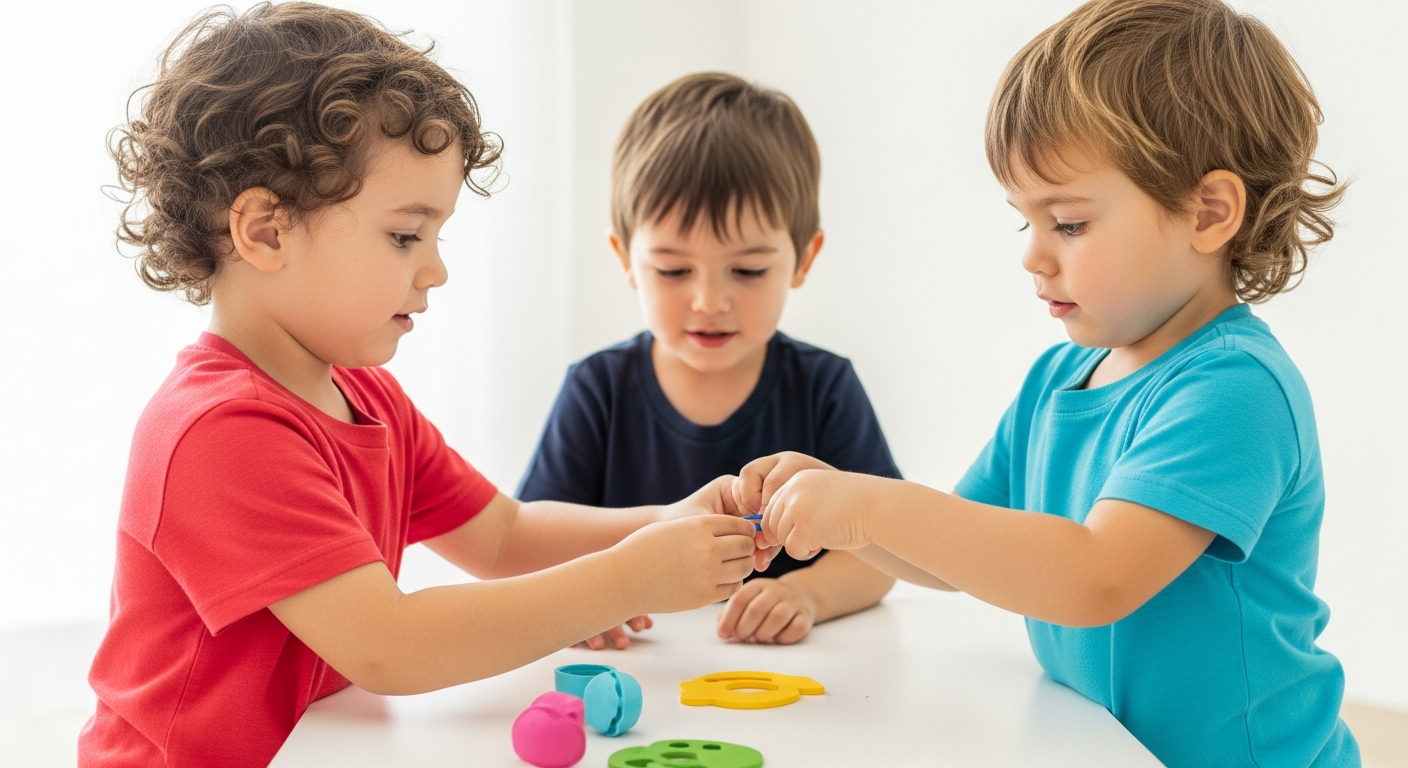
Table of Contents
- Introduction
- The Foundation of Social-Emotional Development
- Engaging Toddler Social Development Activities
- The Science Behind Our Methodology
- Strengthening Social Skills Through Daily Routines
- Why Choosing the Right Plan Matters for Your Child
- Building Confidence and Reducing Frustration
- More Practical Games for Social Growth
- How Speech Blubs Supports the Journey
- Summary of Social Activities for Toddlers
- FAQ
- Conclusion
Introduction
Have you ever watched a group of toddlers in a playgroup and noticed how one child eagerly shares a block while another clutches their toy, shouting a defiant "Mine!"? This common playground scene isn’t just about a favorite toy; it’s a window into the complex, fascinating world of social-emotional growth. For many parents, navigating these early interactions feels like a high-stakes guessing game. We often wonder: Is my child playing "correctly"? Why are they struggling to make eye contact? When will they finally start playing with others instead of just alongside them?
At Speech Blubs, our mission is to empower children to "speak their minds and hearts." We know that communication is the heartbeat of social interaction. Our founders, who navigated their own speech challenges as children, created the tool they wished they had—a joyful, evidence-based platform that turns screen time into "smart screen time." We understand that for the 1 in 4 children who need speech support, social development can feel especially daunting.

In this article, we will explore a wide variety of toddler social development activities designed to foster empathy, cooperation, and confidence. We’ll dive into the science of how toddlers learn, provide practical games you can start today, and show you how our unique video modeling methodology can bridge the gap between solo play and social mastery. By focusing on joyful, play-based learning, we can help our children build the foundational skills they need to thrive in a world built on connection.
The Foundation of Social-Emotional Development
Social development isn't just about learning to say "please" and "thank you." It is the process through which children learn to build healthy relationships, manage their emotions, and understand the perspectives of others. This early foundation is critical because it influences a child’s mental well-being, future academic success, and even their physical health.
Why Early Social Skills Matter
The quality of a child's early social experiences literally shapes their brain development. When a toddler interacts with a caregiver or a peer, their brain is forming neural pathways related to trust, empathy, and problem-solving. These early years are a crucial window where we can foster resilience.
- Empathy: The ability to recognize and respond to the feelings of others.
- Emotional Regulation: Learning how to manage big feelings like frustration or excitement.
- Cooperation: Working together toward a common goal, like building a block tower.
- Communication: Using both words and non-verbal cues to express needs and thoughts.
If you are unsure where your child stands in their development, taking our quick 3-minute preliminary screener is a great first step. It consists of 9 simple questions and provides an assessment and a next-steps plan to support your child’s journey.
Engaging Toddler Social Development Activities
The best way for toddlers to learn is through play. These activities are designed to be simple, low-stress, and fun for both the child and the parent.

1. The Name Game
This is a fantastic activity for toddlers who are just starting to notice their peers. Using a soft ball, sit in a circle with your child and perhaps a few family members or friends.
How to Play: Before rolling or tossing the ball, the person holding it must call out the name of the person they are sending it to. Why it Works: This encourages children to be attentive to others and reinforces the importance of eye contact and intentionality. It helps them recognize that their peers are individuals with their own names and identities.
2. Roll the Ball: A Lesson in Turn-Taking
Turn-taking is one of the hardest social skills for a toddler to master because it requires impulse control.
How to Play: Sit on the floor opposite your child and roll a ball back and forth. Why it Works: Even without words, this game teaches the "give and take" nature of conversation. Your child learns to wait for their turn, observe your body language, and regulate the force of their movements. This simple "back and forth" is the physical precursor to verbal dialogue.
3. Emotion Charades
Understanding facial expressions is a key component of social intelligence. Some children, particularly those with social challenges or speech delays, may find it difficult to read these cues.
How to Play: Write or draw different emotions (happy, sad, angry, surprised) on slips of paper. Pick one and act it out using only your face and body. Ask your child to guess what you are feeling. Why it Works: This helps children recognize emotions using non-verbal cues. If your child finds this challenging, our app uses peer-led video modeling to show children real faces making these expressions, which can be less intimidating than direct face-to-face practice.
4. Collaborative Art Projects
While solo drawing is great for creativity, collaborative art is better for social development.
How to Play: Take a large piece of butcher paper and tape it to the floor. Tell your child, "Let’s draw a big garden together!" Why it Works: They have to navigate space, share crayons, and negotiate what gets drawn where. "I’m drawing a blue flower here; can you draw a yellow one next to it?" This fosters teamwork and reduces the "territorial" nature of toddler play.
5. Playing with Characters and Pretend Play
Toddlers have a natural tendency to play pretend. This is where they "rehearse" life.
How to Play: Use stuffed animals or dolls to act out social scenarios. For example, have two teddy bears "disagree" over a toy and then show them how to resolve it peacefully. Why it Works: This creates a low-risk environment for your child to explore complex feelings. They can practice empathy for the "sad" doll without the pressure of a real-life conflict.
Practical Scenario: For a parent whose 3-year-old "late talker" loves animals, the "Animal Kingdom" section in Speech Blubs offers a fun, motivating way to practice social sounds. By watching a peer on the screen "moo" like a cow, the child feels encouraged to imitate. You can then take this to the physical world: "The cow is hungry! What should we feed him?" This transition from the app to real-world pretend play builds both speech and social imagination.
The Science Behind Our Methodology
At Speech Blubs, we don’t just create games; we follow a scientific methodology designed to produce results while keeping the experience joyful. Our approach is centered on video modeling.
Mirror Neurons and Peer Imitation
When a child watches another child (a peer) perform a task or make a sound, something incredible happens in their brain. "Mirror neurons" fire, essentially making the child's brain feel as if they are performing the action themselves. This makes imitation—the foundation of all learning—much more likely.
Our method is backed by research, placing us in the top tier of speech and development apps worldwide. By using peer-led videos, we reduce the "performance anxiety" that some toddlers feel when an adult asks them to "say this" or "do that." Instead, they see a friend on the screen having fun, and they want to join in.
Smart Screen Time vs. Passive Viewing
We are often asked about the role of technology in toddler development. We advocate for "smart screen time," which is a screen-free alternative to passive viewing like cartoons. Unlike a cartoon that a child just sits and watches, Speech Blubs is interactive. It requires the child to listen, observe, and respond. It is a powerful tool for family connection, meant to be used alongside a parent to spark real-world conversation.
Strengthening Social Skills Through Daily Routines
You don't always need a "game" to work on social development. Everyday life is full of opportunities to practice.
Expressing Feelings with Words
As toddlers develop a sense of self, they experience complex emotions like shame, jealousy, and embarrassment. They often lack the words to describe these feelings, which leads to "acting out" or tantrums.
- Label the Feeling: "I see you are feeling frustrated because that block tower fell down. It’s okay to be frustrated."
- Offer a Strategy: "When I’m frustrated, I take a deep breath. Do you want to try?"
- Model It: Share your own feelings. "I am so happy that we are going to the park today!"
Encouraging Early Friendships
Toddlers typically engage in "parallel play" (playing near each other but not together) before they move to "associative" or "cooperative" play. You can support this transition by:
- Providing Multi-Player Activities: Sandboxes, water tables, and music-making are great because multiple kids can participate without having to "share" a single item immediately.
- The "Friend Book": Take photos of your child’s playmates and make a simple book. Talk about what each friend likes. "This is Leo. Leo likes dinosaurs, just like you!" This builds a sense of community.
Why Choosing the Right Plan Matters for Your Child
We are committed to providing an immediate, effective, and joyful solution for families. To get the most out of our resources, we offer two main subscription options.
- Monthly Plan: For $14.99 per month, you get full access to our speech-boosting activities.
- Yearly Plan (Best Value): For $59.99 per year (which breaks down to just $4.99/month), you save 66% compared to the monthly plan.
The Yearly plan is the clear best choice for parents committed to their child's long-term development. It includes:
- A 7-day free trial to explore all features.
- The Reading Blubs app, which helps transition your child from speaking to early literacy.
- Early access to new updates and a 24-hour support response time.
By choosing the yearly plan, you ensure your child has a consistent, growing library of tools to support their social and verbal evolution. Create your account and begin your 7-day free trial today to see the difference for yourself.
Building Confidence and Reducing Frustration
One of the greatest barriers to social development is frustration. When a child cannot communicate their needs, they may withdraw or lash out. Our goal is to foster a love for communication, which naturally leads to better social outcomes.
Realistic Expectations
It’s important to remember that social skills are a marathon, not a sprint. We don’t suggest guaranteed outcomes like "your child will be the most popular kid in preschool in a month." Instead, we focus on the benefits of the process:
- Fostering a love for interaction.
- Building the confidence to try new sounds and words.
- Developing the foundational skills of attention and imitation.
See what other parents are saying about how their children have built confidence and reduced frustration through our joyful approach.
More Practical Games for Social Growth
6. Simon Says: The Ultimate Listening Game
This classic game is a powerhouse for social development.
Why it Works: It builds self-control, listening skills, and impulse control. Your child has to pay close attention to the instructions and wait for the specific cue ("Simon says") before acting. This translates directly to the classroom environment where following directions is essential.
7. Rhythm and Music Games
Making music together is a deeply social act. Whether you are banging on pots and pans or using toy instruments, the goal is synchronization.
Why it Works: Studies show that joint music-making helps foster helpful behavior in children. When children have to follow a rhythm together, they become more "in sync" with their peers' movements and intentions.
8. Staring Contest (With a Twist)
Many children struggle with eye contact, which can be perceived as a lack of interest in social situations.
How to Play: Instead of a serious contest, make it a "smiling contest." Who can look at the other person the longest without laughing? Why it Works: It helps kids make and keep eye contact in a way that is playful rather than pressured. If your child is uncomfortable, you can start by putting a fun sticker on your forehead to give them a specific point to look at.
9. Building Together
Give two children a pile of blocks and one goal: "Build the tallest tower you can."
Why it Works: They will have to communicate their methods, take turns placing blocks, and—most importantly—deal with the "disaster" together if the tower falls. Learning to "try again" with a partner is a vital life skill.
How Speech Blubs Supports the Journey
Our app is designed to be a powerful supplement to your child’s overall development plan and professional therapy. We believe in "co-play." The app is most effective when you sit with your child, mimic the children on the screen together, and then bring those activities into your daily life.
To start your journey, you can download Speech Blubs on the App Store or Google Play.
Summary of Social Activities for Toddlers
ActivityPrimary Skill TargetedHow to Adapt at Home
Roll the Ball
Turn-taking & Self-control
Use different sized balls to vary the challenge.
Emotion Charades
Emotional Intelligence
Use a mirror so the child can see their own face.
Simon Says
Impulse Control & Listening
Start with very simple one-step directions.
Speech Blubs App
Peer Imitation & Vocabulary
Use "smart screen time" to mimic peer models.
Pretend Play
Empathy & Perspective
Use puppets to act out "tricky" social moments.
FAQ
1. How do I know if my toddler's social development is on track?
Every child develops at their own pace, but by age two, most children begin to show interest in other children, use simple phrases, and engage in "parallel play." If you are concerned about their ability to make eye contact or respond to their name, we recommend taking our 3-minute screener and discussing the results with your pediatrician.
2. My child prefers to play alone. Is that a problem?
Not necessarily! "Solo play" is a normal developmental stage. However, introducing gentle toddler social development activities like "Roll the Ball" can help them start to understand the joy of interaction. The goal is to build a bridge between their independent world and the social world at a pace that feels safe for them.
3. Can an app really help with social skills?
While nothing replaces real-human interaction, Speech Blubs uses "video modeling," which is a scientifically proven way to help children learn social cues and speech by watching their peers. It acts as a "practice round" for the real world, building the confidence they need to interact with other children in person.
4. What is the best way to handle "sharing" issues?
Toddlers don't fully understand the concept of sharing yet. Instead of forcing them to "give it up," try "timed turns." Use a kitchen timer and say, "It’s Sarah’s turn for two minutes, then it’s your turn." This gives the child the security of knowing the toy will come back to them, which reduces the anxiety that causes grabbing.
Conclusion
Social development is the journey of a lifetime, and the first steps happen right in your living room. By engaging in simple, joyful toddler social development activities, we provide our children with the tools to express their hearts and connect with the world around them. Whether it’s a game of "Simon Says," a collaborative drawing, or practicing sounds with a peer in our app, every interaction is a building block for their future.
At Speech Blubs, we are honored to be a part of your family’s journey. Our founders’ personal experiences drive us to create the most effective, science-backed tools possible, helping your child find their voice and their confidence.
Ready to get started? Download Speech Blubs on the App Store or Google Play today. We highly recommend choosing the Yearly plan to take advantage of the 7-day free trial, the bonus Reading Blubs app, and the best long-term value for your child's growth. Together, let’s help them speak their minds and hearts!
About the author