
Helping Your Child with Speech Delay at Home: A Guide
 By Speech Blubs Team•Mar 9, 2026•14 min.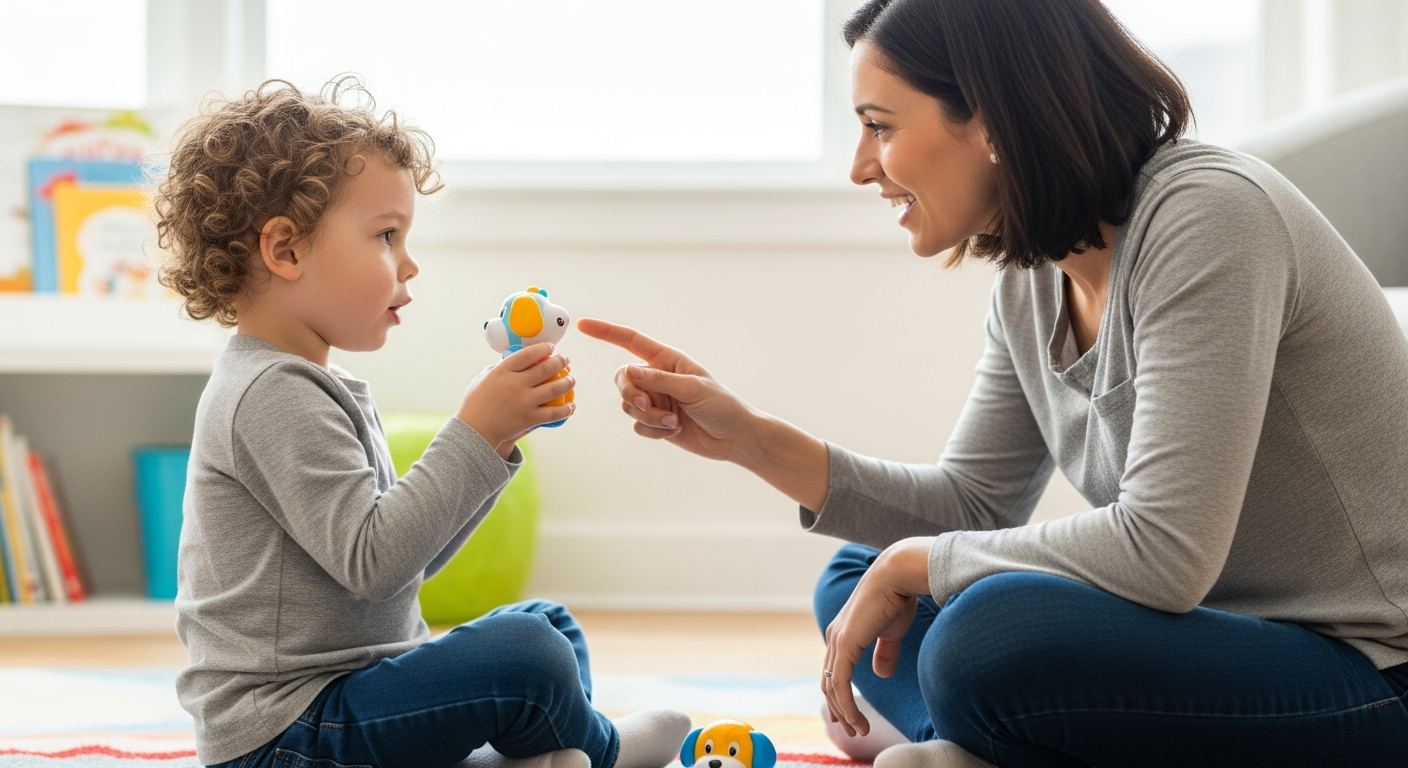
Table of Contents
- Introduction
- Understanding Speech Delay and the "Late Talker"
- The Power of the Home Environment
- 15 Practical Strategies for How to Help with Speech Delay at Home
- The Speech Blubs Methodology: Why it Works
- Choosing the Right Plan for Your Family
- Integrating Speech Therapy at Home with Professional Support
- Identifying When to Seek Extra Help
- FAQs
- Conclusion
Introduction
Did you know that approximately 1 in 4 children will need some form of speech support during their early development? Imagine for a moment that you are watching your two-year-old playing with their favorite blocks. You see them concentrating, stacking, and smiling, but when they want to tell you about the "big tower," the words just aren't there yet. Instead, there is a pointed finger or perhaps a frustrated tug on your sleeve. If you find yourself wondering why other children in the playgroup are chatting away while your little one remains quiet, you are certainly not alone. At Speech Blubs, we understand this journey intimately because our founders lived it; they grew up with speech challenges themselves and built the tool they wished they had as kids.
The purpose of this post is to provide you with a comprehensive, heart-centered roadmap for how to help with speech delay at home. We will explore the nuances between speech and language delays, identify key developmental milestones, and provide fifteen actionable, play-based strategies you can start using today. Our mission is to empower children to speak their minds and hearts, and we believe that the most powerful breakthroughs happen in the comfort of your living room through joyful, everyday connection. By the end of this article, you will have a toolkit of "smart screen time" ideas and home-based techniques that foster a love for communication and build your child’s confidence.

Understanding Speech Delay and the "Late Talker"
Before diving into strategies, it is helpful to understand exactly what we mean when we talk about a delay. While every child follows their own unique internal clock, there are generally accepted milestones that serve as a compass for development.
What is a Speech Delay?
A speech delay occurs when a child is not meeting the expected communication benchmarks for their age. It is often divided into two categories: expressive language (the ability to put thoughts into words) and receptive language (the ability to understand what others are saying). A child might be excellent at following your directions ("Pick up the blue ball") but struggle to name the ball themselves. Alternatively, some children may be "late talkers"—toddlers who understand language perfectly well and have typical motor and social skills but simply start using spoken words later than their peers.
Key Milestones to Watch
To help you gauge your child's progress, here are some typical markers:
- 12 Months: Using simple gestures like waving "bye-bye" or pointing to show you something interesting.
- 18 Months: Starting to use single words and imitating sounds or words they hear you say.
- 2 Years: Having a vocabulary of about 50 words and beginning to put two words together (e.g., "More juice" or "Doggy bark").
- 3 Years: Using short sentences and being understood by familiar adults about 50% to 75% of the time.
If you are feeling uncertain about where your child stands, we offer a 3-minute preliminary screener consisting of nine simple questions to provide you with an assessment and a next-steps plan.
The Power of the Home Environment
Many parents believe that speech therapy only happens in a clinical office once a week. However, research, including studies from Vanderbilt University, shows that parents and caregivers are the most influential "therapists" in a child’s life. Why? Because you are there for the bath times, the grocery store runs, and the bedtime snuggles. These everyday routines are the most fertile ground for language growth.

At Speech Blubs, we view our app as a powerful supplement to this environment. We provide a screen-free alternative to passive viewing (like mindless cartoons) by turning screen time into an active, social experience. We call this "smart screen time," where the goal isn't to distract your child, but to engage them in a way that creates joyful family learning moments.
15 Practical Strategies for How to Help with Speech Delay at Home
Helping your child doesn't require expensive equipment or specialized training. It requires your presence and a bit of intentionality. Here are fifteen proven strategies:
1. Self-Talk: The Daily Narrator
Self-talk is simply the act of being a "sportscaster" for your own life. You describe what you are doing as you do it.
- Scenario: If you are folding laundry, you might say, "I am folding the red shirt. Now, I am putting the socks in the basket. The basket is full!" This teaches your child vocabulary in context without requiring them to respond.
2. Parallel Talk: Narrating Their World
Parallel talk is similar, but instead of talking about yourself, you talk about what your child is doing.
- Scenario: For a parent whose 3-year-old "late talker" loves animals, the "Animal Kingdom" section of our app is a great catalyst. As they watch a peer mimic a lion, you might say, "You see the lion! The lion is big. You are making a loud roar!"
3. Provide Choices
Instead of simply giving your child what they need, offer two options. This forces them to process language and attempt a choice.
- Scenario: At snack time, hold up an apple and a banana. Ask, "Do you want the apple or the banana?" Even if they just point, you are reinforcing the names of the objects.
4. The Power of "Wait Time"
As parents, we are often so tuned into our children's needs that we anticipate them before they speak. By using a "time delay," you give your child the space to try.
- Scenario: When playing with bubbles, blow a few and then stop. Hold the wand and look at your child expectantly. Wait for 5 to 10 seconds. They may eventually gesture, make a sound, or say "Bubbles!" to get you to start again.
5. Toy Sabotage (With Love)
This sounds mischievous, but it’s highly effective. Place favorite toys in view but out of reach, such as on a high shelf or inside a clear, hard-to-open container.
- Scenario: If your child wants their favorite toy car, they are motivated to communicate—whether through a gesture, a sound, or a word—to ask for "help."
6. Expansion: The "Plus One" Rule
When your child does say a word, repeat it back and add one more word to it.
- Scenario: If they point to a dog and say "Dog," you say, "Yes, a big dog!" or "Brown dog!" This shows them how to build longer phrases.
7. Modeling Simple Language
Use "motherese" or "parentese"—a slightly higher-pitched, melodic way of speaking with simplified grammar.
- Scenario: Instead of saying, "Would you like to come over here and sit in your high chair for dinner?" say, "Sit down. Eat dinner." This makes it easier for their developing brain to map the sounds.
8. Use Visuals and Gestures
Children often understand visuals long before they can process complex verbal instructions.
- Scenario: Use simple sign language for core needs like "more," "all done," or "help." Pairing a sign with a word provides two different ways for the child to "see" the language.
9. Sing and Use Rhyme
Music is processed in a different part of the brain than spoken language. The rhythm and repetition of songs like "The Wheels on the Bus" make it easier for children to predict and join in.
- Scenario: Stop in the middle of a familiar line ("The wheels on the bus go round and...") and wait for your child to fill in the blank.
10. Read Predictable Books
Choose books with repetitive phrases or "lift-the-flap" features.
- Scenario: Books like Brown Bear, Brown Bear, What Do You See? allow children to anticipate the next word. Encourage them to "point to the bird" or "show me the yellow duck."
11. Get Face-to-Face
Get down on the floor. When your child can see your mouth moving, they can better understand how to form sounds. This is the core of our "video modeling" methodology. At Speech Blubs, we use videos of other children speaking because kids are naturally more interested in watching their peers. This activates "mirror neurons," which are the brain cells responsible for learning through imitation. You can see the science behind this on our research page.
12. Be Silly and Playful
Language should never feel like a chore. Use funny voices, make animal sounds, or play "peek-a-boo."
- Scenario: Use the fun filters in Speech Blubs to turn your child into a dinosaur or a robot. When they see themselves transformed, the giggles often lead to spontaneous vocalizations.
13. Limit Passive Background Noise
If the TV is on in the background all day, it creates "noise pollution" that makes it harder for a child to distinguish your voice. Turn off the background TV to ensure that when you speak, your child can truly hear the nuances of your speech.
14. Encourage Imitation of Non-Speech Sounds
Sometimes, jumping straight to words is too hard. Start with "vroom vroom" for cars, "pop" for bubbles, or "choo choo" for trains.
- Scenario: During play, focus solely on these fun sounds. Once a child realizes they can make a sound to represent an object, the leap to "real" words becomes much smaller.
15. Create a "Communication-Rich" Routine
Incorporate language into every transition.
- Scenario: During bath time, talk about "splashing," "bubbles," and "wet." During bedtime, talk about "moon," "stars," and "tired." Consistency builds a predictable framework for learning.
The Speech Blubs Methodology: Why it Works
Our approach is built on the belief that play is the highest form of research. When you download Speech Blubs on the App Store or Google Play, you aren't just getting another app; you are getting a scientifically backed tool designed to encourage imitation.
Peer-to-Peer Video Modeling
Traditional therapy often involves an adult telling a child what to do. While effective, it can sometimes feel intimidating. Our app uses video modeling where children learn by watching other children. This "peer-led" approach reduces the pressure and increases the joy. When your child sees a kid who looks like them making a "Moo" sound, they are significantly more likely to try it themselves.
Building Confidence, Not Just Vocabulary
A speech delay can often lead to frustration for both the child and the parent. Our goal is to reduce that frustration by fostering a love for communication. We don't promise that your child will be giving public speeches in a month; instead, we focus on the foundational skills that lead to a lifetime of confident speaking. We want to see those "joyful family learning moments" where a child finally feels understood.
Choosing the Right Plan for Your Family
We want to be transparent about how to access our tools so you can make the best decision for your child’s development. We offer two main paths:
- The Monthly Plan ($14.99 per month): This is a great way to test the waters and see how your child responds to our video modeling sessions.
- The Yearly Plan ($59.99 per year): This is by far our best value, breaking down to just $4.99 per month.
When you choose the Yearly plan, you receive exclusive benefits that are not available on the monthly subscription, including:
- A 7-day free trial to ensure it's the right fit before you commit.
- The Reading Blubs app, which extends the learning into early literacy.
- Early access to all new updates and content.
- 24-hour support response time from our dedicated team.
By choosing the yearly option, you save 66% compared to the monthly rate and give your child a consistent, long-term tool for their development. You can create your account and begin your 7-day free trial today.
Integrating Speech Therapy at Home with Professional Support
It is important to remember that while home strategies are incredibly powerful, they are most effective when used as part of a holistic plan. If you have concerns, we always recommend consulting with a Speech-Language Pathologist (SLP). Our app is designed to be a "continuation of the therapy plan," providing a way to practice the skills learned in professional sessions during the other 167 hours of the week.
"Our method is backed by science, placing us in the top tier of speech apps worldwide with a high MARS scale rating. We aim to bridge the gap between clinical therapy and the home environment."
You can read parent success stories to see how other families have integrated Speech Blubs into their daily routines to overcome the hurdles of late talking.
Identifying When to Seek Extra Help
While "late blooming" is common, sometimes a speech delay is a sign of something that needs more focused attention, such as a hearing issue, an oral-motor impairment (like a tongue tie), or a developmental condition like Autism Spectrum Disorder (ASD).
Call your pediatrician if your child:
- By 12 months: Isn't using gestures like pointing or waving.
- By 18 months: Prefers gestures over vocalizations or has trouble imitating sounds.
- By 2 years: Can only imitate speech but doesn't produce words spontaneously.
- Any age: If you notice a sudden regression in speech or social skills.
Trust your parental intuition. If you feel something is "off," it never hurts to get a professional opinion. In the meantime, continuing to provide a language-rich environment at home is the best thing you can do.
FAQs
1. How much screen time is okay for a child with a speech delay?
The American Academy of Pediatrics suggests limiting screen time for very young children. However, they distinguish between "passive" viewing (like watching a movie alone) and "interactive" or "co-viewing" experiences. At Speech Blubs, we advocate for "smart screen time" where an adult plays alongside the child. Using our app for 10-15 minutes a day as an interactive tool is a productive way to use technology to stimulate communication.
2. Will using sign language stop my child from talking?
This is a common myth! Research actually shows the opposite. Sign language provides a bridge to spoken language. It reduces frustration by giving the child a way to communicate their needs immediately. Once they realize the power of "getting what they want" through communication, they are more motivated to use the more efficient method: speaking.
3. Does a speech delay mean my child has autism?
Not necessarily. While speech delay can be a characteristic of autism, it is also very common in children who are neurotypical but simply developing at a different pace. Autism usually involves a combination of challenges in communication, social interaction, and repetitive behaviors. If you are concerned, our 3-minute preliminary screener can help you decide if further professional evaluation is needed.
4. How long does it take to see progress at home?
Every child is different. Some children show "bursts" of development where they learn ten new words in a week, while others progress steadily. The key is consistency. By using the fifteen strategies mentioned above and incorporating a tool like Speech Blubs into your daily routine, you are building the foundational skills necessary for long-term success.
Conclusion
Helping your child find their voice is one of the most rewarding journeys you will ever take as a parent. Remember that your goal is not perfection, but connection. Whether you are narrating your morning coffee routine, playing with bubbles, or using "smart screen time" to mimic a peer, every interaction counts. At Speech Blubs, we are honored to be a part of your family’s story, providing a joyful, effective, and science-based solution for children who need that extra boost.
We invite you to join our community of over 5 million parents who are dedicated to helping their children speak their minds and hearts. To get the full suite of features—including the Reading Blubs app, 24-hour support, and a week-long trial—we highly recommend our Yearly plan. It is the most cost-effective way to ensure your child has the consistent support they need to thrive.
Ready to begin? Download Speech Blubs on the App Store or Google Play Store today and choose the Yearly plan to start your 7-day free trial. Let’s turn frustration into a celebration of words!
About the author