
Helping Your Little One Talk: Using Massage for Speech Delay
 By Speech Blubs Team•Mar 5, 2026•15 min.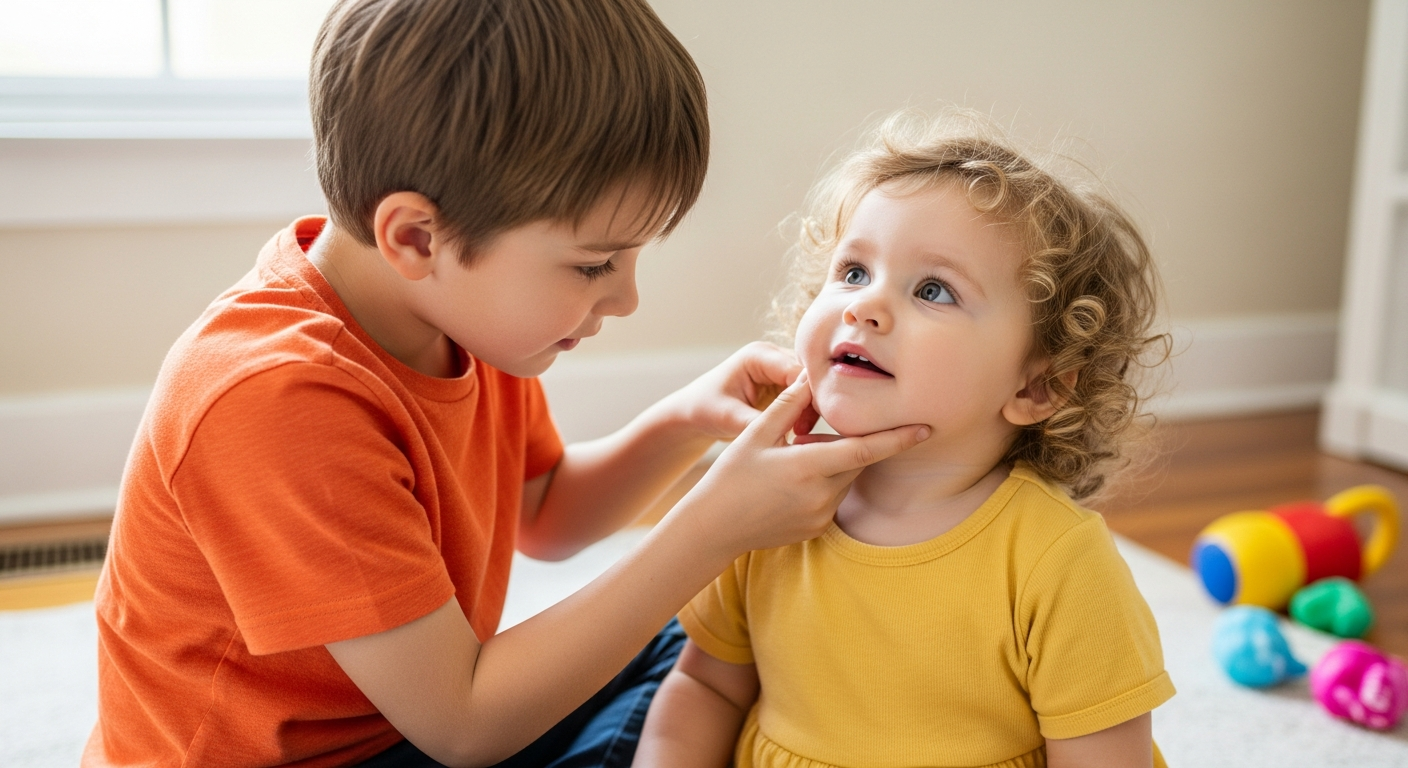
Table of Contents
- Introduction
- The Science of Touch: Why Massage Matters for Speech
- The Hand-Brain Connection: Broca’s Area
- Step-by-Step: Hand and Finger Massage Techniques
- Strengthening the "Speech Tools": Oral Motor Massage
- Practical Play: Turning Exercises into Joyful Moments
- Supporting Neurodivergent Children
- The Speech Blubs Methodology: Why Video Modeling Works
- Setting Realistic Expectations
- Choosing the Right Plan for Your Family
- The Power of Consistency
- Creating a Sensory-Friendly Environment
- Conclusion
- FAQs
Introduction
Have you ever noticed how your child uses their entire body to tell you they want a snack or a favorite toy? They point with their fingers, wiggle their toes in excitement, and look at you with wide, expressive eyes. Long before the first words emerge, children communicate through touch and movement. But for the 1 in 4 children who face speech and language challenges, that bridge between "thinking" a word and "saying" it can sometimes feel a bit wobbly. As parents, we often look for every possible tool to help them bridge that gap. You might be surprised to learn that one of the most effective, gentle, and bonding tools available to you is right at your fingertips—literally.
Using massage for speech delay is a holistic approach that focuses on the deep connection between a child’s physical body and their neurological development. It isn’t just about relaxation; it’s about stimulating the brain, waking up the muscles used for articulation, and creating the sensory foundation necessary for communication. At Speech Blubs, our mission is to empower children to speak their minds and hearts. We believe that by combining physical stimulation with our "smart screen time" experiences, we can help children find their voices in a joyful, pressure-free way.

In this post, we will explore the science behind how touch influences speech, provide step-by-step techniques for hand and facial massage, and discuss how these physical activities complement the video modeling methodology we use in our app. Our goal is to provide you with practical, evidence-based strategies to support your child’s unique journey.
The Science of Touch: Why Massage Matters for Speech
The human brain is a marvel of interconnected pathways. From the moment a child is born, touch is their primary way of learning about the world. This tactile stimulation doesn’t just feel good; it actually builds the brain. Pediatric massage therapy works on the principle that sensory input helps organize the nervous system. When a child’s nervous system is calm and organized, they are in the "optimal zone" for learning.
Speech is a complex motor task. It requires the brain to coordinate the lungs, vocal cords, jaw, lips, and tongue with incredible precision. If a child has sensory processing issues or low muscle tone, this coordination becomes much harder. Massage can help by:
- Improving Neural Connections: Stimulating the skin sends signals to the brain, promoting the growth of neural pathways.
- Reducing Anxiety: Children with speech delays often feel frustrated. Massage lowers cortisol (the stress hormone) and increases oxytocin (the bonding hormone), making them more receptive to therapy.
- Muscle Awareness: Gentle pressure helps a child "feel" their muscles, which is the first step in learning how to control them for speech.
Our approach is grounded in these scientific principles. We know that when children are relaxed and engaged, they learn best. You can see the impact of this holistic focus in our Research section, which highlights how our methods align with the latest in developmental science.
The Hand-Brain Connection: Broca’s Area
One of the most fascinating aspects of massage for speech delay is the direct link between the hands and the brain’s speech center. There is a specific part of the cerebral cortex called Broca’s area, which is responsible for speech production and language processing.

Interestingly, the region of the brain that controls the fine motor skills of the fingers sits right next to Broca’s area. Because these zones are neighbors, stimulating the fingers can actually "spark" activity in the speech zone. This is why many cultures have used hand-based play—like finger puppets or manipulating small objects—to encourage talking for centuries.
If your child is a "late talker" who also struggles with fine motor skills, such as picking up small pieces of food or holding a crayon, focusing on hand massage can be a powerful intervention. By working on the fingers, you are essentially sending a "wake-up call" to the part of the brain that produces words.
Step-by-Step: Hand and Finger Massage Techniques
You don’t need to be a professional therapist to use massage for speech delay at home. These passive exercises are designed to be done in 3 to 5 minutes, ideally twice a day. The key is to keep the environment calm and your touch gentle.
The Palm Stroke
Take your child’s hand in yours. Using your thumb, gently stroke from their fingertips down toward their wrist and back up again. This simple motion helps the child become aware of the boundaries of their hand and relaxes the palm muscles.
Individual Finger Circles
Massage each finger thoroughly, starting with the pinky and moving toward the thumb. Gently rub from the base of the finger up to the nail. You can use small circular motions on each joint. This targeted stimulation is excellent for activating those neural pathways leading to the speech center.
The "Center Press"
Gently press the center of your child’s palm with your thumb. Rotate your thumb in a slow, circular motion. This is a common reflexology point that is thought to help with overall neurological organization.
Finger Vibration
Hold each of your child’s fingers one by one and give them a very gentle, tiny shake. This "vibration" provides a different type of sensory input that can help wake up the nerves.
For a parent whose 3-year-old struggles to stay focused during speech practice, starting with these hand massages can act as a "sensory anchor," helping the child settle down and prepare for learning. Once they are calm, you can transition to using the Speech Blubs app on the Apple App Store to begin vocal exercises.
Strengthening the "Speech Tools": Oral Motor Massage
While hand massage works on the brain, oral motor massage and exercises work directly on the "tools" of speech: the lips, tongue, jaw, and cheeks. If a child’s facial muscles are weak (hypotonia) or overly tight (hypertonia), making clear sounds like "p," "b," "m," or "l" becomes a physical struggle.
Cheek and Jaw Relaxation
Using two fingers, make gentle circles along your child’s jawline and on their cheeks. This helps release tension that might be keeping their mouth "tight." A relaxed jaw is essential for the wide range of movements needed for fluent speech.
Lip Stimulation
Gently tap around your child's lips with your fingertips or a soft, cool cloth. This increases blood flow and "wakes up" the nerves. You can turn this into a game by encouraging them to pucker their lips for a "fish face" or stretch them wide for a "big smile" after the massage.
The "Z-Vibe" or Vibrating Toothbrush
Many therapists use gentle vibration inside and outside the mouth to increase sensory awareness. If your child is comfortable with it, a child-sized vibrating toothbrush can be used to gently touch the tongue or the inside of the cheeks. This high-frequency input can be very effective for children who seem "under-responsive" to touch.
If you are unsure where to start with these physical techniques, we recommend taking our quick 3-minute preliminary screener. It consists of 9 simple questions and will provide you with a personalized assessment and a plan for next steps, which may include specific exercises tailored to your child's needs.
Practical Play: Turning Exercises into Joyful Moments
Massage for speech delay shouldn't feel like a chore or a clinical "procedure." The most effective therapy happens when it’s disguised as play. When you integrate these touches into your daily routine, they become part of your bond.
- During Bath Time: Use a soapy washcloth to gently massage your child’s face and hands. The warmth of the water adds an extra layer of relaxation.
- Story Time: As you read a book together, massage your child’s hands. If the story mentions an animal, like a cow, you can use the "Animal Kingdom" section of our app to practice saying "Moo" together.
- The "Mirror Game": Sit in front of a mirror with your child. Perform the facial massages together. Children love imitating their parents, and seeing their own face move helps build that visual-motor connection.
For parents of toddlers who love technology but need "smart screen time" rather than passive viewing, Speech Blubs is a perfect fit. Instead of just watching a cartoon, your child watches other children making sounds and movements. This is called video modeling, and it’s the core of our methodology. When children see their peers doing something, they are much more likely to try it themselves. You can download Speech Blubs on Google Play to see this science in action.
Supporting Neurodivergent Children
For children with Autism Spectrum Disorder (ASD), Down syndrome, or Cerebral Palsy, massage can be a vital component of a comprehensive development plan.
In children with ASD, sensory processing can be a major hurdle. Some children are "sensory seekers" and need deep pressure to feel grounded, while others are "sensory avoiders" and may be defensive about touch. Tailoring your massage technique to your child’s specific sensory profile can reduce speech-related anxiety and improve verbal communication.
In children with Down syndrome, low muscle tone (hypotonia) often affects the mouth and tongue. Regular oral motor massage and strengthening exercises, like blowing bubbles or using straws, can help build the physical strength required for clearer articulation.
We’ve heard from countless families about how these combined approaches have helped. You can read some of these heartening stories on our Testimonials page.
The Speech Blubs Methodology: Why Video Modeling Works
At Speech Blubs, we don’t just create apps; we create tools for connection. Our company was born from the personal experiences of our founders, who all grew up with speech problems. They created the tool they wished they had—one that blends scientific principles with the pure joy of play.
Our unique approach focuses on video modeling. This technique leverages "mirror neurons" in the brain. When a child watches a peer on the screen making a "pop" sound or sticking out their tongue, their own brain fires as if they were doing it themselves. This reduces the barrier to imitation and builds the foundational skills for communication.
Unlike passive screen time, Speech Blubs is an interactive experience that encourages "co-play." We always frame our activities with the understanding that you, the parent, are the most important part of your child’s learning journey. When you use the app together, massaging their hands while they watch a peer say a new word, you are creating a multi-sensory learning environment that is incredibly powerful.
Setting Realistic Expectations
It is important to remember that every child’s developmental timeline is unique. While massage for speech delay and interactive tools like Speech Blubs are powerful supplements, they are part of a larger picture. We don’t promise that your child will be giving public speeches in a month. Instead, we focus on the meaningful "small wins":
- Fostering a love for communication: Moving from frustration to a desire to interact.
- Building confidence: That "I did it!" moment when a new sound is mastered.
- Reducing frustration: Giving them the tools to express their needs and feelings.
- Joyful family moments: Turning practice into play.
Our app is a supplement to your overall development plan and, when applicable, professional therapy. It’s about building a solid foundation, one "moo," "baa," and "pop" at a time.
Choosing the Right Plan for Your Family
We want to be transparent and helpful as you decide how to support your child. To build trust and provide the best possible experience, we offer two main subscription plans:
- Monthly Plan: $14.99 per month. This is a great way to test the waters and see how your child responds to our video modeling approach.
- Yearly Plan: $59.99 per year. This is our best value option, breaking down to just $4.99 per month—a 66% saving compared to the monthly rate.
We strongly recommend the Yearly Plan because it is designed to support long-term progress and includes several exclusive, high-value features that the Monthly plan does not:
- A 7-Day Free Trial: You can explore everything we have to offer completely risk-free for a full week.
- Reading Blubs: You get access to our sister app, which helps children transition from speaking to early reading skills.
- Priority Support: Enjoy 24-hour response times from our support team and early access to all new app updates.
Ready to take the next step? You can create your account and begin your 7-day free trial today.
The Power of Consistency
Like any physical exercise, the benefits of massage and speech practice come from consistency. You don't need to spend hours a day. Ten minutes of focused, joyful play—five minutes of hand massage and five minutes of Speech Blubs—can make a world of difference over time.
Think of it like watering a garden. You don't just dump a bucket of water once and expect a flower to bloom; you provide a little bit of nourishment every day. By integrating massage for speech delay into your daily "together time," you are providing that consistent nourishment for your child’s growing brain.
Creating a Sensory-Friendly Environment
To make your massage sessions most effective, consider the environment. A child who is overstimulated by bright lights or loud noises will find it hard to focus on the subtle sensations of a hand massage.
- Dim the Lights: A softer environment helps the nervous system transition into a "rest and digest" state.
- Use Calming Scents: If your child isn't sensitive to smells, a tiny bit of lavender lotion can enhance the massage experience.
- Quiet Background: Turn off the TV or loud music. If you use our app during this time, keep the volume at a comfortable level that encourages your child to vocalize over the sound.
This holistic approach—addressing the physical, sensory, and cognitive aspects of speech—is what makes the Speech Blubs experience so unique. We aren't just teaching words; we are helping children develop the ability to "speak their minds and hearts."
Conclusion
Helping a child with a speech delay can feel like a long journey, but you don't have to walk it alone. By incorporating gentle techniques like massage for speech delay, you are supporting your child's development from the "outside in," while tools like Speech Blubs support them from the "inside out." This combination of physical stimulation and "smart screen time" creates a powerful, joyful environment for your child to flourish.
Remember, the goal is progress, not perfection. Every gentle squeeze of a hand, every silly face made in the mirror, and every new sound imitated in the app is a step forward. These moments of connection are the real building blocks of communication.
We invite you to join our community of over 5 million parents who have chosen a more interactive, scientifically-backed way to support their children. Whether you are just starting to notice a delay or are looking for ways to supplement professional therapy, we are here to help.
Ready to start your journey? Download Speech Blubs on the App Store or get it on Google Play today. Don’t forget to choose the Yearly plan during sign-up to unlock your 7-day free trial, the Reading Blubs app, and the best overall value for your family’s future.
FAQs
1. How often should I perform massage for speech delay on my child?
Consistency is key to seeing the benefits of neurological stimulation. We recommend short sessions of 3 to 5 minutes, performed twice daily. It is best to do these when your child is already relatively calm, such as after a bath or right before bedtime, to help reinforce a relaxed state.
2. Is hand massage really linked to speech?
Yes! The part of the brain that controls fine motor movements in the fingers (the motor cortex) is located directly next to Broca’s area, which is responsible for speech production. Stimulating the fingers through massage and exercise creates neural impulses that can activate and "cross-talk" with the speech center, helping to facilitate language development.
3. Can I use massage if my child is sensitive to touch?
Many children with speech delays also have sensory processing sensitivities. If your child is touch-avoidant, start very slowly. You might begin by massaging their feet instead of their hands, or by using a different texture, like a soft plush toy, to provide gentle pressure. Always follow your child's lead—the goal is to build trust and comfort, not to cause distress.
4. Does Speech Blubs replace the need for a professional speech therapist?
No, our app is designed to be a powerful supplement to professional therapy, not a replacement for it. While Speech Blubs provides a joyful, evidence-based way to practice sounds and build confidence at home, a certified Speech-Language Pathologist (SLP) can provide a clinical diagnosis and personalized medical guidance. We always recommend consulting with a professional for a comprehensive treatment plan.
About the author