
Master the R Sound: R and Or Words Speech Therapy Tips
Master the tricky 'R' sound with our guide on or words speech therapy. Access word lists, fun activities, and expert tips to boost your child's articulation
 By Speech Blubs Team•Apr 14, 2026•12 min.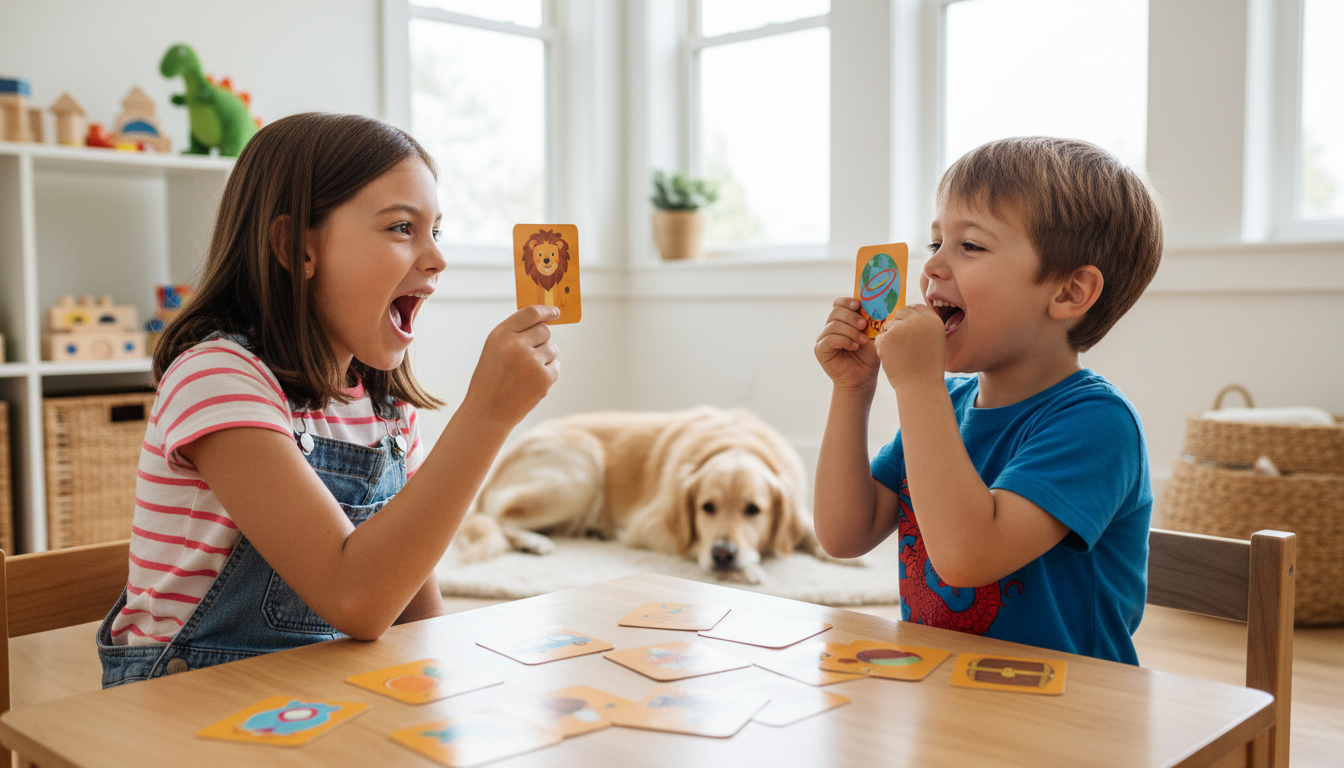
Table of Contents
- Introduction
- Why the "R" Sound is So Tricky
- Our Mission: Empowering Every Voice
- Initial R Word Lists: The Foundation
- Mastering "Or" Words: A Targeted List
- Exploring Other Vocalic R Variations
- R Blends: Adding More Complexity
- Strategies for Home Success
- Choosing the Right Plan for Your Family
- Practical Activities for "R" and "Or" Sound Practice
- Setting Realistic Expectations
- Summary of Key Takeaways
- Frequently Asked Questions
Introduction
Did you know that the "R" sound is often considered the most difficult sound for children to master in the English language? In fact, while many sounds are learned by age three or four, the "R" sound—and its tricky vocalic variations like the "or" sound—can take until age six or seven to fully develop. If your little one is substituting "wabbit" for "rabbit" or saying "fawk" instead of "fork," you aren't alone. Approximately one in four children needs some form of speech support during their developmental years, and at Speech Blubs, we are dedicated to helping every child "speak their minds and hearts."
The purpose of this blog post is to provide a comprehensive, parent-friendly resource for tackling the "R" sound. We will explore the science behind why this sound is so challenging, provide extensive lists for initial R and vocalic R sounds (including a deep dive into "or" words), and share practical, play-based activities you can do at home. Our goal is to shift the focus from frustration to connection, offering tools that turn practice into "smart screen time" that truly works. By the end of this guide, you will have a clear roadmap for supporting your child's articulation journey through joyful, effective practice.

Why the "R" Sound is So Tricky
If you’ve ever tried to explain to a toddler where their tongue should go to make a perfect "R," you know how abstract it can feel. Unlike the "P" or "B" sounds, which involve clear lip movements you can see in a mirror, the "R" sound happens entirely inside the mouth. It requires a high level of coordination and muscle strength.
The Anatomy of an "R"
There are generally two ways people produce the "R" sound: the "bunched" R and the "retroflex" R. The bunched version involves pulling the tongue back and up toward the roof of the mouth, while the retroflex version involves curling the tip of the tongue toward the back. Both require the sides of the tongue to touch the upper back molars to create the necessary tension.
For a child still developing their fine motor skills, this is like trying to do a complicated yoga pose with their tongue. When they struggle, they often default to the "W" sound (gliding) because it’s much easier to produce using just the lips.
The Complexity of Vocalic R
The challenge doubles when we move from the initial R (like in "Red") to the vocalic R. A vocalic R occurs when the "R" follows a vowel, creating a "vowel-colored" sound. These include:
- AR (as in Car)
- ER (as in Bird)
- AIR (as in Hair)
- IRE (as in Fire)
- EAR (as in Near)
- OR (as in Fork)
Because each of these requires the child to move from a vowel shape into that difficult "R" position, they often need specific, targeted practice. This is why focusing on "or" words speech therapy exercises can be a game-changer for kids who have mastered the basic "R" but still struggle with words like "door" or "storm."
Our Mission: Empowering Every Voice
At Speech Blubs, we believe that every child deserves a chance to be understood. Our company was founded by a team who personally experienced speech challenges as children. They created the tool they wished they had: something that felt like a game but was rooted in proven scientific principles.
We utilize a methodology called video modeling. This is based on the scientific concept of mirror neurons—the brain's way of learning by watching others. When your child sees a peer on a screen making a sound and having fun, their brain naturally wants to imitate that peer. It’s a powerful alternative to passive cartoons; it’s an interactive, screen-free alternative to "mindless" scrolling that fosters real-world communication skills.

If you are unsure where your child stands, we recommend taking our quick 3-minute preliminary screener. It consists of 9 simple questions and provides an immediate assessment and a personalized next-steps plan.
Initial R Word Lists: The Foundation
Before diving into the complex "or" words speech therapy lists, it’s often helpful to see if your child can produce the "R" at the beginning of words. This is called "prevocalic R."
Simple Initial R Words
- Race
- Red
- Run
- Rain
- Rock
- Ring
- Rat
- Road
Two-Syllable Initial R Words
- Rabbit
- Robot
- Raccoon
- Rainbow
- Rocket
- Relay
Practical Scenario: Imagine your 4-year-old loves space. Instead of forcing "R" drills, open the "Space" section in the Speech Blubs app. When they see a peer dressed as an astronaut saying "Rocket," they are much more likely to try the sound themselves. You can then practice together: "The rocket is ready to run!"
Mastering "Or" Words: A Targeted List
The "or" sound is a frequent hurdle. It requires the mouth to move from a rounded "O" shape quickly into the "R" position. This transition is what makes "or" words speech therapy so vital for older toddlers and school-aged children.
Short "Or" Words
- For
- Or
- Nor
- Door
- Floor
- More
- Sore
- Tore
Medial "Or" Words (In the Middle)
- Fork
- Storm
- Corn
- Horse
- Born
- Short
- North
- Sport
"Or" Words Phrases for Practice
- Open the door.
- Eat the corn.
- A big horse.
- Cold storm.
- Four more.
Practical Scenario: For a parent whose child is a "foodie," lunch is a great time to practice. If you’re serving corn on the cob, you can exaggerate the "or" sound. "Do you want more corn?" This takes the pressure off "therapy time" and places the sound in a joyful, functional context.
Exploring Other Vocalic R Variations
To give your child a well-rounded foundation, we need to look at the other five vocalic R sounds. Each has a slightly different tongue-starting position.
The -AR Sound (Like a Pirate!)
The -AR sound is often the easiest vocalic R for kids to learn because the mouth is wide open.
- Star
- Car
- Farm
- Bark
- Heart
- Yard
The -ER Sound (The Most Common)
The -ER sound is found in so many words, making it a high-priority target.
- Bird
- Girl
- Dirt
- Nurse
- Spider
- Teacher
The -AIR, -IRE, and -EAR Sounds
- AIR: Hair, Chair, Bear, Stair, Fair.
- IRE: Fire, Tire, Wire, Dryer, Vampire.
- EAR: Near, Fear, Cheer, Deer, Earring.
Our scientific methodology emphasizes that children shouldn't be overwhelmed. Focus on one sound group per week. If your child is struggling with "fire," stick with -IRE words until they feel confident.
R Blends: Adding More Complexity
Once a child can say "Run" and "Fork," they might still struggle when the "R" is bunched up against another consonant. These are called R blends.
- BR: Bread, Bridge, Broom.
- DR: Drum, Drink, Dragon.
- FR: Frog, Friend, Fruit.
- GR: Grass, Grapes, Green.
- TR: Tree, Truck, Train.
Practical Scenario: If your toddler is obsessed with vehicles, the "Transportation" category in Speech Blubs is your best friend. Watching another child say "Truck" or "Train" provides the visual cue they need to realize their tongue has to move differently than it does for just "T" or "R." You can download Speech Blubs on the App Store to start exploring these categories today.
Strategies for Home Success
How do we take these lists and turn them into progress? It’s all about consistency, confidence, and connection.
1. Use Mirror Work
Since the "R" sound is "invisible," a mirror helps. Have your child look at their mouth while you make the sound. Show them how your tongue "hides" in the back. Then, let them try.
2. The "Smile" Technique
Sometimes, kids round their lips too much (making it a "W"). Encourage them to smile while saying "R" words. This pulls the lips back and makes it much harder to produce a "W" sound.
3. Carrier Phrases
Once a word is mastered, don't just stop there. Use "carrier phrases" to build fluency.
- "I see a [word]."
- "I want a [word]."
- "Where is the [word]?"
4. Smart Screen Time
We know that parents are often worried about screen time. However, there is a massive difference between a child staring blankly at a cartoon and a child actively engaging with a peer-led speech app. Speech Blubs is designed to be "smart screen time"—an educational tool that encourages vocalization and imitation. Many parents find that just 10-15 minutes a day can build the foundational skills needed to reduce frustration in daily communication.
Don't just take our word for it—you can read testimonials from parents who have seen their children thrive using our joyful approach.
Choosing the Right Plan for Your Family
We want to be transparent about how you can access the full suite of Speech Blubs tools. We offer two main paths to help your child find their voice:
- Monthly Plan: For $14.99 per month, you get full access to our speech therapy activities. This is a great way to test the waters.
- Yearly Plan (Best Value): Our yearly plan is $59.99 per year. When you break that down, it’s only $4.99 per month—a 66% savings compared to the monthly option!
The Yearly plan is our most popular choice because it offers so much more than just a lower price. When you choose the Yearly plan, you receive:
- A 7-day free trial to ensure the app is the right fit for your child before you pay a cent.
- The Reading Blubs app, which helps transition those speech skills into early literacy.
- Early access to all our new updates and features.
- Priority 24-hour support response time from our team.
Ready to see the difference for yourself? Sign up on our web page to start your 7-day free trial and give your child the tools they need to succeed.
Practical Activities for "R" and "Or" Sound Practice
Beyond the word lists, here are three fun games to keep the "R" words speech therapy sessions feeling like playtime:
The "Roaring" Contest
If your child loves dinosaurs or lions, have a "roaring" contest. To get a good roar, you have to use a strong vocalic "R" or "OR" sound. "ROAR!" or "MORE ROAR!" This builds the muscle tension needed for the sound without the child feeling like they are "working."
Pirate Treasure Hunt
Hide objects around the house that start with "R" or end in "AR" (like a toy car, a star sticker, or a rope). Give them a pirate hat and have them say "ARGGGH!" every time they find a piece of treasure. This is a great way to practice the "AR" sound in a high-energy environment.
The "Or" Choice Game
During snack time or playtime, give your child choices using "or" words. "Do you want the fork or the spoon?" "Should we go to the door or the window?" By hearing you model the "or" sound frequently, they are more likely to pick it up through natural immersion.
Setting Realistic Expectations
Speech development is a marathon, not a sprint. You shouldn't expect your child to be giving public speeches in a month. Instead, look for the "small wins."
- Are they trying the sound more often?
- Is their frustration level decreasing?
- Are they more confident when speaking to peers?
Using Speech Blubs is a powerful supplement to your child's overall development plan. If you are already working with a professional speech-language pathologist (SLP), our app serves as a fantastic tool for "homework" practice between sessions. It keeps the momentum going in a way that feels like fun rather than a chore.
Summary of Key Takeaways
Mastering the "R" sound, including the tricky "or" words speech therapy targets, is a significant milestone in a child's development. Here is what we’ve covered:
- The "R" sound is internal and complex, requiring high coordination.
- Vocalic R (like AR, ER, OR) is often harder because it follows a vowel.
- Video modeling is a scientifically-backed way to encourage imitation.
- Play-based practice at home reduces pressure and builds confidence.
- Consistency is key, and "smart screen time" can be a valuable ally.
We invite you to join the Speech Blubs family. Whether you are dealing with a "late talker" or just want to polish your child's articulation, we have the resources to help.
Start your journey today. Download Speech Blubs on Google Play or the App Store and begin your 7-day free trial. Remember to select the Yearly plan to unlock the best value, including the Reading Blubs app and early access to all our latest tools. Together, let’s help your child speak their mind and heart with clarity and joy!
Frequently Asked Questions
1. At what age should a child be able to say the "R" sound?
While some children master it earlier, the "R" sound is one of the last to develop. It is considered developmentally appropriate for children to continue working on this sound until age 6 or 7. However, if your child is frustrated or difficult to understand by age 4 or 5, starting gentle practice with a tool like Speech Blubs can be very beneficial.
2. Is it okay if my child uses a "W" sound instead of "R"?
This is known as "gliding" and is very common in young children. While it's a normal part of development, if it persists past age 6, it may require more targeted intervention. Using "or" words speech therapy exercises can help them transition from the lip-focused "W" to the tongue-focused "R."
3. How often should we practice these "R" word lists?
Short, frequent sessions are much more effective than one long session. Aim for 10 to 15 minutes of "smart screen time" with Speech Blubs daily, paired with natural modeling during your everyday routine. This keeps the sound fresh in their mind without causing fatigue.
4. Can Speech Blubs replace traditional speech therapy?
Speech Blubs is a powerful tool designed to supplement a child's development and can be used alongside professional therapy. It provides the "video modeling" and repetitive practice that kids need to build confidence at home. Always consult with a professional SLP for personalized medical advice regarding your child's specific needs.
About the author