
Speech and Language Delay Definition: A Guide for Parents
 By Speech Blubs Team•Mar 5, 2026•13 min.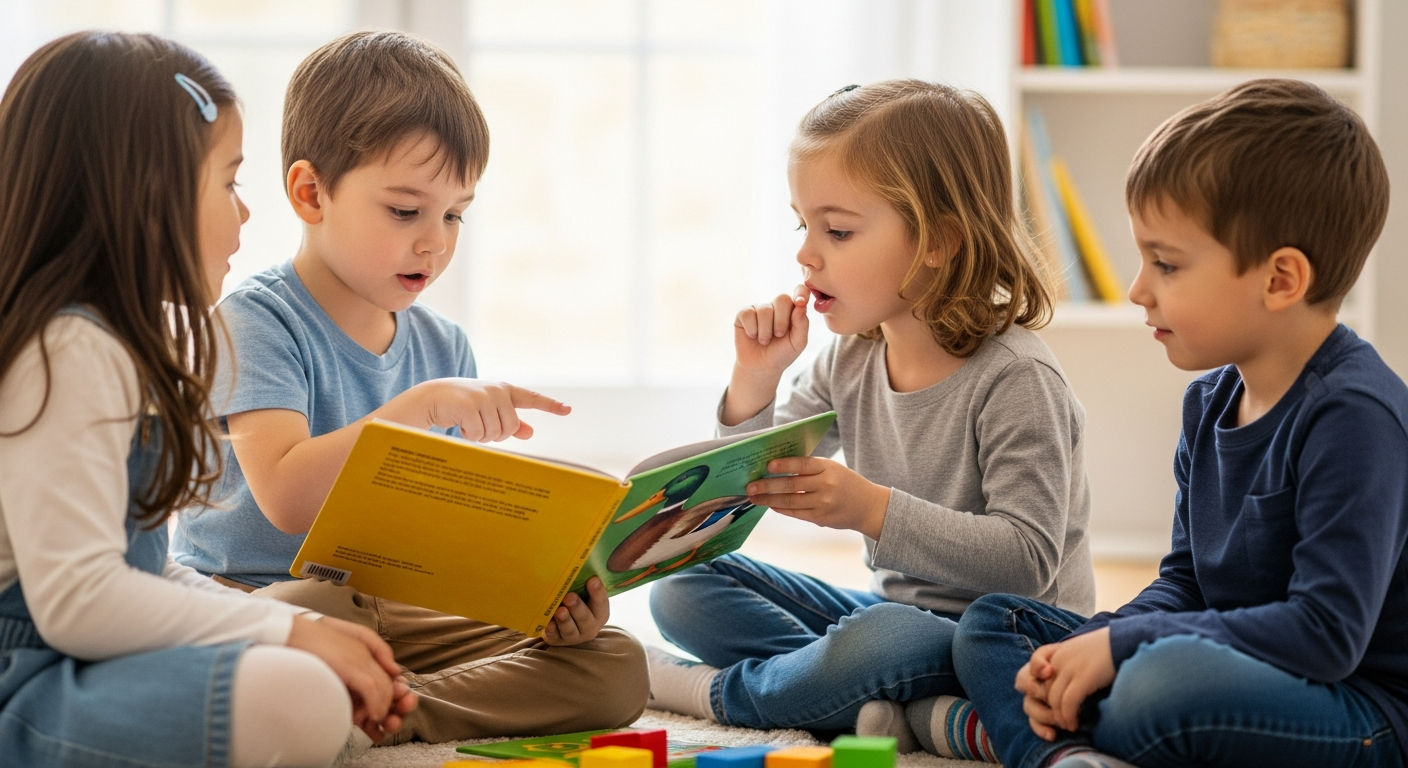
Table of Contents
- Introduction
- What is the Speech and Language Delay Definition?
- Recognizing the Signs: Milestones Matter
- Why Do These Delays Happen?
- How Parents Can Help at Home
- The Role of Professional Support
- Why Choose Speech Blubs for Your Journey?
- Creating Joyful Learning Moments
- Frequently Asked Questions
- Start Your Child’s Journey Today
Introduction
Did you know that approximately one in four children will experience some form of speech or language challenge during their early developmental years? It is a startling statistic, yet it often catches parents off guard. One moment you are celebrating your baby’s first "mama," and the next, you are wondering why your neighbor’s toddler is chatting away while your own little one relies mostly on gestures and tugging at your sleeve. If you have ever felt that twinge of anxiety while watching your child play, you are not alone. We at Speech Blubs understand this feeling deeply because our founders grew up with speech problems themselves. They created the very tool they wished they had when they were struggling to find their voices.
The purpose of this article is to provide a clear, empathetic, and comprehensive speech and language delay definition. We will explore the vital differences between speech and language, identify the developmental milestones you should keep an eye on, and discuss the various causes behind these delays. Most importantly, we want to empower you with practical strategies to support your child’s communication journey. Our mission is to help every child "speak their minds and hearts," turning what can be a frustrating time into a joyful period of family connection and growth. By the end of this guide, you will have a better understanding of how to foster your child’s confidence and whether it is time to seek professional support.

What is the Speech and Language Delay Definition?
To understand what a delay is, we first have to distinguish between two terms that are often used interchangeably: speech and language. While they are closely related, they represent different aspects of communication.
Speech is the physical act of producing sounds. It involves articulation (how we form sounds with our mouth, tongue, and lips), voice (the use of vocal folds and breath to make sound), and fluency (the rhythm of our speaking). If a child has a speech delay, they might be trying to communicate a complex idea, but the sounds coming out are difficult to understand or are not formed correctly.
Language, on the other hand, is much broader. It is the entire system of giving and receiving information. It involves understanding what others say (receptive language) and being able to share thoughts, ideas, and feelings (expressive language). A child with a language delay might be able to pronounce words perfectly, but they might struggle to put those words together into a meaningful sentence or understand a simple instruction like, "Go get your shoes."
A speech and language delay, therefore, occurs when a child is not meeting the typical communication milestones for their age. They may be developing in the right sequence, but at a slower pace than expected. It is important to note that a "delay" is different from a "disorder." A delay implies the child is following a typical path but just needs more time or support, whereas a disorder suggests that the child’s language development is qualitatively different from what is considered typical.
Recognizing the Signs: Milestones Matter
Every child is a unique individual who grows at their own pace. However, developmental milestones serve as a helpful roadmap for parents. At Speech Blubs, we believe that being informed is the first step toward empowerment.
The First Year: From Coos to First Words
By 12 months, most babies are actively engaging with their environment. They should be responding to their names, using simple gestures like waving "bye-bye" or pointing at a toy they want, and making a variety of consonant sounds (like "ba-ba" or "da-da"). If a 12-month-old isn’t using gestures or doesn't seem to respond to sounds, it is worth keeping a close eye on their progress.

18 Months: The Vocabulary Spark
By a year and a half, a toddler typically has a handful of words in their repertoire. They should be able to follow one-step directions without you needing to use hand gestures. A common sign of a delay at this age is a child who prefers using gestures almost exclusively to communicate their needs rather than attempting to vocalize.
24 Months: Putting it Together
The second birthday is a major milestone. By this age, most children can say about 50 words and are starting to combine two words together, such as "more juice" or "doggy run." If a child is only imitating speech and not producing words spontaneously, or if they can only repeat certain sounds over and over, it may indicate a need for a little extra help.
For a parent whose 2-year-old "late talker" loves animals, the "Animal Kingdom" section of the Speech Blubs app offers a fun, motivating way to practice "moo" and "baa" sounds. Instead of feeling like a chore, practicing these sounds becomes a game where they see other children—their peers—making those same fun noises. This is the core of our "video modeling" methodology.
3 to 5 Years: The Storytellers
As children move toward preschool age, their speech should become increasingly intelligible to strangers. By age 4, a child should be mostly understood even by people who don't know them well. They should be using longer sentences and be able to tell a simple story about their day.
Why Do These Delays Happen?
Understanding the "why" can help demystify the situation and reduce the "parent guilt" that so many of us feel. Speech and language delays can stem from several factors:
- Oral-Motor Issues: Sometimes, the brain has trouble communicating with the muscles in the mouth. This can make it difficult to coordinate the lips, tongue, and jaw to produce specific sounds. These children might also have difficulty with eating or swallowing.
- Oral Impairments: Physical issues like a cleft palate or a short frenulum (the fold under the tongue, often called being "tongue-tied") can limit the movement required for clear speech.
- Hearing Loss: This is a very common cause of speech delays. If a child cannot hear clearly, they cannot learn to imitate sounds. Even chronic ear infections can lead to temporary hearing loss that disrupts the critical window for language acquisition.
- Environmental Factors: While not a "cause" in the clinical sense, the amount of verbal interaction a child receives plays a massive role. In our digital age, children are often exposed to passive screen time (like watching cartoons), which doesn't require them to respond or interact. We advocate for "smart screen time," where the digital experience is a bridge to real-world interaction, not a replacement for it.
- Genetic Factors: Research suggests that being male or having a family history of speech delays can increase the likelihood of a child needing communication support.
Our methodology is backed by extensive research, placing Speech Blubs in the top tier of speech applications worldwide. We focus on the science of mirror neurons—the brain cells that fire both when a child performs an action and when they observe someone else performing it. By watching other kids speak in our app, your child’s brain is literally practicing how to speak.
How Parents Can Help at Home
You are your child's first and most important teacher. You don't need a clinical degree to make a huge impact on your child's communication skills. Here are some joyful ways to incorporate learning into your daily routine:
- Narrate Your Life: Talk through everything you are doing. "Now I'm putting the red apple in the bowl. Mmm, crunchy apple!" This helps build their receptive vocabulary.
- Read Together: Reading isn't just about the story; it's about pointing at pictures and asking, "What's that?" or "What color is the bird?"
- Follow Their Lead: If your child is interested in trucks, talk about trucks. Use their natural interests to drive communication.
- Sing and Play: Songs with actions, like "The Itsy Bitsy Spider," encourage imitation and rhythm.
- Create "Smart Screen Time" Moments: Instead of letting your child watch videos passively, use a tool like Speech Blubs together. Sit with them, mimic the children on the screen, and celebrate when your child makes a sound. This transforms the screen into a powerful tool for family connection.
If you are unsure where your child stands, we invite you to take our quick 3-minute preliminary screener. It consists of 9 simple questions and provides you with an initial assessment and a personalized next-steps plan to help you navigate this journey with confidence.
The Role of Professional Support
While home activities are vital, they are often most effective when used as a supplement to professional therapy. If your child meets the criteria for a delay, a Speech-Language Pathologist (SLP) is your best ally. An SLP will conduct standardized tests to evaluate:
- Receptive Language: What the child understands.
- Expressive Language: What the child can say.
- Oral-Motor Status: How the mouth and tongue are functioning.
- Articulation: The clarity of their speech.
Early intervention is key. Rather than a "wait and see" approach, we advocate for a "support and see" mindset. Addressing challenges early can prevent future frustrations with literacy, social interactions, and academic performance. You can read testimonials from other parents who have seen how early support and the right tools can make a world of difference in a child's confidence.
Why Choose Speech Blubs for Your Journey?
We didn't just build an app; we built a solution based on the joy of play. We know that children learn best when they are having fun, not when they feel pressured to perform. Our "video modeling" approach is unique because it features real children, not animations. Kids are naturally drawn to other kids, making them more likely to imitate the sounds and words they see.
We offer two main ways to join our community:
- The Monthly Plan: For $14.99 per month, you get access to our library of over 1,500 activities designed to spark conversation and build skills.
- The Yearly Plan (Best Value): For only $59.99 per year, which breaks down to just $4.99 per month, you receive the full Speech Blubs experience. This plan is designed for families committed to long-term progress and offers the best overall value.
The Yearly plan is the superior choice for parents who want the most comprehensive support. It includes:
- A 7-day free trial so you can explore the app risk-free.
- The Reading Blubs app, which helps transition speech skills into early literacy.
- Early access to new updates and features.
- 24-hour support response time from our dedicated team.
Please note that the Monthly plan does not include the 7-day free trial or the Reading Blubs app. By choosing the Yearly plan, you ensure your child has all the tools they need to succeed at a much lower monthly cost.
Creating Joyful Learning Moments
It is easy to get caught up in the clinical definitions and the "red flags," but at the heart of this journey is your relationship with your child. Communication is about connection. It is about your child being able to tell you they are hungry, they are happy, or they love you.
When we talk about "smart screen time," we are talking about using technology to facilitate these human moments. Imagine your child struggling to say the word "bubble." You open the app, find the "Bottle Pop" section, and together you watch a peer make the "B" sound. Your child tries it, their eyes light up, and suddenly you are both laughing and blowing real bubbles in the living room. That is the Speech Blubs difference. We provide a screen-free alternative to the passive, numbing effect of traditional cartoons by encouraging active participation.
Frequently Asked Questions
1. What is the main difference between a speech delay and a language delay?
Speech delay refers specifically to the difficulty in producing the actual sounds of speech (articulation). A language delay refers to a broader struggle with understanding what is said or being able to use words and sentences to communicate ideas. A child can have one without the other, but they often overlap.
2. Is it true that boys talk later than girls?
While statistics show that boys are more likely to be identified with speech and language delays, this does not mean we should ignore the milestones. Every child should be assessed based on established developmental markers regardless of gender. If a boy is not meeting his milestones, early intervention is just as important for him as it would be for a girl.
3. Will using a speech app replace the need for a speech therapist?
No. While Speech Blubs is a powerful, scientifically-based tool, it is designed to be a supplement to professional therapy and a way for parents to practice skills at home. An SLP provides personalized, clinical diagnosis and treatment that an app cannot replace. However, the app can significantly boost the frequency of practice and keep the child motivated.
4. Can bilingualism cause a speech delay?
This is a common myth, but the answer is no. Children raised in multilingual households may have a slightly different pattern of vocabulary growth in each individual language initially, but they are not at a higher risk for delays. In fact, bilingualism offers significant cognitive advantages. If a bilingual child has a delay, it will usually be present in both languages, indicating an underlying communication challenge rather than an issue with learning two languages.
Start Your Child’s Journey Today
Understanding the speech and language delay definition is the first step in advocating for your child's future. You have the power to transform frustration into confidence and silence into song. By incorporating simple, joyful activities into your day and using the right supportive tools, you are giving your child the gift of communication.
We are here to support you every step of the way. Whether you are looking for a way to make practice more fun or you are just starting to explore why your little one isn't talking yet, Speech Blubs provides a bridge to a world of words.
Ready to see your child find their voice? Download Speech Blubs on the App Store or get it on Google Play to begin your journey.
For the best experience and the most comprehensive support, we highly recommend our Yearly plan. Not only will you save 66% compared to the monthly rate, but you will also unlock a 7-day free trial, the Reading Blubs app, and priority support.
Don't wait for your child to "grow out of it." Give them the support they deserve today. You can create your account and begin your free trial right now on our website. Let's work together to help your child speak their mind and heart!
About the author