
Speech Delay 12 Month Old: Signs, Milestones, and Tips
 By Speech Blubs Team•Mar 9, 2026•15 min.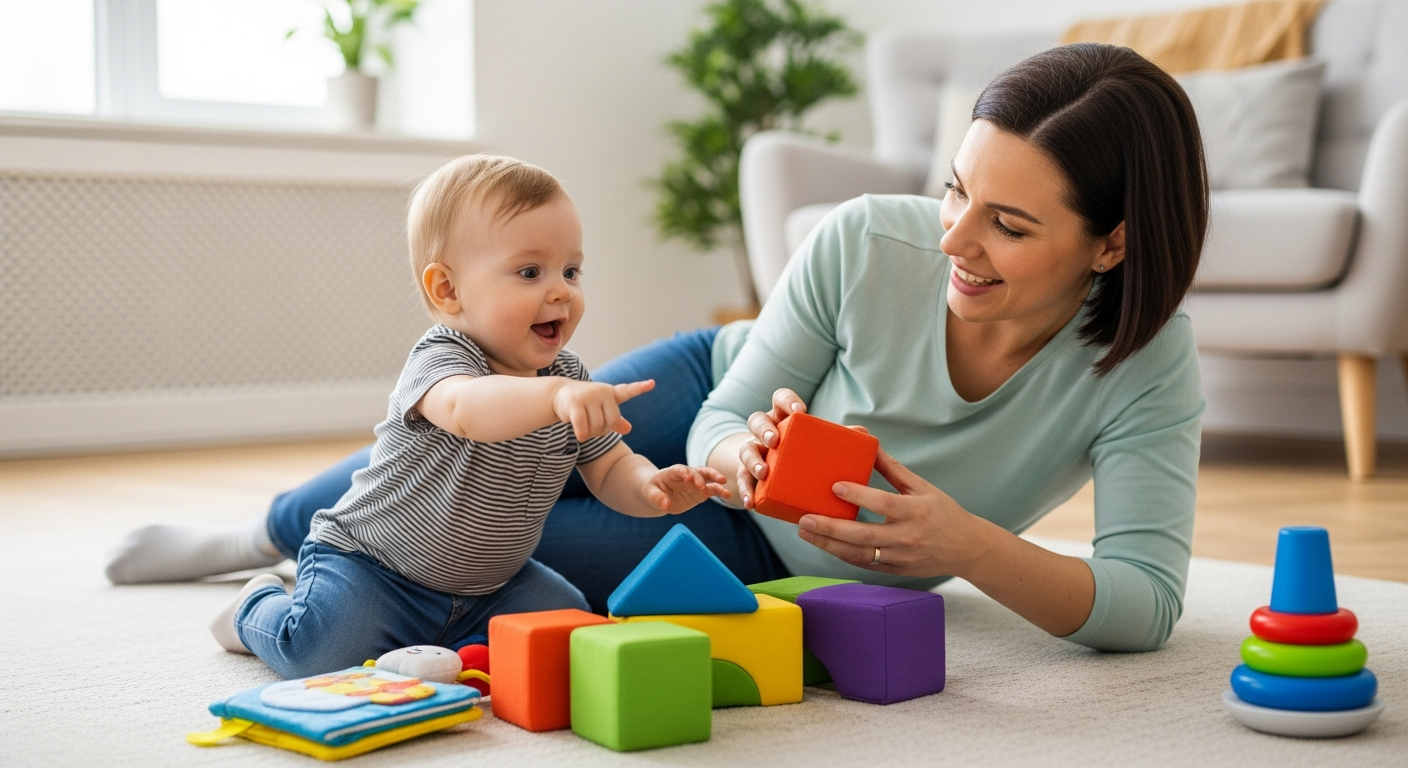
Table of Contents
- Introduction
- Understanding the Difference: Speech vs. Language
- Typical 12-Month Speech and Language Milestones
- Red Flags for Speech Delay at 12 Months
- What Causes Speech Delays in Toddlers?
- The Power of Video Modeling
- Practical Strategies to Encourage Speech at Home
- Realistic Expectations and the Journey Ahead
- Choosing the Right Plan for Your Family
- The Role of Play in Speech Development
- When to See a Speech-Language Pathologist (SLP)
- Making the Most of Everyday Moments
- Summary of Key Takeaways
- FAQ
- Conclusion
Introduction
Have you ever found yourself leaning in a little closer every time your one-year-old opens their mouth, hoping this is the moment they finally say "Mama" or "Dada"? You aren't alone. For many parents, the first birthday is a major milestone, not just for the cake and the party, but for the anticipation of those first precious words. We often compare our little ones to the toddler at the park who seems to be chatting away, and it’s natural to feel a pinch of anxiety if your child is still primarily communicating through grunts or tugs on your sleeve.
While every child develops at their own pace, understanding the nuances of a speech delay 12 month old can help you transition from a place of worry to a place of empowered action. In this post, we will explore the difference between speech and language, identify the specific milestones your child should be hitting at the one-year mark, and discuss the red flags that suggest it might be time for a professional check-in. More importantly, we’ll share how you can foster a joyful environment for communication at home using proven methods like video modeling and "smart screen time."

At Speech Blubs, our mission is to empower children to speak their minds and hearts. We understand the frustration of the "wait and see" approach because our founders grew up with speech challenges themselves. We believe that for the 1 in 4 children who need speech support, the best solution is one that blends scientific principles with the pure joy of play. Our goal today is to provide you with a roadmap to support your child’s unique journey, helping them build the confidence they need to find their voice.
Understanding the Difference: Speech vs. Language
Before we dive into the specifics of a 12-month-old’s development, it is vital to clarify two terms that are often used interchangeably but mean very different things: speech and language.
What is Speech?
Speech refers to the physical act of producing sounds. It involves the coordination of the breath, the vocal cords, the tongue, the lips, and the jaw. When we talk about a speech delay, we are often referring to "articulation"—how a child forms specific sounds—or the fluency and rhythm of those sounds. For a 12-month-old, speech is still very much in the experimental phase. They are practicing the "mechanics" of their mouth.
What is Language?
Language is much broader. It is the entire system of giving and receiving information. It’s about understanding (receptive language) and being understood (expressive language). A child might have a language delay if they can make sounds perfectly fine but cannot put words together to express a thought or if they don't seem to understand simple instructions like "give me the ball."
If you’re feeling unsure about where your child stands, we recommend taking our quick 3-minute preliminary screener. It involves just 9 simple questions and provides you with an initial assessment and a personalized next-steps plan.
Typical 12-Month Speech and Language Milestones
By the time a child reaches their first birthday, they have been "communicating" for a long time. They’ve cried to tell you they’re hungry, smiled to show they’re happy, and probably learned that dropping a spoon from a high chair gets a very specific reaction from you! However, the transition into verbal communication follows a fairly predictable path.

Expressive Language (What they say)
- Specific Words: Most 12-month-olds can say "Mama" and "Dada" and use them specifically for their parents, rather than just babbling the sounds.
- Exclamations: You might hear sounds like "Uh-oh!" when they drop something.
- Imitation: They often try to mimic the sounds or simple words you say, even if they aren't clear yet.
- Gestures: This is a huge part of communication at this age. Your child should be waving "bye-bye," pointing at things they want, and shaking their head for "no."
Receptive Language (What they understand)
- Responding to their Name: When you call them from across the room, they should turn toward you.
- Simple Commands: They should be able to follow one-step directions that include a gesture, such as "Give me the toy" while you hold out your hand.
- Understanding "No": While they might not always obey it, they should show they understand the meaning of the word.
- Recognizing Common Objects: If you ask "Where is the dog?" they might look toward the family pet or a picture of a dog in a book.
Red Flags for Speech Delay at 12 Months
As experts in child development, we want to emphasize that a "delay" isn't a "deficit." It simply means the child is taking longer to reach a certain point. However, early intervention is incredibly powerful. If you notice the following red flags in your speech delay 12 month old, it is worth bringing them up with your pediatrician:
- Lack of Gestures: The child does not point to objects, wave, or reach up to be picked up.
- No Babbling: You don't hear a variety of consonant sounds (like b, m, d, n).
- No Response to Sound: They don't seem to notice when you enter the room or when a loud noise occurs. This could indicate a hearing issue.
- No Joint Attention: They don't look at what you are pointing to or share an interest in an object with you.
- Loss of Skills: If your child was babbling or using a word and suddenly stops doing so, this is a significant sign that requires professional evaluation.
If you are concerned, you can download Speech Blubs on the App Store or Google Play to explore activities designed to stimulate these specific skills. Seeing how other children use these sounds can often spark an "aha!" moment for a toddler.
What Causes Speech Delays in Toddlers?
When a child experiences a delay, parents often wonder if they did something wrong. We want to be very clear: speech delays happen for many reasons, and most of them have nothing to do with your parenting.
Oral-Motor Issues
Some children have difficulty coordinating the muscles in their mouth. This might be due to an oral impairment like a short frenulum (tongue-tie) or more complex issues where the brain has trouble sending signals to the muscles used for speech.
Hearing Problems
This is one of the most common—and treatable—causes. Even temporary hearing loss from chronic ear infections can make sounds seem muffled, like listening to someone talk while you are underwater. If a child can't hear the sounds clearly, they can't imitate them correctly.
Developmental Differences
Sometimes a speech delay is a sign of a broader developmental path, such as Global Developmental Delay or Autism Spectrum Disorder (ASD). In these cases, the speech delay is usually accompanied by other signs in social interaction or motor skills.
Environmental Factors
While less common as a primary cause, a lack of verbal stimulation can slow development. However, for most parents reading this, the issue is not a lack of talking, but rather finding the right way to connect with their specific child.
The Power of Video Modeling
At Speech Blubs, our methodology is rooted in a concept called "video modeling," which is backed by significant scientific research. We leverage the power of "mirror neurons"—specialized brain cells that fire both when we perform an action and when we observe someone else performing that same action.
Think about how your child learned to wave. They didn't read a manual; they watched you do it. Our app uses videos of children (peers) performing speech exercises. When your 12-month-old sees another child making a "b-b-b" sound or blowing a raspberry, their brain is literally practicing that movement. This "kids teaching kids" approach is much more engaging for a toddler than watching an adult's mouth, as they naturally prefer to imitate their peers.
"Our unique approach turns screen time from a passive, 'zombie-like' experience into an active, 'smart' experience that encourages children to interact with the world around them rather than retreat from it."
Practical Strategies to Encourage Speech at Home
You are your child's first and most important teacher. While professional therapy is invaluable, the work you do in the small moments of your day makes a massive difference. Here are some strategies to try:
1. The "Sports Caster" Method
Narrate your day as if you are giving a play-by-play. "Now we are putting on your red shoe. One shoe, two shoes! Now we are going to the kitchen for some cold milk." This surrounds your child with language in a meaningful context.
2. Focus on Imitation
Before you can expect words, look for imitation of actions. If they clap, you clap. If you bang on a drum, see if they will bang on the drum. In our app, we have a section called "Early Sounds" that is perfect for this. For a parent whose 12-month-old "late talker" loves animals, the "Animal Kingdom" section offers a fun, motivating way to practice "moo" and "baa" sounds.
3. Use "Wait Time"
This is the hardest part for parents! When you ask your child a question or expect a sound, wait at least 5 to 10 seconds. Their little brains take longer to process information and formulate a response. Giving them that space reduces frustration and builds their confidence.
4. Smart Screen Time
We know that parents are often told to avoid screens entirely, but not all screen time is created equal. Passive viewing of loud, fast-paced cartoons can actually be overstimulating and doesn't encourage interaction. In contrast, "smart screen time" uses the device as a bridge for connection. When you use Speech Blubs with your child, you are co-playing. You are watching the videos together, imitating the children on the screen, and celebrating every sound your little one makes.
Ready to get started? Create your account and begin your 7-day free trial today.
Realistic Expectations and the Journey Ahead
It is important to remember that we aren't looking for "perfect" speech. We are looking for progress. Your child won't be giving public speeches in a month, and that’s okay! Our goal is to foster a love for communication, reduce the frustration they feel when they can't tell you what they want, and create joyful family learning moments.
Many children who are "late talkers" at 12 months catch up completely by age 3. Others may need a little extra support from a Speech-Language Pathologist (SLP). Using an app like Speech Blubs is a powerful supplement to professional therapy, providing a way to practice the skills learned in a session in a fun, low-pressure environment at home.
Choosing the Right Plan for Your Family
We want to be transparent about how you can access our full suite of tools. We offer two main paths:
- Monthly Plan: $14.99 per month. This is a great way to test the waters if you aren't sure yet.
- Yearly Plan: $59.99 per year. This is our best value option, breaking down to just $4.99 per month (a 66% savings!).
We always recommend the Yearly Plan because it includes several high-value features that the monthly plan does not:
- 7-Day Free Trial: You can explore everything we offer risk-free for a full week.
- Reading Blubs App: Access to our additional app focused on early literacy skills.
- Priority Support: 24-hour support response time.
- Early Access: You get to see our newest updates and features before anyone else.
If you are ready to give your child the tools to speak their mind, download Speech Blubs on the Google Play Store and start your journey today.
The Role of Play in Speech Development
Children learn best when they are having fun. This isn't just a nice sentiment; it’s a biological fact. When a child is stressed or pressured to "say the word," their brain's learning centers actually shut down. When they are playing, their brains are open to new information.
Consider a scenario where you are playing with bubbles. Instead of saying "Say bubble!", just blow the bubbles and say "Pop! Pop! Pop!" Eventually, your child might try to make a "p" sound. That is a huge win! Our app mimics this play-based environment by using fun filters (like digital hats or animal ears) that make the children on screen look silly and approachable. You can see how this has worked for thousands of other families by reading our parent testimonials.
When to See a Speech-Language Pathologist (SLP)
While tools like Speech Blubs are incredibly effective, they do not replace the expertise of a certified professional, especially if there is a physical or neurological cause for the delay. An SLP can provide:
- Standardized Testing: To see exactly where your child falls compared to their peers.
- Oral-Motor Assessment: To check for tongue-ties or muscle weakness.
- Individualized Therapy Plans: Tailored to your child’s specific needs.
If your gut is telling you something is different, listen to it. You are the expert on your child. A quick evaluation can either put your mind at ease or get your child the support they need during the most critical window of brain development.
Making the Most of Everyday Moments
You don't need expensive toys or hours of free time to help your speech delay 12 month old. You just need to be present in the moments you already have.
- Bath Time: Use it to name body parts. "Wash the toes! Wash the tummy!"
- Meal Time: Offer choices to encourage communication. "Do you want the banana or the apple?" Wait for them to point or make a sound before giving it to them.
- Grocery Shopping: Point out colors and shapes. "Look at the big green watermelon!"
By integrating language into these routines, you're showing your child that communication is useful, powerful, and most importantly, a way to connect with the people they love most.
Summary of Key Takeaways
Helping a child with a speech delay is a marathon, not a sprint. Here is a quick summary of what we’ve covered:
- Speech vs. Language: Understand if the issue is making sounds or understanding/using meaning.
- Milestones: Look for "Mama/Dada," simple gestures, and responding to their name by 12 months.
- Red Flags: Take action if there is no babbling, no gesturing, or a loss of previously held skills.
- Video Modeling: Use the power of peer-to-peer learning to spark imitation.
- Smart Screen Time: Choose active, educational tools over passive cartoons.
- Consistency: The small, everyday narrations and play moments are what build the foundation.
FAQ
1. Is it normal for a 12-month-old to not be talking yet? Yes, it can be within the normal range. While many babies say their first word around 12 months, the "window" for first words actually extends up to 18 months for many typically developing children. However, you should look for other forms of communication like pointing, waving, and babbling. If those are missing, it’s best to consult a professional.
2. Can screen time actually help my child learn to talk? Yes, but only if it is "smart screen time." Passive viewing (like watching cartoons) does not encourage speech. However, interactive apps like Speech Blubs use video modeling to encourage children to vocalize and imitate peers, making the screen a tool for active learning rather than passive consumption.
3. Does a speech delay at 12 months mean my child has autism? Not necessarily. While a speech delay is one of the signs of autism, it is also a symptom of many other things, such as hearing loss or simple "late talking." Autism involves a pattern of behaviors, including challenges with social interaction and repetitive behaviors. A speech delay alone is not enough for a diagnosis.
4. How long should I use Speech Blubs with my child each day? We recommend short, frequent bursts of "smart screen time"—about 10 to 15 minutes a day is perfect for a 1-year-old. The key is to do it with them. Co-playing and imitating the sounds together is what makes the tool most effective.
Conclusion
The journey of supporting a speech delay 12 month old can feel overwhelming, but remember that you are already doing the most important thing: paying attention and seeking answers. Your child’s voice is there, and with the right combination of patience, play, and scientifically-backed tools, you can help them find it.
At Speech Blubs, we are honored to be a part of your family’s story. We've seen firsthand how the right support can transform a frustrated toddler into a confident communicator. We invite you to join our community and start building those joyful learning moments today.
Start your 7-day free trial by downloading Speech Blubs on the App Store or Google Play today. For the best experience and the full suite of features—including the Reading Blubs app and priority support—be sure to select our Yearly Plan. It’s an investment in your child’s future that costs less than a single cup of coffee per month. Let’s help your little one speak their mind and heart, together!
About the author