
Speech Delay vs Autism Spectrum: Signs and Support
 By Speech Blubs Team•Mar 5, 2026•15 min.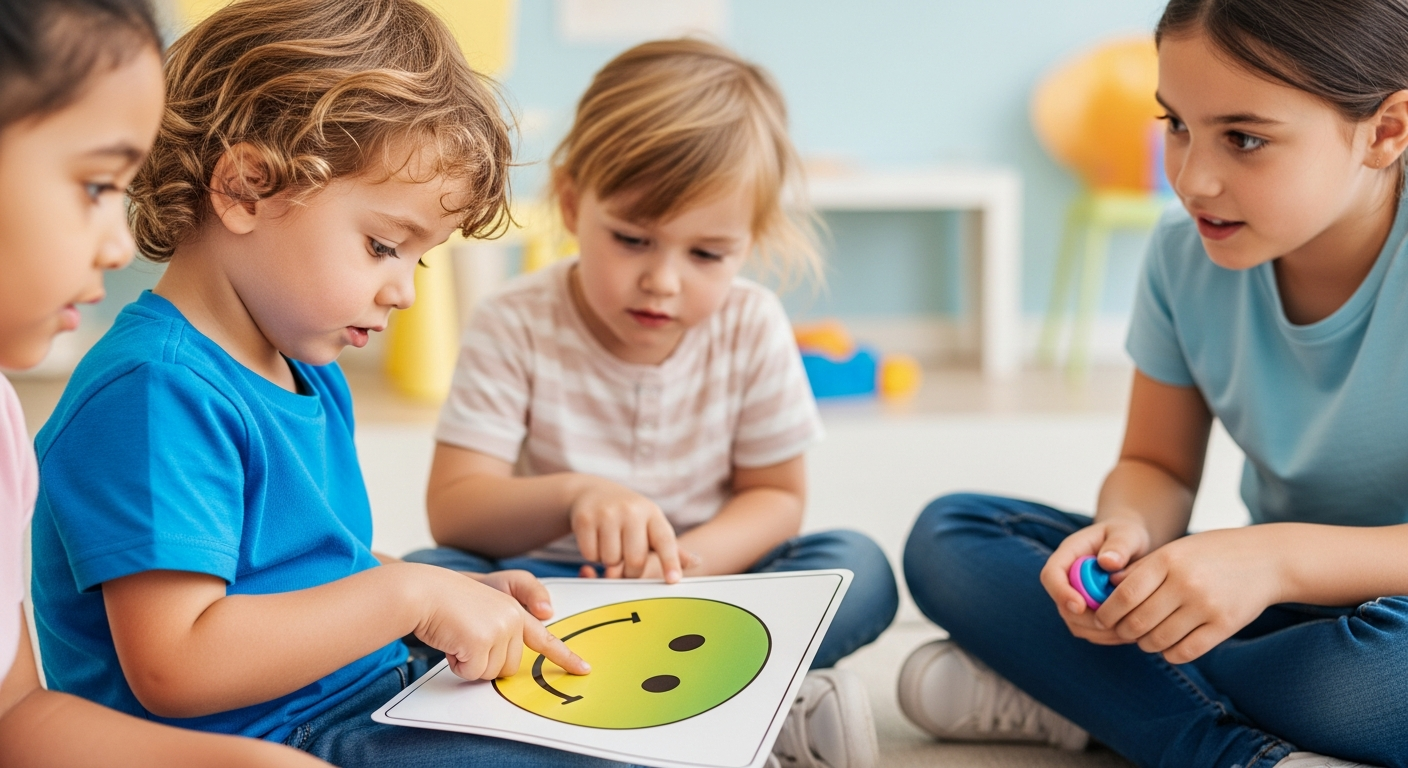
Table of Contents
- Introduction
- Understanding the Core: Speech Delay vs. Autism Spectrum
- Key Behavioral Distinctions
- Milestones and Red Flags by Age
- The Role of Smart Screen Time in Communication
- Practical Scenarios: Bringing Speech to Life
- Fostering a Language-Rich Environment at Home
- Setting Realistic Expectations
- Transparency in Support: Pricing and Value
- The Importance of Professional Evaluation
- Your Partner in the Journey
- FAQ
- Conclusion
Introduction
Did you know that nearly 1 in 4 children today may require some form of speech support during their early development? For many parents, the silence that follows a missed milestone can feel deafening. You might find yourself watching other toddlers at the park, listening to their "mama" and "dada," while your own little one remains quiet or relies on tugging your sleeve to get what they need. It is completely natural for your mind to jump to a common question: Is this a simple speech delay, or is it related to the autism spectrum?
Navigating the nuances of early childhood development is a journey filled with both wonder and worry. At Speech Blubs, we understand this journey intimately because our founders walked this path themselves, having grown up with speech challenges. Our mission is to empower every child to "speak their minds and hearts" by providing joyful, science-based tools that turn screen time into an active learning experience.

In this comprehensive guide, we will explore the critical differences between an isolated speech delay and the communication challenges often seen within the autism spectrum. We will delve into the biological markers of language development, identify specific red flags for different ages, and provide practical strategies for fostering communication at home. Most importantly, we want to provide you with the clarity and confidence to support your child's unique voice, emphasizing that while every child develops at their own pace, early intervention is a powerful gift that can change the trajectory of their growth.
Understanding the Core: Speech Delay vs. Autism Spectrum
While the terms are often used in the same conversation, a speech delay and Autism Spectrum Disorder (ASD) are not the same thing. Understanding the "why" and "how" behind your child's communication can help you determine the best path forward.
What is an Isolated Speech Delay?
A speech delay occurs when a child is developing at a typical rate in most areas—such as social interaction, motor skills, and play—but lags behind specifically in their ability to produce sounds or use words. This can be broken down into two categories:
- Expressive Language Delay: The child understands what is being said (receptive language) but struggles to put their own thoughts into words.
- Receptive Language Delay: The child has difficulty understanding the language coming toward them, which naturally impacts their ability to respond.
Children with isolated speech delays are usually "socially hungry." They want to connect. If they can’t find the words, they will use every other tool in their arsenal: they will point, they will make intense eye contact, they will nod "yes," and they will bring you their favorite toy just to see you smile. Their frustration often stems from the fact that their desire to communicate exceeds their physical or linguistic ability to do so.
What is the Autism Spectrum?
Autism Spectrum Disorder is a broader neurodevelopmental condition that affects how a person perceives the world and interacts with others. In this context, a speech delay is often one symptom among a "triad" of characteristics:

- Challenges with social communication and interaction.
- Restricted, repetitive patterns of behavior or interests.
- Sensory processing differences.
For a child on the autism spectrum, the delay isn't just about the mechanics of speech; it often involves the intent to communicate socially. They may not yet see the "value" in sharing an observation with another person or may find social engagement overwhelming.
If you are currently wondering where your child fits on this spectrum, we recommend taking our quick 3-minute preliminary screener. It involves 9 simple questions and provides a personalized assessment and next-steps plan to give you immediate peace of mind.
Key Behavioral Distinctions
To help differentiate between these two paths, we look at how a child uses their body and their environment to connect with the people they love.
1. The Use of Gestures and Non-Verbal Cues
A child with a speech delay will often become a "master of mime." If they want a cookie, they will point to the jar, look back at you, and perhaps even pull your hand toward the counter. This is a sign of healthy "communicative intent."
In contrast, a child on the autism spectrum may not use these "symbolic gestures." Instead of pointing to show you something interesting (like a bird in a tree), they might use your hand as a tool—physically pushing your hand toward a door to get it opened without necessarily making eye contact or checking to see if you are paying attention.
2. Joint Attention
Joint attention is the shared focus of two individuals on an object. It’s that magical moment when your child sees a dog, points, and looks at you to make sure you saw it too. It says, "I want to share this experience with you."
Children with isolated speech delays typically have strong joint attention. In children with autism, this "shared look" is often absent or inconsistent. They may be deeply focused on the dog but feel no internal drive to ensure you are seeing it as well.
3. Response to Name
One of the most common early "red flags" mentioned by parents is the child's response to their name. While a child with a speech delay might be distracted, they will generally turn their head when called. For a child on the spectrum, they may seem "tuned out," as if they didn't hear you at all, even though their hearing is perfectly fine.
Milestones and Red Flags by Age
It is important to remember that milestones are not "deadlines," but rather "checkpoints." Every child has a different internal clock, but watching for these markers can help you decide when to seek professional guidance.
12 to 18 Months
- Typical: Babbling with various sounds, using "mama" or "dada," and using simple gestures like waving "bye-bye."
- Red Flags: Not responding to their name, no babbling, or a loss of skills (regression) where a child stops using words or sounds they previously had.
18 to 24 Months
- Typical: A growing vocabulary of 10 to 50 words, following simple one-step directions ("Get your shoes"), and starting to use "pretend play" (like feeding a doll).
- Red Flags: Fewer than 6–10 words, no pointing to show interest, or an inability to follow simple instructions.
24 to 36 Months
- Typical: Using two-word phrases ("More milk," "Big truck"), participating in short "back-and-forth" conversations, and being understood by familiar adults about 50% of the time.
- Red Flags: Relying primarily on "echolalia" (repeating exactly what they hear from a TV show or a parent without communicative intent) or showing no interest in playing with other children.
If you are noticing these signs, remember that you are not alone. You can read testimonials from other parents who have faced these same worries and found success and joy through early support.
The Role of Smart Screen Time in Communication
In today's world, parents are often told that screen time is the "enemy" of development. However, at Speech Blubs, we believe in a different approach. There is a vast difference between "passive" screen time—where a child sits and watches cartoons in a trance-like state—and "smart" screen time.
Our app is designed to be a "screen-free alternative" in spirit. This means it encourages the child to look away from the screen and interact with the real world. We use a scientifically-proven methodology called Video Modeling.
The Science of Video Modeling
Children are hardwired to learn from their peers. When a toddler sees an adult performing a task, it feels like "work" or "instruction." But when they see another child doing it, it feels like "play." Research shows that watching peers activates "mirror neurons" in the brain, which are essential for imitation and empathy.
Our app features over 1,500 activities where real children—our "Blubers"—demonstrate sounds, words, and social cues. This peer-to-peer connection reduces the pressure on the child, fosters confidence, and makes the learning process joyful rather than frustrating. You can explore the research behind our method to see why we are ranked in the top tier of speech apps globally.
Practical Scenarios: Bringing Speech to Life
How does this look in practice? Let’s look at a few scenarios where Speech Blubs can support a child struggling with speech delay or autism spectrum challenges.
Scenario 1: The Animal Lover
Imagine a 3-year-old who is a "late talker." He loves his toy farm set but doesn't yet say "cow" or "pig." For this child, the "Animal Kingdom" section of Speech Blubs is a perfect starting point. Instead of a parent repeating "Say Cow" over and over, the child watches a peer on the screen make a silly "Moo!" sound while wearing a fun digital cow filter.
The child is motivated to imitate the peer, and the "smart" screen time becomes a bridge to real-world play. Suddenly, during your next trip to the park, he sees a dog and attempts a "Woof!" This is the "speak their minds and hearts" mission in action.
Scenario 2: The Child Who Needs Social Cues
For a child on the autism spectrum, understanding facial expressions can be a major hurdle. Our app includes activities focused on emotions and social "back-and-forth." By using our face filters, the child sees themselves on the screen next to a peer. This helps build "self-awareness" and encourages them to mimic the smiles and surprises of their peers, making social interaction feel like a fun game rather than a confusing social demand.
Ready to see how these activities can help your family? Download Speech Blubs on the App Store today and start your journey.
Fostering a Language-Rich Environment at Home
While apps and professional therapy are vital, the most important work happens in the quiet moments of your daily routine. Here are a few ways to support your child's development every day:
1. Narrate Your Life
Become a "sports broadcaster" for your child. Instead of working in silence, narrate what you are doing. "I am picking up the big red apple. Now I am washing the apple. Scrub, scrub, scrub!" This constant exposure to language in context helps build their receptive vocabulary.
2. Follow Their Lead
If your child is obsessed with wheels, don't try to force them to look at a book about flowers. Sit on the floor and play with the wheels. Talk about "spinning," "fast," and "stop." When you enter their world, they are much more likely to invite you in and try to communicate.
3. Use "Wait Time"
As parents, we are often so eager to help that we finish our children's sentences or anticipate their needs before they ask. Try the "5-second rule." When you ask a question or show them an object, wait a full five seconds before speaking again. This gives their brain the "processing time" it needs to formulate a sound or gesture.
4. Co-Playing with Technology
When using Speech Blubs, we encourage "co-play." Sit with your child, laugh at the silly filters together, and repeat the sounds alongside the "Blubers." This turns the app into a powerful tool for family connection, moving it away from isolated viewing and toward a shared learning experience.
Setting Realistic Expectations
It is important to remember that progress is rarely a straight line. There will be days of "language bursts" followed by plateaus. Our goal is not to promise that your child will be giving public speeches in a month, but rather to foster a lifelong love for communication.
We focus on building foundational skills:
- Confidence: Reducing the "performance anxiety" often associated with speech therapy.
- Engagement: Encouraging the child to look at faces and respond to social cues.
- Joy: Ensuring that every milestone reached is celebrated as a family.
For many families, our app serves as a powerful supplement to professional speech-language pathology (SLP) services. It provides a way to "keep the momentum going" between therapy sessions, ensuring that the child is getting consistent, high-quality "smart screen time" every day.
Transparency in Support: Pricing and Value
We believe every child deserves access to high-quality speech support. To make our tools accessible while continuing to innovate and provide 24-hour support, we offer two main paths for our families.
- Monthly Plan: For $14.99 per month, you get full access to the Speech Blubs app and its vast library of activities.
- Yearly Plan: Our most popular option is $59.99 per year, which breaks down to just $4.99 per month.
We always recommend the Yearly Plan because it offers the best value and the most comprehensive support for your child's long-term development. When you choose the Yearly Plan, you receive:
- A 7-Day Free Trial: Explore every corner of the app risk-free to ensure it's the right fit for your little one.
- Reading Blubs Included: You get access to our sister app, Reading Blubs, which helps transition speech skills into early literacy.
- Priority Support: Enjoy a 24-hour support response time and early access to all new updates and features.
The Monthly plan does not include the free trial or the Reading Blubs app, making the Yearly plan the clear choice for families committed to a consistent developmental routine. You can create your account and begin your free trial right now to see the difference for yourself.
The Importance of Professional Evaluation
While home strategies and apps like ours are incredible resources, they do not replace the expertise of a professional. If you have concerns about your child's development, we always recommend consulting with your pediatrician or a Speech-Language Pathologist (SLP).
An evaluation can help identify if there are underlying physical causes, such as hearing loss or "apraxia of speech" (a motor-speech disorder), or if a formal diagnosis of autism is appropriate. Early diagnosis is the "gold standard" for the best outcomes because a child's brain has the highest level of "neuroplasticity"—the ability to form new neural connections—during these early years.
Your Partner in the Journey
At the heart of Speech Blubs is a simple belief: every child has something beautiful to say. Whether your child is navigating a speech delay, is on the autism spectrum, or is simply a "late talker" who needs a little extra encouragement, we are here to support you.
Our founders created this tool because they wished they had it when they were struggling with their own speech. We have poured that personal experience, combined with rigorous scientific principles, into an app that feels like a toy but works like a therapist.
For more information about who we are and what we stand for, we invite you to visit our homepage and learn more about our commitment to the 1 in 4 children who need speech support.
FAQ
1. Is a speech delay always a sign of autism?
No, a speech delay is not always a sign of autism. Many children are "late talkers" who eventually catch up to their peers without any other developmental concerns. The key difference lies in social engagement. If a child is not speaking but is still using gestures, making eye contact, and seeking social connection, it is likely an isolated speech delay. If these social cues are also missing, further evaluation for ASD is recommended.
2. Can Speech Blubs replace traditional speech therapy?
Speech Blubs is designed to be a powerful supplement to professional therapy, not a replacement for it. It is an excellent tool for daily practice at home, helping to reinforce the skills learned in therapy sessions through fun, peer-led video modeling. For many families, it provides an immediate, effective way to start working on speech while waiting for an appointment with a specialist.
3. What makes "video modeling" better than cartoons?
Cartoons are passive; children watch them without feeling a need to participate. Video modeling uses real children (peers) to demonstrate sounds and actions. This triggers mirror neurons in a child's brain, making them much more likely to attempt to imitate what they see. Our "smart screen time" approach is interactive, requiring the child to be an active participant in the learning process.
4. When is the best time to start using Speech Blubs?
The most ideal time to begin using the app is between 18 months and 4 years of age, as this is when speech and language delays typically become most noticeable. However, children of all ages can benefit from the confidence-building and social-communication activities within the app. Early intervention is always the best approach, so if you have concerns, starting today is the right choice.
Conclusion
The journey of supporting a child with a speech delay or autism spectrum challenges can feel overwhelming, but you do not have to walk it alone. By understanding the signs, seeking professional guidance, and utilizing "smart" tools, you are giving your child the best possible foundation for a bright, communicative future.
Remember that progress is a marathon, not a sprint. Celebrate every new sound, every pointed finger, and every shared laugh. These small moments are the building blocks of a lifetime of connection. We invite you to join our global community of over 5 million parents who are helping their children find their voices.
Ready to take the next step? Choose the best for your child by starting your 7-day free trial today. Download Speech Blubs on the Google Play Store or the Apple App Store. We highly recommend selecting the Yearly Plan during sign-up to unlock the full suite of features, including the Reading Blubs app and priority support, all while saving 66% compared to the monthly option. Let's help your child speak their mind and heart together!
About the author