
Supporting a 2-Year-Old with Expressive Speech Delay
 By Speech Blubs Team•Mar 9, 2026•14 min.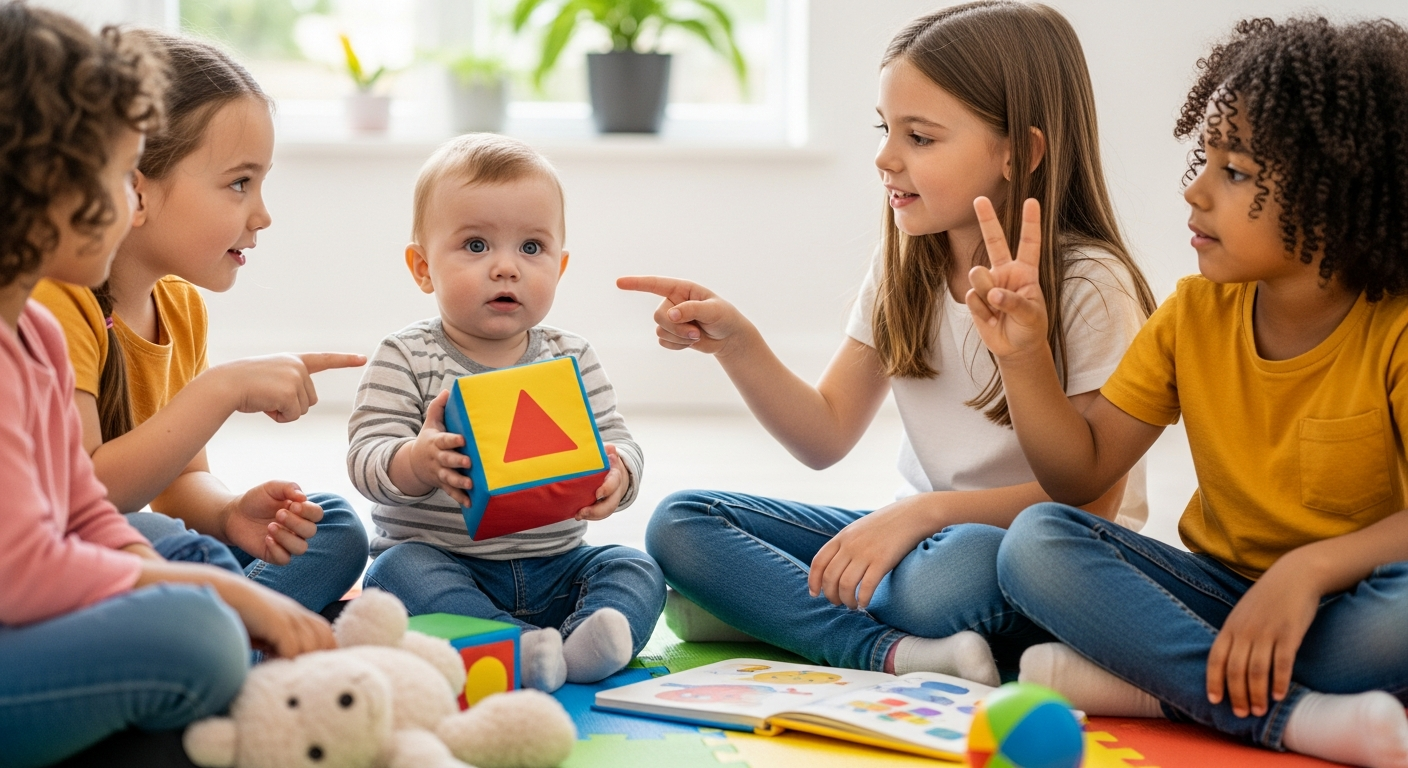
Table of Contents
- Introduction
- Understanding the Basics: Speech vs. Language
- Milestones for a 24-Month-Old
- Identifying Red Flags in a 2-Year-Old
- Possible Causes of Expressive Speech Delay
- The Speech Blubs Approach: Smart Screen Time
- How to Support Your Child at Home
- When to Seek a Speech-Language Pathologist (SLP)
- Choosing the Right Path for Your Family
- Real-World Scenarios: Learning Through Play
- The Science of Success
- Conclusion
- Frequently Asked Questions (FAQ)
Introduction
Have you ever sat at the park, watching other toddlers chatter away while your little one remains quiet, perhaps relying on a tug of your sleeve or a pointed finger to tell you what they need? If you’ve felt that pang of worry wondering why your child isn’t yet "speaking their mind and heart," you are certainly not alone. In fact, nearly 1 in 4 children require some form of speech support during their early developmental years. This moment of realization isn't a sign of failure; it’s the beginning of a proactive journey toward helping your child find their voice.
The purpose of this post is to provide a comprehensive look at expressive speech delay in a 2-year-old. We will explore the vital differences between speech and language, identify the developmental milestones you should be looking for, and discuss how you can transform "screen time" into a powerful, joyful learning experience. We will also delve into the science-backed methods we use at Speech Blubs to empower families just like yours. Our mission is rooted in the personal experiences of our founders, who grew up with speech challenges themselves and built the tool they wished they’d had.

By the end of this article, you will have a clearer understanding of how to support your child's communication, when to seek professional help, and how to foster a home environment where every "ba," "ma," and "vroom" is celebrated as a step toward confidence.
Understanding the Basics: Speech vs. Language
Before we dive into the specifics of a delay, it is essential to clarify what we mean by "speech" and "language." While we often use these terms interchangeably, in the world of child development, they represent two distinct skills.
Speech refers to the physical act of producing sounds. It involves the coordination of the tongue, lips, jaw, and vocal cords to articulate words clearly. If a child has a speech delay, they might be trying to communicate complex ideas, but the sounds they produce are difficult for others to understand.
Language, on the other hand, is the system we use to share and receive information. It is divided into two categories:
- Receptive Language: This is your child’s ability to understand what is being said to them. Can they follow a simple instruction like "find your shoes"? Do they look at the ball when you say, "Where is the ball?"
- Expressive Language: This is what we are focusing on today. It is the ability to use words, gestures, and sentences to convey messages to others.
An expressive speech delay in a 2-year-old specifically means the child has difficulty expressing their thoughts and needs through spoken words, even if they understand perfectly well what is happening around them. This is often why parents describe their children as "late talkers"—the "input" (understanding) is working fine, but the "output" (speaking) is taking a little longer to arrive.
Milestones for a 24-Month-Old
While every child develops at their own unique pace, pediatricians and speech-language pathologists (SLPs) use certain milestones as "checkpoints" to ensure a child is on the right track. For a 2-year-old, the expectations for expressive language start to expand rapidly.

The 50-Word Threshold
By the age of two, most children have a "vocabulary explosion." On average, a 24-month-old should be using between 50 and 100 words spontaneously. These don't have to be perfectly articulated—"wa-wa" for water counts! What matters is that the child uses the word consistently to represent the same object or action.
Putting Words Together
This is a major milestone. By age two, we expect to see the emergence of two-word phrases. Examples include "Mama go," "More milk," or "Doggy big." This indicates that the child is beginning to understand the rules of grammar and how to combine concepts to create new meanings.
Intelligibility
At this age, you (the primary caregiver) should be able to understand about 50% of what your child says. Strangers may still find them difficult to understand, but the "code" of their speech should be cracking for those who spend the most time with them.
If you are unsure where your child stands, we recommend taking our quick 3-minute preliminary screener. It consists of 9 simple questions and provides you with an assessment and a next-steps plan to help you navigate this stage with confidence.
Identifying Red Flags in a 2-Year-Old
It is natural to wonder if your child is just a "late bloomer" or if there is a more significant delay that requires intervention. While many children do eventually "catch up," waiting too long can lead to frustration for both the child and the parent.
Here are some specific signs that it might be time to look closer at your child's expressive language:
- Lack of Imitation: If your child does not try to mimic sounds or words that you say, it can be a sign of a delay.
- Preference for Gestures: While pointing and waving are great, if a 2-year-old only uses gestures and shows no interest in using vocalizations to get what they want, this is a red flag.
- Limited Vocabulary: If your child is 24 months old and has fewer than 20-30 words, or if they aren't adding new words to their vocabulary regularly.
- Frustration: If your child frequently has "meltdowns" because they cannot communicate their needs, this is a sign that their expressive skills are not keeping up with their cognitive desires.
Our approach at Speech Blubs is designed to reduce this frustration by making communication a game. Our scientific methodology is based on "video modeling," where children learn by watching their peers. When a child sees another child successfully making a sound or saying a word, it triggers their "mirror neurons," encouraging them to try it themselves in a low-pressure, joyful way.
Possible Causes of Expressive Speech Delay
Understanding why a delay is happening is the first step toward the right solution. Several factors can influence how and when a child begins to speak.
1. Hearing Issues
Even minor hearing loss can significantly impact language development. If a child cannot hear the nuances of speech (the difference between a "p" and a "b" sound, for example), they will struggle to replicate those sounds. Chronic ear infections (otitis media) can cause fluid buildup that makes sounds muffled, like listening to someone speak underwater.
2. Oral-Motor Difficulties
Some children have trouble coordinating the muscles of the mouth. This could be due to a physical issue, such as a "tongue-tie" (a short frenulum), or a neurological challenge like apraxia, where the brain struggles to send the correct signals to the speech muscles.
3. Environmental and Genetic Factors
Sometimes, speech delays run in families. In other cases, a child might not be getting enough "active" language stimulation. It’s important to note that this is not about parent blame; it’s about recognizing that some children require a higher "dosage" of interaction and specific types of play to unlock their speech.
4. Developmental Disorders
In some instances, an expressive language delay is a symptom of a broader developmental path, such as Autism Spectrum Disorder (ASD) or a global developmental delay. Early identification is key because it allows families to access specialized support that can make a world of difference.
The Speech Blubs Approach: Smart Screen Time
We know that many parents feel guilty about screen time. However, at Speech Blubs, we believe in "smart screen time"—a screen-free alternative to the passive, "zombie-like" state kids often enter when watching cartoons. Instead of just watching, your child is invited to participate, imitate, and interact.
Our app was created because our founders knew the frustration of speech struggles firsthand. We’ve built a platform where the "teachers" are other children. This peer-to-peer connection is powerful. For example, if your 2-year-old loves animals, the 'Animal Kingdom' section of the app doesn't just show a picture of a cow; it shows a real child wearing a fun cow filter, making a "Moo" sound. Your child is naturally drawn to the peer's face and is more likely to mirror the mouth movements and the sound.
This method isn't just fun—it’s effective. We focus on building the foundational skills of communication, such as joint attention, imitation, and confidence. To see how other families have found joy in this process, you can read our parent success stories.
How to Support Your Child at Home
While professional therapy and educational tools are vital, the most significant impact on your child’s speech will come from the thousands of tiny interactions you have with them every day. Here are some practical strategies to encourage expressive language:
1. Narrate Your Day (Sports Casting)
Act like a sports commentator for your child's life. "You are picking up the blue car. The car goes fast! Vroom vroom!" This provides a constant stream of simple, relevant language that maps words to the actions they are currently performing.
2. The Power of "Wait"
One of the biggest mistakes we make as parents is anticipating our child’s needs so quickly that they never have to speak. If you know they want juice, hold the cup and wait for a beat. Look at them expectantly. Even if they just make a sound or a gesture, you are creating a "communication temptation" that encourages them to initiate.
3. Read and Repeat
Books with repetitive phrases are gold for toddlers with expressive delays. Books like Brown Bear, Brown Bear, What Do You See? allow the child to predict what comes next. Eventually, you can pause and let them fill in the blank.
4. Use "Video Modeling" in Real Life
Just like in the Speech Blubs app, you can use imitation to your advantage. If you want your child to say "apple," take a bite of an apple, exaggerate your mouth movements, and say "A-a-apple." Make it silly and fun. If you’re ready to bring this method into your digital routine, download Speech Blubs on the App Store or Google Play to begin.
When to Seek a Speech-Language Pathologist (SLP)
If your child is 2 years old and showing several red flags, the best course of action is to schedule an evaluation with an SLP. You don’t need to wait for a "referral" in many cases; you can seek a private evaluation or look into early intervention services provided by your local government.
An SLP will:
- Assess your child's receptive and expressive language.
- Check their oral-motor skills.
- Determine if their "play skills" (like symbolic play, such as pretending to feed a doll) are age-appropriate.
- Provide you with a customized plan to support your child’s specific needs.
We view Speech Blubs as a powerful supplement to professional therapy. While a therapist might see your child once a week, our app is there for those daily "learning moments" that keep the momentum going. It helps build the confidence your child needs to try out their new skills in their sessions with an SLP.
Choosing the Right Path for Your Family
At Speech Blubs, we want to be transparent about how we can support you. We offer two main ways to access our tools, designed to provide flexibility and value:
- Monthly Plan: For $14.99 per month, you get full access to our speech therapy activities.
- Yearly Plan: This is our most popular and high-value option. At $59.99 per year, it breaks down to just $4.99 per month—a 66% saving compared to the monthly rate.
Why the Yearly Plan is the best choice: The Yearly plan isn't just more affordable; it's a comprehensive package for your child's development. It includes:
- A 7-day free trial so you can explore the app with zero risk.
- The Reading Blubs app, which helps transition speech skills into early literacy.
- Early access to all new updates and features.
- Priority 24-hour support response time.
The Monthly plan does not include these extra features or the free trial. We encourage parents to create their account and begin their 7-day free trial today by selecting the Yearly plan to unlock the full potential of our "smart screen time" experience.
Real-World Scenarios: Learning Through Play
To understand how this looks in practice, let’s consider a few scenarios:
- For the child who loves the outdoors: If your 2-year-old is fascinated by the park, use the 'Nature' section of the app. After they watch a peer make the sound of the wind or say "tree," take them outside. When they see a real tree, remind them of the "friend" in the app. This helps bridge the gap between digital learning and real-world application.
- For the "late talker" who loves vehicles: The 'Transport' section is a favorite. If your child is obsessed with "choo-choo" trains, the app provides a motivating way to practice those specific sounds. Instead of feeling like a "lesson," it feels like they are playing with a friend who shares their interests.
- For the child who struggles with frustration: Sometimes, the win isn't a word; it’s a gesture or a look of understanding. By using the app together, you are creating "joyful family learning moments" where the pressure is off. When the pressure is removed, children often feel safer to experiment with sounds.
The Science of Success
Our method isn't just a collection of videos; it is built on a foundation of scientific principles. We have a high rating on the MARS (Mobile App Rating Scale) and are continuously updating our content based on the latest research in child development. We believe that by providing an immediate, effective, and joyful solution, we can change the trajectory for the millions of children who need speech support.
You can dive deeper into the research behind our video modeling method to understand whypeer imitation is such a breakthrough in early childhood education.
Conclusion
Addressing an expressive speech delay in a 2-year-old is a journey of patience, play, and persistence. It’s about more than just hitting milestones; it’s about fostering a love for communication and building the confidence your child needs to navigate the world. Whether your child is currently babbling, using a few words, or relying on gestures, there is so much you can do to help them reach the next level.
Remember, you are your child's best advocate and most important teacher. By combining your daily interactions with science-backed tools like Speech Blubs, you are providing a robust support system for their growing mind.
We invite you to join our community of parents who are turning screen time into a tool for growth. Ready to get started? Create your account and begin your 7-day free trial today. We highly recommend choosing the Yearly plan to take advantage of the 66% savings, the free trial, and the additional Reading Blubs app. Let’s help your child speak their mind and heart, one joyful word at a time.
Frequently Asked Questions (FAQ)
1. Is it normal for a 2-year-old to only say 10 words?
While every child is different, saying only 10 words at 24 months is generally considered below the expected milestone of 50+ words. This is often categorized as an expressive language delay. It is a good idea to consult a pediatrician or use our preliminary screener to see if a professional evaluation is the next best step.
2. Can "smart screen time" really help my child talk?
Yes, when it is interactive and based on proven methods like video modeling! Unlike passive cartoons, Speech Blubs encourages children to imitate their peers and engage with the content. It’s designed to be a co-play experience where parents and children interact together, which is the gold standard for learning.
3. How do I know if it’s a speech delay or autism?
An expressive speech delay can be a standalone issue, or it can be a part of a broader developmental pattern like Autism Spectrum Disorder (ASD). Children with ASD often have other challenges, such as difficulties with eye contact, social reciprocity, or repetitive behaviors. A professional evaluation by a developmental pediatrician or SLP is necessary to provide an accurate diagnosis.
4. Does the Yearly plan really include a free trial?
Yes! When you sign up for the Yearly plan on our website or through the app stores, you receive a 7-day free trial. This allows you to explore all the features, including the Reading Blubs app, before any payment is processed. If you find it's not the right fit, you can cancel anytime during the trial period.
About the author