
Supporting a Child with Delayed Speech in 2 Year Old Toddlers
 By Speech Blubs Team•Mar 9, 2026•15 min.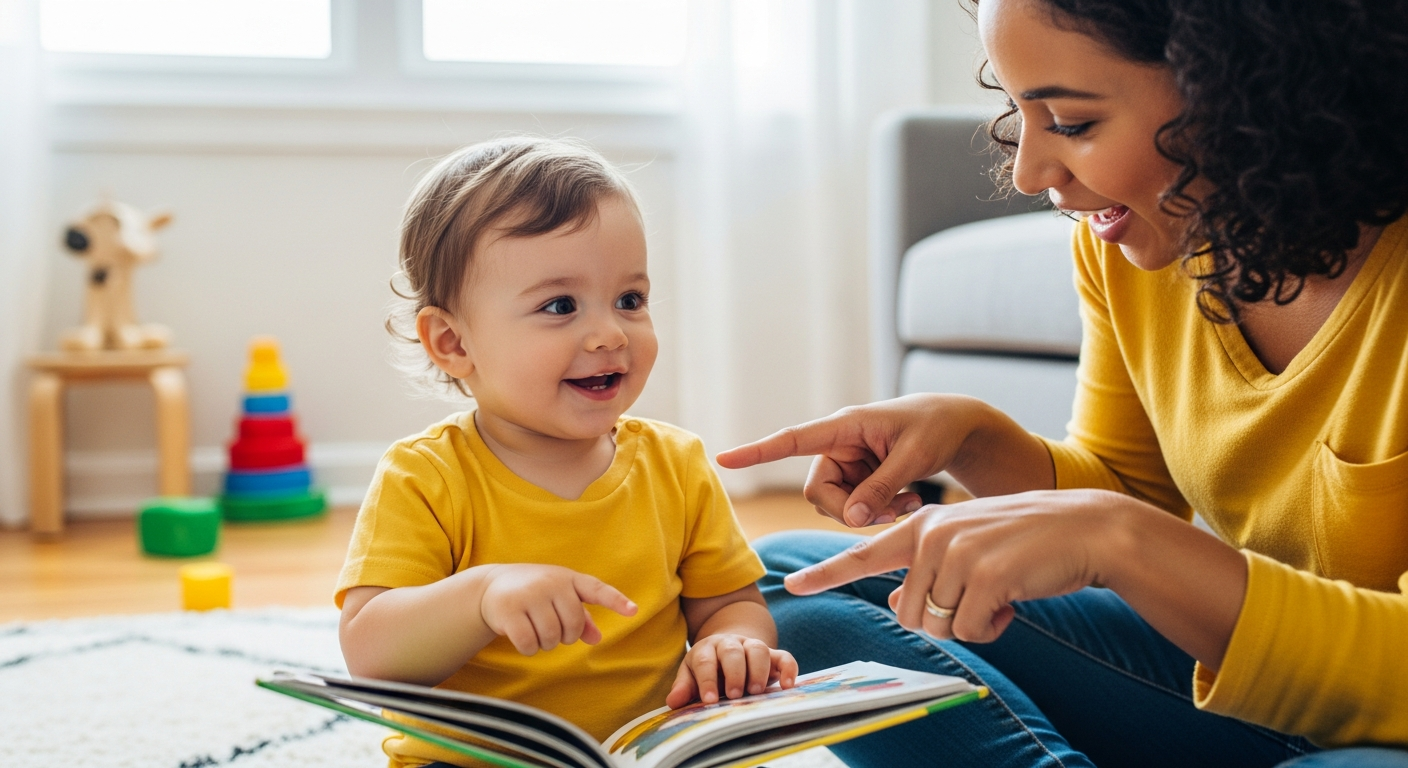
Table of Contents
- Introduction
- Understanding the Milestones: What to Expect at Age Two
- Speech vs. Language: What is the Real Difference?
- Identifying the Red Flags of Delayed Speech in 2 Year Old Children
- Common Causes: Why Your Toddler Might Be a Late Talker
- The Power of Video Modeling: Our Scientific Approach
- Practical Strategies to Encourage Communication at Home
- Taking the Next Steps: Professional Evaluation and Support
- Why Choose Speech Blubs for Your Family’s Journey?
- Pricing and Value: Investing in Your Child’s Voice
- FAQs
- Conclusion
Introduction
Did you know that approximately one in four children will experience some form of speech or language delay during their early developmental years? It is a statistic that often catches parents by surprise, especially when they are scrolling through social media and seeing other toddlers seemingly reciting the alphabet or holding full conversations. If you have noticed that your little one is quieter than their peers, or if you find yourself playing a constant game of charades to understand what they want, you are certainly not alone. At Speech Blubs, we understand the whirlpool of emotions—the worry, the confusion, and the "did I do something wrong?" thoughts—that come with recognizing a potential delay.

The purpose of this post is to provide you with a comprehensive, empathetic, and science-backed resource to navigate the world of delayed speech in 2 year old children. We will dive deep into what constitutes a typical milestone, the critical differences between speech and language, the common causes behind delays, and practical, joy-filled strategies you can implement at home today. Our mission is to empower children to speak their minds and hearts, and that journey begins with providing you, the parent, with the right tools and information.
Our founders created Speech Blubs because they grew up with speech problems themselves; they built the very tool they wished they had as children. We believe that while every child develops at their own pace, early intervention and "smart screen time" can transform frustration into connection. By the end of this article, you will have a clearer understanding of your child's unique path and how we can work together to foster a lifelong love for communication.
Understanding the Milestones: What to Expect at Age Two
When we talk about delayed speech in 2 year old toddlers, it is essential first to establish what the "typical" landscape looks like. While we always emphasize that development isn't a race, milestones act as a helpful compass to let us know if a child might need a little extra support.
By the time a child celebrates their second birthday, most are entering a "language explosion" phase. Typically, a 2-year-old can:
- Use between 50 and 100 words: These don't have to be perfectly articulated, but they should be used consistently to represent specific objects or actions.
- Form two-word phrases: Think of the classic "More juice," "Mommy go," or "Doggy bark." This shows they are beginning to understand the grammar and structure of communication.
- Follow simple, one-step commands: If you ask them to "put the ball in the box" without gesturing, they should generally be able to complete the task.
- Be understood about 50% of the time: Even if their "r" sounds like a "w," familiar adults should be able to decode about half of what they are saying.
If your child isn't quite there yet, it doesn't mean they won't get there. It simply means it’s time to pay closer attention. You might find that your child understands everything you say (receptive language) but struggles to produce the words themselves (expressive language). This is a common scenario we see at Speech Blubs. To help you get a clearer picture of where your child stands, we recommend taking our quick 3-minute preliminary screener. It consists of 9 simple questions and provides an immediate assessment and a personalized next-steps plan.

Speech vs. Language: What is the Real Difference?
It is very common for parents to use the terms "speech" and "language" interchangeably, but in the world of child development, they represent two distinct sets of skills. Understanding the difference is key to identifying the specific nature of a delayed speech in 2 year old child.
Speech refers to the physical act of producing sounds. It involves articulation (how we make speech sounds using our mouth, lips, and tongue), voice (using our vocal folds and breath to make sound), and fluency (the rhythm of our speech). A child with a speech delay might know exactly what they want to say but struggle with the mechanics of getting the sounds out clearly.
Language, on the other hand, is much broader. It is the entire system of giving and getting information. This includes receptive language (understanding what others say) and expressive language (using words, gestures, and writing to communicate a message). A child could have perfect articulation but still have a language delay if they cannot put words together into a meaningful sentence.
At Speech Blubs, we focus on the holistic development of both. Our video modeling methodology is designed to trigger mirror neurons in the brain. When a child watches a peer on screen making a specific sound or saying a word, they are naturally inclined to imitate that behavior. This isn't just passive watching; it is an active, "smart screen time" experience that bridges the gap between seeing, understanding, and speaking.
Identifying the Red Flags of Delayed Speech in 2 Year Old Children
While some children are simply "late bloomers," there are certain signs that suggest a professional evaluation is necessary. Recognizing these red flags early is the best gift you can give your child, as it allows for intervention during the brain's most plastic and receptive years.
Consider reaching out to a pediatrician or a speech-language pathologist (SLP) if your 2-year-old:
- Relies solely on gestures: If they point or grunt to get what they want rather than attempting to use sounds or words.
- Does not imitate sounds: At this age, toddlers are usually little parrots. If they aren't trying to copy the sounds you make or the words you say, it's a sign to watch.
- Has a very limited vocabulary: If they have fewer than 25-30 words or aren't adding new words to their repertoire weekly.
- Cannot follow simple directions: If they seem confused by basic requests like "get your shoes" or "sit down."
- Has an unusual tone: A voice that sounds excessively nasal, raspy, or robotic.
- Lacks social engagement: If they don't make eye contact, don't respond to their name, or seem to be in "their own world."
Early intervention doesn't mean something is "broken." It means we are providing the scaffolding your child needs to build their confidence. If you're feeling overwhelmed, download Speech Blubs on the App Store to explore our fun, peer-led activities that make "practice" feel like play.
Common Causes: Why Your Toddler Might Be a Late Talker
When a parent realizes their child has a delay, the first question is almost always, "Why?" It is important to reiterate: you did not cause this. Speech and language delays are multifactorial, stemming from biological, physical, and environmental roots.
Physical and Oral-Motor Factors
Sometimes, the hurdle is purely physical. For example, a "tongue-tie" (a short frenulum) can limit the tongue's range of motion, making certain sounds difficult to produce. Other children may have oral-motor challenges where the brain struggles to coordinate the muscles of the lips, tongue, and jaw. This is often seen in conditions like Childhood Apraxia of Speech (CAS). Additionally, structural issues like a cleft palate—even a mild one—can impact how air flows through the mouth and nose during speech.
Hearing and Sensory Considerations
Communication is a cycle of hearing and responding. If a child has chronic ear infections, fluid can build up behind the eardrum, making sounds seem muffled—like trying to listen to someone while underwater. If they can't hear the nuances of language clearly, they cannot reproduce them. This is why an audiologist's visit is often the first step in a speech evaluation.
Developmental and Neurological Factors
In some cases, delayed speech in 2 year old toddlers is a symptom of a broader developmental profile. This could include Global Developmental Delay or Autism Spectrum Disorder (ASD). Children with ASD might have the physical ability to speak but struggle with the social-pragmatic side of communication—knowing how and why to use language to interact with others.
Regardless of the cause, our approach at Speech Blubs is rooted in the "Joy of Connection." We believe in meeting children where they are. You can read more about how our approach has helped thousands of families in our parent testimonials.
The Power of Video Modeling: Our Scientific Approach
At Speech Blubs, we don't just create "games." We create evidence-based tools. Our primary method is video modeling, which is widely recognized as an effective intervention for children with speech delays.
When your child opens our app, they don't see a cartoon character. They see a real child—a peer—performing an action or saying a word. This is crucial. Research shows that children are significantly more likely to imitate other children than they are to imitate adults. This peer-to-peer connection activates the brain's "mirror neuron" system. Essentially, the child’s brain "practices" the movement just by watching it, making the transition to actually speaking much smoother.
We transform screen time from a passive experience into a "smart" interactive one. Instead of staring at a flickering cartoon, your child is prompted to participate, make sounds, and see themselves on screen with fun digital filters. This builds the foundational skills of communication: attention, imitation, and confidence. Our method is rated highly on the MARS (Mobile App Rating Scale), ensuring that you are using a tool that is both engaging and pedagogically sound. Get started on the Google Play Store and see the difference peer modeling can make.
Practical Strategies to Encourage Communication at Home
While Speech Blubs is a powerful supplement, the most important "speech therapy" happens in the mundane moments of your daily life. Here are several ways you can foster a language-rich environment:
Narration and Parallel Talk
Become the "narrator" of your child's life. Describe what you are doing as you do it: "I am pouring the milk. Cold milk! Now I am stirring the cereal. Swish, swish!" Similarly, use parallel talk to describe what your child is doing: "You are building a big tower. Up, up, up! Oh no, it fell down!" This provides a constant stream of mapped language—connecting their actions to the words that describe them.
The Magic of Reading Together
Reading isn't just about the story; it's about the interaction. For a 2-year-old, you don't even have to read the words on the page. Point to the pictures and ask questions. "Where is the blue truck?" or "What does the cow say?" Books with repetitive phrases or rhymes are particularly effective for helping children predict and then participate in the reading process.
Play-Based Learning
For a parent whose 2-year-old "late talker" loves animals, our "Animal Kingdom" section offers a fun, motivating way to practice "moo" and "baa" sounds. Use their natural interests as a hook. If they love cars, play with cars! Practice words like "stop," "go," "fast," and "beep." When children are having fun, their "affective filter" is low, meaning they are more open to learning and less frustrated by the challenge of speaking.
Taking the Next Steps: Professional Evaluation and Support
If you have concerns about a delayed speech in 2 year old child, your best move is to be proactive. Talk to your pediatrician. They can refer you to a Speech-Language Pathologist for a formal evaluation. In many regions, you can also access "Early Intervention" programs, which are often state-funded and provide evaluations and therapy at little to no cost for children under three.
An SLP will look at:
- What your child understands (Receptive language).
- What your child says (Expressive language).
- How they use gestures to communicate.
- The clarity of their speech.
- Their oral-motor skills.
Remember, Speech Blubs is designed to work with these professional services, not replace them. We are a tool for the "in-between" times—those moments at home when you want to provide high-quality, educational engagement that supports the goals set by your child's therapist. We are here to help you speak your minds and hearts as a family.
Why Choose Speech Blubs for Your Family’s Journey?
We know that parents today are inundated with apps and "educational" content. What sets Speech Blubs apart is our commitment to "Smart Screen Time." We provide a screen-free alternative to the passive consumption of cartoons. Our app is a tool for family connection, meant to be used with a parent or caregiver.
Our unique approach includes:
- Over 1,500 activities: Designed to keep your child engaged and motivated.
- Peer-to-peer video modeling: The gold standard for social learning and imitation.
- Comprehensive coverage: From basic sounds and "first words" to complex sentences and emotional vocabulary.
- Confidence building: We focus on the process and the joy of learning, reducing the frustration that often accompanies a speech delay.
We don't promise that your child will be giving public speeches in a month. Every child’s journey is different. What we do promise is a way to foster a love for communication and a toolkit for you to help your child reach their full potential. Ready to get started? Create your account and begin your 7-day free trial today.
Pricing and Value: Investing in Your Child’s Voice
We believe in transparency and providing the best possible value for our community. We offer two main plans to fit your family's needs:
- Monthly Plan: $14.99 per month. This is a great way to test the waters and see if Speech Blubs is a fit for your child.
- Yearly Plan: $59.99 per year. This is our best-value option, breaking down to just $4.99 per month—a massive 66% savings compared to the monthly rate.
Why the Yearly Plan is the clear choice: The Yearly plan isn't just about saving money; it’s about providing a comprehensive developmental ecosystem for your child. Only the Yearly plan includes:
- A 7-day free trial: You can explore everything we have to offer risk-free.
- The Reading Blubs app: An extra app specifically designed to help your child transition from speaking to reading.
- Early access: Be the first to try our new updates and features.
- Priority Support: A 24-hour response time from our dedicated support team.
The Monthly plan does not include the free trial, the Reading Blubs app, or priority support. We highly recommend the Yearly plan to ensure your child has the consistent, long-term support they need to thrive.
FAQs
1. Is it normal for my 2-year-old to only say a few words? While every child is different, by age 2, most children have a vocabulary of 50 or more words and are beginning to combine them into two-word phrases. If your child is only using a handful of words, it is a good idea to consult your pediatrician or take our preliminary screener to see if a formal evaluation is warranted.
2. Can screen time make a speech delay worse? Passive screen time—like sitting alone and watching cartoons—can indeed limit the opportunities for back-and-forth interaction that a child needs to develop language. However, "smart screen time," like Speech Blubs, is different. It is an interactive, peer-led experience designed to be used with a parent, encouraging the child to engage, imitate, and speak.
3. Does my child need speech therapy if they understand everything I say? Even if a child's receptive language (understanding) is on track, they may still have an expressive language delay. If they are struggling to produce sounds or words to communicate their needs, an SLP can provide strategies to help bridge that gap and reduce the frustration the child might feel from not being understood.
4. How long does it take to see progress with Speech Blubs? Progress varies for every child. Some parents notice an increase in imitation and sound production within the first few weeks, while for others, it takes longer. The goal is to build a consistent habit of joyful communication and to supplement any professional therapy your child may be receiving.
Conclusion
Navigating delayed speech in 2 year old children can feel like a daunting journey, but it is one you do not have to walk alone. By understanding the milestones, identifying red flags early, and utilizing science-backed tools like video modeling, you can provide your child with the foundation they need to succeed. Remember that your role as an empathetic, engaged caregiver is the most important factor in your child's development.
Whether your child is struggling with physical oral-motor challenges or is simply a "late talker" who needs a bit of a nudge, Speech Blubs is here to support you. We invite you to join our community of over 5 million parents who have discovered the power of smart screen time.
Start your 7-day free trial today by downloading Speech Blubs on the App Store or Google Play. We strongly encourage you to choose the Yearly plan to unlock the full suite of features, including the Reading Blubs app and priority support, all while saving 66%. Let's work together to help your child speak their mind and heart!
About the author