
Supporting Your Toddler With Delayed Speech: Tips and Advice
 By Speech Blubs Team•Mar 5, 2026•15 min.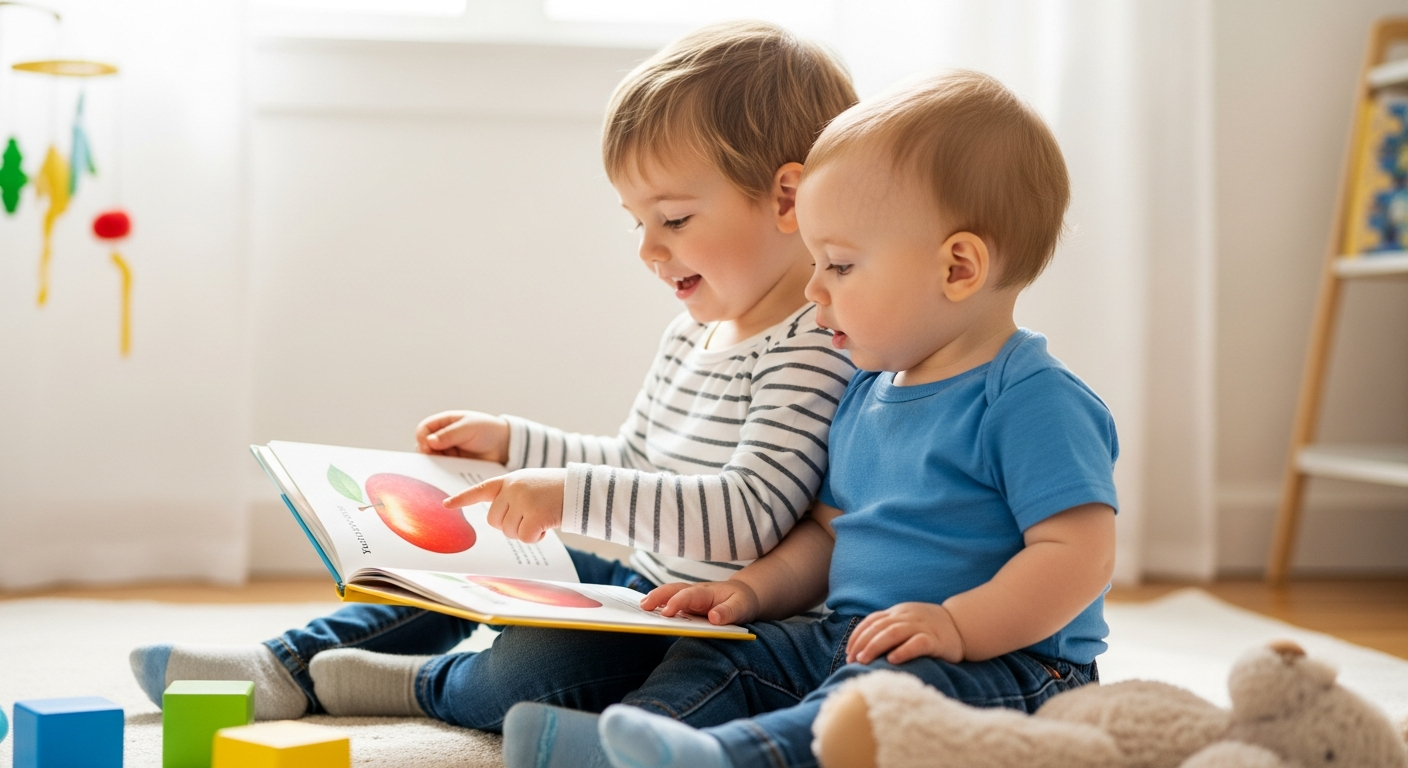
Table of Contents
- Introduction
- Understanding the Basics: Speech vs. Language
- Key Milestones: What to Expect and When
- Recognizing the Red Flags
- Common Causes of Delayed Speech in Toddlers
- The Speech Blubs Approach: Turning Play Into Learning
- Practical Scenarios: Using Speech Blubs at Home
- How Parents Can Help at Home
- Navigating Professional Help and Diagnosis
- Choosing the Right Plan for Your Family
- Fostering Confidence, Not Just Words
- Frequently Asked Questions (FAQ)
- Conclusion
Introduction
It is a Tuesday morning, and you are at the park. You watch as a neighbor’s two-year-old chatters away about the "big blue slide," while your own toddler of the same age pulls on your sleeve and points silently toward the swings. You might find yourself wondering, Is this just a phase? Am I doing enough? Should they be saying more by now? If these questions sound familiar, you are certainly not alone. Language and speech development are among the most anticipated milestones in a child’s early life, but they are also areas where we see a vast range of "normal." However, for about 1 in 5 children, the journey to finding their voice takes a little longer, leading to what is often categorized as delayed speech in toddlers.
The purpose of this post is to provide you with a clear, empathetic, and science-backed look at what it means when a toddler is a "late talker." We will explore the vital differences between speech and language, outline the milestones you should look for at various ages, and discuss the common causes behind these delays. More importantly, we want to share how you can foster a joyful learning environment at home. At Speech Blubs, our mission is to empower children to "speak their minds and hearts." We believe that communication is the foundation of connection, and we are here to support you every step of the way with tools that turn screen time into "smart screen time."

In the following sections, we will break down the complexities of communication development and offer practical strategies to help your child find their voice. Whether your child is just starting to babble or you are navigating the early stages of professional therapy, this article serves as a resource to build your confidence and reduce the frustration that often accompanies developmental hurdles.
Understanding the Basics: Speech vs. Language
Before diving into milestones, it is essential to clarify two terms that are often used interchangeably but mean very different things in the world of child development: speech and language.
What is Speech?
Speech refers to the physical act of producing sounds. It involves the coordination of the breath, the vocal cords, the tongue, the lips, and the jaw. When we talk about a "speech delay," we are often referring to difficulties with articulation (how sounds are formed), voice (the use of the vocal folds and breath to make sounds), or fluency (the rhythm of talking). A child with a speech delay might understand everything you say and have a complex inner world, but they struggle to physically produce the words that others can understand.
What is Language?
Language is much broader. It is the system we use to share information and express our thoughts. It includes:
- Receptive Language: How we understand what others say. Does your child follow a command like "Get your shoes"?
- Expressive Language: How we use words, gestures, and writing to communicate our needs and ideas.
- Social Pragmatics: The unwritten rules of communication, such as taking turns in a conversation or staying on topic.
A child with a language delay might be able to pronounce words perfectly but only use two words at a time when their peers are using full sentences. Conversely, a child with a speech delay might have a rich vocabulary but be difficult to understand. Understanding these differences is the first step in identifying how to best support your child. If you are feeling unsure about where your child stands, we recommend taking our quick 3-minute preliminary screener. It consists of 9 simple questions and provides you with an assessment and a next-steps plan to help guide your journey.

Key Milestones: What to Expect and When
While every child follows their own timeline, experts look for specific milestones to ensure development is on track. Keeping an eye on these can help you identify delayed speech in toddlers early on.
By 12 Months
By their first birthday, most babies are beginning to realize that sounds have meaning. They should be:
- Responding to their own name.
- Using simple gestures like waving "bye-bye" or pointing at something they want.
- Babbling with different tones (it might sound like they are telling you a long, complicated story in their own language!).
- Saying at least one or two simple words like "mama" or "dada."
By 18 Months
This is a period of rapid growth. At 18 months, a toddler typically:
- Uses several simple words spontaneously.
- Points to body parts when asked.
- Follows simple, one-step directions (e.g., "Give me the ball").
- Begins to enjoy "pretend" play, such as feeding a stuffed animal.
By 24 Months (2 Years)
By age two, the "language explosion" often occurs. You should expect to see:
- A vocabulary of at least 50 to 100 words.
- The use of two-word phrases, such as "more juice" or "daddy go."
- Being understood by primary caregivers about 50% of the time.
- Following directions without needing a gesture to help them understand.
By 3 Years
By age three, communication becomes more complex:
- A vocabulary of 200 to 1,000 words.
- The use of three-word sentences.
- Being understood by strangers about 75% of the time.
- Asking "Who," "What," and "Where" questions.
Recognizing the Red Flags
It is important to remember that a delay doesn't necessarily mean a lifelong disorder. Some children are simply "late talkers" who will eventually catch up. However, there are certain signs that suggest it is time to seek professional advice from a pediatrician or a speech-language pathologist (SLP).
You should consider a consultation if your child:
- By 12 months: Does not use any gestures (pointing or waving).
- By 18 months: Prefers gestures over vocalizations or has trouble imitating sounds.
- By 24 months: Can only imitate speech or actions and does not produce words or phrases spontaneously.
- At any age: Shows a regression in skills (losing words they once had).
If you find yourself worrying, it can be helpful to read about the experiences of others. You can read testimonials from other parents who have navigated these same concerns. Seeing how other families supported their "late talkers" can provide both comfort and practical ideas for your own home.
Common Causes of Delayed Speech in Toddlers
Understanding the "why" behind a delay can help lower parental anxiety and point toward the right solutions. Here are some of the most common factors:
Oral-Motor Issues
Many children with speech delays have difficulty coordinating the muscles in their mouth. This is sometimes related to "Childhood Apraxia of Speech" (CAS), where the brain struggles to plan the movements needed for speech. Physical impairments, such as a cleft palate or a short frenulum (tongue-tie), can also play a role.
Hearing Loss
Speech is learned through imitation. If a child cannot hear clearly, they cannot learn to reproduce sounds. Even chronic ear infections can lead to temporary hearing loss during critical windows of development. This is why an audiology exam is almost always the first step recommended by doctors when speech is a concern.
Developmental Conditions
Sometimes, delayed speech is a symptom of a broader developmental profile. Children on the Autism Spectrum (ASD) often experience language delays, particularly in how they use language to interact socially. Similarly, children with global developmental delays may reach speech milestones later than their peers.
Environmental Factors and Risk Factors
Research suggests that certain factors can increase the likelihood of a delay. According to studies highlighted in our research section, risk factors include being male, having a low birth weight (under 2,500g), or a family history of language disorders. Interestingly, being raised in a multilingual home is not a cause of speech delay; while these children may start speaking slightly later, they typically catch up and even exceed monolingual peers in overall cognitive flexibility.
The Speech Blubs Approach: Turning Play Into Learning
At Speech Blubs, we understand that the best way for a child to learn is through joy and play. Our company was founded by individuals who grew up with speech problems themselves. They created the tool they wished they had—one that removes the stress and replaces it with fun.
The Power of Video Modeling
Our app is built on the scientific principle of "video modeling." We use videos of real children (not cartoons) performing speech exercises. Why? Because children are naturally wired to imitate their peers. This peer-to-peer connection triggers "mirror neurons" in the brain, making the child more likely to attempt the sounds themselves. It is a screen-free alternative to passive viewing; instead of just watching, your child is participating.
Creating "Smart Screen Time"
We know that many parents worry about screen time. However, there is a big difference between a child staring blankly at a cartoon and a child interacting with a tool designed to encourage vocalization. Our app requires the child to be an active participant. We frame these activities as powerful supplements to a child's overall development plan. To see the benefits for yourself, you can download Speech Blubs on the App Store or Google Play and start exploring the world of interactive learning.
Practical Scenarios: Using Speech Blubs at Home
To make the most of our tools, we recommend co-playing with your child. Here are a few ways to integrate Speech Blubs into your daily life to address delayed speech in toddlers:
For the Animal Lover
Imagine your 3-year-old is a "late talker" but absolutely lights up when they see a dog or a cow. You can head straight to the "Animal Kingdom" section of the app. As your child watches a peer make a "moo" sound, you can encourage them by saying, "Look! He’s a cow! Can you say 'Moo' too?" This turns a potential point of frustration into a bonding moment centered on their favorite interest.
For the Foodie
If your toddler loves snack time, use the "Yummy Time" section. As the app shows children eating and naming fruits, you can have real fruit slices ready. When the child on the screen says "Apple," you can hold up a piece and repeat the word. This connects the digital learning with a tactile, real-world experience.
Building Social Cues
For a child who struggles with facial expressions or social engagement, our "Face Games" are a wonderful resource. These exercises encourage children to make funny faces, stick out their tongues, and blow "raspberries." These aren't just for laughs—they are vital exercises for building oral-motor strength and social-emotional awareness.
How Parents Can Help at Home
While apps and therapy are incredibly helpful, you are your child’s first and most important teacher. Here are some simple, everyday strategies to encourage language:
- Narrate Your Day: Talk about what you are doing as you do it. "I am washing the red apple. Now I am cutting it. Crunch, crunch!" This builds vocabulary in context.
- Read Together: Reading is one of the best ways to expose your child to new words. Choose books with repetitive phrases and encourage your child to fill in the blanks.
- Follow Their Lead: If your child is interested in a truck, talk about the truck. Use simple language: "Big truck," "Blue truck," "Beep beep!"
- Wait and See: Sometimes we are so quick to anticipate our children's needs that they don't need to talk. When your child points to the milk, wait a few seconds. Look at them expectantly. Give them the chance to try a sound before you hand it over.
- Sing Songs: Music is a fantastic tool for language. The rhythm and rhyme of "The Itsy Bitsy Spider" or "Wheels on the Bus" help children predict the next word and encourage them to join in.
Navigating Professional Help and Diagnosis
If you decide to seek professional help, the process usually involves a few key steps. First, your pediatrician will likely conduct a developmental screening. From there, they may refer you to an SLP who will perform a more detailed evaluation.
What Does an SLP Evaluate?
An SLP will look at:
- Receptive Language: What your child understands.
- Expressive Language: What your child can say.
- Articulation: How clearly they speak.
- Oral-Motor Status: How the muscles in their mouth are working.
Early intervention programs (often called "Part C" in the U.S.) are available for children under three. These programs are often free or low-cost and can provide therapy right in your home. Remember, seeking help early is the best approach. It doesn't mean something is "wrong"; it means you are giving your child the tools they need to thrive.
Choosing the Right Plan for Your Family
We believe that every child should have access to high-quality speech support. To make our platform accessible, we offer two primary subscription options.
- Monthly Plan: For $14.99 per month, you get full access to the Speech Blubs app and its library of over 1,500 activities.
- Yearly Plan: This is our best value option at $59.99 per year, which breaks down to just $4.99 per month.
When you choose the Yearly plan, you aren't just saving 66%—you are getting a complete developmental package. The Yearly plan includes:
- A 7-day free trial so you can explore the app risk-free.
- Access to the Reading Blubs app, designed to help your child transition from speaking to reading.
- Early access to all new updates and content.
- 24-hour support response time from our dedicated team.
The Monthly plan does not include the free trial or the Reading Blubs app, making the Yearly plan the clear choice for families committed to their child's long-term progress. Ready to start your journey? Create your account and begin your 7-day free trial today.
Fostering Confidence, Not Just Words
One of the most significant impacts of delayed speech in toddlers is the frustration it causes. When a child can't express their needs, they may resort to tantrums or withdrawal. Our goal at Speech Blubs is to reduce that frustration by building confidence. When a child sees another child on the screen succeed, and then they make that same sound themselves, the look of pride on their face is priceless.
We don't promise that your child will be giving public speeches in a month. Instead, we focus on the small, joyful victories: the first time they say "more," the first time they point to a dog and say "woof," and the moments of connection that occur when you play together. These are the building blocks of a lifelong love for communication.
Frequently Asked Questions (FAQ)
1. What is the main difference between a speech delay and a language delay?
A speech delay usually refers to the physical production of sounds (articulation and clarity), whereas a language delay refers to the understanding and use of a communication system (vocabulary, sentence structure, and comprehension). A child might have one, the other, or both.
2. Can too much screen time cause a speech delay?
Passive screen time, like watching cartoons for hours, has been associated with developmental delays because it lacks social interaction. However, "smart screen time," like using Speech Blubs, is designed to be interactive and encourage vocalization, acting as a supplement to social play and professional therapy.
3. My child is 2 years old and only says 10 words. Should I be worried?
While every child is different, the milestone for a 2-year-old is typically 50+ words and the use of two-word phrases. It is a good idea to consult your pediatrician or take a preliminary screener to determine if a professional evaluation is needed.
4. How does video modeling help with delayed speech?
Video modeling works by utilizing "mirror neurons." When a child watches another child perform a task—like making a specific sound—their brain reacts as if they are performing the task themselves. This makes them more likely to imitate the behavior and learn the skill more quickly than they would by watching an adult or a cartoon character.
Conclusion
Navigating the challenges of delayed speech in toddlers can feel overwhelming, but it is a journey you don't have to take alone. By understanding the milestones, watching for red flags, and creating a language-rich environment at home, you are already providing your child with the best possible support. Remember that communication is about more than just words; it is about the connection, the smiles, and the shared moments between you and your little one.
At Speech Blubs, we are honored to be a part of your family’s story. Our peer-led video modeling methodology is designed to turn learning into a game, helping your child find their voice in an atmosphere of joy and encouragement. Whether you are using our "Animal Kingdom" games to practice sounds or narrating your daily walk, every effort you make is a step toward helping your child "speak their mind and heart."
Don't wait to give your child the support they deserve. We invite you to download the Speech Blubs app on the App Store or Google Play to begin. To get the absolute best value, select our Yearly plan. You’ll receive a 7-day free trial, access to the Reading Blubs app, and the full suite of features designed to make learning to talk an exciting adventure. Start your free trial today and watch your child’s confidence grow!
About the author