
Understanding the Link: Does Lip Tie Cause Speech Delay?
 By Speech Blubs Team•Mar 9, 2026•14 min.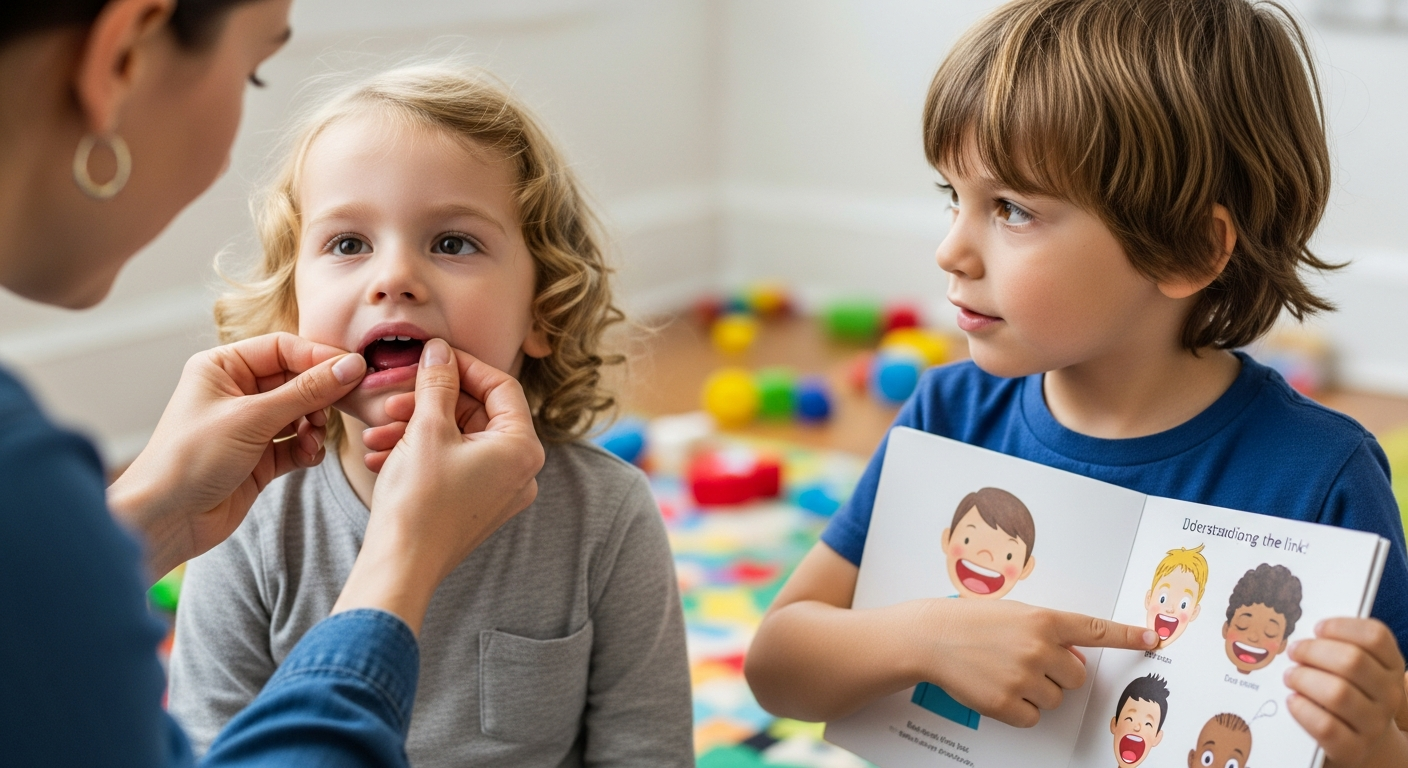
Table of Contents
- Introduction
- What Exactly is a Lip Tie?
- Does Lip Tie Cause Speech Delay? The Scientific Connection
- Key Speech Sounds Affected by Lip Ties
- Signs of a Lip Tie in Infants and Toddlers
- The Ripple Effect: Beyond Just Speech
- The Emotional and Social Impact
- Diagnosis: Who Should You See?
- Treatment Options: The Frenectomy
- Why Speech Therapy Matters Post-Treatment
- Using Speech Blubs to Support the Journey
- Practical Tips for Parents: Play-Based Exercises
- Summary of Key Takeaways
- Conclusion
- FAQs
Introduction
Have you ever watched your child struggle to press their lips together to say "mama" or "ball," only to see them grow frustrated when the sound doesn't come out quite right? As parents, we hang on every syllable our little ones utter, and when those milestones seem a bit out of reach, it is natural to wonder why. One question that frequently comes up in pediatric offices and speech therapy sessions is: does lip tie cause speech delay? While every child develops at their own pace, physical restrictions in the mouth can sometimes play a significant role in how a child learns to communicate.
In this article, we will dive deep into what a lip tie is, how it differs from a tongue tie, and the specific ways it can influence speech development. We’ll also explore the signs to look for in infants and toddlers, the emotional impact of communication challenges, and the various treatment options available, from simple procedures to supportive "smart screen time" tools. Our mission at Speech Blubs is to empower children to speak their minds and hearts, and understanding the physical foundations of speech is a vital first step in that journey.

By the end of this guide, you will have a clear understanding of the relationship between oral ties and speech, as well as actionable steps to support your child’s blossoming voice.
What Exactly is a Lip Tie?
To understand how a lip tie affects speech, we first need to look at the anatomy of a child’s mouth. Inside the mouth, there are several small folds of mucous membrane called frenulums (or frenula). These tissues help anchor the lips and tongue to the mouth’s structure.
A lip tie occurs when the upper labial frenulum—the piece of tissue connecting the upper lip to the upper gum—is unusually thick, tight, or short. This restriction prevents the upper lip from moving as freely as it should. While a small frenulum is normal and necessary, a "tie" occurs when that tissue interferes with function, such as latching during breastfeeding or, later on, articulating specific speech sounds.
It is important to note that lip ties often coexist with tongue ties (ankyloglossia), where the tissue under the tongue restricts movement. Together, these are known as Tethered Oral Tissues (TOTs). At Speech Blubs, we were founded by a team who grew up with speech challenges themselves, so we know firsthand that identifying these physical hurdles early can make a world of difference in a child’s confidence and development.
Does Lip Tie Cause Speech Delay? The Scientific Connection
The short answer is: yes, it can. However, it is more accurate to say that a lip tie can cause articulation issues that may look like a speech delay. Speech is a complex motor task that requires the lips, tongue, jaw, and breath to work in perfect harmony.
When a child has a lip tie, the restricted upper lip cannot "flange" or move upward and outward easily. This limitation can make it difficult to form a proper seal with the bottom lip. If a child cannot close their mouth effectively, they will struggle with "bilabial" sounds—sounds made using both lips.
This struggle can lead to a delay in the acquisition of certain words. If a child finds it physically exhausting or impossible to make the sounds required for basic communication, they may stop trying as often, which can eventually lead to a broader delay in expressive language. We believe in providing an immediate, effective, and joyful solution for the 1 in 4 children who need speech support, and that starts with recognizing when a physical barrier is getting in the way.

Key Speech Sounds Affected by Lip Ties
If you are wondering if your child’s speech is being impacted by a lip tie, pay close attention to specific consonants. Because the upper lip is tethered, the most commonly affected sounds are:
- /p/ as in "Pop" or "Puppy": This sound requires a quick burst of air released after the lips are pressed together.
- /b/ as in "Ball" or "Baby": Similar to /p/, this is a voiced sound that requires lip closure.
- /m/ as in "Mama" or "Milk": This nasal sound requires the lips to stay closed while air moves through the nose.
- /w/ as in "Water" or "Win": This requires the lips to round into a circle.
When a child cannot perform these movements, they might substitute sounds or omit them entirely. For example, "ball" might sound like "all," or "mama" might sound like "ah-ah." If your child is struggling with these specific sounds, it might be worth taking our quick 3-minute preliminary screener to get a better sense of their current milestones.
Signs of a Lip Tie in Infants and Toddlers
The impact of a lip tie often shows up long before a child says their first word. Early detection is key to preventing long-term speech and feeding struggles.
In Infants:
- Difficulty Latching: The baby cannot flare their upper lip over the breast or bottle, leading to a shallow or painful latch for the mother.
- Clicking Sounds: You might hear a clicking noise during feeding, which indicates the seal is breaking.
- Gassiness and Reflux: Because the baby can't maintain a tight seal, they often swallow excess air.
- Poor Weight Gain: If feeding is inefficient, the baby may struggle to get enough nutrients.
In Toddlers and Older Children:
- Speech Articulation Issues: Difficulty with the p, b, m, and w sounds mentioned above.
- Gap Between Front Teeth: A thick lip tie can grow down between the two front teeth (the central incisors), causing a significant gap or "diastema."
- Difficulty Eating from a Spoon: The child may struggle to use their upper lip to "clear" food off a spoon.
- Poor Oral Hygiene: It can be hard to brush the front teeth if the lip tie makes lifting the lip painful, leading to trapped food and potential decay.
The Ripple Effect: Beyond Just Speech
A lip tie doesn't just impact speech; it can affect a child’s overall quality of life. At Speech Blubs, we view speech as a gateway to connection. When that gateway is partially blocked, other areas of development can suffer.
Dental Health
A restrictive lip tie can pull on the gums, leading to recession later in life. Furthermore, if the tie makes it difficult to clean the area between the lip and the teeth, milk or food residue can pool there, significantly increasing the risk of "bottle rot" or early childhood cavities.
Sleep and Breathing
Some children with severe lip ties may become "mouth breathers" because they cannot comfortably keep their lips closed at rest. Mouth breathing is linked to poor sleep quality, snoring, and even a higher risk of ENT issues.
Feeding and Nutrition
As children transition to solid foods, the upper lip plays a crucial role in managing different textures. A child with a lip tie might be labeled a "picky eater" when, in reality, they are simply struggling with the mechanics of chewing and swallowing.
The Emotional and Social Impact
Imagine having a thought in your head but lacking the physical tools to express it. This is the reality for many children with untreated oral ties.
"When a child is misunderstood by their peers or parents, it leads to a cycle of frustration. They may withdraw from social situations, develop a lack of confidence, or even exhibit behavioral outbursts because their 'internal world' isn't matching their 'external expression'."
By addressing a lip tie early, we aren't just helping a child say their "p's" and "b's"—we are helping them build the confidence to navigate the world. Our testimonials from parents often highlight how much a child’s personality "blooms" once the frustration of a speech delay is lifted.
Diagnosis: Who Should You See?
If you suspect your child has a lip tie, you don't have to navigate this journey alone. Several professionals can help:
- Pediatric Dentist: Many pediatric dentists specialize in oral ties and use advanced laser technology for diagnosis and treatment.
- Speech-Language Pathologist (SLP): An SLP can assess how the lip tie is affecting speech and feeding mechanics.
- Lactation Consultant: If you are still breastfeeding, a consultant can help determine if a tie is causing latching issues.
- ENT (Otolaryngologist): For more complex cases involving breathing or swallowing, an ENT specialist is a valuable resource.
Before your appointment, you might want to download Speech Blubs on the App Store to start observing how your child interacts with peer-led video modeling. This can provide valuable data to show your specialist.
Treatment Options: The Frenectomy
The most common treatment for a restrictive lip tie is a frenectomy. This is a simple procedure where the restrictive tissue is "released."
There are two main ways this is done:
- Laser Frenectomy: This is the most modern approach. A high-precision laser vaporizes the tissue. It is quick, involves minimal bleeding, and often requires no anesthesia for infants.
- Surgical Scissors: A traditional method where the doctor snips the tissue with sterilized scissors.
While the idea of a "procedure" can be scary, it is typically very fast—often lasting less than a minute. The recovery involves simple "stretches" to ensure the tissue doesn't grow back together. Most parents report an immediate improvement in breastfeeding or a noticeable change in the child's ability to move their lip within days.
Why Speech Therapy Matters Post-Treatment
A frenectomy is a release of the physical restriction, but it is not a magic wand for speech. After a lip tie is removed, the child’s brain and muscles still need to learn how to use their "new" range of motion. This is where speech therapy—and tools like Speech Blubs—become essential.
Your child has spent months or years compensating for a tight lip. They need to retrain those muscles. Post-treatment exercises might include:
- Lip rounding exercises (making "fish faces").
- Practicing bilabial sounds in front of a mirror.
- Playing with "smart screen time" that encourages imitation.
Our app uses a scientifically-backed video modeling methodology, where children watch their peers perform speech sounds. Research shows that children are more likely to imitate other children than adults. This "peer-to-peer" learning triggers mirror neurons in the brain, making it a powerful supplement to professional therapy.
Using Speech Blubs to Support the Journey
At Speech Blubs, we believe that learning to talk should be joyful, not a chore. If your child is recovering from a lip tie release or waiting for an evaluation, our app provides a screen-free alternative to passive viewing. Instead of just watching a cartoon, your child becomes an active participant in their learning.
For a parent whose 3-year-old "late talker" loves animals, the "Animal Kingdom" section in our app offers a fun, motivating way to practice "moo" and "baa" sounds. These sounds specifically target the lip closure skills that children with lip ties often lack.
Choosing the Right Plan for Your Family
We want to make speech support accessible to everyone. We offer two main paths:
- Monthly Plan: For $14.99 per month, you get full access to our library of 1,500+ activities.
- Yearly Plan (Best Value): At $59.99 per year (only $4.99/month), you save 66% compared to the monthly rate.
The Yearly plan is our most popular choice because it includes a 7-day free trial, the extra Reading Blubs app to help with early literacy, early access to new updates, and priority 24-hour support response time. It’s a comprehensive tool designed to grow with your child as they find their voice.
Practical Tips for Parents: Play-Based Exercises
In addition to using the app, you can support your child’s lip mobility through simple, everyday play:
- Bubble Play: Blowing bubbles is one of the best ways to encourage lip rounding and breath control.
- Straw Drinking: Using a straw (especially a curly or thin one) requires the lips to work together to create suction.
- The "Pop" Game: Put a little bit of safe lip balm or water on your child's lips and encourage them to "pop" them together to make a sound.
- Mirror Mimicry: Sit with your child in front of a mirror and make silly faces. Pull your upper lip up, tuck it in, and see if they can copy you.
Remember, the goal is not perfection—it is progress. By framing these activities as games, you reduce the pressure on your child and foster a love for communication.
Summary of Key Takeaways
- A lip tie is a physical restriction of the upper labial frenulum that can limit lip movement.
- It can contribute to speech delays by making bilabial sounds (/p/, /b/, /m/, /w/) difficult to produce.
- Early signs include feeding struggles in infancy and articulation issues in toddlerhood.
- Treatment is often a quick frenectomy, which should be followed by speech exercises or therapy.
- Speech Blubs provides "smart screen time" that uses video modeling to help children practice sounds in a fun, pressure-free way.
Conclusion
So, does lip tie cause speech delay? It is certainly a piece of the puzzle. While a lip tie can create a physical barrier to clear speech, it is a challenge that can be overcome with the right combination of professional care, parental support, and engaging learning tools.
At Speech Blubs, we are dedicated to helping your child "speak their minds and hearts." Whether you are just beginning to notice a speech struggle or your child is already in therapy, we are here to provide a joyful, effective supplement to their development. We encourage you to choose the Yearly plan to get the full suite of features and your 7-day free trial.
Ready to see your child’s confidence soar? Download Speech Blubs on the Google Play Store or the App Store today. Let’s turn screen time into a powerful tool for family connection and communication!
FAQs
1. Can a lip tie go away on its own?
Generally, a lip tie does not "go away." While the frenulum may stretch slightly or move higher on the gum as the jaw grows, the underlying restriction usually remains. If the tie is causing speech or feeding issues, it is unlikely to resolve without intervention.
2. Is a lip tie release painful for my child?
If done with a laser, the procedure is very quick and involves minimal discomfort. Most infants can breastfeed immediately after the procedure for comfort. For older children, a local anesthetic is often used, and any post-procedure soreness is typically manageable with standard pediatric pain relief recommended by your doctor.
3. Will my child automatically start talking after a lip tie release?
Not necessarily. While the physical barrier is gone, the habit of restricted movement may still be there. This is why post-release exercises and speech practice (like using the Speech Blubs app) are so important to help the child learn how to use their new range of motion.
4. How do I know if my child’s speech delay is caused by a lip tie or something else?
The best way to know is through a professional evaluation. However, if your child specifically struggles with sounds like p, b, and m, but has good understanding of language (receptive language), a physical restriction like a lip tie is a strong possibility. You can start by taking our 3-minute screener for a preliminary assessment.
About the author