
10 Best Blowing Activities for Speech Therapy Progress
Discover 10 fun blowing activities speech therapy experts recommend to improve oral motor skills, breath control, and articulation in children through play.
 Von Speech Blubs Team•Apr 27, 2026•16 Min.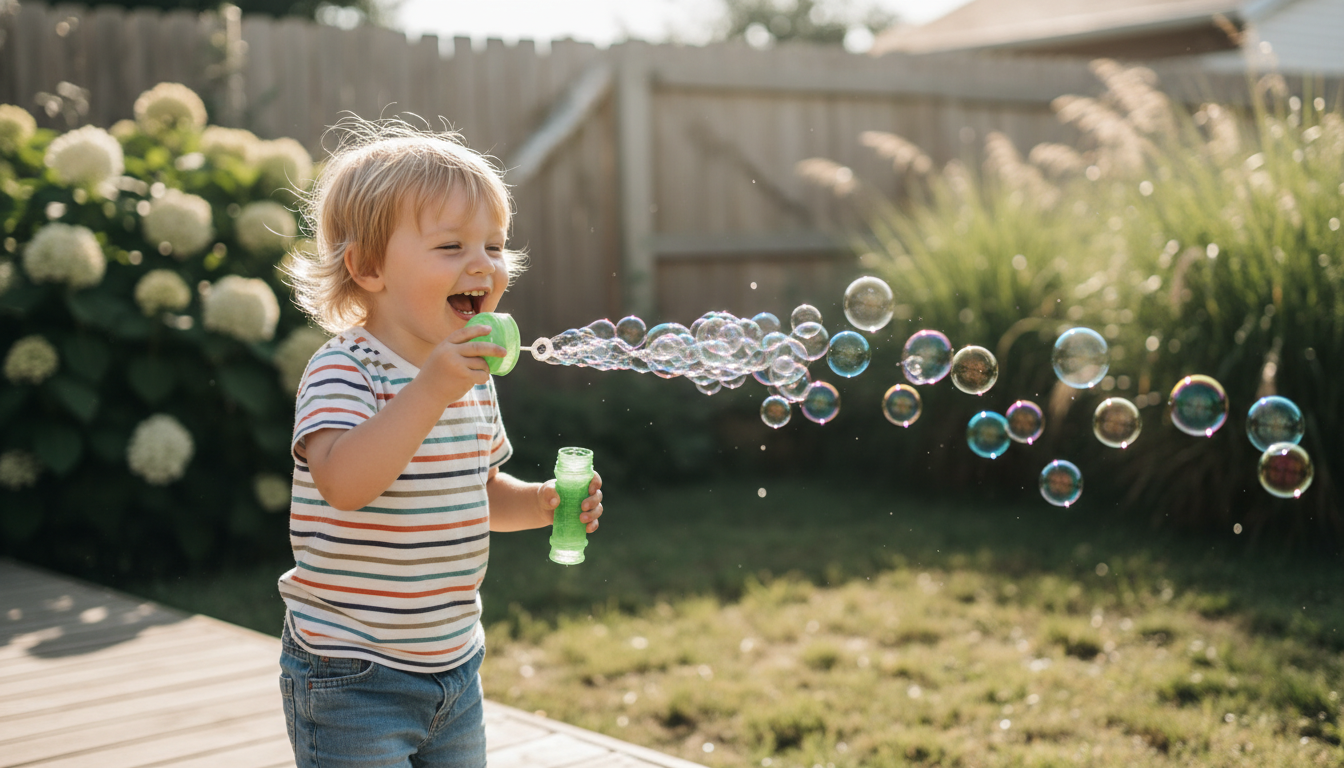
Table of Contents
- Introduction
- The Connection Between Blowing and Speech
- Signs Your Child Might Need Oral Motor Support
- 1. The Classic: Bubble Blowing
- 2. Straw Sips and Blows
- 3. Whistles and Party Blowers
- 4. Lip Bubbles and "Raspberries"
- 5. Pinwheels and Feathers
- 6. Tissue Blowing
- 7. Blowing Paint Art
- 8. Floating Ping Pong Balls
- 9. Lollipop "Push-Ups"
- 10. Candle Blowing (The Pretend Version)
- How Speech Blubs Enhances Physical Play
- The Science of Success: What to Expect
- Choosing the Right Plan for Your Family
- Tips for Success at Home
- Conclusion
- FAQ: Blowing Activities and Speech Therapy
Introduction
Did you know that a simple bubble wand could be the key to unlocking your child's first words? It might seem like magic, but for the 1 in 4 children who face speech and language challenges, these playful moments are actually foundational building blocks for communication. At Speech Blubs, our mission is to empower every child to "speak their minds and hearts," and we know that the journey often begins with strengthening the very muscles used for breathing, eating, and eventually, speaking.
In this blog post, we are going to dive deep into the world of blowing activities speech therapy and explore why these simple exercises are so transformative. We will cover the science of oral motor development, provide a comprehensive list of ten fun activities you can do at home, and explain how these physical exercises pair perfectly with our unique peer-led video modeling approach. Whether your child is a "late talker," struggles with certain consonant sounds, or simply needs a boost in confidence, this guide is designed to provide you with practical, therapist-approved strategies to support their growth.

Our goal is to help you transform "screen time" into "smart screen time" and turn daily play into a joyful learning experience. By the end of this article, you will have a toolkit of activities to foster a love for communication and build the foundational skills your child needs to thrive.
The Connection Between Blowing and Speech
Before we jump into the activities, it’s important to understand why blowing is such a staple in speech therapy. When a child blows a bubble or sips through a straw, they aren't just playing; they are engaging in a complex physical workout.
Understanding Oral Motor Skills
Oral motor skills refer to the strength, coordination, and range of motion of the muscles in the lips, jaw, tongue, and cheeks. These are the same muscles required for:
- Articulating Clear Sounds: To make sounds like "p," "b," "w," and "o," a child must be able to round their lips and control the flow of air.
- Breath Support: Speaking requires a steady stream of air from the lungs. Blowing activities teach children how to regulate their breath so they can sustain longer sentences.
- Feeding and Swallowing: Strong oral muscles ensure that children can chew various textures safely and manage saliva, reducing issues like excessive drooling or gagging.
Why Blowing Activities Work
Blowing activities for speech therapy focus specifically on lip rounding and prolonged exhalation. For example, when a child makes "fish lips" to blow through a wand, they are strengthening the orbicularis oris (the muscle surrounding the mouth). This strength is vital for producing "bilabial" sounds—those made using both lips—such as "m," "p," and "b."
At Speech Blubs, we lean heavily on the concept of video modeling, which is backed by the science of mirror neurons. When a child sees another child blowing a bubble or making a funny face in our app, their brain fires as if they were doing it themselves. This makes physical blowing activities even more effective when reinforced by our digital tools.
Signs Your Child Might Need Oral Motor Support
Every child develops at their own pace, but there are certain "red flags" that might suggest a little extra help with oral motor development could be beneficial. If you notice these signs, incorporating blowing activities into your routine is a great first step:

- Feeding Difficulties: Your child prefers only soft or pureed foods and struggles with chewy textures like meat or raw vegetables.
- Excessive Drooling: Beyond the typical teething age, your child has difficulty managing saliva.
- Open-Mouth Posture: Your child's mouth is frequently open at rest, which can sometimes be linked to weak jaw or lip muscles.
- Unclear Speech: Your child’s speech is difficult for others to understand, or they seem to "mumble" because their lips and tongue aren't moving precisely.
- Difficulty with Straws or Bubbles: If a child is over the age of two and cannot yet blow a bubble or sip from a straw, it may indicate a need for muscle strengthening.
If you are uncertain about where your child stands, we recommend taking our quick 3-minute preliminary screener. It involves 9 simple questions and provides you with an assessment and a next-steps plan, along with a free 7-day trial of our full suite of tools.
1. The Classic: Bubble Blowing
Bubbles are arguably the most versatile tool in a speech therapist's bag. They are inexpensive, portable, and universally loved by children.
How it Helps
Blowing bubbles requires controlled, prolonged airflow and specific lip positioning. It also encourages social interaction. Think about it: a child has to look at you, perhaps use a gesture or a word like "more" or "please," and then wait for the bubbles to appear.
Try This at Home
- The Wait and See: Blow a few bubbles, then close the container tightly. Wait for your child to make eye contact or use a word to ask for more. This builds communication intent.
- Pop the Bubbles: Encourage your child to say "Pop! Pop! Pop!" as they use their finger to break the bubbles. This practices the "p" sound, which requires a quick burst of air and lip closure.
- Speech Blubs Connection: In our "Early Sounds" section, children can watch peers making the "b" sound for "bubbles." This reinforces the physical act they are practicing with the real wand.
2. Straw Sips and Blows
Straws aren't just for drinking; they are excellent resistance trainers for the mouth.
How it Helps
Sucking through a straw builds cheek strength and tongue retraction. Blowing through a straw helps with targeted airflow.
Try This at Home
- Thick Shakes: Offer your child a slightly thickened smoothie or yogurt through a straw. The thicker the liquid, the harder the muscles have to work.
- The Cotton Ball Race: Place a cotton ball on a flat table. Give your child a straw and see if they can blow the cotton ball from one side to the other. This requires them to direct their breath precisely.
- Soap Foam: Have your child blow through a straw into a bowl of water with a drop of dish soap to create a "mountain of bubbles."
3. Whistles and Party Blowers
If you can handle a little extra noise in the house, whistles are fantastic for speech development.
How it Helps
Whistles provide immediate auditory feedback. The child learns that a certain amount of air pressure results in a specific sound. This is a foundational step in understanding how their voice works.
Try This at Home
- The Musical Parade: Use different types of whistles—slide whistles, bird whistles, or simple plastic ones. Encourage your child to blow long "notes" and short "staccato" notes.
- Party Blowers: These are especially great because they provide visual feedback as the paper unrolls. It requires a strong, sustained "push" of air to keep the blower extended.
4. Lip Bubbles and "Raspberries"
You know that funny sound babies make by vibrating their lips together? That’s actually a sophisticated oral motor exercise!
How it Helps
Commonly known as "lip trills," these help relax the tension in the lips and jaw while requiring consistent breath support. It’s a great warm-up for children who struggle with a "tight" or "stiff" mouth posture.
Try This at Home
- The Motorboat: Pretend you are motorboats in the bathtub. Make the "brrr" sound together, letting your lips vibrate.
- Silly Faces: Stand in front of a mirror and take turns making the biggest, loudest "raspberries" possible. Mirror play is essential for building self-awareness.
5. Pinwheels and Feathers
Visual feedback is a powerful motivator for young learners. When a child can see the result of their breath, they are more likely to repeat the action.
How it Helps
Pinwheels require a focused, strong stream of air to get them spinning. Feathers, on the other hand, require a very gentle, soft breath to keep them floating. This teaches "graded" breath control—the ability to adjust how hard or soft they blow.
Try This at Home
- Keep it Up: Throw a light craft feather into the air and see how many "blows" it takes to keep it from hitting the ground.
- The Pinwheel Garden: Plant pinwheels in the yard or a pot of sand. Encourage your child to "power" the garden with their breath.
6. Tissue Blowing
This is a simple, no-cost activity that can be done anywhere, even in a car or a waiting room.
How it Helps
Holding a tissue in front of the face and blowing it so it moves develops the same muscles used for "quiet" sounds and helps children learn to direct air through the mouth rather than the nose.
Try This at Home
- The Ghost Breath: Hold a single-ply tissue by the corners and have your child blow on it to make it "dance" like a ghost.
- Hidden Surprise: Hide a small toy under a tissue and tell your child they have to "blow the cover off" to find the treasure.
7. Blowing Paint Art
Who says therapy can't be messy and creative? Blowing paint is a favorite among occupational and speech therapists alike.
How it Helps
This activity requires long, sustained exhales and allows the child to see the "path" their breath takes. It’s excellent for children who have a short "breath span" and need to work on speaking in longer phrases.
Try This at Home
- Straw Painting: Place a few drops of watered-down tempera paint on a piece of paper. Use a straw to blow the paint around to create "monster hair" or abstract art.
- Speech Blubs Tip: Use this activity as a reward after a successful session on the Speech Blubs app.
8. Floating Ping Pong Balls
For older toddlers or those looking for a challenge, ping pong balls offer a bit more resistance than cotton balls.
How it Helps
Because ping pong balls are heavier and rounder, they require more "lip pursing" to direct the air accurately. This is a high-intensity workout for the cheeks and lips.
Try This at Home
- Water Racing: Fill a shallow tray with water and place a ping pong ball inside. Have your child blow it across the "pond."
- The Goal Post: Use two cups as goalposts and see if your child can blow the ball through the center.
9. Lollipop "Push-Ups"
While we generally want to limit sugar, a lollipop can be used as a targeted therapy tool for tongue placement.
How it Helps
Tongue "lateralization" (moving the tongue from side to side) and "elevation" (moving it up) are crucial for sounds like "l," "t," and "d."
Try This at Home
- The Touch Game: Hold the lollipop to the left corner of your child's mouth and ask them to touch it with their tongue. Then move to the right, the top lip, and the chin.
- Tongue Resistance: Have the child push their tongue against the lollipop while you provide very gentle resistance. This is essentially "weightlifting" for the tongue!
10. Candle Blowing (The Pretend Version)
Birthday candles are the ultimate motivation for blowing, but you don't need a cake to practice this skill.
How it Helps
Blowing out a candle requires a sharp, forceful "burst" of air. This is perfect for practicing the "aspiration" (the puff of air) needed for sounds like "h," "p," and "k."
Try This at Home
- The "Magic" Finger: Hold up your index finger and tell your child it’s a "magic candle." They have to blow it out until you "extinguish" the flame by folding your finger down.
- Electronic Candles: For a safer alternative, use LED tea lights that flicker. Some even turn off when they "sense" a puff of air!
How Speech Blubs Enhances Physical Play
While the physical activities listed above are incredibly valuable, they are only one piece of the puzzle. At Speech Blubs, we believe in a holistic approach that combines physical exercise with cognitive and social-emotional learning. Our app was born from the personal experiences of our founders, who all grew up with speech problems and created the tool they wished they had.
We offer a "smart screen time" experience that is a powerful tool for family connection, rather than the passive viewing associated with cartoons. When you use Speech Blubs, you are engaging in "co-play." You and your child watch our peer models together, and then you can transition that learning into the physical world with blowing activities.
For instance, if your 3-year-old "late talker" loves animals, the "Animal Kingdom" section of our app offers a fun, motivating way to practice "moo" and "baa" sounds. After practicing the "b" in "baa" on the app, you can grab your bubble wand and practice "b-b-bubbles!" This creates a bridge between digital learning and physical development.
The Science of Success: What to Expect
It is important to set realistic expectations. While blowing activities are a powerful supplement to a child’s overall development plan, they are not a "quick fix." We focus on fostering a love for communication, building confidence, and reducing the frustration that often comes with speech delays.
Our methodology is backed by science and has earned us high ratings on the MARS (Mobile App Rating Scale). By focusing on mirror neurons and peer imitation, we help children develop key foundational skills in a way that feels like play, not work. You can read more about our scientific approach and research here.
Many parents have shared their joy in seeing their children finally blow their first bubble or say their first clear "pop." You can find these heart-warming success stories and testimonials here.
Choosing the Right Plan for Your Family
We are committed to being a joyful, effective, and accessible solution for families. To get the most out of Speech Blubs, we offer two main subscription options:
- Monthly Plan: $14.99 per month. This is a great way to test the waters and see if the app fits your routine.
- Yearly Plan: $59.99 per year. This is our clear best-value choice, breaking down to just $4.99 per month—a 66% saving compared to the monthly rate.
The Yearly Plan is the superior choice for several reasons:
- 7-Day Free Trial: You can explore everything we have to offer risk-free.
- Reading Blubs: You get full access to our companion app, Reading Blubs, which supports early literacy.
- Priority Support: You receive 24-hour support response times and early access to all new updates.
Ready to see the difference for yourself? You can sign up and create your account here to start your journey today.
Tips for Success at Home
To make the most of blowing activities for speech therapy, keep these "pro-tips" in mind:
- Keep it Short: Toddlers have short attention spans. 5 to 10 minutes of "speech play" once or twice a day is much more effective than one long, forced session.
- Follow Their Lead: If your child is obsessed with cars, blow "exhaust bubbles" behind their toy cars. If they love dolls, have a "tea party" with straws.
- Be Silly: Your child will mirror your energy. If you are enthusiastic, exaggerated, and having fun, they will be too.
- Combine with Technology: Use the Speech Blubs app to model the sounds, then use the physical toys to practice them. This "double-whammy" approach is highly effective.
Conclusion
Blowing activities for speech therapy are more than just games; they are a bridge to better communication. By strengthening the mouth muscles, improving breath control, and fostering social interaction through play, you are giving your child the tools they need to find their voice. Remember, the goal is progress, not perfection. Every bubble popped and every candle "blown out" is a victory to be celebrated.
At Speech Blubs, we are here to support you every step of the way. We provide an immediate, effective solution that blends scientific principles with the joy of play. We encourage you to download our app on the Apple App Store or Google Play Store to begin your 7-day free trial.
By choosing the Yearly plan, you’ll unlock our full suite of features, including Reading Blubs and exclusive updates, ensuring your child has the very best resources at their fingertips. Let's work together to help your child speak their mind and heart.
FAQ: Blowing Activities and Speech Therapy
1. Can blowing activities actually "cure" a speech delay?
Blowing activities are a powerful tool for building the physical foundation for speech, such as muscle strength and breath control. However, speech is also a cognitive and linguistic process. While these activities are incredibly helpful, they should be used as part of a comprehensive approach that includes language modeling and, when necessary, professional speech-language therapy.
2. At what age should my child be able to blow bubbles?
Most children begin to develop the lip rounding and breath control needed to blow bubbles between 18 and 24 months. If your child is over two and a half and still struggles to blow through a wand or use a straw, it might be worth mentioning to your pediatrician or taking our preliminary screener.
3. My child gets frustrated and quits. What should I do?
If an activity is too hard, it loses its "play" value. Scale it back! If blowing a bubble is too difficult, start with simply making "raspberries" or blowing a very light piece of tissue. Use the Speech Blubs app to show them other kids doing it; often, seeing a peer succeed can motivate a child to try again.
4. Are these activities safe for children with sensory sensitivities?
Yes, but you should always follow your child's lead. Some children might find the "sticky" feel of bubbles or the "vibration" of a whistle overwhelming. Start with "dry" blowing activities like pinwheels or feathers, and gradually introduce different textures and sounds as they become more comfortable.
Über den Autor