
10 Best Physical Activities for Speech Therapy at Home
Boost language development with 10 fun physical activities for speech therapy. Learn how movement improves focus and speech sounds—start your free trial today!
 Von Speech Blubs Team•Apr 22, 2026•16 Min.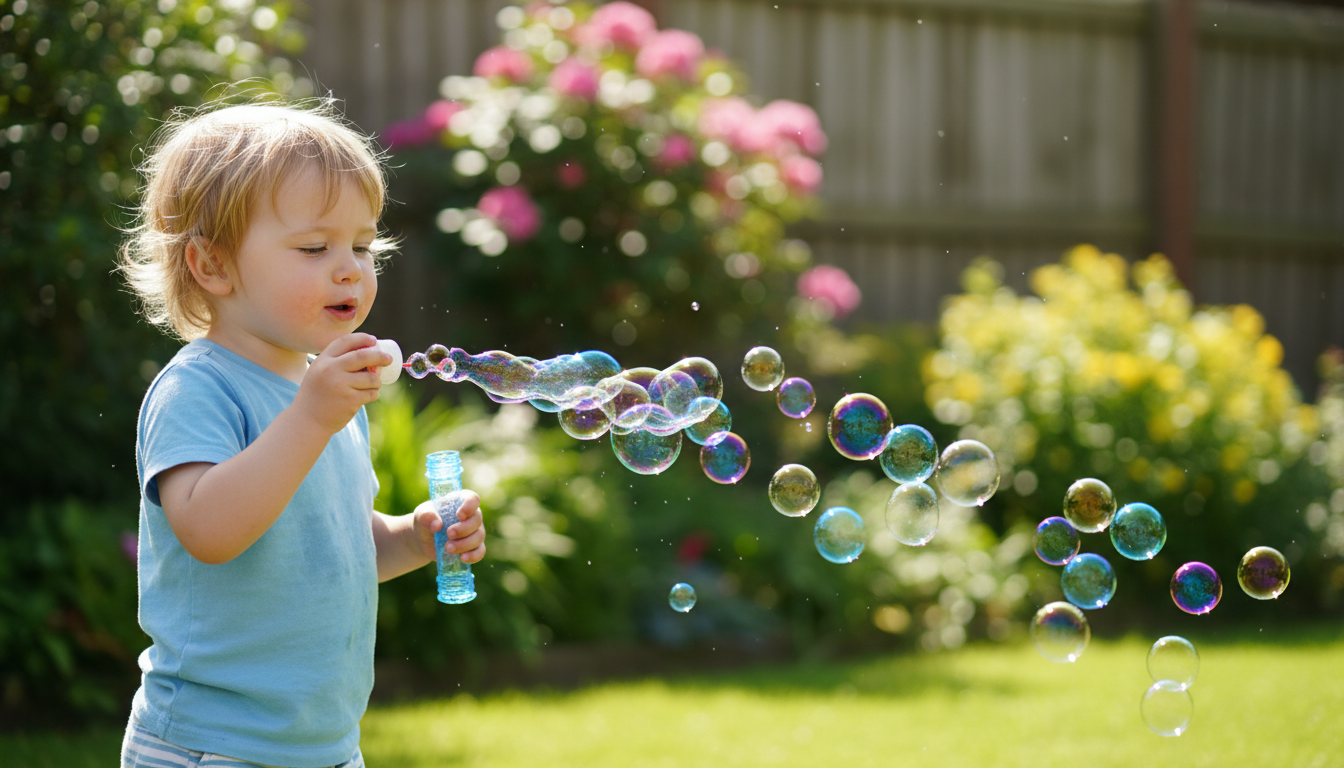
Table of Contents
- Introduction
- The Science of Movement and Language
- 1. The Speech Therapy Hopscotch
- 2. Lily Pad Jump and Follow-the-Leader
- 3. The Sensory Scavenger Hunt
- 4. Yoga for Breath Control and Vocal Strength
- 5. Jump Rope Syllable Segments
- 6. Mirroring and "Simon Says"
- 7. The "Weightlifting" Word Repetition
- 8. Ball Toss Vocabulary
- 9. Bubble Blowing for Oral-Motor Strength
- 10. Animal Walks and Sound Practice
- Physical Activities for Speech Therapy in Adults
- Creating a Joyful Learning Environment
- Understanding the Value of Speech Blubs
- Tips for Success: Making Movement Work for You
- Conclusion
- FAQ
Introduction
Have you ever noticed that your child seems to find their voice the moment they start jumping on the couch or racing through the hallway? It isn't just a coincidence, and it certainly isn't just "excess energy." At Speech Blubs, we believe that movement is the secret language of learning. For a child, the world is one big playground, and their bodies are the primary tools they use to explore it. When we try to force a toddler or preschooler to sit perfectly still in a chair to practice speech sounds, we are often fighting against their natural biology.
Research in child development consistently shows that children learn more effectively when they are physically active. Movement increases blood flow to the brain, releases neurotransmitters that sharpen focus, and creates a multi-sensory experience that helps new information "stick." This is why integrating physical activities for speech therapy is one of the most powerful strategies a parent can use to support a late talker or a child with an articulation delay.

In this post, we will explore why movement and language are so closely linked, provide ten actionable physical activities you can do at home, and explain how to bridge the gap between "playtime" and "therapy time." Our goal is to help you transform your daily routine into a joyful, active learning experience that empowers your child to speak their mind and heart. By the end of this guide, you’ll have a toolkit of exercises that turn speech practice from a chore into the highlight of your child’s day.
The Science of Movement and Language
Before we dive into the games, it is helpful to understand why this works. The parts of the brain responsible for motor coordination—like the cerebellum—are also deeply involved in language processing. When a child engages in gross motor activities (big movements like jumping or running), they are stimulating the neural pathways that also support the fine motor movements required for speech.
At Speech Blubs, our methodology is rooted in the concept of "video modeling" and the stimulation of mirror neurons. When a child watches a peer perform a task on screen, their brain reacts as if they are performing the task themselves. We take this a step further by encouraging children to participate actively. Our app isn't a passive experience like a cartoon; it’s a "smart screen time" tool designed for co-play. When you pair the visual modeling found in our app with the physical activities listed below, you are creating a "total body" learning environment.
Our mission is born from personal experience. The founders of Speech Blubs all grew up with speech problems and created the tool they wished they had—a joyful, effective solution for the 1 in 4 children who need speech support. We know that the best results come when children are engaged, happy, and moving. You can learn more about the scientific principles behind our approach on our research page.
1. The Speech Therapy Hopscotch
Hopscotch is a classic playground staple, but it is also a perfect template for phoneme and syllable practice. The rhythmic nature of jumping helps children pace their speech, which is particularly helpful for those who struggle with multi-syllabic words.

How to play:
- Indoors: Use painter's tape to create a grid on the floor.
- Outdoors: Use sidewalk chalk to draw your squares.
- The Twist: Instead of just numbers, write a target sound, a syllable, or a word in each box. For example, if your child is working on the "K" sound, you might write "Key," "Can," "Cup," and "Kite."
- The Action: As the child jumps into a square, they must say the word. For longer words, they can jump once for each syllable (e.g., "Win" [jump] - "dow" [jump]).
This activity is excellent for building "rhythm" in speech. For a child who loves being outside, this turns a repetitive drill into an athletic challenge. If you want to see how other families have used creative play like this to see progress, check out our parent testimonials.
2. Lily Pad Jump and Follow-the-Leader
Receptive language—the ability to understand and follow directions—is just as important as expressive language. This game uses "lily pads" to help children practice listening skills while getting their hearts pumping.
How to play:
- Cut "lily pads" out of green construction paper or use cushions (if playing safely on a rug).
- Scatter them across the room.
- Give your child a multi-step direction before they can jump to the next pad.
- Scenario: For a parent whose 3-year-old "late talker" loves animals, you might say, "Hop to the next lily pad and tell me: What does the frog say?" or "Jump two times and then point to your nose."
This mimics the "Animal Kingdom" section of our app, where kids learn to imitate sounds and movements. If you’re unsure where your child stands with their developmental milestones, you can take our quick 3-minute preliminary screener to get a simple assessment and a free 7-day trial of our full suite of tools.
3. The Sensory Scavenger Hunt
Movement doesn't always have to be high-intensity; it can also be about exploration. A scavenger hunt encourages children to move through their environment, find specific objects, and then use their words to describe them.
How to play:
- Give your child a "mission." Ask them to find something "soft," something "red," or something that "starts with the B sound."
- As they run through the house to find the item, they are engaging their gross motor skills.
- Once they find the object, encourage them to name it and describe it.
- Speech Blubs Tip: Use the "Early Words" section of the app to pick your scavenger hunt themes. If the app is focusing on "household items," have your child go find the actual spoon or sock they just saw on the screen.
To get started with these themes, Download Speech Blubs on the App Store to begin your journey.
4. Yoga for Breath Control and Vocal Strength
Yoga isn't just for adults; it’s a fantastic way for children to learn about breath support, which is the foundation of clear speech. Many speech sounds require a steady stream of air, and yoga poses help children become aware of their lungs and diaphragm.
How to play:
- The Snake Pose: Have your child lie on their belly and lift their chest. As they exhale, have them make a long "Ssssss" sound. This practices the /s/ sound and encourages long, controlled exhalations.
- The Lion’s Breath: Kneel down, lean forward, and stick out the tongue while making a loud "Ha!" sound. This strengthens the throat and tongue muscles.
- The Bee Breath: Sit cross-legged, cover the ears, and make a "Mmmmmm" humming sound. This helps children feel the vibration of sounds in their lips and nose.
Yoga is a "screen-free" alternative to passive viewing that still feels like a special activity. It builds confidence and reduces the frustration often associated with speech delays.
5. Jump Rope Syllable Segments
For older children who have the coordination for it, jumping rope is a high-energy way to practice phonological awareness. Phonological awareness is the ability to recognize and work with the sounds in spoken language.
How to play:
- As the child jumps, they say one word.
- Alternatively, for a bigger challenge, they can jump for every syllable in a complex word.
- For example: "Hip- (jump) -po- (jump) -pot- (jump) -a- (jump) -mus (jump)."
If your child finds jumping rope too difficult, you can achieve the same effect by having them jump on a trampoline or simply do "star jumps" (jumping jacks). The goal is to sync the physical "burst" of the jump with the vocal "burst" of the syllable. You can find more activities like this on the Speech Blubs homepage.
6. Mirroring and "Simon Says"
Mirroring is a fundamental part of how humans learn to speak. We watch the way a parent's lips move and try to replicate it. This is the "video modeling" methodology we use at Speech Blubs, but you can do it physically at home too.
How to play:
- Stand in front of a large mirror with your child.
- Play "Simon Says" with facial expressions and mouth movements.
- "Simon says... blow a big bubble with your cheeks!"
- "Simon says... touch your tongue to your top teeth!"
- "Simon says... make a 'fishy face'!"
By doing this in front of a mirror, the child gets immediate visual feedback. They can see what they are doing versus what you are doing. This builds the foundational oral-motor skills needed for more complex articulation later on.
7. The "Weightlifting" Word Repetition
You don't need real weights for this! Use soup cans, water bottles, or even stuffed animals. This activity is about building "effort" and "intent" into speech.
How to play:
- Have your child do "bicep curls" with their lightweight objects.
- Every time they lift the "weight" up, they say a target word.
- Why this works: The physical exertion of lifting helps a child put more "power" into their voice. This is great for children who tend to mumble or speak very softly.
If you are looking for a comprehensive way to track these repetitions and see your child's progress, we recommend using our app daily. You can sign up on our website to begin your 7-day free trial.
8. Ball Toss Vocabulary
Simple, classic, and effective. A ball toss helps with "turn-taking," which is a vital social communication skill. Conversation is essentially a game of catch—one person "throws" a word, and the other "catches" it and throws it back.
How to play:
- Sit on the floor and roll or toss a ball back and forth.
- Each time you catch the ball, you must name an item in a category (e.g., "Types of fruit" or "Things that are blue").
- This keeps the brain active and forces the child to think quickly while their body is engaged in a motor task.
9. Bubble Blowing for Oral-Motor Strength
Blowing bubbles is more than just a summer pastime; it is an oral-motor exercise that targets the muscles of the lips and cheeks.
How to play:
- Use different types of wands to encourage different lip shapes.
- Small wands require "pursed" lips (like the 'oo' or 'w' sound).
- Large wands might require a more open mouth.
- The Challenge: Have the child blow a bubble and then try to "blow" it across the room to keep it in the air. This requires sustained, controlled breath.
This is a great activity to pair with the "smart screen time" of Speech Blubs. After your child watches a peer in the app make blowing sounds, you can grab the real bubbles and practice the physical skill in the "real world."
10. Animal Walks and Sound Practice
This is often a favorite for younger children because it allows them to be silly and creative.
How to play:
- The Crab Walk: Scuttle sideways and practice "C" sounds ("Click-clack, click-clack").
- The Bear Crawl: Walk on all fours and practice deep "Grrr" sounds.
- The Bunny Hop: Hop and practice the "P" sound ("Pop, pop, pop").
By associating a specific movement with a specific sound, you are creating a "mnemonic" for the body. The next time your child needs to produce that sound, their brain may recall the fun movement they associated with it.
Ready to see how these sounds come to life? Download Speech Blubs on Google Play to access hundreds of interactive exercises.
Physical Activities for Speech Therapy in Adults
While our primary focus is often on children, physical activities for speech therapy are equally vital for adults recovering from strokes, traumatic brain injuries (TBI), or managing neurological conditions like Parkinson’s disease. In adults, the goal is often "rehabilitation" rather than "development."
For adults, physical exercises like "Mirror Talk" (watching mouth movements to regain precision) and "Breath Support Counting" (inhaling and counting as long as possible on one breath) are crucial. Physical movement, such as walking while practicing word retrieval or using hand gestures to "pace" syllables, can help rebuild the neural pathways damaged by injury.
Just as with children, the key for adults is consistency and the integration of speech practice into daily physical routines. Whether it's practicing articulation while doing light stretching or using rhythmic tapping to manage a stutter, the body-brain connection remains the most powerful tool in the therapy shed.
Creating a Joyful Learning Environment
At Speech Blubs, we believe that speech therapy should never feel like a punishment. It should be a joyful family learning moment. When you use physical activities for speech therapy, you are doing more than just working on sounds; you are:
- Fostering a love for communication: When kids have fun, they want to talk more.
- Building confidence: Physical mastery leads to emotional confidence.
- Reducing frustration: Movement is a natural stress-reliever for kids who feel "stuck" with their words.
- Creating a powerful tool for family connection: These games require you to play with your child, strengthening your bond.
We don't suggest that these activities will result in your child giving public speeches in a month. Development is a journey, and every child moves at their own pace. However, by using these "smart screen time" experiences and physical games as a powerful supplement to your child’s overall development plan (and professional therapy where applicable), you are giving them the best possible foundation.
Understanding the Value of Speech Blubs
We know that parents have a lot of choices when it comes to apps, but Speech Blubs is unique. We provide a screen-free alternative to the passive, numbing effect of traditional cartoons. Our app is a tool for action.
To get the most out of our platform, we highly recommend our Yearly Plan. While we offer a Monthly plan for $14.99 per month, the Yearly plan is the clear best choice for families committed to seeing progress.
The Yearly Plan ($59.99 per year) includes:
- A 7-day free trial to explore everything risk-free.
- The Reading Blubs app, which extends the learning into literacy and phonics.
- Early access to all new updates and content.
- 24-hour support response time from our dedicated team.
- A cost that breaks down to just $4.99/month (a 66% saving compared to the monthly plan).
The Monthly plan ($14.99) does not include the free trial, the Reading Blubs app, or the priority support. To give your child the full suite of features they need to thrive, the Yearly plan is the way to go.
Tips for Success: Making Movement Work for You
As you begin integrating these physical activities for speech therapy, keep these best practices in mind:
- Follow the Child’s Lead: If your child is obsessed with dinosaurs, turn the "Lily Pad Jump" into a "Dino Swamp Jump." If they love cars, have them "race" to the target words.
- Keep it Short: 10 to 15 minutes of active, high-intensity practice is much better than an hour of forced sitting.
- Celebrate Every Effort: Don't just praise a perfect "R" sound. Praise the fact that they tried. Praise the jump. Praise the participation.
- Limit Distractions: Turn off the background TV and put away your own phone. This is a time for co-play and connection.
- Be a Role Model: If you want your child to jump and speak, you should jump and speak too! Your enthusiasm is contagious.
Conclusion
The journey of speech development is paved with small, joyful moments of connection. By incorporating physical activities for speech therapy into your daily life, you are honoring your child's natural need for movement while providing the structure they need to grow. Whether you are jumping through a hopscotch grid, blowing bubbles in the backyard, or mimicking a peer in the Speech Blubs app, you are helping your child find their voice.
We are here to support you every step of the way. Our founders' personal journey with speech challenges drives everything we do, and we are committed to providing an immediate, effective, and joyful solution for your family.
Ready to transform your child's speech journey? Start your 7-day free trial today by downloading the app or signing up on our website. We strongly encourage you to choose the Yearly plan to unlock the best value, including the Reading Blubs app and our full library of interactive content. Let’s get moving and help your child speak their mind and heart!
Get Speech Blubs on the App Store | Get it on Google Play | Sign Up via Web
FAQ
1. Why is physical activity important for speech therapy?
Physical activity increases blood flow to the brain and stimulates the cerebellum, which is involved in motor coordination and language processing. Movement helps children stay engaged, reduces frustration, and allows them to practice the rhythmic and breath-control elements of speech in a natural, multi-sensory way.
2. Can these activities replace professional speech therapy?
No. While physical activities and apps like Speech Blubs are powerful tools for home practice, they are designed to supplement professional therapy, not replace it. If you have concerns about your child's development, always consult with a licensed Speech-Language Pathologist (SLP).
3. How long should a speech therapy activity session last?
For children, shorter and more frequent sessions are usually more effective than one long session. Aim for 10–15 minutes of active play once or twice a day. This keeps the child’s interest high and prevents fatigue or frustration.
4. What is the best way to use the Speech Blubs app with physical activities?
The best way is "co-play." Watch the video models in the app together, and then immediately "act out" the sounds or words using one of the physical games mentioned above. For example, after watching a peer make animal sounds in the app, do an "Animal Walk" across the room while making those same sounds.
Über den Autor