
Auditory Processing Activities Speech Therapy: A Fun Home Guide
Boost your child's listening skills with 15 fun auditory processing activities speech therapy ideas. Learn how to sharpen memory and focus through engaging
 Von Speech Blubs Team•Apr 27, 2026•14 Min.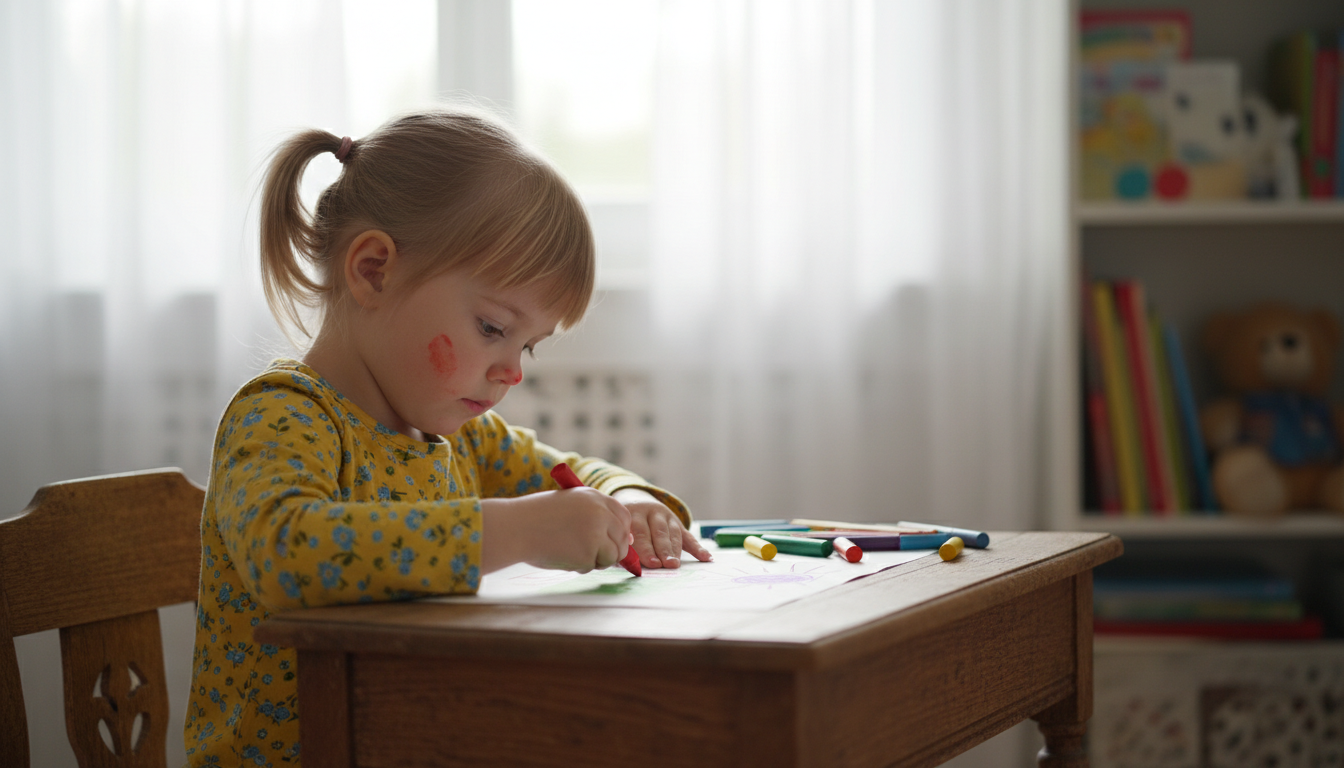
Table of Contents
- Introduction
- What is Auditory Processing?
- The Speech Blubs Approach: Smart Screen Time
- 15 Engaging Auditory Processing Activities for Home
- Real-World Scenarios: Making it Practical
- Why Video Modeling is a Game-Changer
- The Importance of Realistic Expectations
- Investing in Your Child’s Future
- Strategies for Success in the Classroom
- FAQs
- Conclusion
Introduction
Have you ever noticed your child looking directly at you while you speak, yet they seem to miss the message entirely? It can be a confusing experience for any parent. You know their hearing is fine—they can hear a candy wrapper opening from three rooms away—but when it comes to following a simple two-step instruction, it’s as if the signal gets lost in translation. This phenomenon often points to the way the brain interprets sound, rather than how the ears receive it.
At Speech Blubs, we understand this frustration deeply because our journey began with it. Our founders all grew up with speech and language challenges, and they built the very tools they wished they had as children. Our mission is to empower every child to "speak their minds and hearts," providing a joyful, effective solution for the one in four children who need extra speech support. We believe that learning shouldn't feel like a chore; it should be an adventure.

In this post, we are going to dive deep into auditory processing activities speech therapy techniques you can use right in your living room. We will explore how to sharpen your child's "listening ears," improve their memory for sounds, and help them distinguish between different tones and words. By the end of this guide, you’ll have a robust toolkit of games and strategies to help your child navigate a world full of noise with confidence. Our main message is simple: with the right mix of play, science-backed methods like video modeling, and consistent "smart screen time," your child can build the foundational skills necessary for clear communication and lifelong learning.
What is Auditory Processing?
Before we jump into the activities, it’s important to understand what we are actually targeting. Auditory processing isn't about how well a child hears (the physical volume); it’s about what the brain does with what it hears. It involves several complex skills, including:
- Auditory Discrimination: The ability to tell the difference between similar but distinct sounds (like "cat" vs. "bat").
- Auditory Memory: The ability to store and recall information that was heard.
- Auditory Sequencing: The ability to remember the order of sounds or instructions.
- Auditory Figure-Ground: The ability to pick out important sounds (like a teacher’s voice) against a noisy background (like a humming air conditioner).
When these skills are lagging, children may struggle with reading, following directions, or even social interactions. This is where auditory processing activities speech therapy comes into play. By practicing these skills in a low-pressure, fun environment, we help the brain strengthen those vital neural pathways.
The Speech Blubs Approach: Smart Screen Time
Many parents worry about screen time, and rightfully so. Passive viewing, like watching endless loops of cartoons, doesn't often require a child to engage their auditory processing skills. At Speech Blubs, we’ve flipped the script. We offer "smart screen time" that acts as a powerful tool for family connection rather than a distraction.

Our app utilizes a unique "video modeling" methodology. Children watch videos of their peers performing speech exercises, making sounds, and saying words. This triggers "mirror neurons" in the child's brain, encouraging them to imitate what they see and hear. It’s a scientifically grounded approach that feels like play. If you're ready to see how this can supplement your home activities, download Speech Blubs on the App Store or Google Play to begin.
15 Engaging Auditory Processing Activities for Home
Improving these skills doesn't require expensive equipment. You can turn everyday moments into learning opportunities. Here are some of our favorite activities to get you started.
1. Practice Sequencing with Sounds
This is a wonderful game for building auditory memory and sequencing. Ask your child to cover their eyes while you make a distinct noise—closing a door, sneezing, or tapping a glass.
- Level 1: Start with one sound and have them identify it.
- Level 2: Make two sounds in a row (e.g., a clap then a whistle). They must identify both in the correct order.
- Level 3: Keep adding sounds as they get better. This builds the "mental scratchpad" the brain needs to follow multi-step directions later in life.
2. Name the Mistake
Kids love catching adults being "silly." Read a familiar nursery rhyme or story but change a key word. For example, "Twinkle, twinkle little... car!" or "Old MacDonald had a... spaceship!" Your child should shout "Mistake!" or raise their hand the moment they hear the wrong word. This forces them to actively listen to every word rather than just letting the sound wash over them.
3. Clapping Syllables
Understanding that words are made of smaller parts is crucial for reading. Start with family names. Say "Ma-ma" and clap twice. Have them repeat it. Then try "E-le-phant" or "Coun-ter-top." You can also have them place their hands under their chin to feel it drop with each syllable. This tactile feedback reinforces the auditory input.
4. Sound Sort
Create simple picture cards or use objects around the house. Ask your child to find the object that starts with a specific sound. "Can you find something that starts with the /s/ sound?" They might point to a spoon or a sock. This sharpens auditory discrimination and phonemic awareness.
5. Picture Guess (Sound Blending)
This is a reverse of the sound sort. Put a few objects in a bag. Pull one out but don't show it. Instead, say the name sound-by-sound: "/c/ ... /a/ ... /t/." Your child has to "glue" the sounds together in their head to guess "Cat!" This is a foundational skill for decoding words when learning to read.
6. Environmental Listening Lab
Have your child sit on the floor and close their eyes. For one minute, stay perfectly still and then ask them to list every sound they heard. They might hear the refrigerator humming, a bird outside, or a car passing. This helps with auditory figure-ground—identifying specific sounds within a environment of ambient noise.
7. Hide and Seek (The Sound Version)
Take a ticking kitchen timer or a phone playing a soft melody and hide it somewhere in the room. Your child has to find it using only their ears. This practices sound localization—the ability to determine where a sound is coming from.
8. Repeat After Me (Rhythm Sticks)
Use two spoons or pencils as "rhythm sticks." Tap out a simple pattern (tap-tap... pause... tap). Have your child mimic the pattern exactly. This integrates motor skills with auditory processing, a powerful combination for neurodevelopment.
9. Multi-Step Direction Challenge
Start with one simple instruction: "Touch your nose." Once they master that, give two: "Touch your nose, then jump once." Gradually build up to three or four steps. To make it more fun, include silly actions like "Quack like a duck, then spin in a circle, then sit on the floor."
10. The Distraction Game (Focused Listening)
Read a short story to your child while playing some low-volume music in the background. Tell them they need to listen for a specific "magic word" (like the character's name). Every time they hear it, they get a sticker or a high-five. This helps them learn to filter out background noise to focus on relevant information.
11. Comprehension Check
Read a story they haven't heard before. Afterward, ask questions about the sequence: "What happened first?" "Why was the bear sad?" This moves beyond just hearing sounds and into the realm of processing meaning and intent.
12. "I Went to the Market"
This classic memory game is perfect for auditory processing. The first person says, "I went to the market and I bought an apple." The second person says, "I went to the market and I bought an apple and a banana." Each person adds an item while reciting the entire list. This is a rigorous workout for auditory memory.
13. End-of-the-Day Review
During bedtime, ask your child to tell you three things that happened during the day in order. "First we had breakfast, then we went to the park, then we saw a dog." This encourages them to mentally replay auditory and visual information sequentially.
14. Lyric Memorization
Pick a song your child likes but doesn't know the words to yet. Listen to it together and try to learn one verse at a time. Singing requires precise timing and pitch, which are excellent for strengthening the auditory system.
15. Directed Drawing
Give your child a blank piece of paper and a crayon. Give them specific instructions: "Draw a big circle. Now, draw two small squares inside the circle. Now, draw a line under the circle." This requires them to translate auditory instructions into fine motor actions.
Real-World Scenarios: Making it Practical
We know that life is busy. You don't always have time for a structured "therapy hour." The beauty of these activities is that they can happen anywhere.
For example, imagine a parent whose 4-year-old "late talker" is obsessed with vehicles. While driving, the parent can say, "I hear a siren! Is it getting louder or softer?" or "I’m going to say three car colors, and you repeat them back: Red, Blue, Silver." This turns a mundane commute into a high-value speech session.
Similarly, within the Speech Blubs app, the "Animal Kingdom" section offers a motivating way to practice "moo" and "baa" sounds. For a child who loves animals, watching a peer make these sounds on the screen makes them want to join in. You can create your account and begin your 7-day free trial to explore these categories today.
Why Video Modeling is a Game-Changer
At Speech Blubs, we rely heavily on the science of video modeling. Traditional therapy often involves an adult telling a child what to do. However, research shows that children are far more likely to imitate other children. When a child sees a "Blub" (one of the kids in our app) making a sound or performing a facial exercise, their brain responds as if they were doing it.
This peer-to-peer connection reduces the pressure and frustration that many children feel during speech practice. Instead of feeling "corrected" by an adult, they feel like they are playing with a friend. Our methodology is backed by science and has earned us high ratings on the MARS (Mobile App Rating Scale). You can read more about our scientific approach and research here.
The Importance of Realistic Expectations
It’s vital to remember that every child develops at their own pace. Auditory processing activities are not a "quick fix" that will result in a child giving public speeches overnight. Instead, think of these exercises as building blocks. We are fostering a love for communication, building confidence, and creating joyful family learning moments.
These activities are a powerful supplement to a child's overall development plan. If you are ever unsure if your child is on track, we recommend taking our quick 3-minute preliminary screener. It involves 9 simple questions and provides an assessment and a next-steps plan, along with a free 7-day trial of the app.
Investing in Your Child’s Future
We believe that every child deserves the chance to speak their mind and heart. Because we want to be transparent and build trust with our community, we offer two simple ways to access our full suite of tools:
- Monthly Plan: $14.99 per month. This is great for a short-term boost.
- Yearly Plan: $59.99 per year.
The Yearly plan is our most popular option for a reason—it’s the clear best value, breaking down to just $4.99/month (a savings of 66%). More importantly, the Yearly plan includes exclusive features that the monthly plan does not:
- 7-Day Free Trial: Try everything risk-free before you commit.
- Reading Blubs App: An additional app specifically designed to bridge the gap between speech and literacy.
- Priority Support: Early access to new updates and a 24-hour support response time.
Choosing the Yearly plan ensures that you have a consistent, long-term resource to support your child's journey. You can see what other parents are saying about their success with Speech Blubs here.
Strategies for Success in the Classroom
Auditory processing challenges don't stay at home; they follow children into the classroom. If your child is struggling, here are a few ways to support them in a school setting:
Pro-Tip: Ask the teacher to seat your child away from distractions like open windows, noisy hallways, or humming heaters. Being close to the front of the room allows them to better utilize visual cues from the teacher’s face.
Other helpful classroom strategies include:
- Visual Schedules: Having a picture-based schedule helps the child know what is coming next, even if they missed the verbal announcement.
- Repeat and Rephrase: Encourage the teacher to ask the child to repeat instructions back in their own words to ensure comprehension.
- Slow Down: Speaking just a little bit slower can give a child's brain the extra milliseconds it needs to process the incoming sound.
FAQs
1. How do I know if my child has an auditory processing issue or just isn't paying attention?
While all kids have "selective hearing" sometimes, children with auditory processing difficulties often struggle even when they are trying their best to focus. Signs include being easily overwhelmed by noisy environments, frequently asking for things to be repeated, and having trouble following multi-step directions despite appearing to listen.
2. Can auditory processing activities help children with ADHD?
Yes! There is a significant overlap between ADHD and auditory processing challenges. In fact, some studies suggest that up to 50% of children with Auditory Processing Disorder also have ADHD. Activities that focus on sustained attention and filtering out background noise are highly beneficial for both.
3. How often should we practice these activities?
Consistency is more important than duration. Aim for 10–15 minutes of dedicated play or "smart screen time" with Speech Blubs most days of the week. Shorter, frequent bursts of engagement are much more effective than one long, exhausting session.
4. Is Speech Blubs a replacement for professional speech therapy?
No. While Speech Blubs is a powerful, science-backed tool, it is designed to be a supplement to your child's development plan. It works wonderfully alongside professional therapy and provides parents with an easy way to continue the "work" at home in a way that feels like play.
Conclusion
Helping your child navigate the complexities of sound and speech is one of the greatest gifts you can give them. By incorporating auditory processing activities speech therapy into your daily routine, you are doing more than just teaching them to listen—you are helping them build the confidence to express themselves. Whether it’s through a game of "I Went to the Market," clapping out syllables, or using Speech Blubs to watch and learn from other children, every moment of engagement counts.
At Speech Blubs, we are honored to be a part of your family’s journey. Our founders’ personal experiences drive everything we do, ensuring that our app remains a joyful, effective, and "smart" way for children to learn. We invite you to join our community and see the difference that peer-to-peer video modeling can make.
Ready to unlock your child's potential? Download Speech Blubs on the App Store or Google Play today. To get the best value, including the 7-day free trial, the Reading Blubs app, and early access to all our latest updates, be sure to select the Yearly plan. Let’s work together to help your child speak their mind and heart!
Über den Autor