
Engaging Aural Rehabilitation Speech Therapy Activities
Boost your child's listening skills with effective aural rehabilitation speech therapy activities. Discover at-home games and smart tools to help them thrive.
 Von Speech Blubs Team•Apr 22, 2026•13 Min.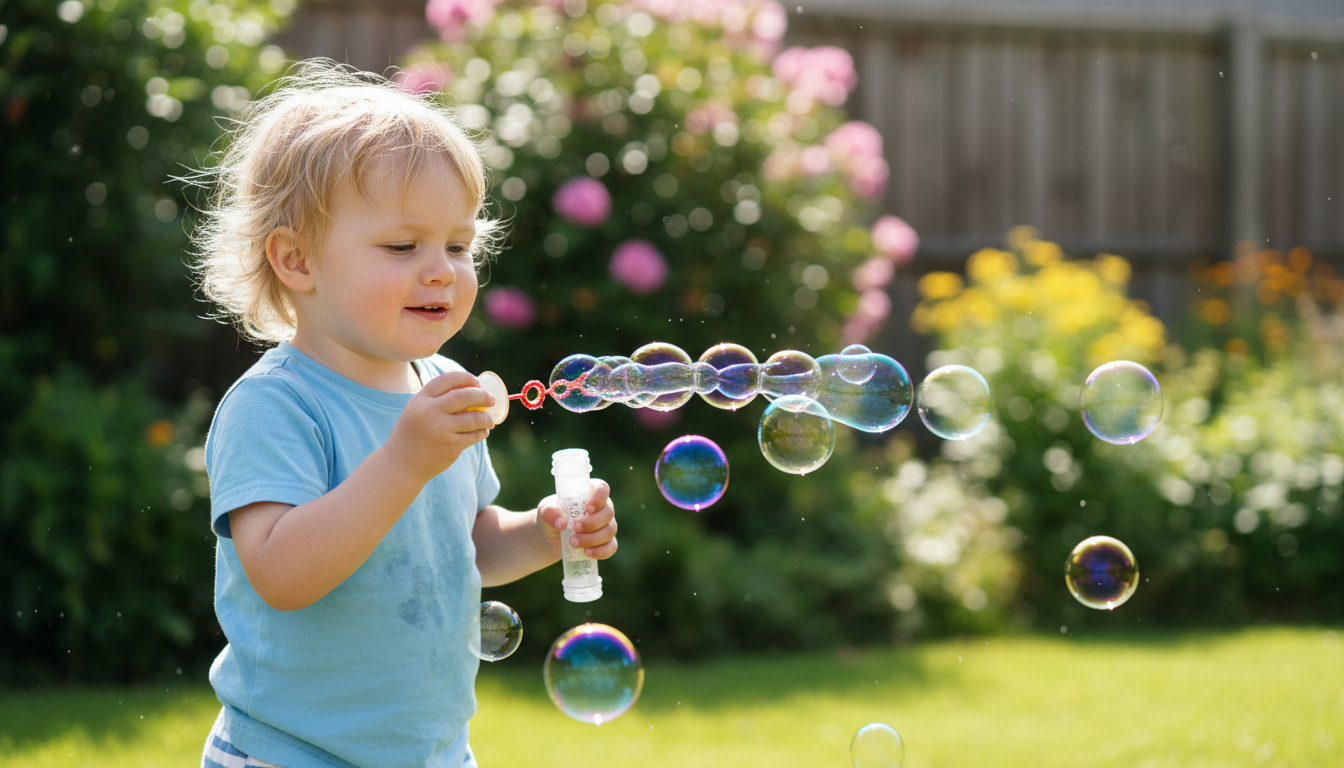
Table of Contents
- Introduction
- Understanding Aural Rehabilitation vs. Habilitation
- Core Pillars of Aural Rehabilitation Speech Therapy Activities
- At-Home Aural Rehabilitation Speech Therapy Activities
- Why "Smart Screen Time" Matters
- Practical Tips for Parents and Caregivers
- The Speech Blubs Difference: Choosing the Right Path
- Setting Realistic Expectations
- Advanced Aural Rehabilitation Resources
- Encouraging Self-Advocacy
- FAQ: Frequently Asked Questions
- Conclusion
Introduction
Did you know that nearly one in four children will require some form of speech or language support during their developmental years? For parents of children with hearing loss or auditory processing challenges, the journey to clear communication can feel like navigating a complex maze. You might wonder if your child is catching every sound or if they are simply piecing together clues from your facial expressions. The process of bridging the gap between "hearing" a sound and "understanding" its meaning is at the heart of what we do.
In this post, we will explore the world of aural rehabilitation speech therapy activities—a specialized set of strategies designed to help children maximize their listening potential. We’ll dive into the difference between rehabilitation and habilitation, provide a wealth of practical activities you can do at home, and explain how "smart screen time" can be a joyful part of your child’s progress. Our mission at Speech Blubs is to empower every child to "speak their minds and hearts," and providing you with the right tools is the first step in that journey.

By the end of this article, you will have a clear roadmap for supporting your child’s auditory development. We believe that with the right combination of professional guidance, home-based play, and scientifically-backed tools, every child can find their voice and build the confidence they need to thrive.
Understanding Aural Rehabilitation vs. Habilitation
When we talk about aural rehabilitation speech therapy activities, we often use the term "rehabilitation" as a catch-all. However, in the world of child development, there is a subtle but important distinction.
What is Aural Habilitation?
For many children, especially those born with hearing loss or who experience it very early in life, the focus is actually on "habilitation." While rehabilitation refers to restoring a skill that was lost (like an adult relearning to hear after a sudden injury), habilitation is the process of teaching a skill that was never there to begin with.
Since a child’s brain is a sponge for language, the goal is to provide the "input" they need to build "output." This involves training the brain to recognize sounds, attach meaning to those sounds, and eventually use them in speech.
The Critical Window of Development
Research shows that early intervention is the single most important factor in a child’s communication success. When hearing loss is identified early—ideally by six months of age—and paired with consistent aural habilitation, many children can reach language milestones on par with their hearing peers. Our founders at Speech Blubs understood this urgency firsthand. Having grown up with their own speech challenges, they created the tool they wished they had: a way to make the hard work of therapy feel like pure, unadulterated play.
Core Pillars of Aural Rehabilitation Speech Therapy Activities
To help your child succeed, activities generally focus on four primary areas. Think of these as the building blocks of a "listening brain."
1. Auditory Perception and Awareness
This is the "Level 1" of listening. Can the child tell if a sound is present or absent? Can they tell the difference between a dog barking and a doorbell ringing? Activities in this category focus on:

- Sound Awareness: Noticing that a sound has occurred.
- Auditory Discrimination: Identifying if two sounds are the same or different.
- Sound Identification: Pointing to a picture of a cat when they hear a "meow."
2. Using Visual Cues
Listening doesn’t happen in a vacuum. We all use visual cues—lip movements, facial expressions, and hand gestures—to help us understand speech. For a child with hearing challenges, these cues are vital. Aural rehabilitation teaches children how to integrate what they see with what they hear to fill in the blanks during a conversation.
3. Improving Speech Production
Once a child can hear and understand a sound, the next step is producing it. This involves fine-tuning the vocal cords, tongue placement, and breath control. For a parent whose 3-year-old "late talker" loves animals, the "Animal Kingdom" section in the Speech Blubs app offers a fun, motivating way to practice "moo" and "baa" sounds by watching other children make those same movements.
4. Language Development and Communication Management
This is the "big picture." It’s about vocabulary, grammar, and social rules. It also involves teaching the child how to advocate for themselves—asking someone to repeat a sentence or moving away from a noisy air conditioner so they can hear better.
At-Home Aural Rehabilitation Speech Therapy Activities
You don’t need a clinical setting to make progress. In fact, the most meaningful learning often happens in the comfort of your living room. Here are several evidence-based activities you can start today.
Sound in a Bag: A Mystery Game
This activity is fantastic for auditory identification and memory.
- How to play: Gather five or six familiar objects that make distinct sounds (a bell, a crinkly bag, a toy car, a whistle). Place them in an opaque bag.
- The Goal: Without looking, make the sound using one of the objects inside the bag. Ask your child to point to a picture or a duplicate object on the table that matches what they heard.
- The Benefit: This forces the brain to rely solely on hearing without the help of visual cues.
Fill-in-the-Blank Context Exercises
This is a "Closed Set" exercise, meaning the child knows the general topic, which helps them narrow down the possibilities.
- How to play: Choose a familiar storybook. Read a sentence but leave out the final word. "The big brown bear ate a sweet, yellow..."
- The Goal: The child uses the context of the sentence and the auditory information they heard to provide the word "banana" or "honey."
- Pro Tip: If your child struggles, provide two visual options (like a picture of a bee and a picture of a car) to help them choose.
Sound Jars for Auditory Discrimination
Discrimination is the ability to tell sounds apart.
- How to play: Take six identical, non-transparent containers (like empty spice jars or plastic eggs). Fill pairs of jars with the same materials: two with rice, two with dried beans, and two with coins.
- The Goal: Shake the jars and ask your child to find the "match."
- The Benefit: This hones the child’s ability to hear subtle differences in pitch and rhythm.
The "Topic Talk" Script Exercise
For older children, scripted dialogue helps build confidence in specific social situations.
- How to play: Pretend you are at a grocery store or a doctor’s office. Use a simple script: "Hello, I would like an apple, please." "That will be one dollar."
- The Goal: Have the child listen to your part of the script and respond correctly.
- The Benefit: Familiarity with common phrases reduces the cognitive load on the child, making real-world interactions less exhausting.
Why "Smart Screen Time" Matters
In a world full of passive cartoons that can sometimes overstimulate without educating, we advocate for "smart screen time." At Speech Blubs, we believe technology should be a bridge to human connection, not a wall.
The Power of Video Modeling
Our app is built on the scientific principle of video modeling. We use "peers"—real children, not animations—to demonstrate sounds and words. When a child sees another child their own age successfully making a sound, their "mirror neurons" fire. This creates a natural urge to imitate. It’s why our methodology is so effective for building foundational communication skills.
Our method is backed by science, and you can read more about the research behind Speech Blubs to see why we are rated so highly on the MARS (Mobile App Rating Scale).
From Screen to Real Life
We don't want your child to just sit and stare. The app encourages "co-play." For example, if you are working on the "Early Sounds" section, the app might prompt your child to make a "pop" sound with their lips. You, as the parent, can join in with bubbles or a toy pop-up book. This turns a digital activity into a joyful, family-focused learning moment.
If you are unsure where to start, we recommend taking our quick 3-minute preliminary screener. It involves 9 simple questions and provides you with a personalized assessment and a free 7-day trial of our full suite of tools.
Practical Tips for Parents and Caregivers
Beyond specific aural rehabilitation speech therapy activities, the way you interact with your child daily can make a massive difference. Here are some simple adjustments to your communication style:
- Positioning is Key: Stand or sit within three to six feet of your child. This ensures they get the clearest possible "signal" from your voice.
- Be the Face of Communication: Always stay at eye level. This allows your child to see your lips, facial expressions, and gestures, which act as vital "backups" to the sounds they are hearing.
- Minimize Background Noise: Before starting an activity, turn off the TV, the dishwasher, or any loud fans. A "quiet" environment makes it much easier for a child with hearing challenges to focus on your voice.
- Rephrase, Don’t Just Repeat: If your child doesn’t understand something the first time, don’t just say it louder. Use different words. If "Put the ball in the box" doesn't work, try "The ball goes inside."
- Speak Clearly, Not Loudly: Shouting can actually distort sounds and make them harder to understand. Use a clear, slightly slower pace with natural intonation.
The Speech Blubs Difference: Choosing the Right Path
We know that every family has different needs and budgets. That’s why we offer flexible options to ensure our tool is accessible to the 1 in 4 children who need it.
Transparent Pricing for Families
- Monthly Plan: For $14.99 per month, you get full access to our main Speech Blubs app, which features over 1,500 activities, face filters to keep kids engaged, and regular content updates.
- Yearly Plan (The Best Value): Our yearly plan is just $59.99 per year, which breaks down to only $4.99 per month.
When you choose the Yearly plan, you save 66% compared to the monthly subscription, but the benefits go much further. The Yearly plan includes:
- A 7-day free trial: Test everything out before committing.
- The Reading Blubs App: An additional app dedicated to early literacy and reading skills.
- Early Access: Be the first to try new updates and features.
- Priority Support: A 24-hour response time from our dedicated support team.
We encourage you to create your account and begin your 7-day free trial today to see the difference for yourself.
Setting Realistic Expectations
It is important to remember that progress in aural rehabilitation is a marathon, not a sprint. While we want to see immediate results, the goal of these activities is to foster a lifelong love for communication and to reduce the frustration that comes with being misunderstood.
Every child's journey is unique. Some might start mimicking sounds within days, while others might take months to build the confidence to try. By celebrating small wins—like a child turning their head toward a sound or imitating a single vowel—you create a positive environment where learning feels safe. Our app is a powerful supplement to professional therapy and overall development, designed to make the process joyful for both you and your child. You can see what other parents are saying about their experiences and the confidence their children have gained.
Advanced Aural Rehabilitation Resources
If you are looking for even more ways to support your child, there are several wonderful online resources and tools available that complement the work we do at Speech Blubs.
- Audiobook Training: Listening to audiobooks while following along with a physical book is a classic aural rehab technique. It helps connect the written word with the spoken sound.
- Angel Sound: A program that offers interactive listening tasks, ranging from basic sound recognition to complex speech-in-noise exercises.
- Communication Corner: Provided by Cochlear Americas, this resource offers activities specifically designed for those using hearing aids or cochlear implants.
While these tools are excellent, they are often designed for older children or adults. Speech Blubs fills the gap for toddlers and preschoolers, providing the "smart screen time" they crave in a way that is developmentally appropriate.
Encouraging Self-Advocacy
As your child grows, aural rehabilitation speech therapy activities should shift toward empowerment. A child who can say, "It's too loud in here," or "Can you please look at me when you talk?" is a child who is ready for the world.
In the Speech Blubs app, we emphasize confidence. Through our peer-to-peer modeling, children see that it's okay to try, okay to make "silly" faces, and okay to take their time. This builds the emotional resilience needed to navigate a world that isn't always quiet or clear.
FAQ: Frequently Asked Questions
1. How often should we practice these aural rehabilitation activities?
Consistency is more important than duration. Aim for 15–20 minutes of dedicated "listening time" each day. This could be split into two 10-minute sessions. Using the Speech Blubs app for 5–10 minutes a day is a perfect way to keep the momentum going without overwhelming your child.
2. Can my child benefit from these activities if they only have a mild hearing loss?
Absolutely. Even mild hearing loss can lead to gaps in language development or difficulty hearing in noisy environments (like a classroom). Aural rehabilitation activities help "sharpen" the brain's processing power, making it easier for children with any degree of hearing challenge to follow conversations.
3. Will using an app replace my child’s speech therapist?
No. Speech Blubs is designed to be a powerful supplement to professional therapy. Think of it as the "homework" that is actually fun. It provides the high-frequency repetition children need between therapy sessions to lock in new skills. Always consult with your speech-language pathologist (SLP) about how to best integrate the app into your child's specific plan.
4. What is the difference between the Monthly and Yearly plans?
The Monthly plan ($14.99) provides basic access to Speech Blubs content. The Yearly plan ($59.99/year) is the best value, offering a 66% discount, a 7-day free trial, the bonus Reading Blubs app, and priority 24-hour support. Most parents choose the Yearly plan to ensure they have all the tools needed for their child's long-term development.
Conclusion
The path of aural rehabilitation is filled with challenges, but it is also filled with moments of pure magic—like the first time your child responds to their name or mimics the sound of a roaring lion. These aural rehabilitation speech therapy activities are more than just exercises; they are the keys to helping your child "speak their minds and hearts."
By combining traditional listening games, such as sound jars and fill-in-the-blank stories, with the innovative "smart screen time" offered by Speech Blubs, you are providing your child with a holistic, joyful approach to learning. Remember to focus on the process, build confidence, and keep the experience playful.
Ready to jumpstart your child’s journey? Download Speech Blubs on the App Store or get it on Google Play to begin. To get the best possible value, including our 7-day free trial and the bonus Reading Blubs app, be sure to select the Yearly plan. We can't wait to be a part of your family's success story!
Über den Autor