
Fun and Effective At Home Speech Therapy Activities
Boost your child's communication with fun, effective at home speech therapy activities. Discover SLP-backed strategies and games to turn playtime into learning!
 Von Speech Blubs Team•Apr 27, 2026•14 Min.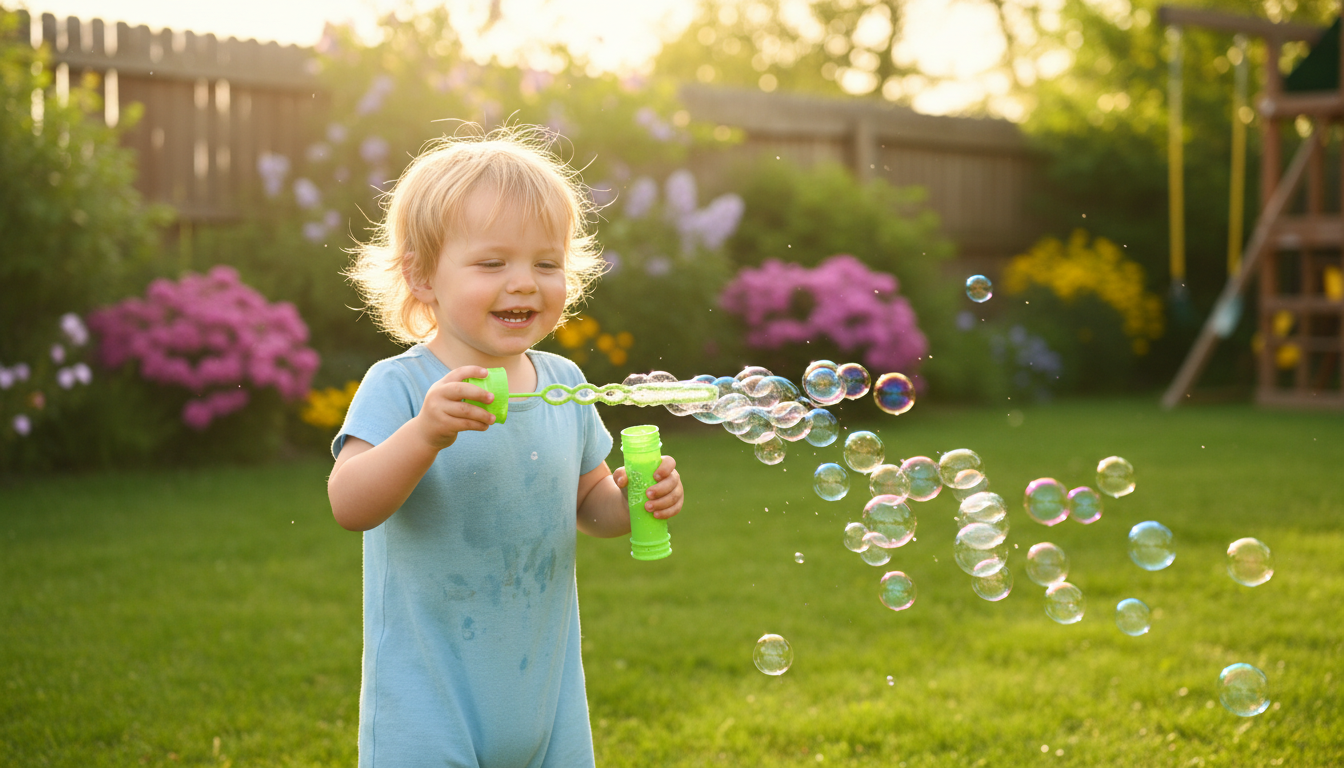
Table of Contents
- Introduction
- Why Practice Speech Therapy at Home?
- Setting the Stage for Success
- Core Strategies to Use at Home
- Fun At Home Speech Therapy Activities for Every Day
- Turning Screen Time into Smart Screen Time
- Transparency in Our Approach and Value
- Realistic Expectations for At-Home Practice
- Integrating Activities into Your Daily Routine
- Frequently Asked Questions
- Conclusion
Introduction
Did you know that approximately one in four children will face a speech or language delay at some point in their early development? For many parents, hearing that their little one isn't hitting milestones as quickly as their peers can feel overwhelming. You might find yourself wondering if you’re doing enough or how you can possibly replicate a professional therapy session in your living room between snack time and naps. At Speech Blubs, we believe that you are your child’s best and most influential teacher. Our mission is to empower children to speak their minds and hearts, and we know that the most significant breakthroughs often happen in the quiet, everyday moments at home.
The purpose of this blog post is to provide you with a comprehensive set of at home speech therapy activities that are easy to implement, scientifically backed, and, most importantly, fun. We will cover the core strategies used by speech-language pathologists (SLPs), practical games you can play today, and how to use modern tools to supplement your child's journey. We understand the pressure parents feel because our founders grew up with speech problems themselves; they created the tool they wish they had as kids.

By the end of this guide, you will have a robust toolkit of techniques to foster a love for communication and build your child's confidence. We want to help you turn "screen time" into "smart screen time" and transform daily chores into language-rich learning opportunities. The central message of this post is simple: consistent, joyful, and interactive practice at home is the most powerful way to support your child’s communication development and bridge the gap between therapy sessions and real-world connection.
Why Practice Speech Therapy at Home?
While professional speech-language pathology sessions are invaluable, they typically only happen once or twice a week. That leaves a lot of hours where your child is communicating (or trying to) in their natural environment. Research consistently shows that parent-led intervention significantly improves outcomes for children with speech delays. When you integrate at home speech therapy activities into your daily routine, you are providing the repetition and consistency that the developing brain needs to forge new neural pathways.
At Speech Blubs, we view at-home practice as a powerful supplement to professional therapy. It’s not about replacing the experts; it’s about carrying over the skills they teach into the places where your child feels most comfortable. When a child practices in their own home, with their favorite toys and the people they love most, their frustration levels often drop. They aren't "working"; they are playing. This joy is the secret ingredient to successful learning. Our methodology is rooted in this belief, blending scientific principles with the natural curiosity of childhood.
Setting the Stage for Success
Before diving into specific exercises, it is important to create an environment where communication can thrive. You don’t need a dedicated "therapy room"—your kitchen table or the living room rug is perfect. However, a few small adjustments can make a big difference.
1. Minimize Distractions
Young children, especially those with developmental delays, can be easily overwhelmed by sensory input. When you are focusing on a specific activity, try to turn off the television and put away your own phone. A quiet, calm environment allows your child to focus on the sounds of your voice and the movements of your mouth.

2. Follow Their Lead
If your child is obsessed with dinosaurs today, don't try to force a game about farm animals. Use what they love as the vehicle for language. For a parent whose 3-year-old "late talker" loves animals, the "Animal Kingdom" section of our app offers a fun, motivating way to practice "moo" and "baa" sounds because it taps into their existing interests. When a child is intrinsically motivated, they are much more likely to attempt new sounds.
3. Keep it Short and Frequent
You don't need to block out an hour for "speech time." In fact, 10 to 15 minutes once or twice a day is much more effective than one long, exhausting session. Children have short attention spans, and ending on a high note ensures they’ll be excited to play again tomorrow.
Core Strategies to Use at Home
Professional therapists use specific techniques to encourage language. You can easily adopt these "tricks of the trade" during your daily interactions.
Modeling Simple Language
Imitation is the foundation of speech. Your child learns to talk by watching and listening to you. Modeling means showing your child how to communicate without demanding that they repeat you immediately. If they point to a ball, instead of saying "Say ball!", you simply say, "Ball! Big blue ball." By bringing the object near your mouth while you say it, you help them focus on how your lips move. This is the core of our "video modeling" methodology, where children learn by watching their peers. You can learn more about our mission and how we use this peer-to-peer approach to trigger "mirror neurons" in a child's brain.
Parallel Talk and Self-Talk
Think of yourself as a sports commentator for your child's life.
- Self-talk: Describe what you are doing. "I am washing the apple. Scrub, scrub, scrub. Now I am cutting the apple."
- Parallel talk: Describe what your child is doing. "You are building a tall tower! Oh, look, the red block is on top." This provides a constant stream of language that is directly relevant to what they are seeing and doing in the moment.
The Power of Choices
One of the most effective at home speech therapy activities is giving choices. Instead of just handing your child their juice, hold up the juice and a piece of fruit and ask, "Do you want juice or apple?" This forces them to process the words and attempt a response—whether it's a gesture, a sound, or the full word—to get what they want. It empowers them to use their voice to control their environment.
Expectant Waiting
This is perhaps the hardest strategy for parents. We often want to help our children so much that we finish their sentences or anticipate their needs before they have to speak. Expectant waiting involves pausing mid-activity and looking at your child with an encouraging expression, giving them 5 to 10 seconds to respond. For example, if you are blowing bubbles, blow a few, then stop and wait. Look at them expectantly. They might reach for the wand, make a "b" sound, or say "more." That pause is where the "magic" of communication happens.
Fun At Home Speech Therapy Activities for Every Day
Now let’s look at some specific, playful activities you can incorporate into your routine. These require little to no prep and use items you likely already have.
1. The Mirror Imitation Game
Stand in front of a mirror with your child. Start by making silly faces—stick out your tongue, puff out your cheeks, or make a wide "O" with your mouth. Encourage them to copy you.
- Why it works: It builds oral-motor strength and helps children become aware of their own mouth movements.
- The Speech Blubs Connection: This is exactly what we do in our app. By showing videos of other children making these faces and sounds, we encourage your child to imitate their peers. If you’re unsure where to start, you can take our quick 3-minute preliminary screener to get a simple assessment and a tailored plan for your child.
2. Sensory Bin "Hide and Seek"
Fill a plastic bin with rice, beans, or even sudsy water. Hide small toy animals or objects inside. As your child finds an item, practice the sound it makes or its name.
- Scenario: If your child finds a hidden toy pig, you can model the "P" sound and the "oink oink" sound. This tactile experience keeps them engaged longer than just looking at a picture card.
3. Kitchen "I Spy"
While you are preparing a meal, play a modified version of "I Spy." Instead of colors, focus on sounds or categories. "I spy something we eat that starts with the 'M' sound..." (Milk).
- Benefit: This helps with word retrieval and categorization, essential skills for building a robust vocabulary.
4. Musical Rhymes and Repetition
Songs like "The Wheels on the Bus" or "Itsy Bitsy Spider" are speech therapy gold. They use rhythm, rhyme, and repetition—three things that help the brain encode language. Pause at the end of a familiar line and let your child "fill in the blank." For example: "The wheels on the bus go round and ____."
5. Bubbles and Straws
Blowing bubbles isn't just fun; it’s an oral-motor exercise. It requires lip rounding and breath control, both of which are necessary for making sounds like "p," "b," "w," and "m." Similarly, drinking thick smoothies through a straw helps strengthen the tongue and jaw muscles.
Turning Screen Time into Smart Screen Time
We know that modern parents often feel guilty about screen time. However, not all screen time is created equal. Passive viewing, like watching repetitive cartoons, doesn't require a child to interact or communicate. In contrast, "smart screen time" is designed to be a springboard for real-world interaction.
Speech Blubs was designed by experts to be a powerful tool for family connection. We don't want your child to just sit and stare; we want them to watch, imitate, and then turn to you to share what they've learned. Our peer-modeling videos are a form of high-intensity interest for kids. When they see another child—not an adult—making a sound or wearing a silly digital hat, they are much more likely to try it themselves.
Using our app is a great way to structure your at home speech therapy activities. For instance, you might spend 10 minutes on the "Early Sounds" section and then spend the next 10 minutes finding objects around the house that start with those same sounds. This creates a bridge between the digital world and the physical world. If you want to see the impact this has had on other families, you can read our parent testimonials.
Transparency in Our Approach and Value
We are committed to being a long-term partner in your child's development. Because speech progress is a journey, not a sprint, we offer different ways to access our tools. We want you to choose the option that best supports your family’s needs.
Our Pricing Plans
- Monthly Subscription: $14.99 per month. This is a great way to try out the app and see how your child responds to the video modeling sessions.
- Yearly Subscription: $59.99 per year. This is our clear best-value option, breaking down to just $4.99 per month—a 66% saving compared to the monthly plan.
Why the Yearly Plan is the Best Choice
We highly recommend the Yearly plan because it is designed to grow with your child. Beyond the significant cost savings, the Yearly plan includes exclusive features that aren't available on the monthly plan:
- 7-Day Free Trial: You can explore the entire app with your child risk-free for a full week.
- Reading Blubs App: Access to our companion app designed to bridge the gap between speech and early literacy.
- Priority Support: You get early access to new updates and a guaranteed 24-hour response time from our support team.
Ready to begin your journey? You can create your account and start your 7-day free trial today to see the difference for yourself.
Realistic Expectations for At-Home Practice
It’s important to remember that every child develops at their own pace. While we provide the tools to foster communication, we don't believe in "quick fixes" or guaranteed timelines. You won't see your child giving public speeches in a month, and that’s okay.
The goal of at home speech therapy activities is to:
- Foster a genuine love for communication.
- Reduce the frustration that comes with being unable to express needs.
- Build the foundational skills (listening, imitation, oral-motor strength) needed for complex speech.
- Create joyful learning moments that strengthen your bond with your child.
Progress often looks like small wins: a new sound, a more purposeful gesture, or a decrease in tantrums because they finally found the word for "more." Celebrate these milestones! They are the building blocks of confidence.
Integrating Activities into Your Daily Routine
The best part about speech therapy at home is that it doesn't have to feel like "work." You can weave these strategies into things you are already doing.
- Bath Time: Use the bubbles to practice "b" sounds or narrate as you wash. "Wash toes! Scrub, scrub, scrub."
- Grocery Store: Ask your child to help you find items. "Do we need the red apples or the green apples?"
- Bedtime: Instead of just reading a book, ask "What happens next?" or have them "read" a picture to you.
- Driving: Sing songs together. The car is a great place for focused listening because there are fewer toys to distract them.
If you are ready to take the next step, you can download Speech Blubs on the Apple App Store or find us on the Google Play Store.
Frequently Asked Questions
1. Will using sign language delay my child’s speech?
Actually, the opposite is true! Research shows that teaching basic signs like "more," "help," and "all done" provides a bridge to verbal communication. It reduces frustration by giving the child a way to express themselves while their vocal muscles are still developing. Once they are physically able to say the word, they usually drop the sign in favor of the faster, more efficient spoken word.
2. How much time should we spend on speech activities every day?
Consistency is more important than duration. We recommend short bursts of 10 to 15 minutes. You can do one session in the morning and one in the afternoon. If you are using the Speech Blubs app, this is the perfect amount of time for a couple of "smart screen time" sessions that you do together with your child.
3. My child is very frustrated and refuses to practice. What should I do?
If practice feels like a battle, stop immediately. We want communication to be associated with joy, not stress. Switch to "parallel talk" where you just narrate what they are doing without asking for a response. Or, try a "silly" approach. Sometimes, making a mistake on purpose (like trying to put a shoe on your hand) will make them laugh and prompt them to correct you, which is a great form of spontaneous speech.
4. Can Speech Blubs replace a licensed speech-language pathologist (SLP)?
No. Speech Blubs is a powerful supplemental tool designed to be used at home to reinforce and accelerate the work done in therapy. If you have concerns about your child's development, we always recommend consulting with a professional. Our app provides the "homework" and daily practice that makes professional therapy more effective.
Conclusion
Helping your child find their voice is one of the most rewarding journeys you will ever take. While the road may sometimes feel long, remember that every effort you make at home—every song sung, every bubble blown, and every "expectant pause"—is making a difference. By focusing on at home speech therapy activities that prioritize play and connection, you are building a foundation of confidence that will last a lifetime.
At Speech Blubs, we are honored to be a part of your family’s story. We provide a screen-free alternative to passive viewing and a joyful, scientifically-backed way to encourage your child to "speak their minds and hearts." Whether you are dealing with a temporary delay or a more complex challenge, you don't have to do it alone.
Ready to unlock your child's potential? We encourage you to start your journey today. Download the Speech Blubs app on the App Store or Google Play and select our Yearly plan to receive your 7-day free trial. This gives you full access to all our features, including the Reading Blubs app and priority support, for the best possible value of just $4.99 a month. Let’s start making some noise together!
Über den Autor