
Fun Bilabial Word List for Early Speech Therapy
Master early speech sounds with our comprehensive bilabial word list speech therapy guide. Discover fun activities, /p/ /b/ /m/ /w/ lists, and expert tips
 Von Speech Blubs Team•Apr 22, 2026•13 Min.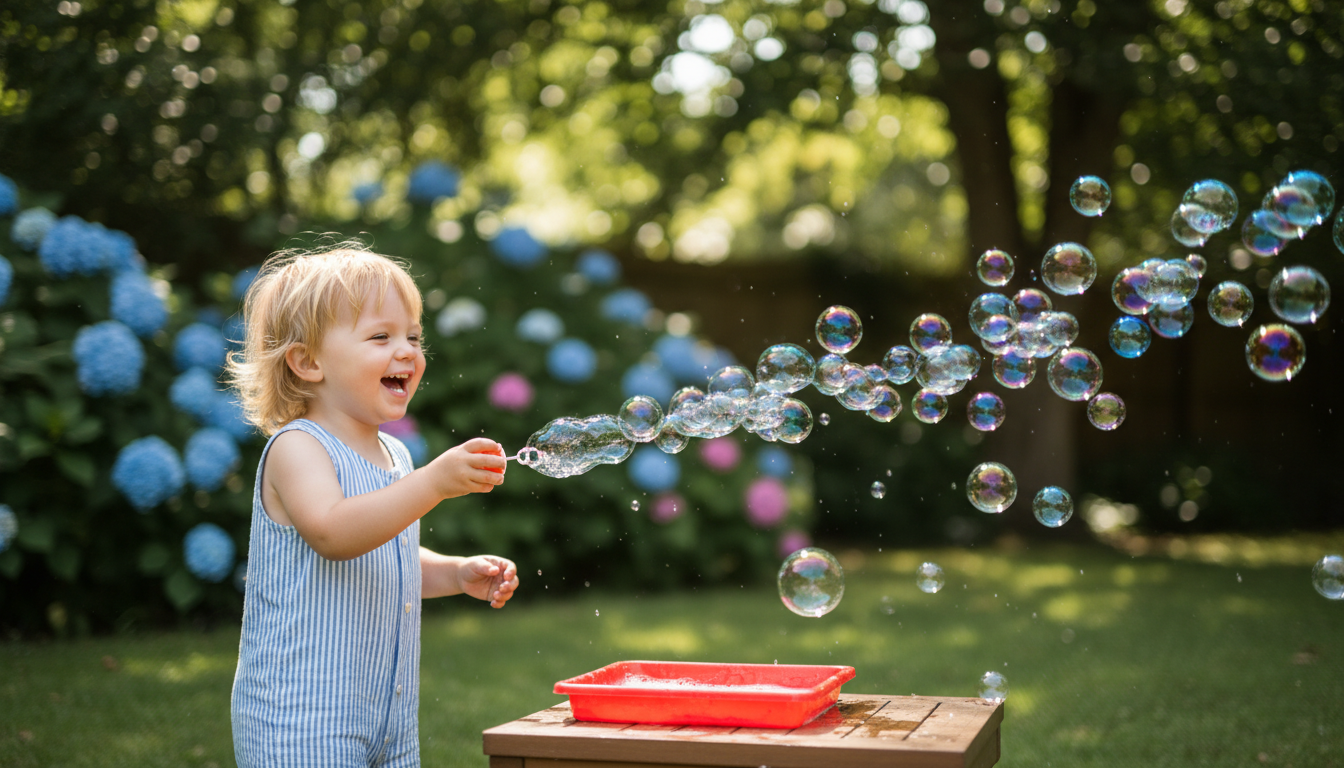
Table of Contents
- Introduction
- What Are Bilabial Sounds?
- Bilabial Word List Speech Therapy: The /p/ Sound
- Bilabial Word List Speech Therapy: The /b/ Sound
- Bilabial Word List Speech Therapy: The /m/ Sound
- Bilabial Word List Speech Therapy: The /w/ Sound
- Moving Beyond Single Words: Syllable Shapes
- How Speech Blubs Uses Video Modeling for Bilabials
- Practical Scenarios for Practicing Bilabials at Home
- Integrating Speech Blubs into Your Routine
- Setting Realistic Expectations
- Encouraging Carryover and Generalization
- Why Choose Speech Blubs?
- Frequently Asked Questions (FAQ)
- Conclusion
Introduction
Think about the very first time you heard your child try to say "Mama" or "Papa." Those precious, bubbly sounds are more than just cute—they are the essential building blocks of communication. For many parents, hearing those first "M" and "P" sounds is a moment of pure magic. However, when those sounds don't emerge as expected, or if your little one seems to struggle to bring their lips together, it can feel a bit overwhelming. You might find yourself wondering if there is a specific way to help them or if you should be worried about their development.
At Speech Blubs, we believe that every child deserves the opportunity to speak their minds and hearts. Our company was born from the personal experiences of our founders, who all grew up with speech problems and created the tool they wished they had. We understand the journey you are on because we’ve been there too. Our goal is to provide an immediate, effective, and joyful solution for the 1 in 4 children who need speech support, blending scientific principles with play into one-of-a-kind "smart screen time" experiences.

In this guide, we are going to dive deep into the world of bilabial sounds. We will provide you with a comprehensive bilabial word list for speech therapy, explain why these sounds are so important for early development, and share practical, fun ways to practice them at home. Whether you are working with a speech-language pathologist or looking for ways to supplement your child's learning, this resource is designed to empower you with the knowledge and tools you need.
By the end of this article, you will have a clear roadmap for helping your child master these foundational sounds, fostering a love for communication and building the confidence they need to thrive. If you're ready to jump in right now, you can download Speech Blubs on the App Store or Google Play to start your journey with our interactive tools.
What Are Bilabial Sounds?
Before we get to our word lists, let’s talk about what "bilabial" actually means. In the world of speech therapy, "bilabial" refers to sounds that are produced using both (bi-) lips (labial). These are often the very first sounds infants make because they are highly visual. Your child can easily see you pressing your lips together to say "mmmmm" or "puh-puh-puh," making it easier for them to imitate.
There are four primary bilabial sounds we focus on in early speech development:
- /p/ sound: This is a "voiceless" sound, meaning your vocal cords don't vibrate. It’s a quick "pop" of air.
- /b/ sound: This is the "voiced" twin of the /p/ sound. Your lips do the same thing, but your "voice box" is turned on.
- /m/ sound: This is a nasal sound where the lips stay closed, and the air (and sound) travels through the nose.
- /w/ sound: This involves rounding the lips and is often considered a "glide" or semi-vowel.
Why Are Bilabials Important?
Mastering these sounds is a critical milestone. Because they are produced at the very front of the mouth, they set the stage for more complex tongue movements required for sounds like /t/, /d/, /k/, and /g/ later on. If a child has difficulty with bilabials, it can lead to frustration when they try to request basic needs, like "more," "up," or "milk."

If you are unsure if your child is hitting their milestones, we recommend taking our quick 3-minute preliminary screener. It involves 9 simple questions and provides an assessment and a next-steps plan to give you peace of mind.
Bilabial Word List Speech Therapy: The /p/ Sound
The /p/ sound is like a tiny explosion of air. When practicing, you can encourage your child to feel the air on the back of their hand to understand the "pop."
Initial /p/ Words (Beginning of the Word)
These are often the easiest to practice because the sound is front and center.
- Pie
- Pan
- Pot
- Pig
- Pop
- Pen
- Pat
- Pin
- Puppy
- Paper
Medial /p/ Words (Middle of the Word)
As children get more comfortable, we move the sound to the middle.
- Apple
- Happy
- Open
- Diaper
- Hippo
- Paper
- Napkin
- Puppy
Final /p/ Words (End of the Word)
Ending a word with a /p/ requires a "stop," which can be a fun challenge.
- Up
- Cup
- Hop
- Stop
- Mop
- Cap
- Nap
- Top
- Help
Bilabial Word List Speech Therapy: The /b/ Sound
The /b/ sound is one of the most functional sounds in a toddler's vocabulary. Think of words like "ball," "bye-bye," and "bottle."
Initial /b/ Words
- Ball
- Baby
- Big
- Bye
- Boy
- Bed
- Bus
- Boat
- Book
- Bear
Medial /b/ Words
- Rabbit
- Bubble
- Table
- Baby
- Cabbage
- Cowboy
- Robot
- Ribbon
Final /b/ Words
- Tub
- Bib
- Web
- Crab
- Cub
- Club
- Snob
- Job
Bilabial Word List Speech Therapy: The /m/ Sound
The /m/ sound is often the very first sound a child associates with meaning, specifically "Mama" or "More."
Initial /m/ Words
- Mama
- More
- Me
- Milk
- Moon
- Mouse
- Mouth
- Map
- Mud
- Monkey
Medial /m/ Words
- Hammer
- Tummy
- Yummy
- Mommy
- Lemon
- Animal
- Summer
Final /m/ Words
- Gum
- Home
- Swim
- Come
- Room
- Team
- Farm
- Drum
Bilabial Word List Speech Therapy: The /w/ Sound
The /w/ sound requires lip rounding. While it’s technically a glide, it is grouped with bilabials because of the lip involvement.
Initial /w/ Words
- Water
- Walk
- Wait
- Wet
- Wagon
- Window
- Web
- Wave
Medial /w/ Words
- Flower
- Away
- Power
- Towel
Moving Beyond Single Words: Syllable Shapes
In speech therapy, we don’t just look at sounds; we look at the "shape" of the word. For children with apraxia of speech or significant delays, we start with simple shapes before moving to complex sentences.
CV (Consonant-Vowel) Words
These are the simplest combinations.
- Me
- Moo
- Pie
- Bee
- Bye
- Way
VC (Vowel-Consonant) Words
- Up
- Am
- Eat (though 't' isn't bilabial, it's a common early shape)
- On
CVC (Consonant-Vowel-Consonant) Words
- Mom
- Pop
- Bib
- Bob
- Map
- Bus
CVCV (Consonant-Vowel-Consonant-Vowel) Words
These are often the most "rewarding" for kids because they sound like real speech.
- Mama
- Papa
- Baby
- Puppy
- Bubba
How Speech Blubs Uses Video Modeling for Bilabials
One of the reasons Speech Blubs is so effective for teaching bilabial sounds is our use of video modeling. This is a scientifically proven method where children learn by watching their peers. Our method is backed by research, placing us in the top tier of speech apps worldwide.
When a child sees another child on a screen making a "popping" /p/ sound or a "yummy" /m/ sound, their mirror neurons fire. This makes them significantly more likely to attempt the sound themselves. Unlike passive cartoons that children just watch, Speech Blubs is "smart screen time." It encourages interaction, imitation, and family connection.
For a parent whose 3-year-old "late talker" loves animals, our "Animal Kingdom" section is a goldmine. You can practice the /m/ sound with "Moo" or the /b/ sound with "Baa." Watching a peer make these sounds helps reduce frustration and builds the confidence needed to try new words.
Ready to see it in action? Create your account and begin your 7-day free trial today.
Practical Scenarios for Practicing Bilabials at Home
You don't need a therapy room to help your child with their speech. In fact, the most meaningful learning happens during your daily routines. Here are some relatable scenarios:
Bath Time Bubbles
Bath time is the perfect place for the /b/ sound. As you blow bubbles, emphasize the word "Bubble." You can say, "Look at the big bubble! Pop the bubble!" This combines the /b/ sound and the /p/ sound in a fun, sensory environment.
Snack Time Requests
During snack time, use the word "More." Before giving your child another piece of apple or a cracker, wait for them to attempt the /m/ sound. You can model it by putting your finger to your lips and saying, "Mmmm, more?" This helps them realize that speech is a tool to get what they want, reducing mealtime frustration.
Playing with Cars or Trains
If your child loves vehicles, use the word "Beep" or "Boat." As you push a car, say "Beep, beep!" or "Stop!" The /p/ at the end of "stop" is a great way to practice final consonants.
Getting Dressed
When putting on a shirt, you can practice "Up" or "Button." These functional words are used every single day, giving your child multiple opportunities for "high-trial" practice without it feeling like work.
Integrating Speech Blubs into Your Routine
We recommend using Speech Blubs as a powerful supplement to your child’s overall development plan. It’s not a replacement for professional therapy, but it is an incredible tool to use between sessions or as an early intervention step.
Our app is designed for adult co-play. Sit with your child, watch the videos together, and mirror the sounds yourself. This creates joyful family learning moments that strengthen your bond while building their skills. To ensure you get the most out of our platform, we offer different pricing tiers:
- Monthly Plan: $14.99 per month.
- Yearly Plan: $59.99 per year (which breaks down to just $4.99/month).
The Yearly plan is our clear best choice. Not only do you save 66% compared to the monthly rate, but you also get:
- A 7-day free trial to explore all features risk-free.
- The exclusive Reading Blubs app, which helps transition your child from speaking to reading.
- Early access to new updates.
- Priority support with a 24-hour response time.
The monthly plan does not include the free trial or the Reading Blubs app, so we highly encourage families to choose the Yearly plan for the full suite of features and the best value.
Setting Realistic Expectations
At Speech Blubs, we want to be your partner in this journey, but it’s important to stay grounded in reality. We do not suggest guaranteed outcomes like "your child will be giving public speeches in a month." Speech development is a marathon, not a sprint.
Instead, we focus on the benefits of the process. You will see your child foster a love for communication, build their confidence, and slowly reduce their frustration as they gain more "tools" in their verbal toolbox. Our app helps develop the key foundational skills—like imitation and motor planning—that are necessary for long-term success. You can see what other parents are saying about their own experiences with these small, joyful victories.
Encouraging Carryover and Generalization
One of the biggest challenges in speech therapy is "carryover"—getting the child to use the sounds they learned in "practice" during their everyday life. Here are a few tips to help bilabial sounds stick:
- Recasting: If your child says "ot" for "pot," don't correct them harshly. Instead, "recast" the word correctly: "Yes, that is a big blue pot!" This provides a positive model without making the child feel like they failed.
- Wait Time: Give your child at least 5-10 seconds to respond. Sometimes their little brains just need a moment to plan the motor movement of their lips.
- Visual Cues: Use a "lip-pop" gesture. Tap your lips together with your fingers when you say /p/ or /b/ to draw their attention to your mouth.
- Praise Effort, Not Just Perfection: If they try to say "Mama" and it comes out as "Baba," celebrate the attempt! They are working hard to coordinate their muscles.
Why Choose Speech Blubs?
The Speech Blubs homepage is filled with stories of children who found their voice through our platform. What makes us different is our heart. We aren't just developers; we are people who know exactly what it feels like to struggle to be understood.
Our app is a screen-free alternative to passive viewing. While traditional cartoons might keep a child quiet, Speech Blubs keeps them active. Through our "smart screen time," we transform a tablet into a speech therapy tool that is engaging, scientifically sound, and, most importantly, fun. We provide the structure and the "word lists" so you don't have to suffer from "spontaneous memory loss" trying to think of words to practice on the fly!
Frequently Asked Questions (FAQ)
1. At what age should my child master bilabial sounds?
Most children begin to master the /m/, /p/, and /b/ sounds by the age of 3. However, many infants start producing these sounds in babbling (like "ba-ba-ba") as early as 6 to 9 months. If your child is 2 years old and not consistently using these lip sounds, it may be a good time to consult a professional or start using supportive tools.
2. My child says "M" and "P" but skips them at the end of words. Is this normal?
This is often referred to as "Final Consonant Deletion." It is a common phonological process in young children. For example, they might say "cu" for "cup" or "ho" for "hop." While common, you can help them by emphasizing the "pop" at the end of the word or using visual cues to show your mouth closing at the end.
3. What is the difference between a /p/ and a /b/ sound in therapy?
Physically, your lips do the exact same thing for both sounds! The only difference is "voicing." To show your child the difference, have them put their hand on your throat. When you say /b/, they will feel a vibration. When you say /p/, they will feel nothing. This tactile feedback is a great way to help them distinguish between the two.
4. How can I make speech practice less like "work" for my toddler?
The key is to follow their lead! If they are playing with a toy airplane, practice the /w/ sound for "wing" or the /b/ sound for "big." Don't force them to sit at a table with flashcards. Use an app like Speech Blubs for 10-15 minutes of "smart screen time," and then integrate those same words into your play later in the day.
Conclusion
Helping your child master a bilabial word list for speech therapy is a wonderful way to jumpstart their communication journey. These "lip sounds" are the doorway to a world of expression, and your support as a parent is the most important factor in their success. Remember to keep things playful, use visual and tactile cues, and celebrate every single "pop" and "moo" along the way.
At Speech Blubs, we are honored to be a part of your family’s story. Whether you are dealing with a simple delay or a more complex speech challenge, we are here to provide the tools that make learning feel like a celebration rather than a chore. Our methodology is rooted in the joy of peer-to-peer learning and the effectiveness of video modeling.
Ready to unlock your child's potential? Start your 7-day free trial today by downloading the app on the App Store or Google Play. For the best experience and the most value, be sure to select our Yearly plan. At just $59.99 per year, you’ll get access to Reading Blubs, priority support, and the peace of mind that comes with knowing you’re giving your child the very best "smart screen time" available. Let's help your little one speak their mind and heart together!
Über den Autor