
Fun Ways to Use Describing Activity Speech Therapy at Home
Boost your child's communication with describing activity speech therapy. Explore 10 fun games, video modeling tips, and expert strategies to expand vocabulary
 Von Speech Blubs Team•Apr 27, 2026•14 Min.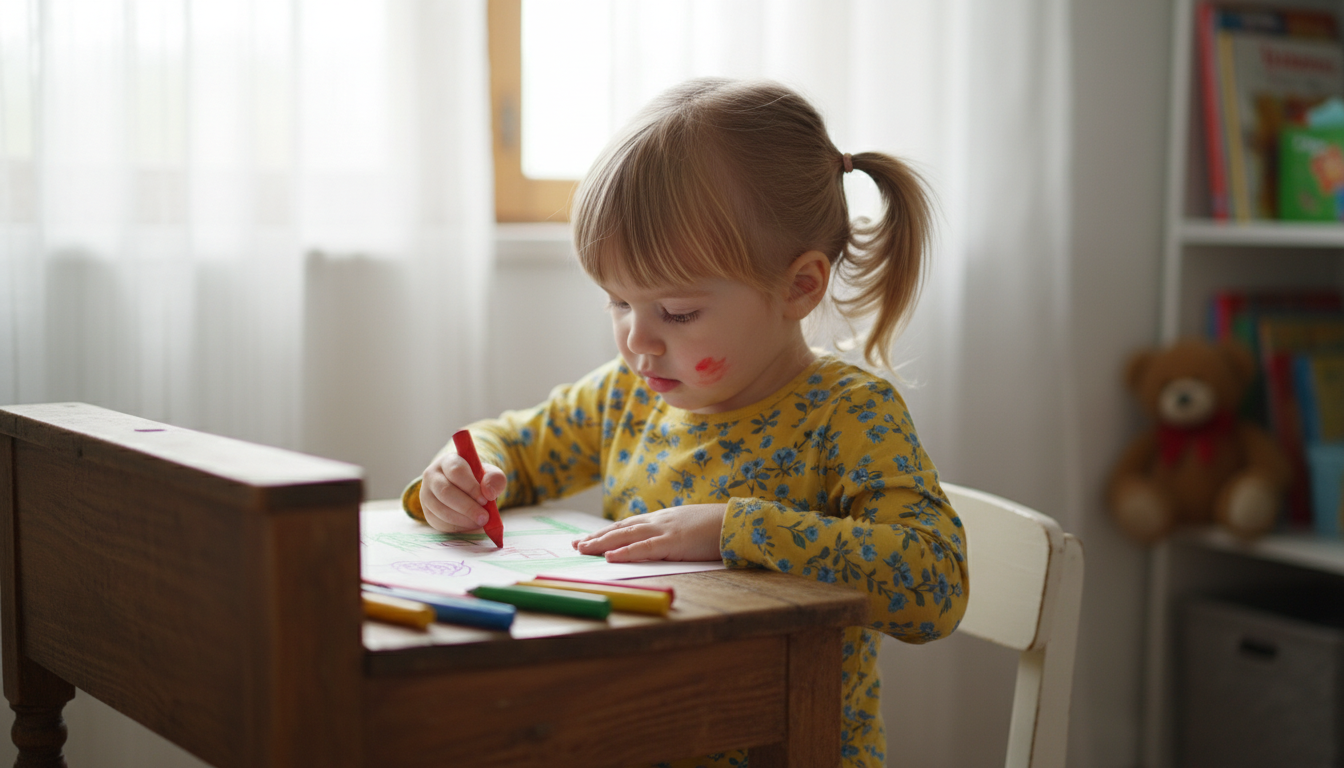
Table of Contents
- Introduction
- The Importance of Describing Skills
- Why We Use Video Modeling
- Practical Scenarios: Describing in Action
- 10 Engaging Describing Games for Speech Therapy
- Integrating Speech Blubs into Your Routine
- Transparent Pricing and The Best Way to Start
- Setting Realistic Expectations
- The Scientific Foundation: More Than Just Games
- Building the "Describing House": A Summary
- Final Thoughts
- FAQ
Introduction
Have you ever watched your child struggle to tell you about their day, or perhaps they pointed at a toy and simply said "that" because they couldn't find the right words to describe it? If so, you aren't alone. In fact, research shows that roughly 1 in 4 children will face some form of speech or language delay during their early development. This can be a source of frustration for both the child, who wants to share their world, and the parent, who is eager to understand.
At Speech Blubs, our mission is to empower every child to speak their minds and hearts. We know exactly how it feels because our founders grew up with speech hurdles themselves. They created the very tool they wished they had—a way to turn "smart screen time" into a joyful, effective learning experience.
In this post, we are going to dive deep into the world of describing activity speech therapy. We will explore why describing is a "powerhouse" skill that hits multiple developmental goals at once, provide you with ten actionable games you can play today, and explain how our unique scientific approach helps your child build the confidence they need to communicate clearly. By the end of this article, you will have a full toolkit of strategies to help your little one expand their vocabulary and move from single words to rich, descriptive sentences.

The Importance of Describing Skills
When we talk about a describing activity in speech therapy, we aren't just talking about learning a few adjectives. We are talking about the foundation of complex communication. To describe an object, a child must be able to categorize it, identify its function, notice its physical attributes, and understand its relationship to other things.
Imagine your child is looking at a red apple. To describe it, they have to realize:
- Category: It is a fruit (food).
- Attributes: It is red, round, and smooth.
- Function: You eat it.
- Location: It grows on a tree or stays in the kitchen.
Because describing requires the "marriage" of so many different language skills—expressive, receptive, and cognitive—it gives you the biggest "bang for your buck" in development. It moves a child beyond simple labeling. Instead of just saying "dog," they can say "the big, brown, fluffy dog." This transition is a massive milestone in early childhood.
Why We Use Video Modeling
At the core of our methodology is something called video modeling. If you’ve ever noticed your child staring intently at another child at the park, you’ve seen this in action. Children are hardwired to learn from their peers. Our app uses videos of real children (we call them "Blubers") performing speech exercises.
This isn't just a fun feature; it’s based on the science of mirror neurons. When a child watches a peer make a specific sound or use a describing word, the neurons in their own brain fire as if they were doing it themselves. This reduces the pressure and makes learning feel like a playdate rather than a lesson. We’ve found that this "smart screen time" is a powerful tool for family connection, offering a high-quality alternative to passive cartoon viewing.
To see the science behind how we help children find their voices, you can read more about our research and methodology.
Practical Scenarios: Describing in Action
We often hear from parents who feel that therapy sessions are great, but they don’t know how to carry that progress into the living room. Let’s look at how a describing activity speech therapy session might look in a real-world scenario using our tools.

The Animal Lover
Imagine a 3-year-old "late talker" who is obsessed with the zoo. Traditional drills might bore them, but if you open the "Animal Kingdom" section in Speech Blubs, the game changes. As they watch a peer pretend to be a lion, you can pause and ask, "What does the lion look like?" Use the video as a prompt to describe the "big, yellow mane" or the "loud roar." This turns a passive moment into an active describing exercise.
The "Guessing Game" Enthusiast
For a child who is starting to put two words together but struggles with specific nouns, you might use our 3-minute preliminary screener to see exactly where they are. If the screener suggests working on vocabulary, you can play a "Mystery Bag" game at home. Place a toy truck inside. Have your child feel it and describe it: "It has wheels," "It is hard," "It goes beep-beep." These are all descriptive precursors to complex speech.
10 Engaging Describing Games for Speech Therapy
To make progress, variety is key. Here are ten games designed to target describing skills while keeping the atmosphere light and fun.
1. The Mystery "Touch and Tell" Bag
This is a classic for a reason. It removes the visual element and forces the child to rely on their tactile senses and descriptive vocabulary.
- How to play: Place 5-6 familiar items in an opaque bag (a spoon, a ball, a stuffed animal, a block).
- The goal: Have the child reach in, hold an item, and describe how it feels (soft, hard, cold, fuzzy) before they pull it out.
- Why it works: It builds "sensory vocabulary," which is often the first step in learning adjectives.
2. Descriptive "I Spy"
Standard "I Spy" usually only uses color (e.g., "I spy something blue"). To level this up for speech therapy, change the rules.
- How to play: Instead of color, use function or category. "I spy something we use to drink water" or "I spy something that has four legs and is soft."
- The goal: Encourage the child to look for specific attributes rather than just scanning for colors.
3. Build a Monster (or a House)
Using building blocks or playdough is perfect for real-time description.
- How to play: As you build together, describe every step. "I am adding a tiny, green block on top of the big, red one."
- The goal: Modeling descriptive language during a shared activity. You can even encourage your child to give you "directions" on how to build their monster: "Give him three purple eyes!"
4. Descriptive Charades
This game is excellent for older preschoolers (ages 4-6) who are starting to understand more abstract concepts.
- How to play: Instead of just acting out "a cat," act out a "sleepy cat" or a "hungry cat."
- The goal: Connecting adjectives (emotions/states) to actions.
5. "What Am I?" Riddles
Riddles are essentially descriptions in reverse. They require the child to synthesize multiple clues to find a single answer.
- How to play: Give three clues. "I am yellow. I am a fruit. You have to peel me to eat me."
- The goal: Teaching the child how to group attributes together to define a specific object.
6. The "Silly" Picture Description
Take a regular picture and add something "wrong" to it (like a cat wearing sunglasses or a car with square wheels).
- How to play: Ask the child to describe the picture and tell you what is "silly" or "different."
- The goal: It motivates the child to speak because they want to point out the humor, leading to more spontaneous descriptive language.
7. Scavenger Hunt: Sensory Edition
Turn a walk through the park or a trip to the backyard into a mission.
- How to play: Give your child a list of things to find based on descriptions: "Find something crunchy," "Find something smooth," "Find something that smells like a flower."
- The goal: Generalizing language skills to the real world outside of "study time."
8. Category Sort-and-Describe
Use a basket of laundry or a toy bin to practice categorization.
- How to play: Sort items into piles (clothes we wear on our feet vs. clothes we wear on our heads). As you sort, describe the items: "These socks are white and stretchy."
- The goal: Building the "category" wall of the describing house.
9. Picture Scene "Coloring and Chatting"
Many parents find that their children speak more freely when their hands are busy.
- How to play: While coloring a scene, ask open-ended questions. "Tell me about this tree. What color are the leaves? Are they big or little?"
- The goal: Reducing the "interrogation" feel of speech therapy and making it a natural conversation.
10. The Memory Match Twist
If you have a standard memory matching game, add a descriptive rule.
- How to play: Every time a child flips over a card, they must say two things about it before they can try to find the match. "This is a fire truck. It is red and it has a ladder."
- The goal: Increasing the frequency of descriptive attempts during a structured game.
Integrating Speech Blubs into Your Routine
While these games are fantastic, we know that modern parents are busy. That is why we designed Speech Blubs to be an easy-to-use, effective supplement to your child’s development plan. It’s not just an app; it’s a tool that fosters a love for communication.
Our approach focuses on:
- Building Confidence: When a child sees another child successfully saying a word, they feel they can do it too.
- Reducing Frustration: By giving children the descriptive tools they need, we reduce those "meltdown" moments where they can’t express what they want.
- Joyful Learning: We believe play is the work of childhood. If it isn't fun, they won't want to do it!
Parents often ask about the results. While every child’s journey is unique and we don't suggest guaranteed overnight outcomes, many families see a noticeable shift in their child's willingness to engage and try new words. You can read some of these heart-warming stories on our testimonials page.
Transparent Pricing and The Best Way to Start
We want to be your partner in this journey, which is why we believe in being transparent about our pricing. We offer two main plans to fit your family's needs:
- Monthly Plan: $14.99 per month. This is a great way to test the waters if you are looking for a short-term boost.
- Yearly Plan (Best Value): $59.99 per year. This breaks down to just $4.99 per month, saving you 66% compared to the monthly rate.
We highly recommend the Yearly Plan because it is designed for long-term success. Speech development is a marathon, not a sprint, and the Yearly Plan provides the consistent support your child needs.
Exclusive Yearly Plan Benefits:
- 7-Day Free Trial: Try everything risk-free before you commit.
- Reading Blubs App: You get full access to our secondary app designed to bridge the gap between speech and literacy.
- Priority Support: You get a 24-hour response time from our support team.
- Early Access: Be the first to try new updates and features.
Please note that the Monthly plan does not include the free trial, the Reading Blubs app, or priority support. To give your child the full suite of tools and start your journey today, you can create your account and begin your 7-day free trial here.
Setting Realistic Expectations
It is important to remember that every child develops at their own pace. Describing activity speech therapy is a process of building blocks. One week, your child might only notice colors; the next, they might start identifying what objects are made of.
Our app is a powerful supplement to professional therapy and overall development. We encourage "co-play"—sit with your child while they use the app. Talk about what the kids on the screen are doing. Imitate the sounds together. These "joyful family learning moments" are where the real magic happens.
If you are ready to bring this technology into your home, you can find us on your favorite platform:
The Scientific Foundation: More Than Just Games
You might wonder why we focus so much on peer-to-peer interaction. It goes back to how our brains are wired. In our app, we use high-quality video modeling where "smart screen time" replaces passive scrolling. Our methodology is designed to trigger those mirror neurons we mentioned earlier.
When your child sees a "Bluber" describe a "big, blue ball," they aren't just hearing the words; they are seeing the mouth movements, the facial expressions, and the excitement of a peer. This multifaceted approach is why we are consistently rated as a top-tier tool for speech development. You can learn more about our mission and the team behind the app on our homepage.
Building the "Describing House": A Summary
Think of teaching describing as building a house:
- The Foundation: This is the basic vocabulary—labeling things like "car," "apple," or "dog."
- The Walls: This is categorization—knowing that a car is a "vehicle" and an apple is "food."
- The Roof and Paint: These are the adjectives—color, size, shape, and texture.
- The Landscaping: These are the fun facts and functions—"The car goes fast," or "The apple is crunchy."
Don't rush the process. If the foundation isn't solid yet, stay there a while. Use the games mentioned above to reinforce each level of the house. Most importantly, keep it fun! If your child feels like they are playing, they will be much more likely to participate.
Final Thoughts
Helping your child find their voice is one of the most rewarding journeys you will ever take. While speech delays can feel isolating, remember that there is a community of experts and parents walking this path with you. By incorporating describing activity speech therapy into your daily life—through simple games, sensory experiences, and "smart screen time"—you are giving your child the gift of clear communication.
We invite you to join the Speech Blubs family. Whether you are using our 3-minute screener to get a baseline or jumping straight into our video modeling activities, we are here to support you every step of the way.
Ready to get started? We encourage you to choose our Yearly plan to take advantage of the 7-day free trial and the full suite of features, including Reading Blubs.
Download Speech Blubs on the App Store or Google Play to begin today!
FAQ
1. How often should I practice describing activities with my child?
Consistency is more important than duration. We recommend short, 10-15 minute sessions daily rather than one long session per week. Integrating descriptive language into your daily routine—like during bath time or grocery shopping—is the most effective way to see progress.
2. My child is only using single words. Is a describing activity too advanced?
Not at all! Describing can actually help push a child from single words to two-word phrases. You can start by modeling the description yourself. If they say "ball," you say "Yes, big ball!" Eventually, they will begin to imitate the adjective along with the noun.
3. Does Speech Blubs replace the need for a Speech-Language Pathologist (SLP)?
No. Speech Blubs is a powerful supplement to professional therapy, not a replacement. It is designed to provide high-quality practice between therapy sessions. If you have concerns about your child's development, we always recommend consulting with a licensed SLP.
4. Why is the Yearly plan better than the Monthly plan?
The Yearly plan offers the best value at $59.99 (just $4.99/month), which is 66% cheaper than the monthly rate. More importantly, it includes the 7-day free trial, the Reading Blubs app, priority support, and early access to new content—features that are not available with the Monthly plan.
Über den Autor