
Helping Your Child Master FCD Words in Speech Therapy
Master fcd words speech therapy with our guide. Discover fun activities, minimal pairs, and word lists to help your child find missing ending sounds today!
 Von Speech Blubs Team•Apr 27, 2026•17 Min.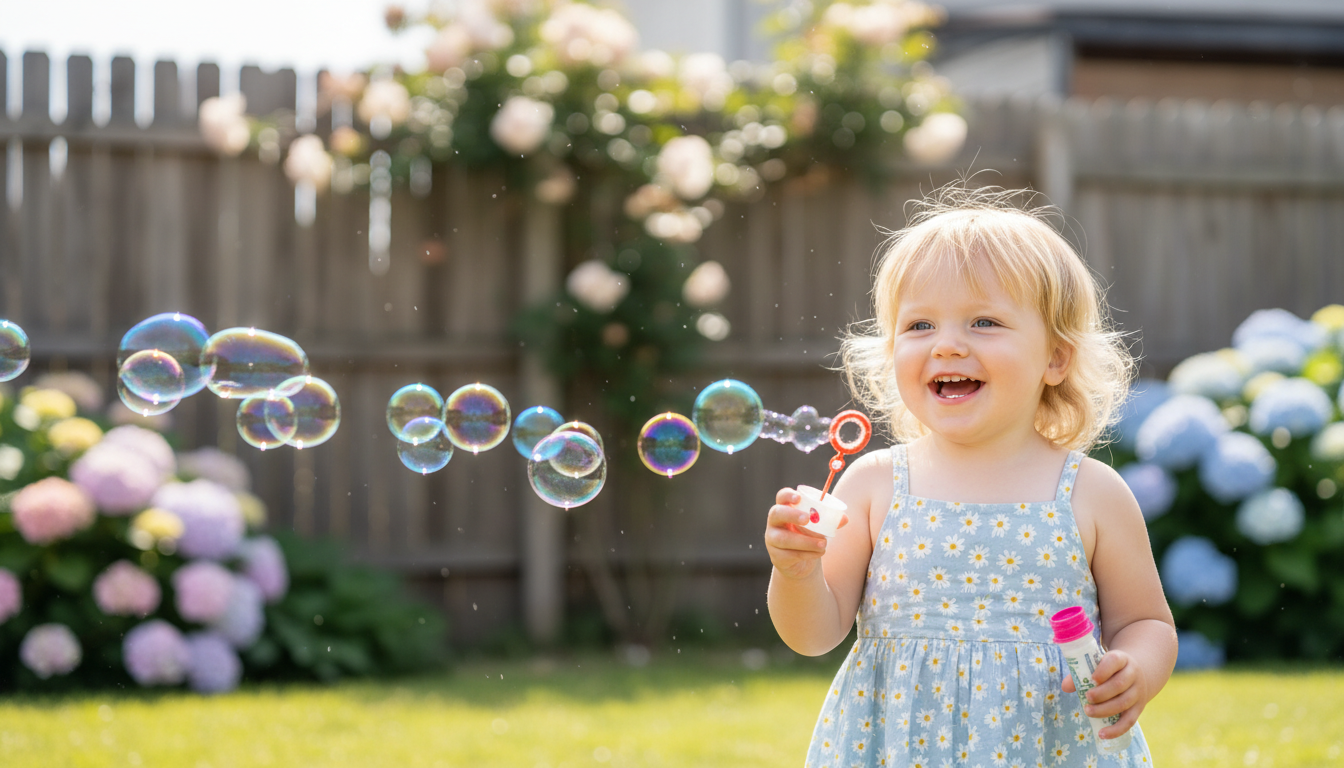
Table of Contents
- Introduction
- Understanding Final Consonant Deletion (FCD)
- The Milestone: When Should Those Endings Appear?
- The Science of Sound: Minimal Pairs
- A Comprehensive FCD Word List for Practice
- 10 Fun Activities to Target Final Consonants at Home
- Why "Smart Screen Time" Works for FCD
- Setting Realistic Expectations
- Choosing the Right Plan for Your Family
- Practical Scenarios: FCD in the Real World
- The Emotional Side of Speech Challenges
- FAQ
- Conclusion
Introduction
Have you ever noticed your toddler asking for a "ca" when they want their favorite toy "car," or perhaps they shout "bi" when a big "bike" zooms past? While these "vanishing" endings can be quite cute in a two-year-old, they are actually part of a specific speech pattern known as Final Consonant Deletion (FCD). Imagine trying to tell a story where the last letter of every important word is simply erased. It would be frustrating for you to tell, and even more confusing for your friend to hear! This is the daily reality for many children who struggle with FCD.
At Speech Blubs, we believe every child deserves to speak their mind and heart. Our founders, who navigated their own speech challenges as children, created our platform because they knew exactly what was missing: a joyful, effective tool that turns speech practice into play. We are dedicated to supporting the 1 in 4 children who need a little extra help with their communication skills, providing "smart screen time" that encourages active participation rather than passive scrolling.

In this guide, we will dive deep into the world of FCD words in speech therapy. We will explore what this phonological process is, why it happens, and—most importantly—provide you with a treasure trove of practical activities and word lists to help your child find those "missing" sounds. We will also look at how our unique video modeling approach can help your little one gain the confidence they need to finish their words with a flourish. By the end of this article, you will have a clear roadmap to help reduce frustration and foster a love for communication in your home.
Understanding Final Consonant Deletion (FCD)
To understand FCD, we first have to look at the broader category it falls into: phonological processes. When children are learning to speak, the English language can be incredibly complex. To make things easier, their developing brains create "shortcuts" to simplify difficult words. These shortcuts are called phonological processes.
Final Consonant Deletion is the specific shortcut where a child omits the final consonant of a word, effectively ending the word on a vowel sound. For example, "boat" becomes "bo," and "bus" becomes "bu." In speech therapy terms, we call a word that ends in a vowel an "open" syllable, and a word that ends in a consonant a "closed" syllable. Children with FCD are essentially keeping all their syllables "open" because closing them requires extra motor planning and coordination.
It is important to distinguish FCD from a simple articulation disorder. An articulation disorder usually involves a child having trouble with one specific sound (like a lisp on the "s" sound). FCD is a phonological disorder because it affects an entire pattern of sounds. It doesn't matter if the final sound is a "t," a "p," or a "k"—the child simply leaves it off.
At Speech Blubs, we focus on helping children recognize these patterns through play. Understanding the "why" behind the speech pattern is the first step in helping your child bridge the gap between their "open" words and the "closed" words they need for clear communication.

The Milestone: When Should Those Endings Appear?
As a parent, it is natural to wonder if your child’s speech is "on track." Developmentally speaking, FCD is actually a very normal part of language acquisition. Most toddlers use this shortcut as they transition from babbling to first words. However, there is a general timeline that speech-language pathologists look for.
Typically, children should stop deleting final consonants by the age of 3. By this point, their motor skills and phonological awareness have usually developed enough to handle the "closure" of a word. If a child continues to omit these sounds past their third birthday, it can significantly impact their intelligibility—or how well others understand them.
When a child is missing the ends of their words, they might be able to communicate perfectly with you (because you "speak toddler"), but a teacher, a grandparent, or a peer at the playground might be completely lost. This often leads to "communication breakdown" and frustration for the child.
If you are unsure whether your child's speech patterns are typical for their age, we recommend taking a proactive step. You can use our quick 3-minute preliminary screener. It consists of 9 simple questions and provides you with an assessment and a next-steps plan, along with a free 7-day trial of our app. It’s a great way to gain peace of mind and see if your child might benefit from more structured support.
The Science of Sound: Minimal Pairs
One of the most effective tools in a speech therapist's toolkit for FCD is something called "minimal pairs." This might sound like a technical term, but it’s actually a very simple and powerful concept.
A minimal pair consists of two words that differ by only one single sound. In the case of FCD, we pair an "open" word (one ending in a vowel) with a "closed" word (one ending in a consonant).
For example:
- BEE (no final consonant) vs. BEEP (ends in 'P')
- BOW (no final consonant) vs. BOAT (ends in 'T')
- TEA (no final consonant) vs. TEAM (ends in 'M')
The goal of using minimal pairs is to show the child that the final sound is "meaningful." If they say "bee" when they mean "beep," you can point to a picture of a bee and say, "Oh, you want the bee? Or did you mean the beep of the car?" This helps the child realize that leaving off that last sound actually changes the entire meaning of what they are saying.
Our research and science page explains how this cognitive shift is essential. We use video modeling—where children watch other children say these words—to activate "mirror neurons." When your child sees a peer on a screen emphasizing that final "T" in "boat," their brain is actually practicing the movement themselves!
A Comprehensive FCD Word List for Practice
To help you get started at home, we have compiled a list of common FCD minimal pairs. You can use these for games, drawing activities, or simply to model correct speech during the day.
The "P" and "B" Endings
- BEE — BEEP
- PEA — PEEP
- KEY — KEEP
- TWO — TOOT
- BOO — BOOT
The "T" and "D" Endings
- BOW — BOAT
- SEE — SEED
- TEA — TEASE
- DIE — DIME (Note: focusing on the 'M' closure)
- TOE — TOAD
- RAY — RAID
- LAY — LATE
The "K" and "G" Endings
- BEE — BEAK
- MAY — MAKE
- SEW — SOAK
- BYE — BIKE
- GO — GOAT (Focusing on the 'T' but also useful for 'G' awareness)
The "N" and "M" Endings
- MOO — MOON
- PIE — PINE
- NEW — NOON
- RAY — RAIN
- MY — MINE
When you practice these, don't just focus on the sounds. Focus on the joy of the discovery. For a parent whose 3-year-old "late talker" loves animals, our "Animal Kingdom" section in the app is perfect. You can practice "moo" for the cow, and then contrast it with "moon" in the sky, or "baaa" for the sheep and "bag" for the groceries. This contextual learning makes the sounds stick much better than rote repetition.
10 Fun Activities to Target Final Consonants at Home
Practice doesn't have to happen at a table with flashcards. In fact, for preschoolers, it shouldn't! Here are ten engaging ways to work on FCD words in your daily life.
1. The Train Caboose
Grab a toy train set. Explain to your child that every word is like a train. The beginning of the word is the engine, and the end of the word is the caboose. If we leave off the final sound, the train has no caboose! As you say words like "boat," push the train and physically attach the caboose at the moment you say the "T" sound.
2. The Arm Slide
This is a wonderful tactile cue. Have your child hold their arm out. As you say the first part of a word (e.g., "Caaaaa..."), slide your finger down their arm. When you reach their hand, give it a gentle "tap" to represent the final sound ("...T!"). The physical "stop" at the end of the slide helps their brain recognize that the word has an ending.
3. Sorting Buckets
Set up two buckets or boxes. Label one with a "check mark" (for words with endings) and one with an "X" or a picture of an open mouth (for words that end in a vowel). Say a word and have your child throw a beanbag into the correct bucket based on whether they heard a "tail" on the word or not.
4. Hide and Seek Cards
Hide pictures of "closed" words (like duck, cup, hat) around the living room. When your child finds one, they have to say the name of the object. If they say "du," you can play a "confused" character: "A du? I don't see a du! I see a du...ck!"
5. Bubble "Pop"
Bubbles are the ultimate motivator for toddlers. Use the word "pop" as your target. Every time they want to pop a bubble, they have to say the word with a strong "P" at the end. You can even model it by saying "Po...P!" with a big dramatic lip-pop at the end.
6. The "Tail" Game
Draw animals that are missing their tails (like a pig, a cat, or a dog). Have your child "pin" the tail on the animal. As they attach the tail, they have to say the "tail" (the final consonant) of the animal's name. "Pi...G!" This visual of adding a tail to a body perfectly mirrors adding a consonant to a vowel.
7. Play Dough Smash
Create small balls of play dough. Assign each ball a sound in a word. For the word "cat," you would have three balls. As you say "C," smash the first ball. As you say "A," smash the second. As you say "T," smash the third. If they forget the "T," that last ball stays round and un-smashed!
8. The "Open vs. Closed" Hands
This is a simple visual cue you can use anywhere. When you say an "open" word like "bee," hold your hands open wide. When you say a "closed" word like "beep," clap your hands together firmly on the "P." Encourage your child to copy your movements as they speak.
9. Sensory Bin Treasure Hunt
Fill a bin with rice, beans, or sand and hide small objects that end in consonants (a bus, a pot, a dog). As your child pulls them out, practice the words. The sensory input helps keep them engaged for longer periods of study.
10. Using Speech Blubs Video Modeling
Sometimes, a child needs to see someone other than Mom or Dad doing the work. Our app uses "smart screen time" to show your child videos of other kids their age successfully making these sounds. Watching a peer say a word like "book" or "cake" triggers an imitative response that is often more powerful than just hearing an adult say it. You can see how this has worked for thousands of families on our testimonials page.
Why "Smart Screen Time" Works for FCD
We know that many parents are concerned about screen time, and rightly so. Passive viewing of loud, fast-paced cartoons can often lead to overstimulation without any educational gain. However, at Speech Blubs, we've designed a different kind of experience.
Our methodology is rooted in video modeling. This is a scientifically proven technique where children learn new behaviors or skills by watching others. Because our "teachers" are other children, your little one feels a sense of connection and "I can do that too!" confidence.
When working on FCD words in speech therapy, our app provides a mirror feature. This allows your child to see themselves on the screen right next to the child they are imitating. They can see their own mouth moving, helping them understand how to "close" those words physically. It’s a powerful tool for building foundational communication skills while keeping the atmosphere light and joyful.
Ready to see the difference for yourself? Download Speech Blubs on the App Store or Google Play to begin your journey toward clearer speech today.
Setting Realistic Expectations
It is important to remember that speech development is a marathon, not a sprint. While we want to see progress, we also want to foster a love for communication rather than a fear of making mistakes.
Don't expect your child to master every final consonant in a week. Instead, look for small wins:
- They noticed that they left a sound off.
- They attempted a final "T" even if it wasn't perfect.
- They are less frustrated when you ask them to repeat a word.
- They are having fun during your "speech play" sessions.
Our app is designed to be a powerful supplement to your child's overall development plan. If your child is currently seeing a professional speech-language pathologist, Speech Blubs is the perfect tool for carryover practice at home. It keeps the "homework" feeling like a game, which reduces the power struggles that can sometimes happen during therapy.
Choosing the Right Plan for Your Family
We want to be transparent about our pricing so you can make the best decision for your family’s needs. We offer two main paths:
- Monthly Plan: For $14.99 per month, you get full access to our library of speech-boosting activities.
- Yearly Plan: For $59.99 per year, which breaks down to just $4.99 per month.
The Yearly Plan is our most popular choice for a reason—it offers 66% savings compared to the monthly rate. But the value goes beyond just the price tag. When you choose the Yearly Plan, you also receive:
- A 7-day free trial to explore everything we have to offer.
- Access to our Reading Blubs app, which helps transition speech skills into early literacy.
- Early access to all new updates and features.
- Priority 24-hour support response time from our team.
We encourage you to create your account and begin your 7-day free trial today to see which plan fits your lifestyle. Most parents find that the Yearly plan provides the consistent support needed to see real growth in their child's confidence and clarity.
Practical Scenarios: FCD in the Real World
Let's look at how these techniques play out in a typical day.
Imagine you are having lunch with your three-year-old. They point to their drink and say, "Mu!" You know they want milk, but this is a perfect moment for a "gentle recast." Instead of just giving them the milk, you can say, "Oh, you want your mil...K? Here is your mil...K!" You are emphasizing that final "K" without making them feel corrected.
Later, you might be playing with blocks. You can use the "Block Stack" method we mentioned earlier. For every block you add to a tower, you say a part of a word. "B... O... T!" If the tower falls, you can laugh and say, "Oh no! The boat crashed!"
These tiny moments of intentionality, combined with the structured practice found in Speech Blubs on Google Play, create a rich environment for language to flourish. You aren't just teaching sounds; you are teaching your child that their voice has power and that you are listening.
The Emotional Side of Speech Challenges
We would be remiss if we didn't mention the emotional impact of speech delays. When a child can't make themselves understood, it often results in tantrums, withdrawal, or a loss of confidence. At Speech Blubs, our mission is to empower children to "speak their minds and hearts."
We know that when a child finally masters those FCD words, it’s not just about the "T" or the "P." It’s about the smile on their face when they ask for a "snack" and actually get one, rather than you guessing five different things. It’s about the joy of a family connection that isn't strained by constant "What did you say?" moments.
We are here to support you through the ups and downs. Whether you are using our app for 10 minutes a day or using our word lists for bath-time games, you are doing the important work of building your child's future.
FAQ
1. Is final consonant deletion a sign of a hearing problem?
While FCD is often a phonological process, it can sometimes be linked to hearing issues, such as chronic ear infections (fluid in the ears). If a child cannot hear the high-frequency sounds at the ends of words (like 's', 't', or 'p'), they won't produce them. It is always a good idea to have a hearing screening if you are concerned about speech delays.
2. Can I use Speech Blubs if my child is already in speech therapy?
Absolutely! In fact, many speech-language pathologists recommend our app as a tool for "home carryover." It provides a fun, engaging way to practice the skills they are learning in their professional sessions, making the repetition required for progress much more enjoyable for the child.
3. My child is only 2 and does this. Should I be worried?
At age 2, deleting final consonants is considered developmentally appropriate. Most children are still simplifying words at this age. However, you can still begin modeling correct endings and playing some of the "open vs. closed" games mentioned above to build awareness for the future.
4. What are some of the easiest sounds to start with for FCD?
Usually, we recommend starting with "lip" sounds like 'p', 'b', and 'm' (e.g., up, herb, ham). These are very visual sounds that a child can see you making. After they master those, you can move on to "tip of the tongue" sounds like 't', 'd', and 'n' (cat, bed, run).
Conclusion
Helping your child find those missing "ending" sounds is one of the most impactful things you can do for their communication. Final Consonant Deletion is a common hurdle, but with the right tools, a bit of patience, and a lot of play, it is a hurdle your child can clear. By using minimal pairs, engaging in tactile activities like the "arm slide," and incorporating "smart screen time," you are giving your child the gift of clarity.
At Speech Blubs, we are honored to be a part of your family's journey. We know that every "beep," "boat," and "book" is a victory worth celebrating. Our mission is to make those victories happen more often, fostering a lifelong love for communication and reducing the frustration that comes with being misunderstood.
Ready to start your journey? Choose the Yearly plan to get your 7-day free trial and the full suite of features, including the Reading Blubs app and priority support. Let's work together to help your child speak their mind and heart, one "closed" word at a time. Download Speech Blubs today on the Apple App Store or Google Play and turn screen time into a joyful learning moment.
Über den Autor