
Mastering the S Sound: A Practical S Word List for Kids
Master the "S" sound with our comprehensive s word list speech therapy guide. Explore initial, medial, and final S words plus fun activities to boost your
 Von Speech Blubs Team•Apr 27, 2026•13 Min.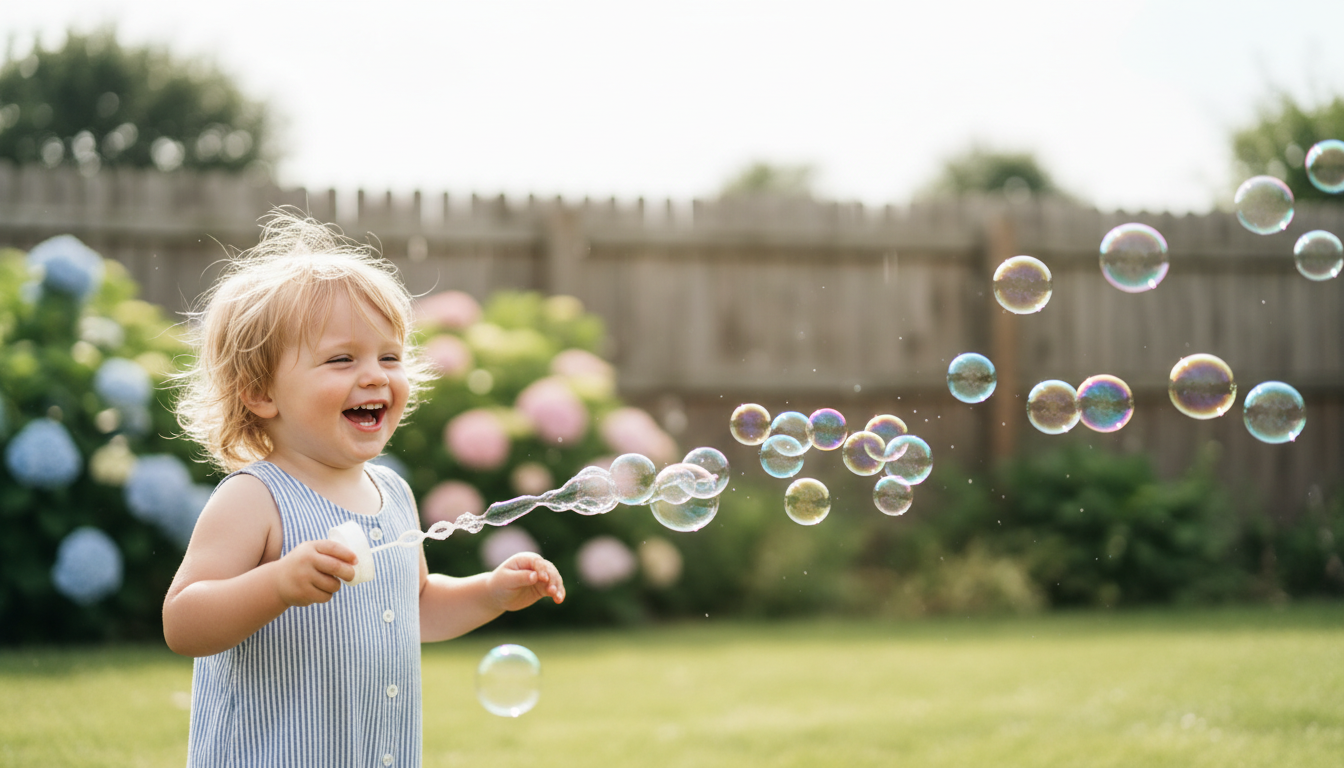
Table of Contents
- Introduction
- Understanding the "S" Sound Mechanics
- Identifying Common "S" Sound Challenges
- Initial S Word List: Starting Strong
- Medial S Word List: Finding the Middle Ground
- Final S Word List: Ending with Precision
- Exploring S-Blends
- The Science Behind Our Approach
- How to Practice at Home Without the Frustration
- Investing in Your Child’s Future
- Practical Activity Ideas for "S" Practice
- Setting Realistic Expectations
- Beyond the "S" Sound: Holistic Development
- Summary of the S Word List
- Conclusion
- FAQs
Introduction
Did you know that the "S" sound is one of the most frequent sounds in the English language, but also one of the most common hurdles for little ones learning to talk? If you have ever heard your child say "thun" instead of "sun" or "yeth" instead of "yes," you are not alone. At Speech Blubs, we know that every "snake" sound and "hiss" is a step toward a child being able to speak their minds and hearts. Our founders, who all grew up navigating their own speech challenges, created this platform to be the joyful, effective tool they wish they had when they were young.
The purpose of this post is to provide you with a comprehensive s word list speech therapy resource that you can use at home. We will cover the mechanics of how to produce the "S" sound, break down word lists by their position (initial, medial, and final), explore the world of S-blends, and offer practical, fun activities to keep your child engaged.

Our mission is to provide an immediate and joyful solution for the 1 in 4 children who need speech support. We believe in "smart screen time"—transforming the tablet or phone from a passive cartoon-delivery device into a powerful tool for family connection and learning. By the end of this article, you will have a clear roadmap and a robust toolkit to help your child master the "S" sound with confidence and joy.
Understanding the "S" Sound Mechanics
Before we dive into our s word list speech therapy categories, it is helpful to understand how this sound is actually made. Speech therapists often refer to "S" as a "fricative." This means it is produced by forcing air through a narrow channel in the mouth, creating that signature hissing noise.
To help your child find the right spot, you can use these simple cues:
- The Smile: Encourage your child to pull their lips back slightly into a gentle smile.
- The Bumpy Spot: Ask them to find the "bumpy spot" (the alveolar ridge) right behind their top front teeth with their tongue.
- The Air Channel: The tongue should almost touch that bumpy spot, leaving just a tiny gap for the "hiss" to travel through.
- The Hiss: Blow a thin stream of air right down the center of the tongue.
It is important to remember that "S" is a voiceless sound. This means if you put your hand on your throat while saying "sssss," you shouldn't feel any vibration. If your child is turning their voice on, it might sound more like a "Z."
At Speech Blubs, we use a unique "video modeling" methodology. Children are naturally inclined to imitate their peers. By watching other children on screen successfully making these sounds, your child’s mirror neurons—the brain cells that fire both when we perform an action and when we see someone else do it—are activated. This makes the learning process feel like a playdate rather than a lesson.
Identifying Common "S" Sound Challenges
Many children struggle with "S" because it requires fine motor control of the tongue. The two most common errors parents notice are:

- The Frontal Lisp: This happens when the tongue peeks out between the front teeth, turning "sun" into "thun."
- The Lateral Lisp: This occurs when air escapes out the sides of the tongue, creating a "slushy" or "wet" sound.
If you are unsure if your child’s speech development is on track, we invite you to take our quick 3-minute preliminary screener. It involves 9 simple questions and provides you with a personalized assessment and a next-steps plan to help your child thrive.
Initial S Word List: Starting Strong
When we begin speech practice, we often start with "initial" sounds—those at the very beginning of a word. These are usually the easiest for children to notice and replicate.
One-Syllable Initial S Words
- Sun
- Soap
- Sit
- Soup
- Sock
- Seed
- Seal
- Sad
- Six
- Salt
Two-Syllable Initial S Words
- Soccer
- Salad
- Seven
- Sofa
- Sailboat
- Sandwich
- Silver
- Silly
- Summer
- Saddle
Three-Syllable (and More) Initial S Words
- Sunflower
- Seventy
- Saturday
- Cereal (Note: "C" often makes the "S" sound!)
- Cylinder
- Salamander
- Satellite
Pro Tip: For a child who loves animals, the "Animal Kingdom" section in the Speech Blubs app is a fantastic place to practice. You can watch peers make the "S" sound in "Seal" or "Snake," providing a fun, motivating way to master these initial sounds. You can download Speech Blubs on the App Store or Google Play to get started today.
Medial S Word List: Finding the Middle Ground
Medial sounds are those that appear in the middle of a word. These can be trickier because the child has to transition from one sound into the "S" and then quickly move to the next.
Two-Syllable Medial S Words
- Pencil
- Fossil
- Basing
- Dancer
- Glasses
- Listen
- Muscle
- Icing
- Whistle
- Faucet
Three-Syllable (and More) Medial S Words
- Dinosaur
- Bicycle
- Gasoline
- Grasshopper
- December
- Medicine
- Popsicle
- Impossible
- Recipe
- Recycle
When practicing medial sounds, try to emphasize the "S" slightly without breaking the word apart. For example, say "pen-SSSS-il." This helps the child register where the sound lives within the word.
Final S Word List: Ending with Precision
Final "S" sounds are located at the very end of words. Sometimes children "drop" these sounds, saying "bu" instead of "bus."
One-Syllable Final S Words
- Bus
- Ice
- Glass
- Juice
- House
- Mouse
- Face
- Horse
- Kiss
- Yes
Two-Syllable Final S Words
- Office
- Cactus
- Lettuce
- Tennis
- Walrus
- Address
- Erase
- Nervous
- Police
- Birdhouse
Three-Syllable Final S Words
- Octopus
- Enormous
- Dangerous
- Generous
- Delicious
- Happiness
- Fabulous
Practicing final sounds is essential for clear communication. A great way to do this at home is through "co-play." For instance, while playing with a toy farm, you can emphasize the "S" in "Horse" or "Grass." This turns a routine play session into a joyful learning moment.
Exploring S-Blends
An "S-blend" is when the "S" sound is combined with another consonant, such as "St," "Sp," or "Sl." These are often the most complex for children to master because they require two distinct mouth movements in rapid succession.
The "SK" and "SC" Blends
- Skate
- Sky
- School
- Scoop
- Scarf
- Skunk
The "SL" Blends
- Slide
- Sleep
- Slow
- Sled
- Slipper
- Slime
The "SM" and "SN" Blends
- Smile
- Smell
- Smoke
- Snake
- Snack
- Snail
The "SP" and "ST" Blends
- Spoon
- Space
- Spider
- Star
- Stop
- Stickers
The "SW" Blends
- Swing
- Swim
- Sweet
- Swan
- Sweater
Mastering blends is a huge milestone! It indicates that your child is developing advanced coordination. If your child is struggling with a blend, try "stretching" the "S" first: "ssssss-top."
The Science Behind Our Approach
At Speech Blubs, we don't just create games; we build tools based on scientific principles. Our methodology is rooted in the "Video Modeling" technique, which is widely recognized as effective in speech therapy. By using real children in our app, we provide a relatable and engaging model for your child to follow.
Our app's high rating on the MARS scale (a tool used to assess the quality of mobile health apps) reflects our commitment to excellence. We aim to foster a love for communication and build the foundational skills necessary for a lifetime of confident speaking. You can read more about the research behind our methods to see why thousands of parents trust us.
How to Practice at Home Without the Frustration
One of the biggest challenges for parents is keeping practice "fun." If speech therapy feels like a chore, children may become frustrated or resistant. Here are some strategies to keep the joy alive:
- Short Bursts: Focus on 5-10 minutes of dedicated practice. Our app is designed for these short, high-impact sessions.
- Follow Their Lead: If your child loves cars, practice "fast" and "slow." If they love dinosaurs, focus on "Stegosaurus."
- The "I See" Game: While driving or walking, play a game of "I spy" or "I see." Use the s word list speech therapy from this post! "I see a sign," "I see the sun," "I see a bus."
- Celebrate Small Wins: Mastering a sound takes time. Celebrate the effort, not just the perfect pronunciation.
For a parent whose 3-year-old is a "late talker," seeing their child finally nail the "S" in "Spider" while playing with our digital stickers can be a moment of pure magic. These "smart screen time" experiences are designed to be a bridge to real-world conversation.
Investing in Your Child’s Future
We believe that every child deserves the chance to be heard. To support your family's journey, we offer two flexible pricing plans:
- Monthly Plan: $14.99 per month. This is a great way to test the waters.
- Yearly Plan: $59.99 per year.
Why the Yearly Plan is our clear best choice: The Yearly plan breaks down to just $4.99 per month—a 66% saving over the monthly rate. More importantly, the Yearly plan is the only one that includes:
- A 7-day free trial so you can explore all the features risk-free.
- The exclusive Reading Blubs app, which helps transition speech skills into literacy.
- Early access to all our new updates and a 24-hour support response time from our dedicated team.
Ready to get started? Create your account and begin your 7-day free trial today.
Practical Activity Ideas for "S" Practice
Integrating practice into your daily routine is the most effective way to ensure progress. Here are some easy ways to use your s word list speech therapy throughout the day:
1. The "S" Treasure Hunt
Hide objects around the house that start with "S" (a spoon, a sock, a toy snake). As your child finds them, have them say the name of the object three times. This is great for initial sound practice.
2. Bath Time Bubbles
Bubbles are a great motivator. Have your child practice saying "Soap," "Splash," or "Sudsy" before they get to blow more bubbles.
3. Kitchen Helpers
While making a sandwich or a salad, involve your child. Ask them to pass the salt or help you find the spoons. These functional labels help children understand that words have a purpose.
4. Bedtime Stories
When reading books, look for "S" words on the page. Point to the stars, the sun, or a snail. Ask your child to repeat the word after you.
"Our son used to get so frustrated when we couldn't understand him. Since starting Speech Blubs, his confidence has soared. He loves 'competing' with the kids in the app to see who can make the best 'S' sound!" — Parent Testimonial. You can read more success stories from parents here.
Setting Realistic Expectations
It is important to remember that speech development is a marathon, not a sprint. We never want to overpromise; your child likely won't be giving public speeches in a month. However, consistent practice fosters a love for communication and builds crucial confidence.
The "S" sound is typically mastered between the ages of 4 and 5. If your child is younger, focus on the attempt and the fun. If they are older and still struggling, Speech Blubs is a powerful supplement to professional therapy, helping to keep them engaged between sessions.
Beyond the "S" Sound: Holistic Development
While mastering the "S" is important, it is just one piece of the communication puzzle. This is why our Yearly plan includes the Reading Blubs app. Speech and literacy are deeply connected. As children learn to hear and produce sounds correctly, they become better equipped to recognize those sounds in written form.
Our app covers a vast range of topics, from "First Words" to "Mouth Gym" exercises that strengthen the muscles needed for clear speech. By choosing a comprehensive approach, you are supporting your child's overall cognitive and emotional growth.
Summary of the S Word List
To help you navigate your practice, here is a quick-reference summary of the words we've covered:
PositionExamples
Initial
Sun, Soap, Soccer, Salad, Sunflower
Medial
Pencil, Fossil, Dinosaur, Bicycle
Final
Bus, House, Octopus, Delicious
Blends
Star, Spoon, Snake, Slide, Swing
Feel free to print this list or keep it open on your phone as a handy reference during play.
Conclusion
Helping your child master the "S" sound is a journey filled with hisses, smiles, and eventually, clear and confident words. By using a structured s word list speech therapy approach and incorporating it into joyful, everyday moments, you are giving your child the best possible start.
At Speech Blubs, we are honored to be a part of your family’s story. Our mission to empower children to "speak their minds and hearts" is what drives us every day. Whether you are using our peer-modeling videos to spark imitation or playing "I Spy" during a car ride, remember that every effort counts.
Are you ready to turn screen time into "smart screen time"? Download Speech Blubs on the App Store or Google Play today. For the best value, we highly recommend our Yearly plan. Not only will you save 66%, but you will also unlock our 7-day free trial, the Reading Blubs app, and priority support. Let's start this journey together and help your little one find their voice!
FAQs
1. At what age should my child be able to say the "S" sound correctly?
Most children master the "S" sound between the ages of 4 and 5. However, it is common for younger children to use a "TH" substitution (a frontal lisp) as they develop the fine motor control needed for proper tongue placement. If the lisp persists past age 5, or if it is a lateral (slushy) lisp, it may be time to consult a speech-language pathologist.
2. What is the difference between a frontal lisp and a lateral lisp?
A frontal lisp occurs when the tongue pushes forward between the teeth, creating a "TH" sound (e.g., "thun" instead of "sun"). A lateral lisp happens when air escapes out the sides of the tongue rather than through the center, resulting in a "wet" or "slushy" sound. Lateral lisps are generally not considered developmental and often require targeted intervention to correct.
3. How often should we practice these S words at home?
Consistency is key, but it’s important to keep sessions short and positive. Aim for 5 to 10 minutes of focused practice once or twice a day. Using an engaging tool like Speech Blubs can make this practice feel like a game, which helps maintain your child's interest and reduces the risk of frustration.
4. Can an app really help my child with their speech?
Yes! While an app is a supplement to and not a replacement for professional therapy when needed, it is a powerful tool for daily practice. Speech Blubs uses "video modeling," where children watch and imitate their peers. This technique is backed by science and helps activate mirror neurons in the brain, making it easier for children to learn and replicate new sounds in a fun, stress-free environment.
Über den Autor