
Play-Based Activities for Speech Therapy: A Parent's Guide
Discover effective play-based activities for speech therapy! Learn how to use pretend play, sensory bins, and smart screen time to boost your child's
 Von Speech Blubs Team•Apr 27, 2026•14 Min.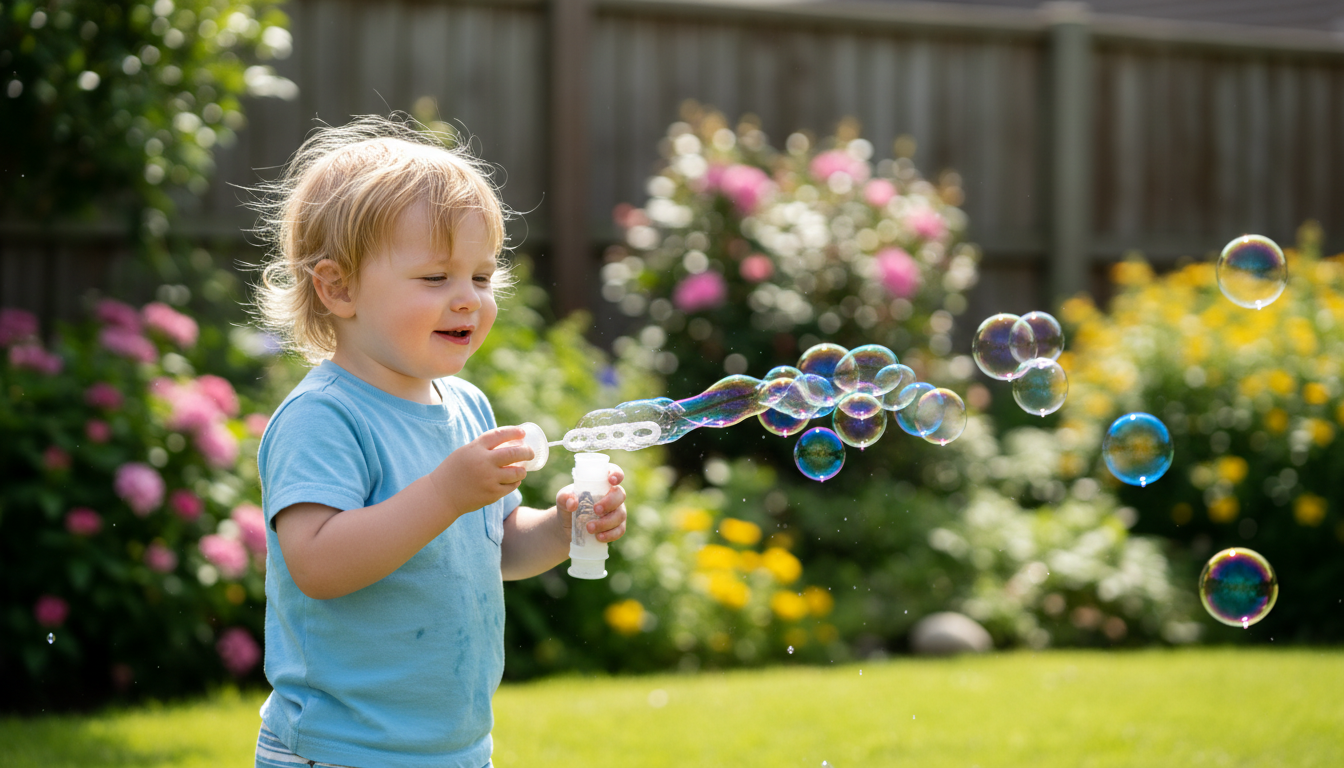
Table of Contents
- Introduction
- What is Play-Based Speech Therapy?
- Our Mission: Why We Do What We Do
- The Science of Play and Video Modeling
- Play-Based Activities for Speech Therapy: Pretend Play
- Play-Based Activities for Articulation
- Physical Play and Gross Motor Activities
- The Role of "Smart Screen Time"
- Essential Strategies for Parents
- Realistic Expectations: The Journey, Not the Destination
- Choosing the Right Plan for Your Family
- Summary of Key Takeaways
- Frequently Asked Questions
Introduction
Have you ever watched your child get completely lost in a world of cardboard boxes, plastic dinosaurs, or a simple bowl of soapy water? In those moments, their imagination is firing on all cylinders, and their brain is soaking up information like a sponge. But for a parent of a child with a speech delay, these moments can sometimes feel bittersweet. You might find yourself wishing those babbles turned into "dino" or those gestures turned into "more bubbles, please." If you’ve ever felt the sting of frustration when your little one can’t tell you what they need, you aren’t alone. Approximately 1 in 4 children require some form of speech support during their early years, and the journey toward clear communication is rarely a straight line.
The good news is that you don't need a classroom or a stack of flashcards to make a massive impact. In fact, some of the most powerful tools for language development are already in your toy box. This post is designed to show you how to transform everyday play into a high-impact learning environment. We will explore the "why" behind play-based intervention, provide a massive list of practical activities you can start today, and explain how our "smart screen time" approach at Speech Blubs can be the perfect partner in your child's development. Our goal is to help your child find the joy in communication so they can finally speak their minds and hearts.

What is Play-Based Speech Therapy?
At its core, play-based speech therapy is exactly what it sounds like: a way to build communication skills through meaningful, motivating, and natural play routines. Instead of sitting at a desk and repeating words on command—which can feel like a chore for a toddler—we embed those same learning goals into games, stories, and activities that children actually enjoy.
When a child is playing, they are "regulated." This means their brain is calm, focused, and open to new information. In this state, they aren't worried about "getting it right"; they are just having fun. This reduces the pressure that often comes with speech delays and encourages them to take risks with their voice. Whether we are working on expressive language, articulation, or social skills, play provides a natural context for repetition and expansion. It’s about meeting the child where they are and turning their interests into a bridge for communication.
Our Mission: Why We Do What We Do
At Speech Blubs, our mission is personal. Our company was founded by a group of friends who all grew up with speech problems. They remember the frustration of not being understood and the "work" that traditional therapy sometimes felt like. They set out to create the tool they wished they had: something effective, scientific, but above all, joyful.
We believe that every child deserves the chance to express themselves fully. We don’t just want to help kids say words; we want to help them connect with their families and the world around them. This is why we created a platform that blends proven scientific principles with the magic of play. By using a Speech Blubs homepage as a starting point, parents can access a world of activities designed to make "smart screen time" a reality—offering a powerful, interactive alternative to passive cartoon watching.
The Science of Play and Video Modeling
You might wonder how a "play-based" approach can be as effective as traditional drills. The answer lies in how the human brain learns, specifically through something called "mirror neurons." When a child watches someone else perform an action or make a sound, the same parts of their brain fire as if they were doing it themselves.

This is the foundation of our unique "video modeling" methodology. In the Speech Blubs app, children don’t watch cartoons; they watch videos of their peers—real children—making sounds and saying words. Seeing another child "do it" makes the task feel achievable and exciting. It triggers that natural desire to imitate. Our approach is backed by science and places us in the top tier of speech apps globally. If you want to dive deeper into the data, you can read more about the science behind our method and our high rating on the MARS scale.
Play-Based Activities for Speech Therapy: Pretend Play
Pretend play is a goldmine for language. It allows children to practice social roles, use "core words" (like go, in, on, eat), and experiment with storytelling. Here are some ways to use common toys for speech goals:
The Kitchen and Food Set
A play kitchen is perhaps the most versatile tool in your arsenal. You can target:
- Verbs: Stir, pour, cook, cut, wash, and eat.
- Requesting: "I want the apple," or "More juice, please."
- Sequencing: First we mix the flour, then we put it in the oven, then we eat!
- Categorization: Sort the plastic foods by color or by type (fruits vs. vegetables).
The Doctor’s Kit
Playing doctor is wonderful for developing empathy and learning body parts.
- Vocabulary: Heart, tummy, arm, "boo-boo," medicine, and stethoscope.
- Social Skills: Taking turns being the doctor and the patient.
- Functional Language: Asking "Where does it hurt?" or saying "Better now!"
The Farm Animal Set
For a parent whose 3-year-old "late talker" loves animals, the "Animal Kingdom" section of our app offers a fun, motivating way to practice "moo" and "baa" sounds. You can then bring those sounds into the real world with a toy barn.
- Articulation: Focus on animal sounds (p, b, m sounds like "moo," "baa," and "pig").
- Prepositions: Put the cow in the barn, the sheep on the roof, or the pig behind the fence.
- WH-Questions: "Where is the horse?" or "Who is in the barn?"
Play-Based Activities for Articulation
If your child is working on specific speech sounds, play can make those repetitive practices much more bearable.
The "I Spy" Sensory Bin
Fill a bin with rice, beans, or kinetic sand and hide small trinkets that start with your child's target sound. If they are working on the /s/ sound, hide a plastic snake, a spoon, a star, and a sock. As they find each item, they get to name it. This turns a "repetition drill" into a treasure hunt!
Car Races and Minimal Pairs
Use toy cars and a "track" made of construction paper. If you are working on "minimal pairs" (words that differ by only one sound, like "tea" and "key"), place a picture of a cup of tea and a key on the track. The child has to say the word correctly to "drive" their car to that spot. It adds a physical, competitive element that keeps kids engaged.
The Bubble Pop
Bubbles are a classic for a reason. They are perfect for early sounds.
- The /p/ and /b/ sounds: "Pop, pop, pop!" or "Big bubbles!"
- Requesting: Holding the wand and waiting for the child to say "please" or "blow."
- Anticipation: Using "Ready... set..." and waiting for the child to shout "GO!"
Physical Play and Gross Motor Activities
Sometimes, kids learn best when they are moving their whole bodies. Integrating speech into physical play can help children who have a lot of energy and struggle to sit still for "tabletop" activities.
Obstacle Courses
Create a simple course in your living room using pillows and chairs. As your child moves through it, use "parallel talk." Narrate their actions: "You are crawling under the table! Now you are jumping over the pillow!" This builds an understanding of spatial concepts and prepositions in a way a worksheet never could.
Hide and Seek
This simple game is perfect for practicing "where" questions and prepositions. "Where is Mommy? Is she under the blanket? Is she behind the door?" It also teaches the concept of "waiting" and social turn-taking.
Simon Says
This is the gold standard for practicing following directions. You can start with one-step directions ("Simon says touch your nose") and move to complex, multi-step instructions ("Simon says touch your toes, then clap your hands"). This builds auditory processing and listening skills.
The Role of "Smart Screen Time"
In today's world, screens are everywhere. While we advocate for a screen-free alternative to passive viewing (like sitting mindlessly in front of cartoons), we believe technology can be a powerful tool when used correctly. Speech Blubs is designed to be "smart screen time."
Our app is not a "babysitter." It is a tool for family connection. We encourage parents to sit with their children, watch the peer models together, and then practice the sounds in real life. If your child sees a boy in the app making a "fish face," you should make the fish face too! This co-play strengthens the learning and makes the experience a bonding moment rather than an isolated one.
If you are unsure where to start, we offer a quick 3-minute preliminary screener. It involves 9 simple questions and provides you with an assessment and a next-steps plan. It’s a great way to see where your child's strengths are and where they might need a little extra play-based support.
Essential Strategies for Parents
You don't need a degree in speech-language pathology to be your child's best teacher. Here are four strategies you can use during any of the play-based activities mentioned above:
- Parallel Talk: Be a sportscaster for your child. Narrate what they are doing while they are doing it. "You are building a tall tower! Oh, it fell down! Boom!" This provides a constant stream of language that is directly related to what they are seeing and touching.
- Echo and Expand: If your child says a single word, repeat it and add one more. If they point to a dog and say "Dog!", you say "Yes, big dog!" or "Brown dog!" This shows them how to build longer sentences without correcting them or making them feel "wrong."
- The Power of the Pause: This is the hardest one for parents! When you are playing, ask a question or start a routine (like "Ready, set...") and then wait. Count to five in your head. Giving your child "processing time" allows them to find the words themselves rather than you jumping in to answer for them.
- Self-Talk: Narrate what you are doing. "I am washing the dishes. Scrub, scrub, scrub. Now I am drying them with the towel." This helps children understand that language is used to describe the world throughout the day, not just during "lesson time."
Realistic Expectations: The Journey, Not the Destination
It is important to remember that every child develops at their own pace. While we want to see progress, we should avoid focusing solely on "guaranteed outcomes." You might not see your child giving public speeches in a month, and that’s okay.
The real "win" is fostering a love for communication, building their confidence, and reducing the frustration that leads to tantrums. We want to create joyful family learning moments. Think of play-based activities and the Speech Blubs app as powerful supplements to your child's overall development plan. If your child is already seeing a professional therapist, these activities are the perfect way to reinforce those goals at home in a way that feels like fun. To see how these small wins add up, you can read what other parents are saying about their child's success and the confidence they’ve gained.
Choosing the Right Plan for Your Family
We want to be transparent about our pricing so you can make the best choice for your family’s needs. We offer two main paths to help your child start their journey:
- Monthly Plan: For $14.99 per month, you get full access to the Speech Blubs app and its library of over 1,500 activities.
- Yearly Plan: This is our most popular and high-value option. At $59.99 per year, the cost breaks down to just $4.99 per month—a savings of 66% compared to the monthly rate.
The Yearly plan is designed for families committed to long-term growth and includes several exclusive benefits that the monthly plan does not:
- 7-Day Free Trial: Try everything risk-free before you commit.
- Reading Blubs App: You get our companion app for free, which focuses on early literacy and phonics.
- Priority Support: Enjoy a 24-hour response time from our support team and early access to all new updates and features.
We highly recommend the Yearly plan because speech development is a marathon, not a sprint. Having a full year of support—at a fraction of the monthly cost—ensures you have the tools you need through every developmental leap.
Summary of Key Takeaways
Play-based activities for speech therapy are not just about "having fun"—they are about creating the most effective environment for a child's brain to grow. By using pretend play, sensory bins, and physical games, you are giving your child a reason to talk.
Remember:
- Play reduces pressure and increases engagement.
- Video modeling (watching peers) is a scientifically proven way to encourage imitation.
- Strategies like parallel talk and expansion are easy, everyday ways to support language.
- Speech Blubs provides a "smart" alternative to passive screen time.
Whether you are just starting to notice a delay or are looking for ways to support your child's ongoing therapy, the power of play is your greatest ally.
Ready to get started? Create your account and begin your 7-day free trial today. You can also download Speech Blubs on the Apple App Store or the Google Play Store to begin. We recommend choosing the Yearly plan to get the best value, the free trial, and the full suite of features including Reading Blubs. Let's help your child speak their mind and heart, one play session at a time!
Frequently Asked Questions
1. What exactly is play-based speech therapy?
Play-based speech therapy is an approach where a clinician or parent uses natural play activities (like playing with cars, dolls, or bubbles) to target specific communication goals. Instead of formal drills, the therapist follows the child's lead and embeds language practice into the fun. This makes the child more likely to participate and helps them apply what they learn to real-life situations.
2. Can I do these activities at home without a professional therapist?
Absolutely! While a professional Speech-Language Pathologist (SLP) is invaluable for diagnosing and creating a specific clinical plan, parents are a child's first and most frequent teachers. The activities we've described—like narrating play or using sensory bins—are safe, effective, and highly recommended for home carryover. Using an app like Speech Blubs can provide the structure and peer modeling you need to feel confident in your "home therapy" sessions.
3. How long should a play session last to be effective?
You don't need to set aside hours of time. In fact, short, frequent bursts of "smart play" are often better for a toddler's attention span. Aim for 10 to 15 minutes of focused play a few times a day. The goal is to keep it joyful; if the child becomes frustrated or tired, it’s okay to stop and try again later. Consistency is more important than duration.
4. Is Speech Blubs meant to replace traditional speech therapy?
We view Speech Blubs as a powerful supplement, not a replacement. For many families, it is a fantastic "first step" or a way to provide daily support while waiting for a professional appointment. If your child is already in therapy, our app is an excellent tool to use between sessions to keep the momentum going. Always consult with a professional if you have serious concerns about your child's development.
Über den Autor