
Speech Therapy Activities for Autistic Preschoolers
Discover fun, science-backed speech therapy activities for autistic preschoolers. Boost communication through play, video modeling, and sensory games. Start
 Von Speech Blubs Team•Apr 22, 2026•15 Min.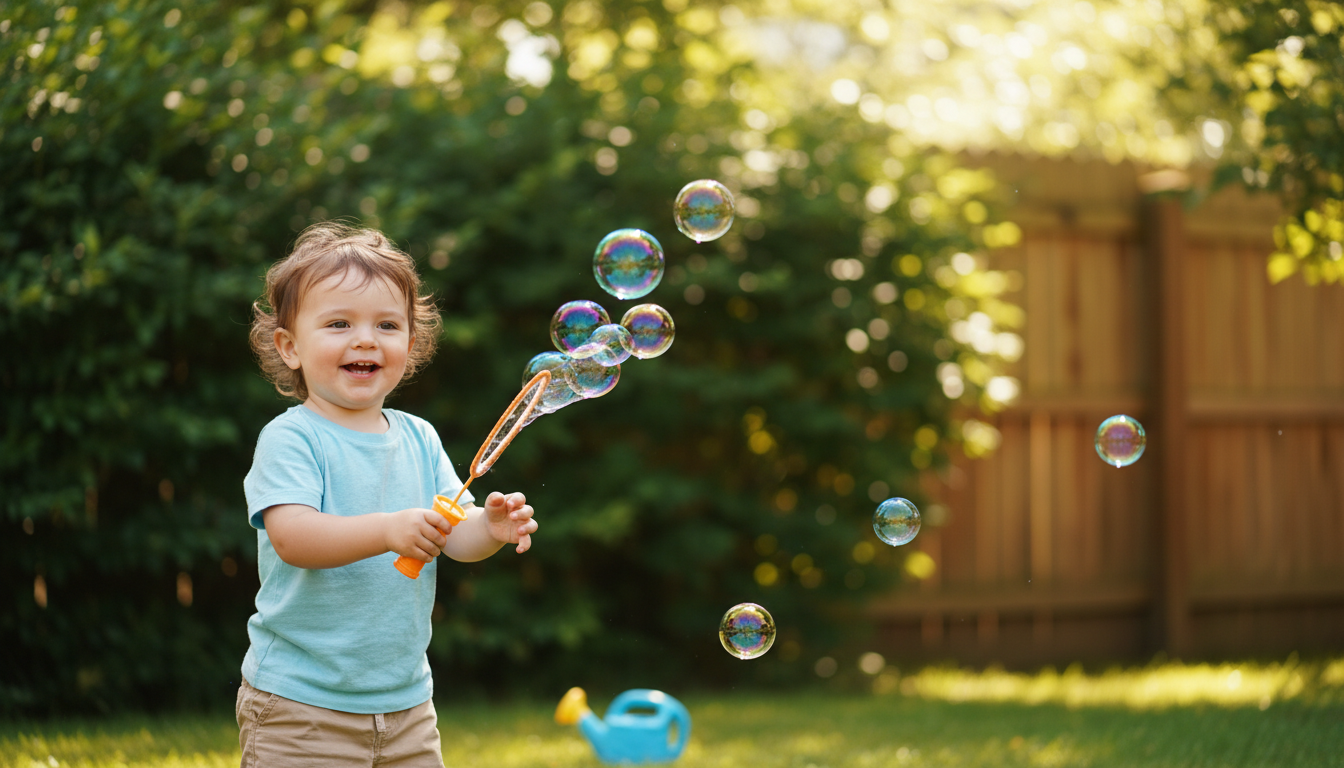
Table of Contents
- Introduction
- Understanding the Autistic Preschooler’s Communication Journey
- The Science of Success: Video Modeling and Mirror Neurons
- High-Engagement Speech Therapy Activities for Autistic Preschoolers
- Social Communication and Interactive Play
- Calming and Regulation Strategies for Better Communication
- Integrating "Smart Screen Time" into Your Routine
- Realistic Expectations: The Journey, Not Just the Destination
- Choosing the Right Plan for Your Family
- Practical Scenarios: Real-World Implementation
- Conclusion
- FAQs
Introduction
Did you know that approximately 1 in 4 children require some form of speech and language support during their early developmental years? For parents of autistic preschoolers, this statistic often hits home with a unique intensity. You might find yourself watching your little one struggle to express a simple need, or perhaps you’ve noticed they communicate in ways that feel like a puzzle you’re still trying to solve. At Speech Blubs, we believe that every child deserves the chance to speak their minds and hearts. Our mission is rooted in the personal histories of our founders, who navigated their own speech challenges and grew up to build the tool they wished they’d had.
In this article, we are going to explore a wide range of engaging, science-backed speech therapy activities for autistic preschoolers. We will delve into the "why" behind specific techniques, such as the power of video modeling and mirror neurons, and provide you with a toolkit of play-based strategies you can implement right at home. From animal sounds to sensory-rich games, our goal is to help you transform therapy into a joyful, connecting experience that fits seamlessly into your family’s daily rhythm. By the end of this post, you’ll have a clearer understanding of how to foster a love for communication and build your child's confidence, one small win at a time.

Understanding the Autistic Preschooler’s Communication Journey
Autism Spectrum Disorder (ASD) is a neurodivergent condition, which simply means the brain is wired differently than what is considered neurotypical. For a preschooler on the spectrum, communication isn't just about learning words; it’s about navigating a world that can sometimes feel sensory-overwhelming or socially confusing. You might notice your child has a "spiky profile"—they might be brilliant at recognizing complex patterns or letters but struggle with the back-and-forth flow of a conversation or responding to their name.
Our approach at Speech Blubs is built on the understanding that communication is a multisensory, emotional, and social experience. For an autistic child, traditional "drill-and-kill" therapy can sometimes feel restrictive or frustrating. Instead, we lean into their natural strengths. Many autistic children are visual learners and highly motivated by their specific interests. By using these "superpowers," we can create a bridge between their inner world and the people around them.
Before diving into specific activities, it is often helpful to get a baseline of where your child currently stands. If you are ever unsure about your child's progress, we recommend taking our quick 3-minute preliminary screener. It involves just nine simple questions and provides you with an initial assessment and a next-steps plan, along with a free 7-day trial of our app.
The Science of Success: Video Modeling and Mirror Neurons
One of the most effective ways to teach complex communication skills to autistic children is through a methodology called video modeling. But why does it work so well? The answer lies in our brain’s "mirror neurons." These are specialized cells that fire both when we perform an action and when we observe someone else performing that same action.
For autistic preschoolers, observing their peers can be more motivating and less intimidating than observing an adult. This "peer-to-peer" learning is the core of our scientific methodology. When a child sees another child on a screen making a "buh" sound or sticking out their tongue, those mirror neurons start to fire, making it much easier for the child to imitate the behavior.

Unlike passive screen time—such as watching a cartoon where characters move in ways humans don't—Speech Blubs offers "smart screen time." Our app features real children modeling sounds and words, encouraging your child to become an active participant rather than a passive viewer. This approach has been widely recognized for its efficacy, helping us maintain a high rating on the MARS scale for educational apps.
High-Engagement Speech Therapy Activities for Autistic Preschoolers
Play is the "work" of childhood, and for autistic preschoolers, it is the most effective classroom. Here are several categories of activities designed to boost speech and language development through fun and connection.
1. Imitation Games: "Mirror Me"
Imitation is the foundation of language. Before a child can say a word, they usually need to be able to imitate a gesture or a motor movement.
- How to play: Sit face-to-face with your child. Start with big, silly movements. Tap your head, clap your hands, or touch your nose. Once they are following along, move to oral-motor imitation. Make a "pop" sound with your lips, blow a raspberry, or open your mouth wide.
- The Speech Blubs Connection: In our app, the "Face Gym" section is designed specifically for this. It uses fun filters to turn your child into a lion or a robot, making the practice of moving their mouth and tongue feel like a game rather than a chore.
2. The Magic of Animal Noises
Many children on the spectrum have a deep affinity for animals. Animal sounds are often easier to produce than complex words because they are "onomatopoeic"—the sound itself suggests the meaning, and they often involve simple, repetitive phonemes.
- How to play: Use a toy farm or a set of animal figurines. As your child picks up the cow, say "Moo!" and wait. If they don't respond, repeat it with more emphasis. Try to pair the sound with a movement, like "jumping" the frog while saying "Ribbit."
- Practical Scenario: For a parent whose 3-year-old "late talker" loves animals, the "Animal Kingdom" section in the Speech Blubs app offers a fun, motivating way to practice "moo" and "baa" sounds. Seeing a peer wearing a sheep filter while making the sound often triggers that "Aha!" moment where the child tries to replicate it themselves.
3. Sensory-Rich Language Play
Since many autistic children have sensory processing differences, integrating tactile or auditory stimuli can make speech activities more "sticky" in their memory.
- The Scavenger Hunt: Hide objects in a bin of rice or dried beans. Ask your child to find the "red car" or the "bumpy ball." As they pull an item out, model the word. "Car! Vroom vroom!" The tactile sensation of the rice helps ground them and keeps them engaged with the task.
- Sound Matching: Use a set of containers filled with different items (pennies, rice, cotton balls). Shake them and describe the sound. Is it "loud" or "quiet"? This helps develop auditory discrimination, which is vital for hearing the differences between speech sounds.
4. Functional Language and "Power Words"
Sometimes we get caught up in teaching "academic" words like colors or shapes, but for an autistic preschooler, "power words" are more important. These are words that allow them to control their environment and reduce frustration.
- "More" and "Help": During snack time, give your child just one small piece of their favorite cracker. Hold the rest in view but out of reach. When they look at you or reach, model the word "More." You can pair this with the sign for "more" (tapping fingertips together).
- Choice Making: Offer two options for everything. "Do you want the blue shirt or the red shirt?" Hold them up so the child can point or attempt to label their choice. This empowers them to "speak their minds and hearts" by making real-life decisions.
Social Communication and Interactive Play
Social language, or pragmatics, involves the "unwritten rules" of communication, such as turn-taking and eye contact. For autistic children, these don't always come naturally, but they can be nurtured through joyful co-play.
Joint Attention Activities
Joint attention is when two people focus on the same thing at the same time. It’s a precursor to conversation.
- Bubbles: Blowing bubbles is a speech therapy classic for a reason. It requires the child to look at the bubbles, then look at you to ask for "more" or "please." It also works on "puckering" the lips, which is great for speech motor control.
- The "Name Game": Sit in a circle with a ball. Say your child’s name and roll the ball to them. Encourage them to say your name (or "Mama"/"Papa") before rolling it back. This builds the understanding that communication is a two-way street.
Using Story Stones and Visual Aids
Visual supports can take the "guesswork" out of language.
- Story Stones: Paint simple pictures on smooth stones—a sun, a dog, a house, a car. Let your child pick a stone and tell a tiny "story" about it. Even if they only say "Dog go!" it is a huge step in narrative development.
- Communication Boards: If your child is currently non-verbal or has limited speech, a communication board with pictures of their favorite things can reduce "meltdowns" caused by being misunderstood. At Speech Blubs, we view these tools as a "bridge" to verbal speech, not a replacement for it.
Calming and Regulation Strategies for Better Communication
It’s hard to learn how to talk when you’re feeling overwhelmed. Autistic preschoolers often experience sensory overload, which can lead to shutdowns or meltdowns. Creating a "communication-ready" environment is essential.
- Mindfulness and Grounding: If your child is getting frustrated, try a simple grounding exercise. "Tell me one thing you see. Tell me one thing you hear." This shifts their focus from their internal distress back to the external world.
- Calming Corners: Create a "retreat zone" with soft pillows, a weighted blanket, and perhaps some calming music. Use this space not as a punishment, but as a place to reset. You might find that after 10 minutes of quiet, your child is much more willing to engage in a speech activity.
- Consistency is Key: Autistic children thrive on routine. Try to schedule your "Speech Blubs time" at the same point each day—perhaps after breakfast or before naptime. This predictability reduces anxiety and prepares their brain for learning.
Integrating "Smart Screen Time" into Your Routine
We know that "screen time" can be a loaded term for parents. However, there is a world of difference between a child staring blankly at a repetitive cartoon and a child interacting with a peer on a screen to learn a new skill. Speech Blubs was designed to be a powerful tool for family connection, meant for adult co-play.
When you use the app with your child, you aren't just handing them a device; you are participating in their growth. You can mimic the sounds along with them, cheer for their successes, and use the concepts they learn in the app during your everyday activities. For example, if you practice "Apple" in the app, you can go to the kitchen afterward and "find" a real apple to touch and taste.
To ensure your child is getting the most out of their experience, we recommend exploring the full suite of features available. Download Speech Blubs on the App Store or get it on Google Play to begin your journey.
Realistic Expectations: The Journey, Not Just the Destination
As a parent, it is natural to want immediate results. You might wonder, "When will my child say their first sentence?" While we provide an effective and joyful solution, it’s important to remember that every child's timeline is unique. Our goal is to foster a love for communication and reduce the frustration that comes with being unable to express oneself.
Success might look like:
- Your child making eye contact while you sing a song.
- A reduction in "meltdowns" because they can now point to what they want.
- The first time they imitate a "pop" sound after watching a peer in the app.
- The increased confidence they show when trying to interact with a sibling.
These are the foundational skills that pave the way for long-term communication success. Many families have shared their success stories, noting that the app helped "unlock" their child's desire to speak.
Choosing the Right Plan for Your Family
We are committed to being transparent about our pricing so you can make the best choice for your child’s development. We offer two main plans:
- Monthly Subscription: $14.99 per month. This is a great "entry-level" option if you want to test the waters.
- Yearly Subscription: $59.99 per year. This is our best-value plan, breaking down to just $4.99 per month—a 66% savings compared to the monthly rate.
The Yearly plan is designed for families who are serious about consistent progress. It includes exclusive benefits that the monthly plan does not:
- A 7-Day Free Trial: Try everything risk-free before you commit.
- Reading Blubs App: Access to our additional app focused on early literacy and reading skills.
- Priority Support: 24-hour response time for any questions or technical needs.
- Early Access: Be the first to try new updates and features.
If you are ready to give your child the tools they need to thrive, we encourage you to create your account and select the Yearly plan to unlock the full suite of features.
Practical Scenarios: Real-World Implementation
Let’s look at how these speech therapy activities for autistic preschoolers translate into a typical day.
Scenario A: The "Late Talker" at Lunch Imagine your 4-year-old, Leo, loves yogurt but rarely asks for it. Instead of just giving it to him, you open Speech Blubs to the "Yummy Time" section. You watch a video of a child saying "Mmm!" and "Eat." Leo smiles at the peer on the screen. You then take the yogurt lid off and say "Mmm!" Leo mimics the sound. You give him a spoonful. This isn't just "eating"; it's a multi-layered therapy session happening at your kitchen table.
Scenario B: Transitioning from Play to Rest Transitions are often hard for autistic kids. Use a "First/Then" strategy paired with the app. "First, we do two minutes of 'Face Gym,' then we lay down for a nap." Because Leo loves the funny filters in the "Face Gym," the transition becomes a reward rather than a source of conflict. You’re building his oral-motor skills while simultaneously working on his ability to follow a routine.
Conclusion
Supporting an autistic preschooler’s speech development is a marathon, not a sprint. It requires patience, empathy, and the right set of tools. By focusing on play-based activities, leveraging the power of peer video modeling, and creating a sensory-friendly environment, you are laying the groundwork for your child to "speak their minds and hearts."
At Speech Blubs, we are honored to be a part of your family’s story. Whether you are using our app as a supplement to professional therapy or as a way to jumpstart your child's communication at home, we are here to provide an immediate, effective, and joyful solution. Remember, the goal isn't just more words—it's more connection, more confidence, and more joy in your daily interactions.
Are you ready to see your child's communication blossom? Start your journey today. Download Speech Blubs on the App Store or Google Play and take advantage of our 7-day free trial by choosing the Yearly plan. For just $59.99 a year, you’ll get the best value, including the Reading Blubs app and priority support. Let's work together to give your child the voice they deserve.
FAQs
1. How many minutes a day should my autistic preschooler use Speech Blubs?
We recommend short, frequent sessions rather than long periods of screen time. Usually, 10 to 15 minutes of "smart screen time" per day is sufficient. The key is consistency and active participation. It’s always best to use the app together so you can reinforce the sounds and words in real-world contexts throughout the day.
2. My child is currently non-verbal. Can these activities still help?
Absolutely. Speech therapy for non-verbal children focuses on "pre-linguistic" skills like imitation, joint attention, and following simple directions. Activities like the "Mirror Me" game or using animal sounds are perfect for this stage. Speech Blubs uses video modeling to encourage imitation, which is often the first step toward verbal speech.
3. Why is the Yearly plan better than the Monthly plan?
The Yearly plan offers the best long-term value at $59.99 (only $4.99/month). Most importantly, it includes a 7-day free trial, which allows you to explore the app's full potential risk-free. You also get the Reading Blubs app, early access to new content, and faster customer support, ensuring you have every resource possible to support your child.
4. Is Speech Blubs a replacement for traditional speech therapy?
Speech Blubs is designed to be a powerful supplement to a child’s overall development plan. While it is built on scientific principles used by SLPs, it is not a replacement for professional clinical therapy. We always recommend consulting with a licensed speech-language pathologist for a personalized treatment plan, especially for children on the autism spectrum.
Über den Autor