
10 Best Toddler Shaving Cream Activity Ideas
 By Speech Blubs Team•Mar 18, 2026•14 min.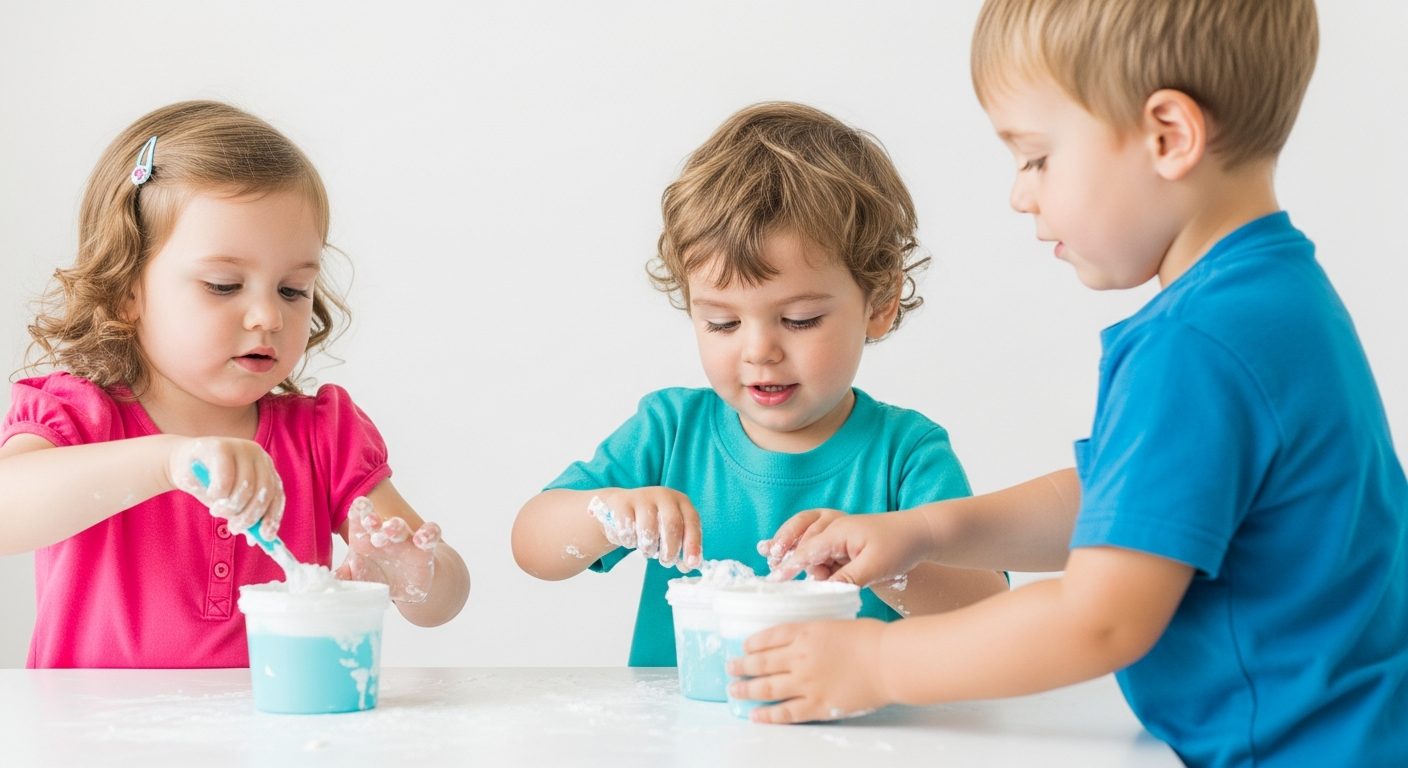
Table of Contents
- Introduction
- The Science of Sensory Play and Speech
- Safety First: A Note for Parents
- 1. The Shaving Cream Sensory Bin
- 2. Writing and Mark-Making
- 3. The Shaving Cream "Bakery"
- 4. Window and Mirror Painting
- 5. Shaving Cream Marbling Art
- 6. The "Rain Cloud" Science Experiment
- 7. Puffy Paint Masterpieces
- 8. Shaving Cream Play Dough
- 9. Melting Ice in Foam
- 10. Mess-Free Sensory Bags
- Why Choose Speech Blubs for Your Child?
- Integrating Shaving Cream Play with Speech Blubs
- Conclusion: Let the Messy Learning Begin!
- Frequently Asked Questions
Introduction
Have you ever watched a toddler’s eyes light up when they encounter something squishy, cold, and entirely messy? There is a certain magic in the "oohs" and "aahs" that follow a handful of fluffy white foam. As parents, we often find ourselves caught between wanting to keep the living room rug clean and wanting to provide our children with the rich, sensory experiences they need to thrive. But what if we told you that one of the most powerful tools for boosting your child's communication and motor skills is sitting right now on your bathroom counter?
Sensory play is not just about making a mess; it is about building brains. From the moment children are born, they explore the world through their five senses. These tactile experiences create the foundation for how children learn, think, and eventually speak. In this post, we will explore the wonders of the toddler shaving cream activity, offering 10 creative ways to use this inexpensive household staple to foster language development, fine motor skills, and joyful family bonding. We’ll also show you how these "offline" activities perfectly complement the "smart screen time" we offer at Speech Blubs.

At Speech Blubs, our mission is to empower children to "speak their minds and hearts." We believe that when you combine scientific principles—like our unique video modeling methodology—with the pure joy of play, you create an environment where every child can flourish. Whether your child is a "late talker" or simply a curious explorer, these shaving cream activities are designed to reduce frustration and build the confidence they need to find their voice.
The Science of Sensory Play and Speech
Before we dive into the activities, it’s important to understand why we advocate for these types of experiences. Approximately 1 in 4 children will face some form of speech or language delay. This statistic hits close to home for us because our founders grew up with speech problems themselves. They created the tool they wished they had—a tool that bridges the gap between clinical methodology and the magic of childhood.
When a child engages in a toddler shaving cream activity, they aren't just playing; they are firing off neural pathways. Sensory play strengthens the connections in the brain's pathways, which are essential for complex tasks later in life.
Building Vocabulary Through Touch
When your child's hands are buried in foam, they are experiencing concepts like "cold," "squishy," "smooth," and "fluffy" in a literal, physical way. This makes the words more than just sounds; it gives them meaning. As we often discuss in our scientific research, children learn best when they are actively engaged. By narrating their play—saying, "Look at that big, white cloud!"—you are providing the linguistic input they need to expand their vocabulary.
Mirror Neurons and Imitation
Our app is based on video modeling, where children watch their peers perform speech exercises. This triggers "mirror neurons" in the brain. You can replicate this effect at home during sensory play. When you draw a circle in the shaving cream and your child tries to copy you, they are practicing the very same imitation skills required for speech.

If you’re unsure where your child stands in their development, you can take our quick 3-minute preliminary screener. It involves just 9 simple questions and provides an assessment and next-steps plan to help you support your little one.
Safety First: A Note for Parents
While shaving cream is generally safe for skin contact, it is not edible. For toddlers who are still in the "everything goes in the mouth" phase, we recommend a simple swap. You can use whipped cream or a "foaming" soap designed for kids to achieve a similar effect. Always supervise your child closely during these activities to ensure the foam stays on the tray and out of their eyes and mouth.
1. The Shaving Cream Sensory Bin
The sensory bin is the "gold standard" of a toddler shaving cream activity. It is simple, contained, and offers endless variations.
What you’ll need:
- A large plastic storage bin.
- 2–3 cans of inexpensive shaving cream.
- Small waterproof toys (plastic animals, cars, or blocks).
How to do it: Fill the bin with shaving cream and hide the toys inside. Encourage your child to "rescue" the animals or find the hidden treasures.
Speech Blubs Pro-Tip: For a child who loves animals, the "Animal Kingdom" section of our app is a great motivator. After they watch a peer make a "moo" sound in the app, you can have them find the cow in the shaving cream bin and practice that "moo" together!
This activity encourages descriptive language. Ask them, "Is the car hiding?" or "How does the foam feel?" By using these open-ended questions, you are fostering a love for communication without the pressure of a "lesson."
2. Writing and Mark-Making
Before a child can hold a pencil, they need to develop the fine motor control required for mark-making. Shaving cream provides the perfect, low-resistance surface for this.
How to do it: Spread a thin layer of shaving cream on a flat tray or even directly onto a clean table. Use your finger to draw simple shapes, lines, or letters. Encourage your child to copy you. If they make a "mistake," they can just "erase" it by smoothing the foam over.
This reduces the frustration often associated with learning to write. It’s a joyful, low-stakes way to practice foundational skills. If you want to see how other parents have used these types of interactive play to help their children, check out our parent testimonials.
3. The Shaving Cream "Bakery"
Pretend play is a massive milestone in cognitive development. It shows that a child is beginning to understand symbolism—that one thing (foam) can represent another (frosting).
What you’ll need:
- Muffin tins, spatulas, and bowls.
- Shaving cream.
- Food coloring (optional).
How to do it: Set up a "bakery" station. Help your child "frost" cupcakes made of blocks or fill pie tins with "cream." Use words like "mix," "pour," "bake," and "yummy." This role-playing helps children practice social communication skills and turn-taking.
4. Window and Mirror Painting
Transforming a vertical surface into a canvas is incredibly exciting for a toddler. It also works different muscle groups in the arms and shoulders, which are vital for overall physical development.
How to do it: Take the play to a sliding glass door or a low-hanging mirror. Let your child "paint" the surface with shaving cream. You can even add a few drops of washable paint or food coloring to the foam to make a vibrant masterpiece.
Cleaning Tip: This is actually a great way to clean your windows! Shaving cream is a surprising cleaning agent, so once the play is done, just squeegee it off and wipe it dry.
5. Shaving Cream Marbling Art
This activity results in a beautiful piece of art that you can hang on the fridge, giving your child a sense of pride and accomplishment.
What you’ll need:
- A tray of shaving cream.
- Liquid watercolors or food coloring.
- A toothpick or popsicle stick.
- Cardstock paper.
How to do it:
- Smooth out a layer of foam on a tray.
- Drop colors onto the surface.
- Use the stick to swirl the colors together (don't over-mix!).
- Press the paper firmly onto the foam.
- Peel it off and scrape away the excess foam with a piece of cardboard.
- Beneath the foam, you’ll find a stunning marbled pattern.
This experiment teaches cause and effect. "What happens when we mix red and blue?" It’s a perfect lead-in to more complex scientific thinking.
6. The "Rain Cloud" Science Experiment
This is a classic STEM activity that visualizes how rain works, making abstract concepts tangible.
What you’ll need:
- A glass or jar of water.
- A "cloud" of shaving cream on top.
- Blue food coloring mixed with a little water.
- A dropper or spoon.
How to do it: Have your child drop the blue "rain" into the white "cloud." As the cloud becomes heavy, the blue water will break through and "rain" down into the clear water below. It’s visually stimulating and a great way to practice the word "down!"
7. Puffy Paint Masterpieces
Did you know you can make your own 3D paint using shaving cream? This is a fantastic way to engage older toddlers who might want a more "permanent" art project.
What you’ll need:
- Equal parts shaving cream and white school glue.
- Food coloring.
How to do it: Mix the ingredients together until they form stiff peaks. Use brushes or even fingers to paint onto thick paper. Once it dries, the paint stays "puffy" to the touch. This adds a tactile element to their art that regular paint just can't match.
8. Shaving Cream Play Dough
If your child finds regular play dough too "tough," this cloud-like version is a dream to handle.
What you’ll need:
- 1 part shaving cream.
- 2 parts cornstarch.
How to do it: Knead the two ingredients together. It will eventually form a soft, moldable dough that smells great and feels incredibly light. This is excellent for strengthening the small muscles in the hands, which are essential for self-feeding and dressing.
9. Melting Ice in Foam
This activity is perfect for a hot summer day and introduces concepts of temperature.
How to do it: Freeze some colorful ice cubes (you can even hide small toys inside the ice). Place them in a bin of shaving cream. As the child plays, the ice melts, creating swirls of color and changing the texture of the foam from fluffy to "slushy."
Talk about the sensations: "Brrr, it’s cold!" or "The ice is disappearing!" This type of focused interaction is exactly what we encourage when using the Speech Blubs app alongside physical play.
10. Mess-Free Sensory Bags
If you are a parent who truly cannot handle the mess (we’ve all been there!), this is the solution.
What you’ll need:
- A gallon-sized Ziploc bag.
- Shaving cream.
- Food coloring and glitter.
- Heavy-duty tape.
How to do it: Fill the bag with shaving cream and the "extra" bits. Squeeze out the air and seal it. Use the tape to reinforce the seal and even tape the bag to a table or high-chair tray. Your child can squish and move the foam around without a single drop touching your carpet.
This is a wonderful way to provide "smart screen-free time" while you are busy preparing a meal or taking a well-deserved break.
Why Choose Speech Blubs for Your Child?
While these physical activities are essential, we live in a digital world. Our goal is to make sure that the time your child spends on a screen is productive, educational, and joyful. Unlike passive cartoons that can lead to "zombie-like" viewing, Speech Blubs is a powerful tool for family connection. We encourage "adult co-play," where you sit with your child, watch the videos together, and mimic the sounds and words.
Our unique approach of teaching complex communication skills through video modeling is backed by science and has earned us high ratings on the MARS scale. We aren't just an app; we are a partner in your child's development.
Transparent Value and Pricing
We want to be transparent about how you can join our community. We offer two main plans to fit your family's needs:
- Monthly Plan: $14.99 per month.
- Yearly Plan: $59.99 per year.
The Yearly Plan is far and away the best value for parents. Not only does it break down to just $4.99 per month (a 66% savings!), but it also includes exclusive features designed to give your child the best possible start:
- 7-Day Free Trial: Try everything before you commit.
- Reading Blubs: Access to our companion app that focuses on early literacy skills.
- Early Access: Be the first to try new updates and activities.
- Priority Support: A 24-hour response time from our dedicated support team.
Download Speech Blubs on the App Store or get it on Google Play to begin your journey today.
Integrating Shaving Cream Play with Speech Blubs
The best way to support a child's growth is through a multi-sensory approach. Think of Speech Blubs as the "guide" and the toddler shaving cream activity as the "practice field."
For example, if you are working on the "Early Sounds" section of the app, you might hear a peer making a "B-B-B" sound for "Bubble." You can then go to your sensory bin and blow real bubbles into the shaving cream, repeating the "B-B-B" sound. This reinforces the learning across multiple environments and senses, making the skills stick.
We don't promise that your child will be giving public speeches in a month. Development is a journey, not a race. Our focus is on fostering a love for communication, reducing the frustration that comes with being misunderstood, and creating those joyful family moments that you will cherish forever. You can create your web account and sign up for a free trial to see the difference for yourself.
Conclusion: Let the Messy Learning Begin!
A simple can of shaving cream can be the gateway to a world of discovery for your toddler. Whether they are "baking" a fluffy pie, painting a masterpiece on the window, or practicing their first letters in a tray of foam, they are doing the hard work of growing and learning.
At Speech Blubs, we are honored to be a part of that journey. We invite you to take the next step in supporting your child’s communication skills. By combining hands-on play with our scientifically-backed video modeling, you are giving your child a powerful foundation for the future.
Ready to start? We recommend choosing our Yearly Plan to unlock the full suite of features, including the Reading Blubs app and your 7-day free trial. It is the most cost-effective and comprehensive way to ensure your child has the tools they need to "speak their minds and hearts."
Download the app today and turn "screen time" into "growth time."
Frequently Asked Questions
1. Is shaving cream safe for my toddler's skin? Most standard shaving creams are safe for occasional play, but if your child has sensitive skin or eczema, you should look for a hypoallergenic, fragrance-free version. Always do a small patch test first and rinse the skin thoroughly with water after the activity is finished.
2. What should I do if my child tries to eat the shaving cream? Shaving cream is non-toxic but can cause an upset stomach if ingested. If your child is still frequently putting items in their mouth, we strongly recommend substituting shaving cream with whipped cream or a "food-safe" foam made from chickpea water (aquafaba) and a little food coloring.
3. How does sensory play actually help with speech delays? Sensory play engages the brain in a way that passive learning cannot. It builds foundational skills like imitation, cause and effect, and joint attention. By narrating the sensory experience, parents provide a rich linguistic environment that helps children connect physical sensations with specific words and sounds.
4. Can Speech Blubs replace traditional speech therapy? Speech Blubs is a powerful supplement to a child's overall development plan and can be a wonderful tool to use alongside professional therapy. It provides extra practice and motivation at home. However, it is not a replacement for a clinical diagnosis or treatment from a licensed Speech-Language Pathologist (SLP) if your child has a significant delay.
About the author