
10 Creative Ideas for a Toddler Craft with Leaves
 By Speech Blubs Team•Feb 20, 2026•17 min.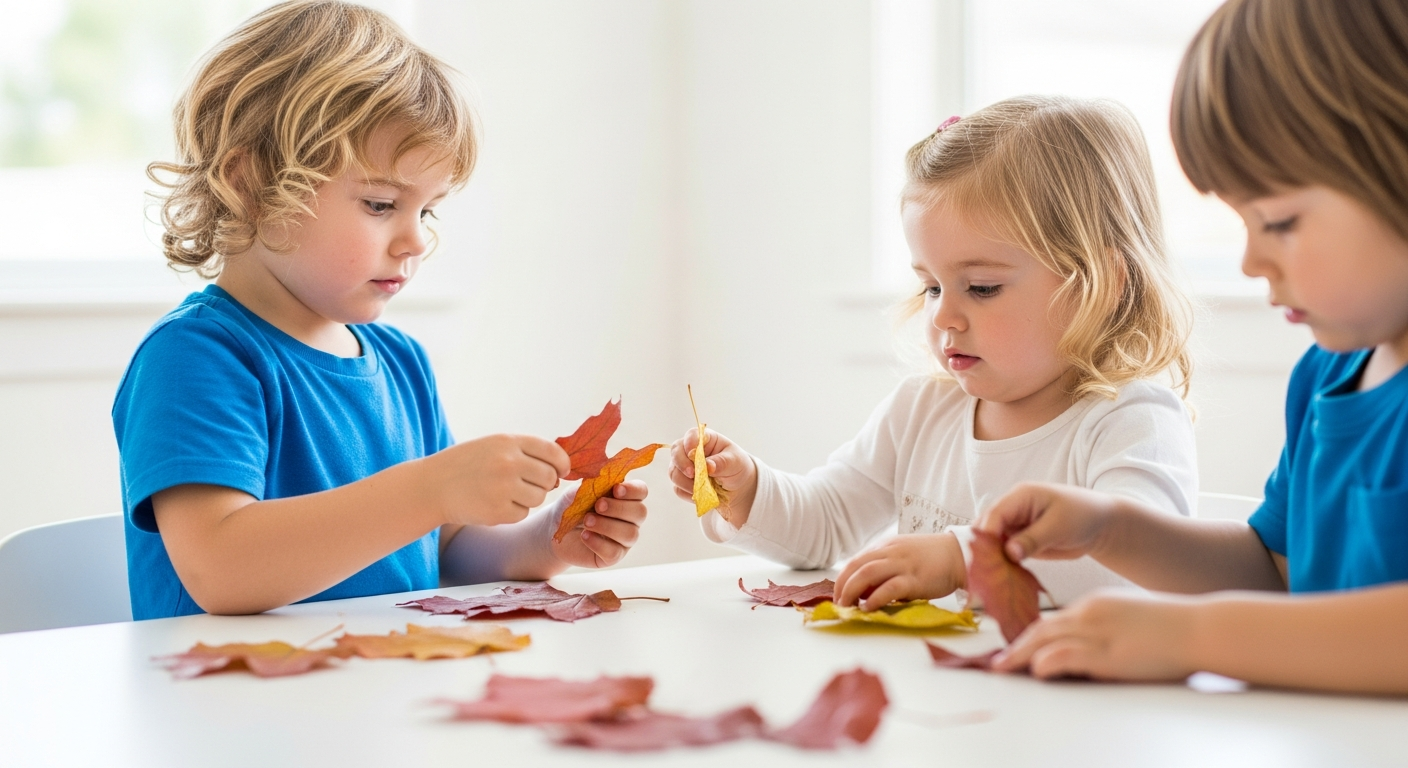
Table of Contents
- Introduction
- Why Crafting with Leaves is a Developmental Win
- Setting the Stage: The Nature Walk
- 1. The Classic Leaf Tree Collage
- 2. The Magical Leaf Suncatcher
- 3. Leaf Animal Portraits
- 4. Leaf "Paintbrushes" and Texture Art
- 5. Color Sorting with Nature
- 6. Leaf Rubbings: The "Magic" Reveal
- 7. The Leaf Sensory Bin
- 8. Leaf Puppets for Storytime
- 9. Leaf Crowns for Autumn Royalty
- 10. Floating Leaf Boats
- Integrating Speech Blubs into Your Routine
- Practical Tips for Mess-Free (or Mess-Less) Crafting
- Building Language Through Books and Play
- Conclusion
- Frequently Asked Questions
Introduction
Did you know that for a toddler, a single crunchy brown leaf isn't just "yard waste"—it is a sensory masterpiece? To a two-year-old, the world is a brand-new discovery every single day. The way a leaf crumbles in their hand, the vibrant gold of a maple leaf, and the tickle of a stem on their palm are all opportunities for learning and connection. As parents and caregivers, we are always looking for ways to bridge the gap between simple play and meaningful development.
The purpose of this blog post is to provide you with a variety of engaging, low-cost, and developmentally appropriate ideas for a toddler craft with leaves. We will explore everything from classic leaf pressings to creative animal collages, all while focusing on how these activities build fine motor skills, boost vocabulary, and foster a love for nature. At Speech Blubs, our mission is to empower children to "speak their minds and hearts." We believe that the best learning happens when children are having fun, and what could be more joyful than a crisp autumn afternoon spent exploring the backyard?

In the following sections, we will guide you through the supplies you need, step-by-step instructions for various crafts, and tips for incorporating language-building strategies into your creative time. Whether you are looking for a way to kill time before a nap or a structured activity to supplement your child's speech goals, leaf crafting is a powerful tool for family connection. By the end of this article, you will have a toolkit of ideas to make this season unforgettable for your little one.
Why Crafting with Leaves is a Developmental Win
Before we dive into the "how-to," let’s talk about the "why." At Speech Blubs, we are committed to providing an immediate, effective, and joyful solution for the 1 in 4 children who need speech support. Our methodology is rooted in "smart screen time," where we blend scientific principles with play. However, we also know that real-world, hands-on experiences are the perfect companion to our digital tools.
When your child participates in a toddler craft with leaves, they aren't just making art; they are building a foundation for complex communication.
- Sensory Integration: Feeling the different textures (smooth, bumpy, crunchy, soft) helps organize a child’s sensory system.
- Fine Motor Skills: Picking up small leaves, using a glue stick, and placing items on paper strengthens the tiny muscles in their hands—skills they will later need for writing and buttoning clothes.
- Language Development: Activities like these provide a rich environment for "labeling." You can describe colors (orange, red, yellow), sizes (big, small, tiny), and actions (stick, press, drop).
- Confidence Building: Completing a project, even one as simple as sticking a leaf to paper, gives a toddler a sense of accomplishment. This builds the confidence they need to try new sounds and words.
Our company was born from the personal experiences of our founders, who all grew up with speech problems and created the tool they wished they had. We understand that every small win in a craft session is a step toward a more communicative future. If you are unsure where your child stands in their development, we recommend taking our quick 3-minute preliminary screener. It involves 9 simple questions and provides a personalized assessment and next-steps plan.

Setting the Stage: The Nature Walk
The best part of any toddler craft with leaves is the "hunt." Before you sit down at the table, take your toddler outside. This is a screen-free alternative to passive viewing that gets everyone moving.
What to Discuss During Your Walk
Don't just pick up leaves in silence! Use this time to model language. At Speech Blubs, we use a "video modeling" methodology where children learn by watching and imitating their peers. You can act as the "model" in real life by narrating your walk:
- "Look at this big yellow leaf!"
- "Can you hear the crunch, crunch, crunch?"
- "The wind is blowing. The leaves are falling down."
What to Collect
Bring a small bucket or a bag. Encourage your toddler to find:
- Leaves of different colors.
- Twigs and small sticks.
- Acorns or seeds (with close supervision).
- Leaves of different shapes (pointy vs. round).
This activity introduces the concept of seasons. For a 2-year-old, this might be the first autumn they truly "experience" and remember. By naming the things you see, you are helping them build their internal dictionary. If you want to see how other parents have used similar interactive strategies to help their children, check out our testimonials page.
1. The Classic Leaf Tree Collage
This is perhaps the simplest and most effective craft for younger toddlers. It focuses on the basics of sticking and placement.
Supplies:
- Large piece of construction paper.
- Brown crayon or marker.
- Glue stick (we recommend the purple ones so kids can see where they applied it).
- Your collected leaves.
Instructions:
- Draw the Trunk: Draw a simple, bare tree trunk with branches. Don't worry about being an artist—your toddler is your biggest fan, not a critic!
- Model the Glue: Show your child how the glue stick works. We like the "I do, we do, you do" approach. First, you put glue on a leaf. Then, you hold their hand while they do it. Finally, let them try it solo.
- Decorate: Let your child stick leaves onto the branches (or the ground!).
For a child who is a "late talker" and loves nature, this activity is a great time to practice "more." You can ask, "Do you want more leaves?" and wait for a gesture or a sound before giving them the next one. This mimics the interactive nature of our app. You can download Speech Blubs on the App Store to find "Nature" and "Animal" sections that complement this hands-on play perfectly.
2. The Magical Leaf Suncatcher
Suncatchers are a wonderful way to discuss light and color. They look beautiful on a window and provide a long-lasting reminder of your craft day.
Supplies:
- Clear contact paper (sticky back plastic).
- Colored duct tape or masking tape.
- Flat, colorful leaves.
Instructions:
- Cut two equal squares of contact paper.
- Peel the backing off one piece and lay it sticky-side up on the table. Secure the corners with tape so it doesn't curl.
- Invite your toddler to "drop" leaves onto the sticky surface. This is a great sensory experience—toddlers love the "sticky" feeling!
- Once they are satisfied, peel the second piece of contact paper and carefully lay it over the first, sandwiching the leaves in between.
- Smooth out the air bubbles (this part is for the grown-ups!) and tape the edges to create a frame.
- Hang it on a sunny window.
This craft is a powerful tool for family connection. While you work together, you can talk about how the sun makes the leaves "glow." If you find your child is particularly engaged by visual learning, they will likely love our app's interface. Our research shows that the combination of peer modeling and interactive play is highly effective for early childhood development.
3. Leaf Animal Portraits
Toddlers are often naturally drawn to animals. Turning a leaf into a lion or a hedgehog is a fantastic way to encourage imaginative play and sound imitation.
Supplies:
- Paper plates.
- Glue.
- Googly eyes (or a marker to draw eyes).
- Leaves (yellow and orange work best for lions; brown and pointy for hedgehogs).
Instructions:
- The Lion: Draw a simple circle in the middle of the paper plate for the face. Have your toddler glue leaves all around the edge of the circle to create a "mane." Add eyes and a nose.
- The Hedgehog: Draw a half-circle on a piece of paper for the body. Have your child glue "pointy" leaves on the back to represent the hedgehog's spines.
Speech Tip: While making the lion, practice the "ROAR" sound! In the Speech Blubs app, the "Animal Kingdom" section features children making animal sounds, which encourages your child to do the same. Combining the craft with the app creates a multi-sensory learning loop. Try Speech Blubs for free to explore these animal sounds together.
4. Leaf "Paintbrushes" and Texture Art
If your toddler loves to get their hands messy, this is the craft for them. Instead of using traditional brushes, we use the leaves themselves to apply paint.
Supplies:
- Washable tempera paint in fall colors.
- Large sheets of paper.
- Sturdy leaves with stems (maple or oak work well).
- Clothespins (optional, to act as a handle).
Instructions:
- Pour small amounts of paint onto a paper plate.
- Show your toddler how to dip a leaf into the paint and "stamp" it onto the paper.
- Alternatively, clip a clothespin to the stem of the leaf to make a "brush" and let them swipe the paint across the paper.
- Discuss the patterns the leaves make. "Look, this one has lines!" or "This one is a big circle!"
This activity is great for building the foundational skills needed for communication, such as imitation and turn-taking. While the mess might feel daunting, remember that our goal is to foster a love for exploration. We want to reduce frustration and create joyful family learning moments.
5. Color Sorting with Nature
This is more of an "activity" than a "craft," but it uses leaves to teach a vital cognitive skill: categorization.
Supplies:
- A variety of leaves in different colors (green, yellow, red, brown).
- Colored bowls or pieces of colored paper.
Instructions:
- Place a red, yellow, and green piece of paper on the floor.
- Give your toddler a pile of leaves.
- Model the behavior: "This leaf is red. It goes on the red paper!"
- Encourage them to match the remaining leaves.
Sorting is a precursor to many language skills, as it requires the brain to identify similarities and differences. If you're looking for more ways to support your child's cognitive growth, our homepage offers a wealth of resources on how we blend science with play.
6. Leaf Rubbings: The "Magic" Reveal
For older toddlers (around 3 years old), leaf rubbings feel like a magic trick. It requires a bit more coordination but offers a high reward.
Supplies:
- Thin white paper (printer paper works better than construction paper).
- Crayons with the paper wrappers peeled off.
- Flat, "veiny" leaves.
Instructions:
- Place a leaf on the table, veiny side up.
- Place the paper over the leaf.
- Show your child how to rub the side of the crayon over the paper.
- Watch as the shape and texture of the leaf "magically" appear on the paper.
This activity is excellent for practicing "push" and "pull" motions, which are important for physical development. It also provides an opportunity to use words like "under," "over," and "surprise!"
7. The Leaf Sensory Bin
Sometimes the best toddler craft with leaves is simply playing with the materials. A sensory bin is a contained way to let your child explore.
Supplies:
- A plastic bin.
- Leaves, sticks, acorns, and pinecones.
- Small toy animals (like plastic forest creatures).
- Kid-friendly tweezers or scoops.
Instructions:
- Fill the bin with your nature finds.
- Add the toy animals and hide them under the leaves.
- Ask your toddler, "Where is the bear?" and let them "hunt" through the leaves to find it.
This mimics the "Hide and Seek" games found in many educational settings. It builds vocabulary related to positions (in, out, under) and helps with fine motor control as they use scoops or tweezers.
8. Leaf Puppets for Storytime
Turning leaves into characters is a great way to bridge the gap between art and storytelling.
Supplies:
- Sturdy leaves.
- Craft sticks (popsicle sticks).
- Tape or glue.
- Markers.
Instructions:
- Draw simple faces on the leaves. One could be "happy," one "sad," and one "surprised."
- Attach the leaves to the craft sticks.
- Use the puppets to tell a simple story or sing a song.
Using puppets can sometimes make a child feel more comfortable practicing new sounds. They aren't the ones talking—the "Leaf Friend" is! This is very similar to how children interact with the "Blubs" in our app. By projecting onto a character, the pressure to "perform" is removed, making communication more natural and fun.
9. Leaf Crowns for Autumn Royalty
Every toddler loves to play dress-up. A leaf crown turns a regular afternoon into a royal adventure.
Supplies:
- A strip of cardstock or a paper grocery bag cut into a band.
- Stapler (for adult use) or tape.
- Glue or double-sided tape.
- Leaves.
Instructions:
- Measure the band around your child's head and secure it.
- Let your child decorate the band by sticking leaves all the way around.
- Once dry, place it on their head and go on a "Royal Nature Walk."
This activity fosters imaginative play, which is a key component of speech and social development. When children engage in "pretend," they are practicing the social rules of communication.
10. Floating Leaf Boats
If you have a water table or even just a bathtub, this craft introduces basic science concepts like "sink" and "float."
Supplies:
- Large, sturdy leaves (like Magnolia leaves).
- Small twigs.
- A bit of modeling clay or playdough.
Instructions:
- Use a small ball of clay to stand a twig upright in the center of the leaf (this is the "mast").
- Place the "boat" in the water.
- Blow on the leaf to make it move.
This is a fantastic breathing exercise! Controlling their breath is a foundational skill for speech production. You can say, "Big breath... blow!" to encourage them to use their oral muscles in a new way. For more activities that focus on these foundational skills, you can download Speech Blubs from the Google Play Store.
Integrating Speech Blubs into Your Routine
While these leaf crafts are wonderful for physical and sensory play, we know that many parents are looking for a comprehensive approach to their child's development. This is where Speech Blubs comes in. Our app is designed to be a "smart" supplement to your child's day—a powerful tool for family connection rather than a way to keep them "quiet."
Why Choose the Yearly Plan?
If you're ready to commit to your child's communication journey, our Yearly plan is the clear best choice for families. While we do offer a Monthly plan for $14.99 per month, the Yearly plan is just $59.99 per year. That breaks down to only $4.99 per month—a savings of 66%!
Beyond the cost savings, the Yearly plan includes exclusive, high-value features that you won't find in the monthly option:
- A 7-Day Free Trial: You can explore everything we have to offer before spending a dime.
- Reading Blubs App: You get access to our second app, which is dedicated to early literacy and reading skills.
- Early Access: Be the first to try new updates and themes.
- Priority Support: Enjoy a 24-hour support response time for any questions you have.
We encourage you to start your 7-day free trial today and see the difference that "smart screen time" can make.
Practical Tips for Mess-Free (or Mess-Less) Crafting
We know that "toddler" and "craft" can sometimes result in "disaster." Here are a few tips to keep the stress low:
- The "Tray" Method: Do all crafting inside a large baking sheet or a plastic tray. This keeps the glue and leaf bits contained.
- Wet Wipes are Your Best Friend: Keep a pack of wipes on the table for sticky fingers before they touch the sofa.
- Limit the Palette: If you are painting, only put out two or three colors at a time. This prevents the "everything turns brown" phenomenon and makes the choices less overwhelming for your toddler.
- Embrace the Process: Your toddler's tree might not look like a tree. Their lion might have eyes on its chin. That’s okay! The goal is fostering a love for communication and building confidence, not creating a gallery-ready masterpiece.
Building Language Through Books and Play
To further enhance your toddler craft with leaves, consider pairing your creative time with books. Reading about the seasons helps solidify the concepts they are learning through their hands. Some of our favorites include "Goodbye Summer, Hello Autumn" and "A Tree for All Seasons."
As you read, you can point to the pictures and say, "Look! We made a tree just like that one!" This helps with "generalization"—the ability to take a concept learned in one context (the craft) and apply it to another (the book). This is a core principle we use at Speech Blubs to help children move from single words to more complex communication.
Conclusion
Taking the time to sit down for a toddler craft with leaves is about so much more than just making art. It is about the "crunch" of the leaves underfoot, the sticky purple glue on a thumb, and the wide-eyed wonder of a child seeing a "lion" emerge from a paper plate. These moments are the building blocks of development. They reduce frustration, develop key foundational skills, and, most importantly, create joyful family learning moments.
At Speech Blubs, we are here to support you every step of the way. Whether through our hands-on activity suggestions or our scientifically backed app, our mission is to give your child the tools they need to speak their minds and hearts. We don't promise public speaking miracles in a month, but we do promise a process that celebrates every small sound, every new word, and every creative spark.
Ready to take the next step in your child's communication journey? Download Speech Blubs on the App Store or Google Play Store today. For the best value and access to the full suite of features—including the Reading Blubs app and priority support—be sure to select the Yearly plan. Your 7-day free trial is waiting!
Frequently Asked Questions
What is the best age to start crafting with leaves?
While every child is different, most toddlers can begin simple leaf crafts around 18 to 24 months. At this age, focusing on sensory exploration (touching and "dropping" leaves onto sticky paper) is best. As they move toward age 3, they can begin using glue sticks and basic scissors with supervision.
What if I live in an area without many fall leaves?
No problem! You can still participate by using green leaves from your yard or even cutting "leaf" shapes out of colorful construction paper or felt. You can also find artificial leaves at most craft stores, which can be reused for many different activities.
My toddler still puts everything in their mouth. Is leaf crafting safe?
Safety is always the priority. Always supervise your child closely during nature play. If your child is still in the "mouthing" phase, stick to larger, clean leaves and avoid small items like acorns or pebbles. Using contact paper "suncatchers" is also a great way to let them see the leaves without being able to chew on them!
How does a simple craft help with my child's speech delay?
Crafts provide a "naturalistic" environment for language. Unlike a drill or a flashcard, a craft is a motivating activity where the child wants to communicate to get more supplies or describe what they are making. It provides a low-pressure way to practice sounds, follow simple directions, and learn new vocabulary words in context.
About the author