
10 Creative Leaf Craft Toddler Activities for Fall Fun
 By Speech Blubs Team•Feb 20, 2026•16 min.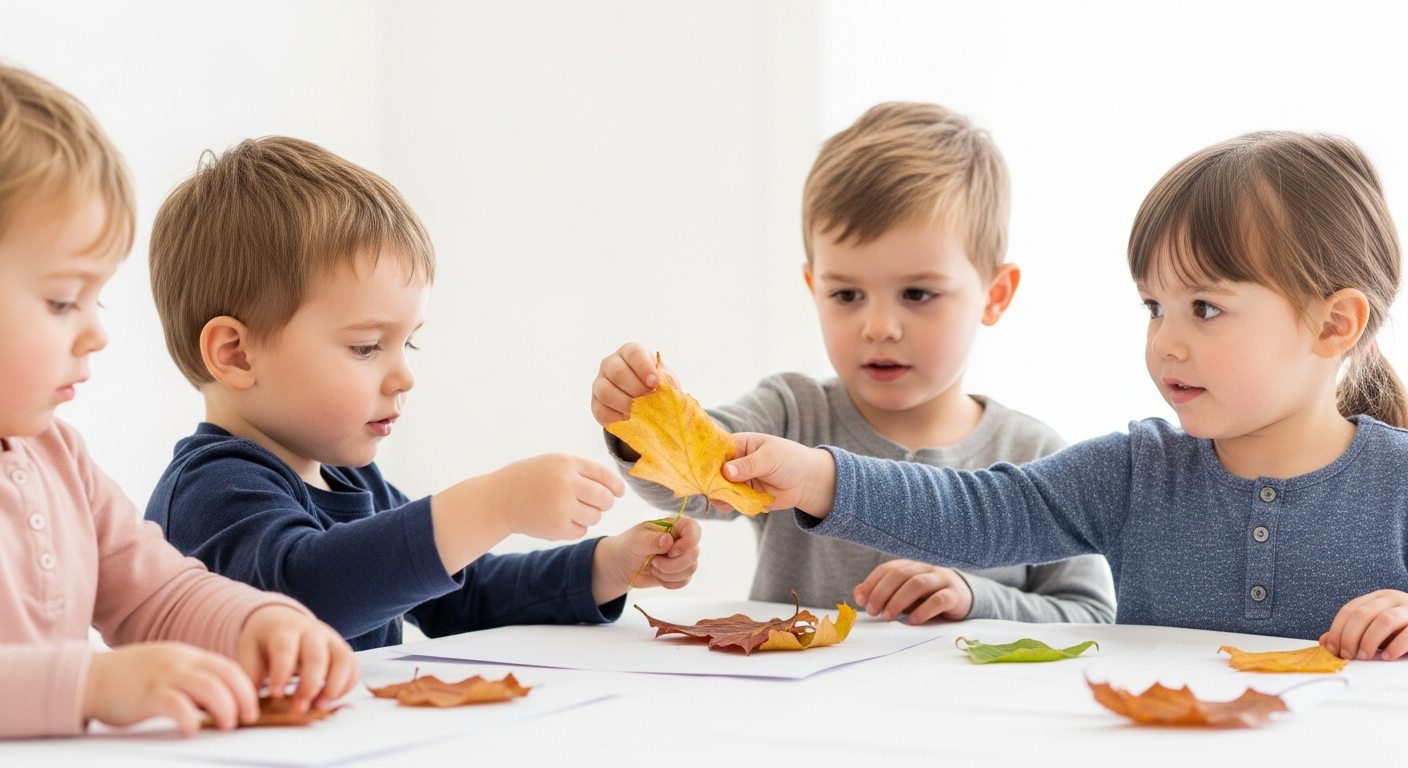
Table of Contents
- Introduction
- The Developmental Power of the Leaf Craft Toddler Experience
- 1. The Classic Leaf Sun Catcher
- 2. The "Leaf Man" Collage
- 3. Leaf Rubbing Art
- 4. The Sticky Leaf Wall
- 5. Leaf Printing and Finger Painting
- 6. The Leaf Crown
- 7. Leaf Alphabet and Name Practice
- 8. Leaf Lanterns (Mason Jar Craft)
- 9. Leaf Sorting and Math
- 10. The "Leaf Thief" Storytelling Bag
- Why We Choose "Smart Screen Time" to Support Nature Play
- Practical Tips for Crafting with Toddlers
- Choosing the Right Support for Your Child
- Conclusion
- Frequently Asked Questions
Introduction
Have you ever watched a toddler discover a pile of crunchy, fallen leaves for the first time? There is a pure, unadulterated joy in that moment—the wide eyes, the tentative stomp, and the eventual eruptive laughter as they realize the world has turned into a giant, rustling playground. This seasonal shift isn't just a change in the weather; for a child, it is a sensory explosion. At Speech Blubs, our mission is to empower children to speak their minds and hearts, and we believe that some of the best opportunities for communication happen right in the middle of a messy, leaf-filled afternoon.
Our company was born from the personal experiences of our founders, who all grew up with speech challenges. They set out to create the tool they wished they had—a way to turn "screen time" into "smart time" that actually encourages real-world interaction. We know that for the 1 in 4 children who need speech support, every activity is an opportunity to build confidence and vocabulary. That is why we love the humble leaf craft toddler activity. It’s accessible, it’s free, and it provides a rich landscape for language development.

In this post, we are going to dive deep into the world of autumn crafting. We will explore why nature play is vital for speech, provide ten detailed craft ideas that you can do today, and show you how to pair these activities with the Speech Blubs app to maximize your child's learning. Whether you are looking to boost fine motor skills or simply find a way to make it to nap time with a smile on your face, these leaf crafts are your new secret weapon. Our goal is to foster a love for communication and create joyful family learning moments that last long after the last leaf has fallen.
The Developmental Power of the Leaf Craft Toddler Experience
Before we get our hands sticky with glue, it is important to understand why we are doing this. A leaf craft isn't just about the final product hanging on your refrigerator. It is about the process of exploration. When you take your toddler outside to collect supplies, you are engaging in "environmental labeling." You aren't just picking up "things"; you are finding "crunchy leaves," "yellow leaves," "pointed leaves," and "smooth acorns."
Sensory Integration and Speech
For many children, especially those working on speech delays, sensory input is the key that unlocks vocalization. The tactile sensation of a dry leaf crumbling in their hand often leads to spontaneous sounds—"Cr-cr-crunch!" or "Uh-oh!" These are the building blocks of communication. At Speech Blubs, we utilize scientific principles like video modeling to encourage kids to imitate their peers, but we also know that these digital lessons are most effective when reinforced with physical, sensory-rich play.
Fine Motor Skills and "Glue Magic"
Introducing tools like glue sticks or safety scissors is a major milestone. As mentioned by many early childhood experts, the "I do, we do, you do" method is the gold standard for teaching these skills. You model how to swipe the glue, you hold the stick together with your child, and finally, you let them take the lead. This builds the hand strength and coordination required for later tasks, including the complex oral-motor movements needed for clear speech.

If you are ever unsure where your child stands in their developmental journey, we invite you to take our quick 3-minute preliminary screener. It involves 9 simple questions and provides an assessment and next-steps plan to help you support your little one’s growth.
1. The Classic Leaf Sun Catcher
This is perhaps one of the most beautiful and rewarding crafts you can do with a toddler. It turns your window into a stained-glass masterpiece using the natural transparency of autumn leaves.
Supplies Needed:
- Clear contact paper (sticky back plastic)
- Fall colored tissue paper (red, orange, yellow)
- Freshly collected leaves
- Construction paper for a "frame"
- Scissors
The Process:
- Preparation: Cut two sheets of contact paper. Tape one sheet, sticky side up, to the table. This is a sensory activity in itself—let your toddler feel the stickiness!
- Tissue Paper Play: Have your child tear small pieces of tissue paper. This tearing motion is excellent for building "pincer grasp" strength.
- Layering: Encourage your child to place the leaves and tissue paper onto the sticky surface. Talk about the colors as they go. "Look, a yellow leaf! Can you say yellow?"
- Sealing: Place the second sheet of contact paper on top to seal the "sandwich."
- Framing: Cut a leaf shape out of construction paper to create a border, then hang it in a sunny window.
Speech Tip: While your child is sticking items down, use position words. "Put the leaf on the paper." "Put it next to the red one." This helps them understand spatial relationships, which is a key part of our research-backed methodology.
2. The "Leaf Man" Collage
Inspired by the wonderful children's book Leaf Man by Lois Ehlert, this craft encourages toddlers to see shapes and figures in nature.
Supplies Needed:
- A variety of leaf shapes (long, round, jagged)
- Cardstock or heavy paper
- Glue sticks
- Googly eyes (optional but highly recommended)
The Process: Gather leaves of all shapes and sizes. Sit with your child and look at a leaf. "Does this look like a nose? Does this look like a foot?" Let your child’s imagination lead the way. Help them glue the leaves down to create a "person" or a "monster." Adding googly eyes instantly brings the creation to life and usually results in lots of giggles.
For a parent whose 3-year-old "late talker" loves characters, this activity offers a fun, motivating way to practice body parts. You can point to the leaf-arm and wait for them to point to their own arm. This mirroring is a fundamental part of how children learn, and it’s why our app features real children modeling sounds rather than cartoons.
3. Leaf Rubbing Art
This is a classic "low-mess" activity that feels like magic to a toddler. It’s perfect for those days when you don't want to deal with wet glue or paint.
Supplies Needed:
- Thin white paper (printer paper works best)
- Crayons with the wrappers peeled off
- Flat, dry leaves with prominent veins
The Process: Place a leaf "vein-side up" on the table. Lay the paper over it. Show your child how to rub the side of the crayon across the paper. As the image of the leaf "appears" through the paper, narrate the excitement! "Wow! Look! I see the leaf!"
This activity is great for practicing the "sh-sh-sh" sound as the crayon rubs against the paper. It also introduces the concept of cause and effect—a vital cognitive building block.
4. The Sticky Leaf Wall
If you have a toddler who loves to move, a seated craft might be a challenge. The sticky wall gets them standing and reaching.
Supplies Needed:
- A large piece of contact paper
- Painter's tape
- A bucket of leaves
The Process: Tape a large sheet of contact paper to a wall or a sliding glass door, sticky side facing out. Give your toddler a bucket of leaves and let them go to town. They can stick them on, pull them off, and move them around.
Speech Strategy: This is a perfect time for "verbal routines." Every time they stick a leaf, you can say, "Pop!" or "Stick!" Eventually, pause and wait. Look at them with an expectant smile. They may just fill in the blank with their own "Stick!" to keep the game going.
5. Leaf Printing and Finger Painting
Sometimes, you just have to embrace the mess. Painting with leaves provides a unique texture that brushes simply can't match.
Supplies Needed:
- Washable tempera paint in fall colors
- Paper
- Leaves with sturdy stems (to use as "handles")
The Process: Dip the flat side of a leaf into a tray of paint and press it onto the paper like a stamp. Alternatively, let your child use their fingers to paint "leaves" onto a tree trunk that you have drawn for them.
At Speech Blubs, we believe in "joyful solutions." If the paint ends up on their nose, laugh about it! Reducing the pressure to "perform" or "do it right" is essential for building a child's confidence in communication. You can see more about how this philosophy helps families in our user testimonials.
6. The Leaf Crown
Every toddler deserves to be the king or queen of the forest. This craft is excellent for pretend play.
Supplies Needed:
- A strip of cardstock or a paper grocery bag cut into a band
- Stapler or tape (for the adult to use)
- Leaves
- Glue or double-sided tape
The Process: Measure the band around your child's head and secure it. Then, let them decorate their "crown" by gluing leaves all around it. Once it's dry, put it on and go for a "Royal Nature Walk."
Pretend play is where language skills truly flourish. When your child wears the crown, they aren't just a toddler anymore; they are a character. This shift allows them to experiment with different tones of voice and new words they might not use in their everyday routine.
7. Leaf Alphabet and Name Practice
For older toddlers who are starting to show interest in letters, leaves make a great natural canvas.
Supplies Needed:
- Large, sturdy leaves (like Maple or Oak)
- A thick permanent marker (adult use) or chalk markers
The Process: Write one letter of your child's name on several different leaves. Scatter them on the floor and ask them to find the "L" or the "A." You can also write the entire alphabet and go on a "letter hunt" around the living room.
Connecting physical objects with abstract concepts like letters is a huge step in literacy. To support this journey, our Yearly Plan actually includes the Reading Blubs app at no extra cost, providing a comprehensive approach to both speech and reading readiness. You can sign up for a 7-day free trial to explore how we blend these skills.
8. Leaf Lanterns (Mason Jar Craft)
These look stunning on a dinner table or a bedside nightstand, providing a warm, autumnal glow.
Supplies Needed:
- Clean glass jars (or plastic for safety)
- Mod Podge or a mix of white glue and water
- Sponge brush
- Thin leaves or tissue paper leaves
- Battery-operated tea lights
The Process: Coat the jar in a layer of glue. Press the leaves onto the jar, then go over them with another layer of glue to seal them. Once dry, drop in the tea light.
Safety Note: Always use battery-operated lights with toddlers! The glow of the lantern is a great "calm down" activity before bed. You can talk about the light being "on" and "off," practicing those functional opposites.
9. Leaf Sorting and Math
Is it a craft? Is it a math lesson? It's both! Sorting is a fundamental logic skill that precedes more complex language structures.
Supplies Needed:
- A large pile of diverse leaves
- Several baskets or bowls
The Process: Ask your child to help you "clean up" the leaves by putting them into piles. "Put all the red ones here. Put the big ones there." This categorizing helps the brain organize information, which is exactly what it has to do when learning how to categorize sounds and words.
10. The "Leaf Thief" Storytelling Bag
Based on the popular book The Leaf Thief by Alice Hemming, this activity turns crafting into a narrative.
Supplies Needed:
- A small paper bag
- A "Squirrel" (could be a toy or a leaf you've drawn a face on)
- Leaves
The Process: Act out the story of the squirrel who thinks his leaves are being stolen, only to realize the wind is the "thief." Have your child "hide" the leaves in the bag and "find" them again.
This game of hide-and-seek with objects is perfect for practicing "Where?" questions. "Where did the leaf go?" "It's in the bag!" These simple exchanges are the heartbeat of early conversation.
Why We Choose "Smart Screen Time" to Support Nature Play
You might wonder why a company that makes an app is encouraging you to go outside and play with leaves. It’s because we know that technology should be a bridge, not a barrier. At Speech Blubs, we advocate for "smart screen time"—experiences that are active, educational, and designed for co-play.
Our app uses video modeling, a scientifically proven method where children watch other children perform speech exercises. When a child sees a peer on the screen making a "blowing" sound (like the wind blowing leaves), their mirror neurons fire, making them much more likely to imitate that sound themselves.
After using the app for 10-15 minutes, you can take those learned sounds and bring them right into your leaf craft toddler session. If you’ve been practicing animal sounds in the "Animal Kingdom" section of Speech Blubs, you can look for "leaf animals" and make the sounds together. This "app-to-world" connection is where the real magic happens.
Practical Tips for Crafting with Toddlers
To make your leaf crafting experience as stress-free as possible, keep these tips in mind:
- Focus on the Journey: Your toddler might only want to stick two leaves down and then spend twenty minutes trying to put the cap back on the glue stick. That is okay. The goal is engagement, not a Pinterest-perfect result.
- Model Language: Don't just narrate what they are doing; narrate what you are doing. "I am picking up a crunchy leaf. Crunch, crunch, crunch!"
- Keep it Short: Toddler attention spans are famously brief. If they lose interest, set the craft aside and try again later.
- Safety First: Always supervise the use of glue, scissors, and small items like acorns or googly eyes.
Choosing the Right Support for Your Child
We know that parenting can feel overwhelming, especially when you are concerned about your child’s development. Our founders started Speech Blubs to provide an immediate, effective, and joyful solution for families. We want to be a powerful tool in your overall development plan, supplementing the great work you do at home and any professional therapy your child may receive.
To give your child the full benefit of our program, we highly recommend our Yearly Plan. While we offer a Monthly plan at $14.99 per month, the Yearly plan is the clear best choice for families committed to seeing progress.
The Yearly Plan ($59.99/year - breaks down to $4.99/month) includes:
- A 7-day free trial to explore all features risk-free.
- The Reading Blubs app, which helps transition speech skills into early literacy.
- Early access to all new content updates.
- Priority 24-hour support response time.
- A 66% savings compared to the monthly rate.
Ready to turn your fall adventures into a language-learning journey? Download Speech Blubs on the App Store or Google Play to begin today.
Conclusion
The transition into fall is a beautiful time to slow down and connect with your little one. A simple leaf craft toddler activity can be the spark that ignites a new word, a boost in confidence, or a precious moment of shared laughter. By combining the tactile, messy fun of nature with the "smart screen time" offered by Speech Blubs, you are giving your child a well-rounded foundation for communication.
Remember, our mission is to help your child speak their mind and heart. Whether they are shouting with joy in a leaf pile or carefully sticking a leaf onto a sun catcher, they are learning that their voice and their actions matter. We are honored to be a part of that journey with you.
Don't wait for the season to pass you by. Grab a bucket, head outside, and start collecting those leaves! And when you come back inside, let Speech Blubs help you turn those discoveries into new words and skills.
Ready to get started? Create your account and begin your 7-day free trial today. We highly recommend the Yearly plan to unlock our full suite of features and ensure your child has everything they need to thrive this season!
Frequently Asked Questions
1. At what age can my toddler start using glue sticks for leaf crafts?
Most toddlers are ready to begin experimenting with glue sticks around 18 to 24 months. At this age, it is less about "gluing things down" and more about the sensory experience. Always supervise closely to ensure the glue stays on the paper and out of their mouths. Modeling the "swiping" motion is key to helping them learn.
2. What if we live in an area where the leaves don't change color?
You can still enjoy these crafts! Green leaves have wonderful textures and shapes too. If you really want that "fall" look, you can supplement with fall-colored tissue paper or even paint your green leaves with red and orange washable paint before sticking them to your projects.
3. How can I use the Speech Blubs app alongside these physical crafts?
The best way is to find a theme in the app that matches your activity. For example, if you are making "Leaf Animals," spend a few minutes in the "Animal Kingdom" section of the app first. Watch the children in the app make animal sounds, then try to make those same sounds as you build your leaf creatures. This reinforces the learning through multiple senses.
4. My child has a very short attention span for crafts. Is this normal?
Absolutely! For a toddler, a "successful" activity might only last 5 to 10 minutes. The goal of a leaf craft toddler session isn't to finish a masterpiece; it's to engage with the materials and with you. If they want to stop after one leaf, let them. You can always leave the supplies out and come back to it later in the day.
About the author