
10 Creative Toddler Tree Craft Ideas for Home Learning
 By Speech Blubs Team•Feb 20, 2026•15 min.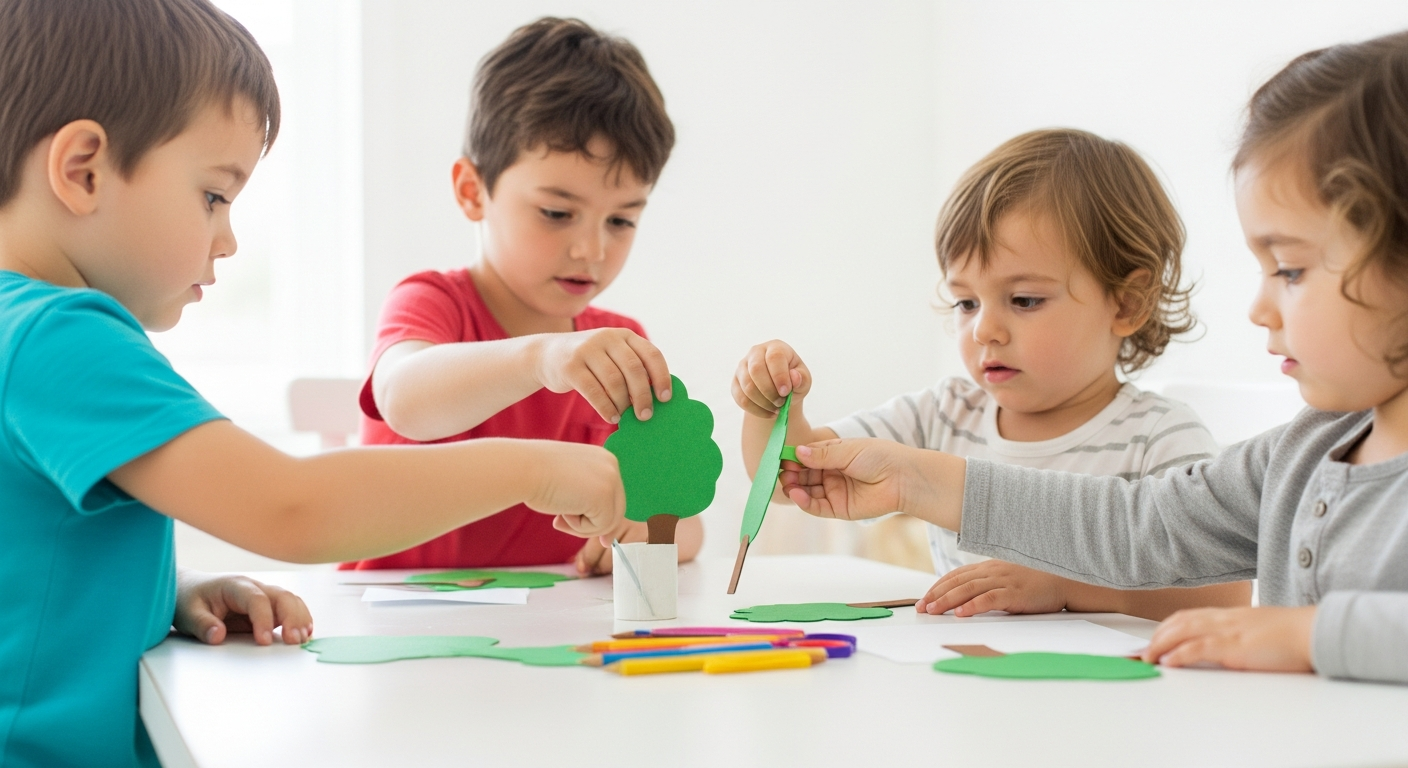
Table of Contents
- Introduction
- Why a Toddler Tree Craft is a Language Powerhouse
- 1. The "Sticky Wall" Fall Tree
- 2. The Handprint Keepsake Tree
- 3. Bubble Wrap Texture Tree
- 4. Q-Tip Cherry Blossom Tree
- 5. The Nature Walk Tree
- 6. The "Thankful" Tree
- 7. Fruit Loop or Cereal Tree
- 8. Sponge Painted Summer Tree
- 9. Tissue Paper Texture Tree
- 10. Fork Painted Pine Tree
- Integrating "Smart Screen Time" with Your Craft
- Why the Yearly Plan is the Best Choice for Your Family
- Frequently Asked Questions
- Conclusion
Introduction
Have you ever watched your child stare in awe at the rustling leaves of a giant oak tree in the park? To a toddler, a tree isn't just a part of the landscape; it is a towering, living mystery full of colors, textures, and sounds. At Speech Blubs, we believe that these moments of natural wonder are the perfect catalysts for language development. When we combine the beauty of nature with a hands-on toddler tree craft, we aren't just making art; we are building the neurological bridges necessary for communication, fine motor control, and cognitive growth.
The purpose of this guide is to provide you with a variety of engaging, easy-to-implement tree-themed activities that do more than just decorate your refrigerator. We will explore how different textures—like crunchy leaves, soft tissue paper, and smooth contact paper—can stimulate sensory processing. More importantly, we will show you how to pair these activities with evidence-based speech strategies to help your little one find their voice. Whether your child is a "late talker," currently in speech therapy, or simply a curious explorer, these crafts offer a joyful way to practice new words and sounds.

Our mission at Speech Blubs is to empower every child to "speak their minds and hearts." This goal is deeply personal to us, as our founders all grew up with speech challenges themselves. They created the very tool they wished they had as children—a way to turn "screen time" into "smart screen time." By the end of this article, you will have a toolkit of creative ideas and a clear understanding of how to use our unique video modeling methodology to turn a simple afternoon of crafting into a powerful learning experience.
Why a Toddler Tree Craft is a Language Powerhouse
Before we dive into the glue and glitter, it is helpful to understand why trees are such a fantastic theme for speech development. From a linguistic perspective, trees provide a rich set of "functional vocabulary"—words that children can use in their everyday lives to describe the world around them.
Think about the parts of a tree: trunk, branch, leaf, root. Think about the colors: green, brown, orange, red, yellow. Think about the actions: grow, fall, climb, shake. When you sit down to complete a toddler tree craft, you are creating a "joint attention" environment. This is a fancy way of saying that you and your child are focused on the same thing at the same time, which is the absolute foundation of all human communication.
At Speech Blubs, we emphasize "smart screen time" as a supplement to these real-world interactions. While our app uses peer-led video modeling to encourage imitation, these crafts provide the physical "doing" that reinforces those digital lessons. For example, after watching a peer in the app say the word "leaf" in our "Nature" section, coming to the table to stick a physical leaf onto a paper tree helps solidify that concept in the child's brain.
1. The "Sticky Wall" Fall Tree
This is one of our favorite activities for younger toddlers who might not be ready for the precision of a glue stick. It uses clear contact paper to create a "magical" surface where things just stay put.
Materials Needed:
- Clear contact paper
- Brown construction paper (for the trunk)
- Fake fabric leaves or real dried leaves
- Painter's tape
How to Do It:
- Cut out a simple tree trunk from the brown paper and tape it to your wall at your child's eye level.
- Cut a large cloud-like shape from the contact paper.
- Peel off the backing and tape it to the wall, sticky side facing out, just above the trunk.
- Give your child a basket of leaves and let them press them onto the sticky surface.
Speech Tip:
Focus on "positional words." As they place a leaf, say "On!" or "Up high!" If a leaf falls, say "Uh-oh, down!" This simple repetition helps toddlers understand the relationship between objects and space. If you find your child is struggling with these basic concepts, you might want to take our quick 3-minute preliminary screener. It involves just 9 simple questions and provides an assessment and a next-steps plan to see where your child's milestones currently sit.

2. The Handprint Keepsake Tree
Nothing says "toddler craft" quite like a handprint. This activity is excellent for sensory seekers who enjoy the feel of paint on their skin.
Materials Needed:
- Washable brown and green paint
- Large white paper
- A paintbrush
How to Do It:
- Paint your child's hand and forearm with brown paint.
- Have them press their forearm down vertically (this is the trunk) and their hand at the top (these are the main branches).
- Once the "trunk" is dry, let them use their fingers to dip into green, yellow, or red paint to make "fingerprint leaves" all around the branches.
Speech Tip:
This is a great time to practice body parts. "Here is your hand! Here is your arm!" You can also work on the "G" sound for "Green" or "Grow." To see how other parents have used sensory play and our app to boost their child's confidence, check out our parent testimonials. You’ll see how small wins in crafting often lead to big breakthroughs in speaking.
3. Bubble Wrap Texture Tree
If you have leftover shipping supplies, don't throw them away! Bubble wrap makes the most incredible "leaf" textures and provides a satisfying sensory "pop" that toddlers love.
Materials Needed:
- Bubble wrap
- Green and yellow paint
- Paper plate
- Brown paper trunk
How to Do It:
- Glue a brown paper trunk to a piece of cardstock.
- Pour some paint onto a paper plate.
- Cut a small square of bubble wrap and help your child dip the "bubbly" side into the paint.
- Stamp the bubble wrap onto the paper to create a cluster of textured leaves.
Speech Tip:
Use the sound of the bubble wrap to practice the "P" sound. "Pop! Pop! Pop!" This bilabial sound (made with both lips) is one of the first sounds children typically master. In Speech Blubs, we use video modeling to show children exactly how to shape their lips to make these sounds. You can download Speech Blubs on the App Store to find specific exercises that mirror this "pop" motion.
4. Q-Tip Cherry Blossom Tree
This toddler tree craft is perfect for practicing fine motor "pincer" grasp, which is actually linked to the same area of the brain that handles speech production.
Materials Needed:
- Q-tips (handful)
- Pink and white paint
- A rubber band
- Brown marker or paint
How to Do It:
- Bundle about 5-6 Q-tips together with a rubber band.
- Draw a simple tree with many bare branches.
- Have your child dip the Q-tip bundle into pink paint and "dot" it all over the branches to look like blossoms.
Speech Tip:
This activity is very rhythmic. You can say "Dot, dot, dot" as they work. This helps with the "prosody" or rhythm of speech. For a child who loves nature-themed activities, the "Nature" and "Animal Kingdom" sections in our app offer a fun, motivating way to practice the sounds associated with the outdoors.
5. The Nature Walk Tree
Why use paper when you can use the real thing? This craft starts with an outdoor adventure, making it a "multi-sensory" experience.
Materials Needed:
- Small twigs found outside
- Glue (liquid glue works best here)
- Cardboard base
- Real leaves or flower petals
How to Do It:
- Take a walk and collect small, flat twigs and interesting leaves.
- Back at home, help your child glue the twigs onto the cardboard to form a "3D" tree trunk and branches.
- Glue the real leaves onto the twigs.
Speech Tip:
The walk itself is a language goldmine. Use descriptive adjectives: "Is the stick rough or smooth?" "Is the leaf crunchy?" At Speech Blubs, our methodology is backed by science, specifically the concept of mirror neurons. When your child sees you (or a peer in the app) touching a "rough" stick and saying the word, their brain prepares to do the same.
6. The "Thankful" Tree
This is a wonderful activity for older toddlers (3+) to begin understanding abstract concepts like gratitude while building their "vocabulary of the heart."
Materials Needed:
- A sturdy branch from the yard
- A jar or vase with stones (to hold the branch up)
- Paper leaves with holes punched in them
- String or ribbon
How to Do It:
- Set the branch up in the jar.
- Ask your child, "What do you love?" or "What makes you happy?"
- Write their answer on a paper leaf (e.g., "Mommy," "Grapes," "Doggy").
- Help them hang the leaf on the branch.
Speech Tip:
This encourages "expressive language"—the ability to put thoughts into words. Even if they just point to the dog, you can provide the word: "You love the dog! Let's say 'Dog'." This builds the "family connection" that we value so highly at Speech Blubs.
7. Fruit Loop or Cereal Tree
Who says you can't play with your food? Using colorful cereal makes this toddler tree craft irresistible.
Materials Needed:
- Round colorful cereal (like Fruit Loops or Apple Jacks)
- Glue
- Paper with a tree outline
How to Do It:
- Draw a large, simple tree outline.
- Have your child put small dots of glue on the "leaves" area.
- Place one piece of cereal on each dot.
Speech Tip:
This is perfect for "sorting" and "colors." "Where does the red one go?" "Can you find a yellow one?" You can also sneak in some "Yummy Time" vocabulary. If they eat a piece, say "Mmm, crunchy!" or "Sweet!" To get more ideas for incorporating daily routines into speech practice, you can find Speech Blubs on the Google Play Store and explore our various categories.
8. Sponge Painted Summer Tree
Sponges allow toddlers to cover large areas quickly, which provides immediate gratification and keeps them engaged longer.
Materials Needed:
- A kitchen sponge cut into small cubes
- Clothespins (to act as "handles" for the sponge)
- Green paint
- Paper
How to Do It:
- Clip a clothespin onto a sponge cube.
- Dip the sponge into green paint.
- "Bounce" the sponge onto the paper to create a full, lush summer tree canopy.
Speech Tip:
Focus on action verbs. "Bounce, bounce, bounce!" or "Dip!" and "Press!" These short, repetitive words are much easier for a child with a speech delay to imitate than long sentences. We focus on these "building block" words in our app to help reduce frustration and build confidence.
9. Tissue Paper Texture Tree
Tearing paper is a fantastic way to build hand strength, which is a precursor to writing. It also creates a beautiful 3D effect.
Materials Needed:
- Scraps of green, yellow, or orange tissue paper
- Glue stick
- Brown construction paper
How to Do It:
- Cut out a trunk and glue it to a base.
- Show your child how to "Rip!" the tissue paper into small bits.
- Crumple the bits into small "balls" and glue them to the tree.
Speech Tip:
Use the word "Rip!" every time you tear the paper. The "R" sound can be tricky, but the exaggerated motion of ripping provides a physical cue for the sound. This is exactly how our "smart screen time" works—we provide a visual and auditory cue that invites the child to participate rather than just passively watching a cartoon.
10. Fork Painted Pine Tree
This unusual tool creates a very specific pattern that looks just like pine needles!
Materials Needed:
- A plastic fork
- Green paint
- Paper
How to Do It:
- Draw a vertical line for the trunk.
- Dip the back of the fork into green paint.
- Press the fork tines onto the paper, angled downward from the trunk, to create "needles."
Speech Tip:
Practice the "F" sound for "Fork." It's a "fricative" sound where you put your top teeth on your bottom lip. You can make it a game: "Where is the fork? Fish starts with F too!"
Integrating "Smart Screen Time" with Your Craft
At Speech Blubs, we know that parents are often worried about screen time. We've all seen the "zombie mode" that happens when a child watches a passive cartoon. That is why we built something different. Our app is designed to be a "digital toy" that you play with together.
Our unique approach is based on video modeling. In the app, your child will see other children—not cartoons or adults—performing speech exercises. Why children? Because kids are naturally more motivated to imitate their peers. It’s the "I can do what they do" effect.
When you are doing a toddler tree craft, you can use the app to "prime" the activity. Spend 5-10 minutes in the "Nature" section of the app, practicing words like "tree," "sun," and "flower." Then, put the device away and bring out the craft materials. This transition from digital learning to physical application is where the real magic happens. It creates a joyful learning moment that reduces the frustration often associated with speech delays.
Why the Yearly Plan is the Best Choice for Your Family
We want to be transparent about how you can access these tools to support your child’s journey. While we offer a monthly option, the majority of our community chooses the Yearly plan because it provides the most comprehensive support for a child's development.
Pricing Overview:
- Monthly Plan: $14.99 per month.
- Yearly Plan: $59.99 per year (this breaks down to just $4.99 per month, saving you 66% compared to the monthly rate).
The Yearly plan is designed for parents who are committed to seeing long-term progress. It isn't just about the lower price; it’s about the exclusive features that help your child thrive. When you choose the Yearly plan, you receive:
- A 7-day free trial: Test everything out before you commit.
- The Reading Blubs App: An extra app specifically designed to bridge the gap between speaking and reading.
- Early Access: You get to try our newest updates and features before anyone else.
- Priority Support: A 24-hour response time from our support team to answer any questions you have.
Please note that the Monthly plan does not include the free trial, the Reading Blubs app, or early access features. To give your child the full suite of tools, we recommend starting with the Yearly plan. You can create your account and begin your 7-day free trial today.
Frequently Asked Questions
1. My toddler won't sit still for a craft. Is this normal?
Absolutely! Toddlers have very short attention spans (typically 3-5 minutes per year of age). The goal of a toddler tree craft isn't a perfect finished product; it's the 5 minutes of focused interaction you get. If they want to stop after gluing two leaves, that's okay! Follow their lead.
2. Can these crafts really help with a speech delay?
Yes, but they are most effective when used as part of a "language-rich environment." This means talking to your child, describing what you see, and using tools like Speech Blubs to encourage imitation. Crafts provide a "low-pressure" way to practice sounds that might feel "hard" in a formal therapy setting.
3. What if my child just wants to eat the paint or glue?
Always use non-toxic, washable materials. For children who are very "mouth-oriented," try the Fruit Loop Tree or use a "homemade paint" made of yogurt and food coloring. This removes the "no" from the activity and allows them to explore safely.
4. How often should we use the Speech Blubs app alongside crafting?
We recommend "short and sweet" sessions. 10-15 minutes a day in the app is plenty. The key is consistency. Using the app to practice sounds and then reinforcing those sounds with a physical craft helps move the information from short-term to long-term memory.
Conclusion
Creating a toddler tree craft is about so much more than paper and glue. It is about the "Moo" you say when you see a cow under your paper tree, the "Pop!" of the bubble wrap, and the look of pride on your child's face when they show you their creation. These activities foster a love for communication and build the foundational skills—fine motor, sensory, and linguistic—that your child will use for the rest of their life.
At Speech Blubs, we are here to support you every step of the way. Whether you are navigating a speech delay or just want to give your child a head start, our "smart screen time" experiences are designed to be an immediate, effective, and joyful solution. We don't promise public speeches in a month, but we do promise a tool that makes the process of learning to speak fun for both you and your child.
Are you ready to turn your child's curiosity into communication? Start your 7-day free trial today by downloading Speech Blubs on the App Store or Google Play. Remember to select the Yearly plan during sign-up to unlock the full suite of features, including the Reading Blubs app and our priority support. Let's help your little one speak their mind and heart together!
About the author