
10 Engaging Toddler Summer Activities at Home
 By Speech Blubs Team•Feb 23, 2026•13 min.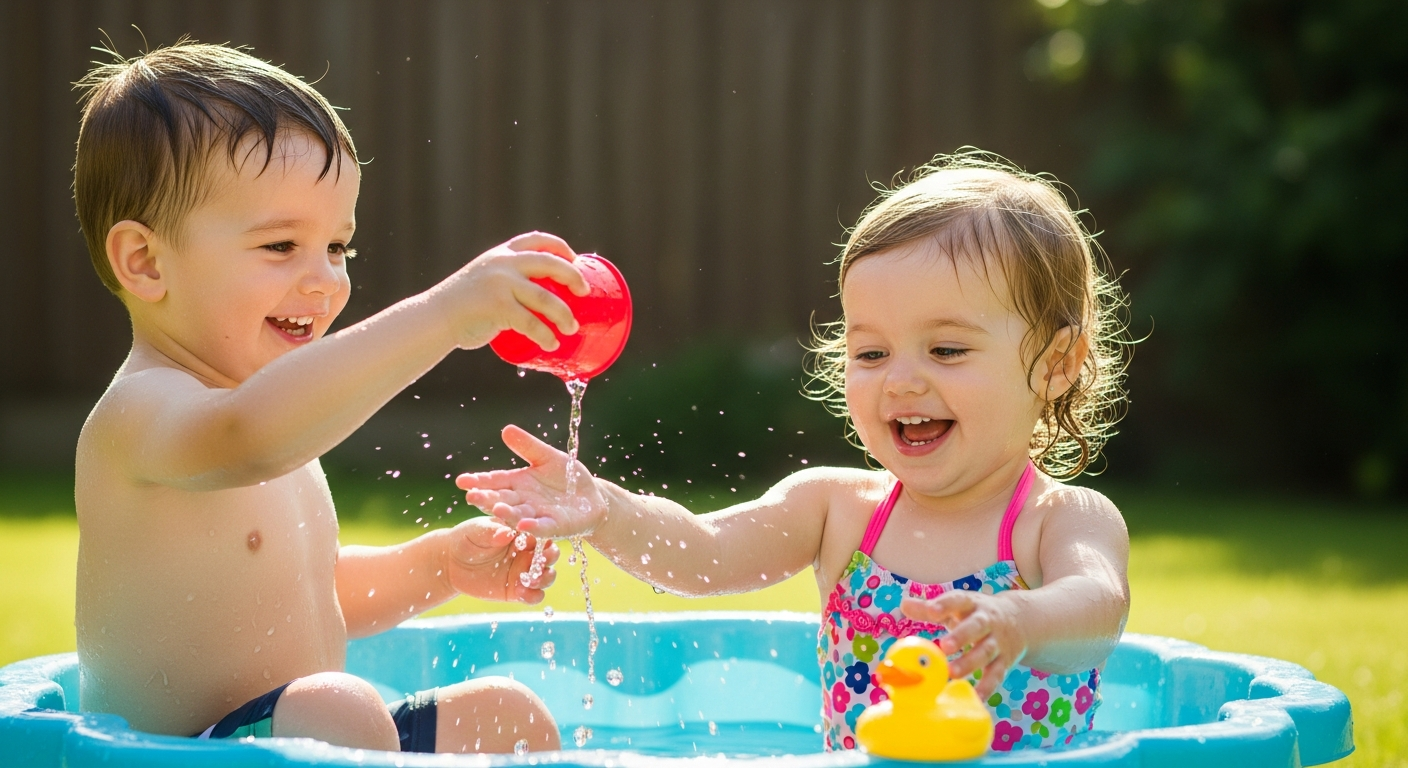
Table of Contents
- Introduction
- The Science of Play and Language Development
- Messy Sensory Fun: Learning Through Touch
- Creative Art Adventures: Expressing Inner Worlds
- Water Play: Splashing Into New Vocabulary
- Quick and Easy At-Home Ideas for Low-Energy Days
- Why Speech Blubs is the Perfect Summer Companion
- Building Confidence and Realistic Expectations
- More Fun Activities to Try
- Managing the Summer Heat: Indoor Alternatives
- The Role of Co-Play
- Conclusion
- Frequently Asked Questions
Introduction
Did you know that approximately one in four children will experience some form of speech or language delay during their early developmental years? This statistic can feel overwhelming for parents, but it also highlights a beautiful opportunity: the power of early intervention and intentional play. Summer, with its long days and relaxed pace, is the perfect season to lean into activities that foster connection and communication. Whether you are navigating a diagnosed delay or simply want to give your child a head start, the environment you create at home is the most influential classroom they will ever have.
At Speech Blubs, our mission is to empower children to "speak their minds and hearts." We understand the nuances of this journey because our founders grew up with speech challenges themselves; they built the very tool they wished they had as kids. In this post, we are going to explore a variety of toddler summer activities at home that blend sensory exploration, physical movement, and creative expression. We will also show you how to pair these offline moments with "smart screen time" to create a holistic learning experience. By the end of this guide, you will have a toolkit of low-prep, high-impact ideas that turn your backyard or living room into a hub of joyful discovery.

The core message here is simple: play is the work of childhood. When we engage in these activities together, we aren't just passing the time; we are building the foundational blocks of language, confidence, and curiosity. Ready to transform your summer? You can download Speech Blubs on the App Store or Google Play to begin this journey of discovery with us.
The Science of Play and Language Development
Before we dive into the specific activities, it is helpful to understand why they work. Toddlers learn best through multi-sensory experiences. When a child feels the cold squish of mud between their toes or hears the rhythmic splash of water in a bucket, their brain is firing in multiple directions. This is where language takes root. By labeling these sensations—"cold," "squishy," "loud," "splash"—you are helping them map words to real-world experiences.
We utilize a specific scientific methodology called video modeling. In our app, children watch videos of their peers performing speech exercises. This triggers "mirror neurons" in the brain, making the child want to imitate what they see. This same principle applies to your at-home activities. When you model a behavior or a sound during play, your child is naturally inclined to follow suit. Combining these physical activities with our research-backed approach provides a powerful, dual-pronged strategy for development.
Messy Sensory Fun: Learning Through Touch
Sensory play is a cornerstone of toddler development. It helps with fine motor skills, cognitive growth, and, most importantly, language expansion. Here are some of our favorite messy summer activities to try in the backyard.
1. Chocolate Oobleck "Animal Rescue"
Oobleck is a fascinating substance made of cornstarch and water that acts as both a liquid and a solid. Adding cocoa powder turns it into "mud," which is perfect for an animal-themed activity.
- How to do it: Mix two parts cornstarch with one part water and a few tablespoons of cocoa powder in a large bin. Add plastic toy animals.
- The Learning Connection: For a parent whose 3-year-old "late talker" loves animals, this is a golden opportunity. As your child "rescues" the animals from the mud, you can practice animal sounds.
- Speech Blubs Tie-in: After the activity, open the "Animal Kingdom" section in Speech Blubs. Your child can watch their peers make the "moo" and "baa" sounds they just practiced in the mud, reinforcing the vocabulary in a digital environment.
2. Edible Sludge Exploration
If you have a "taby" (a toddler who still puts everything in their mouth), taste-safe activities are essential.

- How to do it: You can use blended oats, chia seed slime, or even overcooked pasta dyed with food coloring.
- The Learning Connection: Focus on descriptive words. Is it "sticky"? Is it "green"? Is it "yucky"? Using these adjectives helps expand a child's vocabulary beyond simple nouns.
Creative Art Adventures: Expressing Inner Worlds
Art is a non-verbal form of communication that eventually bridges into verbal skills. It allows toddlers to make choices and see the immediate impact of their actions.
3. The Giant Amazon Box Mural
If you are like many parents, you likely have cardboard boxes piling up. Don't throw them out!
- How to do it: Flatten a large box and tape it to the ground or a fence. Provide washable paints and sponges.
- The Learning Connection: This is a great "gross motor" art activity. Instead of small finger movements, they are using their whole arms. Talk about the "big" circles or "long" lines they are making.
- Strategic Tip: If you are unsure where your child stands with their communication milestones, you can take our quick 3-minute preliminary screener to get a personalized assessment and a 7-day free trial.
4. Fly Swatter Painting
This is exactly what it sounds like—and toddlers find it hilarious.
- How to do it: Put dollops of paint on a large sheet of paper and let your child "swat" the paint.
- The Learning Connection: This activity is excellent for practicing "action words" or verbs. "Hit," "splat," "bang," and "go" are all high-frequency words that are easy for toddlers to grasp during high-energy play.
Water Play: Splashing Into New Vocabulary
Water play is a summer staple for a reason. It is cooling, engaging, and offers endless opportunities for "cause and effect" learning.
5. The Backyard Car Wash
Toddlers love imitating adults. Giving them a "job" to do builds confidence and social-emotional skills.
- How to do it: Fill a bucket with soapy water and gather their toy trucks, trikes, or even the family car (if you don't mind a few missed spots).
- The Learning Connection: Use this time to practice "prepositions." Put the soap on the car. Put the water in the bucket. Scrub under the wheels. Understanding these directional words is a key part of early language development.
- Smart Screen Time Pair: After the real-life car wash, explore the "Toy Box" section in our app to see different vehicles and hear the sounds they make. You can find us on the Google Play Store to get started.
6. Nature Soup
This activity combines a nature walk with water play.
- How to do it: Give your child a bucket and go for a walk to collect "ingredients" like leaves, sticks, and flower petals. Bring them back and add them to a large tub of water with some ladles and bowls.
- The Learning Connection: This encourages categorization. "Let's find all the yellow flowers" or "Let's find the pointy leaves." Narrating the process helps the child understand the sequence of events.
Quick and Easy At-Home Ideas for Low-Energy Days
We know that every day isn't a "high-energy, outdoor painting" kind of day. Sometimes, you just need something simple to get through the afternoon slump.
7. The Living Room Blanket Fort
A classic for a reason. A fort creates a "cosy space" where children often feel more secure and willing to vocalize.
- How to do it: Use chairs and blankets to create a dark, quiet cave.
- The Learning Connection: Use a flashlight to play "I Spy" inside the fort. This builds focused attention, which is a prerequisite for learning language.
- Family Connection: This is a perfect time to sit together and use Speech Blubs. Unlike passive cartoons, our app is designed for "co-play." You can sit in the fort, watch the video models together, and encourage your child to mimic the sounds.
8. Kitchen "Helping"
Toddlers are fascinated by the kitchen. While you may not want them near the stove, they can be excellent "mixers."
- How to do it: Give them a bowl of dry pasta and a wooden spoon, or let them help wash plastic containers in the sink.
- The Learning Connection: This is a great time for "turn-taking," which is the foundation of conversation. "My turn to stir, now your turn!"
Why Speech Blubs is the Perfect Summer Companion
While physical activities are vital, incorporating "smart screen time" can accelerate progress. Many parents feel guilty about screen time, but there is a significant difference between passive viewing and active learning. Traditional cartoons often move too fast for a child with a speech delay to process the language. Speech Blubs, however, is built on the principle of peer-to-peer imitation.
When your child sees another child's face on the screen making a specific sound, it is much more relatable and encouraging than an animated character. We offer an immediate, effective, and joyful solution for the 1 in 4 children who need speech support. We aren't just an app; we are a bridge to better communication.
Transparent Pricing for Families
We want to be as helpful as possible, which includes being transparent about our costs. We offer two main plans to fit your family's needs:
- Monthly Plan: For $14.99 per month, you get full access to our library of 1,500+ activities and video models.
- Yearly Plan (Best Value): For $59.99 per year (which breaks down to just $4.99 per month), you save 66% compared to the monthly plan.
The Yearly Plan is our most popular choice because it includes:
- A 7-day free trial to see if the app is a fit for your child.
- The Reading Blubs app, which helps transition speech skills into literacy.
- Early access to all new updates and features.
- 24-hour support response time from our dedicated team.
The Monthly plan does not include the free trial or the Reading Blubs app, so we always recommend the Yearly plan for the most comprehensive experience. You can create your account and start your trial today.
Building Confidence and Realistic Expectations
It is important to remember that every child's journey is unique. At Speech Blubs, we don't promise overnight "miracles." Instead, we focus on fostering a love for communication and reducing the frustration that often comes with speech delays. Our goal is to create joyful family learning moments.
Think of our app as a powerful supplement to your child's overall development plan. Whether they are in professional speech therapy or you are just looking for ways to boost their skills at home, consistency is key. Using the app for just 10-15 minutes a day, paired with the physical toddler summer activities at home we've discussed, can lead to significant gains in confidence and foundational skills.
Don't just take our word for it—see what other parents are saying about their experiences. From "late talkers" to children with Autism or Down Syndrome, our community is full of stories of progress and heart-to-heart connections.
More Fun Activities to Try
9. Backyard Scavenger Hunt
Create a simple visual list of things for your child to find.
- How to do it: Draw a picture of a leaf, a rock, a flower, and a stick.
- The Learning Connection: This builds "receptive language"—the ability to understand and follow instructions. As they find each item, celebrate with "enthusiastic praise."
10. Sponge Water Painting
This is the ultimate low-mess, high-fun activity.
- How to do it: Give your child a bucket of water and some old sponges. Let them "paint" the side of the house, the fence, or the sidewalk.
- The Learning Connection: As the water evaporates, you can talk about "magic" and "disappearing." It's a simple way to introduce complex concepts through observation.
Managing the Summer Heat: Indoor Alternatives
Sometimes, it is simply too hot to be outside. On those days, you can bring the summer vibes indoors.
- Ice Cube Play: Put some plastic toys inside an ice cube tray, freeze them, and then let your child "rescue" the toys using warm water and a dropper. This is incredible for fine motor development.
- Shadow Puppets: Close the curtains, grab a flashlight, and make animals on the wall. This is a quiet, intimate way to practice animal names and sounds.
The Role of Co-Play
The most important "supply" for any of these activities is you. While it is tempting to set up an activity and step away to finish chores, the real magic happens when you play together. Children are social learners. They look to you for cues on how to react, how to sound out words, and how to engage with the world.
When using Speech Blubs, try to sit with your child. Mimic the video models yourself! When they see you making a silly face or a "pop" sound, it gives them the social "permission" to be silly and try it too. This co-play builds a bond that is far more valuable than any toy.
Conclusion
Summer is more than just a break from the routine; it is a season of growth. By integrating these toddler summer activities at home with the scientific approach of Speech Blubs, you are providing your child with a rich, supportive environment to find their voice. Remember, the goal isn't perfection—it's progress, confidence, and connection.
We are here to support you every step of the way. Whether your child is just starting to babble or is working on complex sentences, our "smart screen time" experiences are designed to meet them where they are.
Ready to see the difference for yourself?
We invite you to start your 7-day free trial by downloading the app on the App Store or Google Play. For the best value and access to our full suite of features—including the Reading Blubs app and priority support—be sure to select the Yearly plan. Let’s make this the summer your child truly begins to speak their mind and heart.
Frequently Asked Questions
1. How much screen time is "too much" for a toddler?
While the American Academy of Pediatrics provides general guidelines, the quality of screen time matters as much as the quantity. Passive viewing (like watching cartoons) should be limited. However, "smart screen time" like Speech Blubs is interactive and encourages physical participation. We recommend short, 10–15 minute sessions of high-quality, interactive content paired with plenty of offline play.
2. My child isn't talking yet; can they still use Speech Blubs?
Absolutely! In fact, the app is specifically designed for "late talkers." Our "Early Sounds" and "Animal Kingdom" sections focus on simple sounds and mimicry, which are the building blocks of speech. The video modeling technique is especially effective for children who haven't started using words yet because it focuses on the physical mechanics of making sounds.
3. Do I need any special equipment for the summer activities mentioned?
Not at all. We intentionally chose activities that use common household items like cardboard boxes, water, cornstarch, and sponges. The goal is to make learning accessible and low-stress for parents. The most important "equipment" is your time and engagement.
4. What makes the Yearly plan better than the Monthly plan?
The Yearly plan is designed for families committed to seeing long-term progress. It is 66% cheaper than the monthly rate and includes a 7-day free trial, which the monthly plan does not. Additionally, you get the Reading Blubs app for free, giving your child a head start on literacy, along with 24-hour support and early access to all new app content.
About the author