
12 Fun and Easy Toddler Apple Craft Ideas for Fall
 By Speech Blubs Team•Feb 20, 2026•15 min.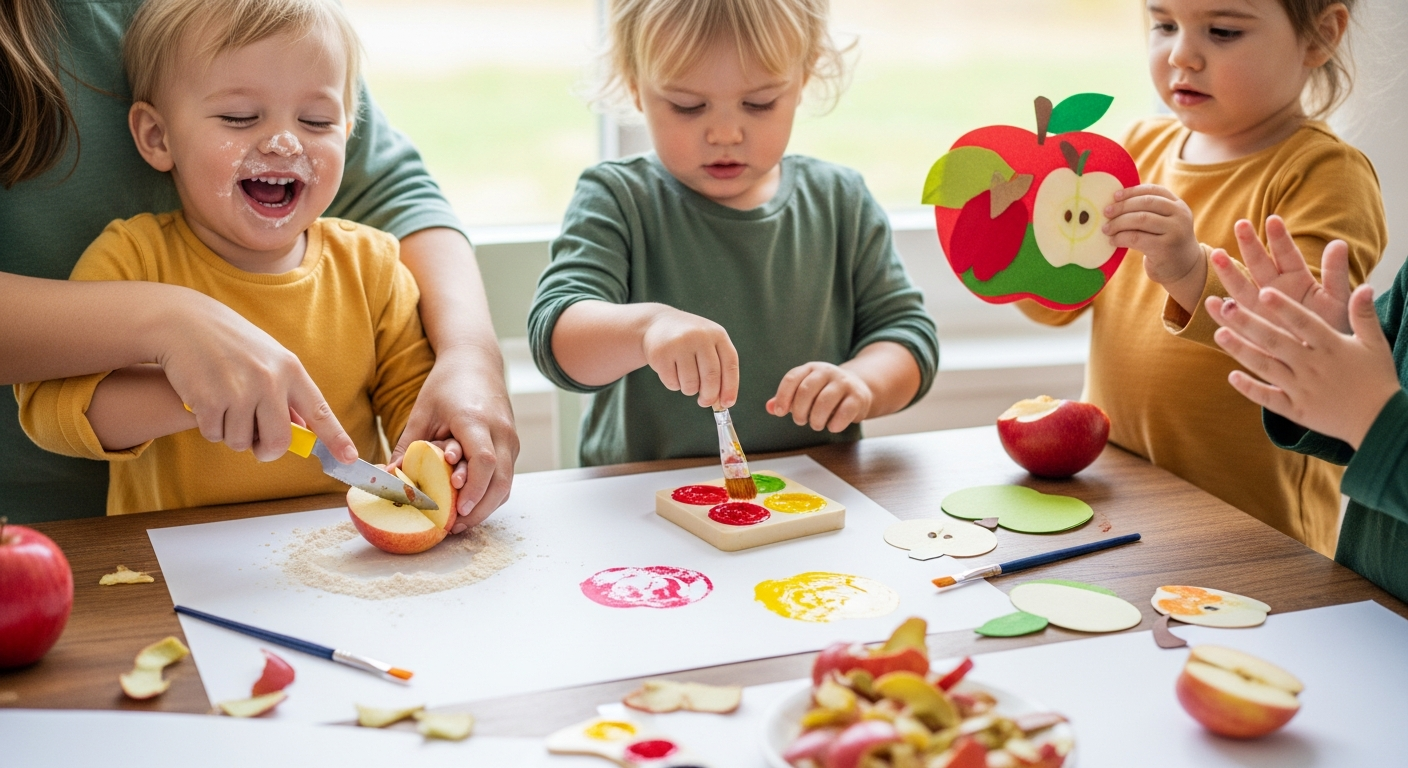
Table of Contents
- Introduction
- The Power of Sensory Play in Early Development
- 1. The Classic Paper Plate Apple
- 2. Apple Stamping with Real Fruit
- 3. Contact Paper Apple Suncatchers
- 4. Bubble Wrap Painted Apples
- 5. Torn Paper Apple Art
- 6. The "Worm in My Apple" Craft
- 7. Yarn-Wrapped Apples
- 8. Apple Scented Playdough
- 9. Apple Tree Handprint Keepsake
- 10. Coffee Filter Apples
- 11. Duplo Stamped Apple Trees
- 12. The Apple "Anatomy" Craft
- Integrating Smart Screen Time with Speech Blubs
- Tips for a Stress-Free Crafting Session
- Conclusion
- Frequently Asked Questions
Introduction
Did you know that the simple act of picking up a slice of apple or dip-painting a paper plate can actually be a building block for your child's communication skills? For toddlers, the world is one giant laboratory, and autumn provides the perfect "specimen" to study: the apple. Whether they are feeling the smooth skin, smelling the sweet scent, or hearing the "crunch" of a first bite, apples offer a multi-sensory experience that is ripe for language development. At Speech Blubs, we believe that every moment—even a messy crafting session—is an opportunity to empower children to speak their minds and hearts.
The purpose of this guide is to provide you with a curated list of the best toddler apple craft ideas that are not only fun but also intentionally designed to support fine motor skills, sensory exploration, and early vocabulary. We will explore everything from classic apple stamping to creative suncatchers, while also showing you how to bridge the gap between physical play and "smart screen time."

Our main message is simple: you don’t need to be a professional artist or a speech therapist to support your child’s growth. By combining hands-on activities with the right educational tools, you can create joyful family learning moments that foster a lifelong love for communication.
The Power of Sensory Play in Early Development
Before we dive into the glue and glitter, it’s important to understand why a toddler apple craft is more than just a refrigerator decoration. When a child engages in "process art"—where the focus is on the doing rather than the final product—they are exercising their brain in unique ways.
Building Fine Motor Skills
Toddlers are still mastering the tiny muscles in their hands and fingers. Activities like tearing paper, squeezing glue bottles, or gripping a halved apple for stamping are essential for developing the dexterity needed for writing and self-feeding later on. These "pre-writing" skills are foundational to their overall physical confidence.
Vocabulary Expansion
Crafting provides a natural context for new words. Instead of just teaching the word "apple," you can introduce descriptive adjectives like round, red, crunchy, sweet, sticky, and smooth. You can use action verbs like paint, press, tear, and stick. This contextual learning is exactly what we advocate for at Speech Blubs, as it helps children connect sounds to real-world objects and actions.
If you are ever concerned that your child isn't meeting certain vocal milestones while engaging in these activities, we are here to help. You can take our quick 3-minute preliminary screener, which involves just 9 simple questions, to get an assessment and a next-steps plan tailored to your little one.
1. The Classic Paper Plate Apple
This is a staple for a reason. It’s low-cost, high-reward, and perfectly suited for tiny hands.
What You’ll Need:
- Paper plates
- Red, green, or yellow washable paint
- Cotton balls or sponges
- Clothespins
- Brown and green construction paper scraps
The Process: Instead of a traditional paintbrush, clip a cotton ball into a clothespin. This creates a "handle" that encourages a pincer grasp. Let your toddler dip the cotton ball into the paint and "dab-dab-dab" all over the plate. Once dry, help them glue on a brown rectangle for a stem and a green leaf.

The Speech Connection: Use this time to practice the "P" sound. Every time they dab the paint, say "Pop!" or "Push!" This repetition mimics the video modeling methodology used in our app, where children learn by watching and imitating. Seeing you make the "P" shape with your lips while performing a physical action helps the brain lock in the sound.
2. Apple Stamping with Real Fruit
There is something magical to a toddler about using food as a tool. This craft helps them understand the internal structure of the fruit.
What You’ll Need:
- One or two apples (halved)
- Thick paper or cardstock
- Paint in various "apple colors"
The Process: Cut the apple vertically to show the traditional "apple shape" or horizontally to reveal the star pattern in the core. Show your child how to dip the flat side into paint and press it firmly onto the paper.
Pro-Tip: For a parent whose 3-year-old "late talker" loves repetitive motions, apple stamping is a fantastic motivator. You can model the word "More?" and wait for a gesture or a sound before giving them the next color. This reduces frustration by giving them a clear, fun way to communicate their needs.
3. Contact Paper Apple Suncatchers
Suncatchers are excellent for fine motor development because they require "pinching" small pieces of tissue paper.
What You’ll Need:
- Clear contact paper (sticky back plastic)
- Red and green tissue paper (pre-torn or cut into squares)
- Black construction paper for the outline
The Process: Cut an apple-shaped "frame" out of black construction paper. Place it on a piece of contact paper. Let your toddler fill the middle with tissue paper bits. Once full, seal it with another piece of contact paper and tape it to a sunny window.
Why it Works: The transparency of the craft introduces the concept of light. You can talk about how the sun makes the red "bright" or "glow." This is a great way to move beyond basic nouns into more abstract concepts.
4. Bubble Wrap Painted Apples
If your child is a sensory seeker, they will love the texture of bubble wrap. It adds a 3-dimensional element to their art.
What You’ll Need:
- Bubble wrap
- Red paint
- Paper cut into an apple shape
The Process: Paint the "bubbly" side of the wrap and then press the apple-shaped paper onto it. When you peel it back, it leaves a cool, pebbled texture that looks like the skin of certain apple varieties.
Smart Screen Time Connection: After a tactile session like this, your child might be ready for a "cool down" period. This is where "smart screen time" comes in. Instead of passive viewing, you can open Speech Blubs and find the "Yummy Time" section. Your child can watch their peers making eating sounds or naming fruits, which reinforces the physical play they just finished. You can download Speech Blubs on the App Store to see these sections in action.
5. Torn Paper Apple Art
Don't have paint? No problem. Tearing paper is actually one of the best ways to build hand strength.
What You’ll Need:
- Construction paper (red, green, brown)
- Glue stick
- A printed apple outline (or a hand-drawn one)
The Process: Show your child how to tear long strips of red paper into small "bits." Then, have them "paint" the inside of the apple outline with a glue stick and stick the bits down.
The Goal: Don't worry if the paper goes outside the lines! The goal is confidence and the joy of creation. At Speech Blubs, our mission is to empower kids to express themselves, whether through words or a messy, torn-paper masterpiece.
6. The "Worm in My Apple" Craft
This craft adds a playful character to the mix, which is great for storytelling.
What You’ll Need:
- A paper plate painted red
- A green pipe cleaner or a strip of green paper
- Googly eyes
The Process: Punch a small hole in the "apple" (the plate). Feed the pipe cleaner through it to represent a wiggly worm. Add googly eyes to the worm.
The Speech Connection: This is the perfect opportunity to practice prepositions. Is the worm in the apple? Is he out? Is he on the apple? Using the "Wormy" character makes these complex language concepts feel like a game.
7. Yarn-Wrapped Apples
For older toddlers (around age 3), yarn wrapping is a fantastic way to practice bilateral coordination (using both hands together).
What You’ll Need:
- Cardboard cut into an apple shape
- Red yarn
- Tape
The Process: Tape one end of the yarn to the back of the cardboard. Show your child how to wrap the yarn around and around the apple until it’s "dressed."
Scientific Note: This type of activity engages the brain's motor planning centers. Our founders, who grew up with speech problems themselves, understood that physical movement and vocalization are deeply linked. By strengthening one, we often support the other. You can read more about our scientific approach and the use of mirror neurons on our research page.
8. Apple Scented Playdough
Sometimes the craft isn't a "thing" you keep, but a "medium" you play with.
What You’ll Need:
- 2 cups flour
- 1 cup salt
- 2 tbsp cream of tartar
- 2 tbsp oil
- 1.5 cups boiling water
- Red food coloring and cinnamon or apple extract
The Process: Mix the ingredients to create a soft, scented dough. Give your child "apple" tools: cinnamon sticks for stems, real leaves, and a rolling pin.
Relatable Scenario: Imagine a parent whose toddler is frustrated because they can't quite say "apple" yet. While squishing this dough, the parent can model the "Ah" sound. "Ah-ah-apple!" The scent and the texture provide extra sensory "hooks" for the brain to remember the word. To see how other families have used these sensory-integrated techniques, check out our parent testimonials.
9. Apple Tree Handprint Keepsake
This is a classic "grow with me" craft that parents cherish.
What You’ll Need:
- Brown paint
- Green paper
- Red markers or red finger paint
The Process: Paint your child's hand and forearm brown and press it onto paper to create the "trunk" and "branches." Once dry, draw or paint green "clouds" for the leaves and add red dots for the apples.
The Value of Connection: This activity requires a lot of co-play. You are holding their hand, guiding the paint, and laughing together. This connection is the heartbeat of development. Our app is designed to be a tool for this kind of family connection—a screen-free alternative to passive viewing that you do together.
10. Coffee Filter Apples
Coffee filters absorb liquid in a way that is fascinating for kids to watch.
What You’ll Need:
- Round coffee filters
- Washable markers (red and green)
- A spray bottle with water
The Process: Let your toddler scribble all over the coffee filter with red markers. Then, give them the spray bottle (great for hand strength!) and let them mist the filter. Watch as the colors bleed and blend.
The Language of Discovery: Ask questions! "What happened?" "Where did the white go?" Even if they answer with one word or a sound, you are building the foundations of conversational turn-taking.
11. Duplo Stamped Apple Trees
If your house is like ours, you probably have plastic building blocks everywhere. Why not use them as art tools?
What You’ll Need:
- Circular Duplo or LEGO bricks
- Red paint
- A drawing of a tree trunk
The Process: Use the circular end of a Duplo brick as a stamp. It makes perfectly round "apples" to fill up the tree.
Building Confidence: Using familiar toys in new ways builds "creative confidence." A child who feels confident in their ability to solve a "problem" (like how to make a circle) is a child who will eventually feel confident enough to try out new, tricky speech sounds.
12. The Apple "Anatomy" Craft
For preschoolers, we can start looking inside the apple.
What You’ll Need:
- Paper cut into three parts: The "skin" (a red ring), the "flesh" (a white circle), and the "seeds" (black paper scraps).
The Process: Help your child layer them: Skin on the outside, flesh in the middle, and seeds in the center.
Realistic Expectations: Your child might want to put the seeds on the skin. That’s okay! We aren't looking for botanical accuracy; we are looking for engagement. Fostering a love for learning and reducing frustration are the primary goals here.
Integrating Smart Screen Time with Speech Blubs
While hands-on toddler apple crafts are incredible for development, we live in a digital world. At Speech Blubs, we’ve created a way to make that screen time "smart" and effective. Our app uses video modeling, where your child watches other children (their "peers") perform speech exercises. This triggers mirror neurons in the brain, making your child more likely to imitate the sounds they see.
Why Choose Speech Blubs?
- Immediate & Joyful: We blend scientific principles with play to create a one-of-a-kind experience.
- Peer-to-Peer Learning: Children are more motivated by other children than by cartoons or adults.
- Evidence-Based: Our method is designed to provide effective support for the 1 in 4 children who need help with speech.
Transparency in Pricing
We want to be a partner in your child's journey, which is why we are transparent about our plans. We offer two main ways to join our community:
- Monthly Plan: $14.99 per month. This is a great way to test the waters.
- Yearly Plan (Best Value): $59.99 per year. This breaks down to just $4.99/month, saving you 66% compared to the monthly rate.
The Yearly Plan is our clear recommendation because it includes exclusive features:
- A 7-day free trial so you can explore everything risk-free.
- The Reading Blubs app, which extends the learning into early literacy.
- Early access to new updates and a 24-hour support response time.
Please note that the Monthly plan does not include the free trial or the Reading Blubs app. To get the full suite of features and the best start for your child, the Yearly plan is the way to go.
Tips for a Stress-Free Crafting Session
We know that "toddler craft" can sometimes feel synonymous with "giant mess." Here is how we recommend managing the experience:
- Prepare in Advance: Have all your papers cut and your paints poured before you call your toddler to the table. Their attention span is short, and every second you spend looking for a glue stick is a second they might spend painting the dog.
- Use Trays: Perform all crafts on a plastic tray or a cookie sheet. This keeps the glue and paint contained.
- Focus on the "Why": Remind yourself that the goal isn't a perfect apple. The goal is the conversation you have while making it.
- Embrace the "Smart" Screen: If the mess gets too much and you need five minutes to clean up, that is the perfect time to let your child use Speech Blubs. It keeps them in a "learning" mindset while you reset the environment.
Conclusion
The humble apple is more than just a snack; it’s a gateway to sensory discovery and language mastery. From the "pop" of a paint-soaked cotton ball to the "crunch" of a real Gala or Honeycrisp, every interaction is an opportunity for your child to find their voice. By engaging in these toddler apple craft ideas, you are building the foundational skills of fine motor control, vocabulary, and creative confidence.
At Speech Blubs, we are honored to be a part of your family’s journey. Our mission is to provide you with the tools to help your child speak their mind and heart with joy and confidence. Whether you are using our app as a supplement to professional therapy or as a way to enrich your daily play, we are here to support you.
Ready to take the next step in your child's communication journey? Download Speech Blubs on the Google Play Store or the Apple App Store today. Choose the Yearly plan to unlock your 7-day free trial, the Reading Blubs app, and the full suite of "smart screen time" experiences for just $4.99 a month. Let’s start making those joyful learning moments together!
Frequently Asked Questions
1. What is the best age to start apple crafts with a toddler?
Most children can begin simple "process art" like finger painting or paper tearing around 18 months to 2 years. At this age, the focus should be entirely on sensory exploration. As they reach age 3 or 4, they can begin more structured activities like yarn wrapping or using scissors with supervision.
2. My child still puts everything in their mouth. Is crafting safe?
Safety is the priority! For children who are still in the oral exploration phase, stick to "edible" crafts. You can use yogurt colored with food dye instead of paint, or use real apple slices and water for "stamping" on construction paper. Always supervise your child closely during any activity involving small parts like googly eyes or seeds.
3. How do these crafts actually help with speech delays?
Crafts help by creating a "low-pressure" environment for communication. When a child is focused on a task they enjoy, they are more likely to attempt sounds and words. By modeling specific sounds (like "A is for Apple") during the craft, you are using the same principles of imitation that make Speech Blubs so effective.
4. Can Speech Blubs replace traditional speech therapy?
Speech Blubs is designed to be a powerful supplement to a child’s overall development plan and, when applicable, professional therapy. It provides a fun, engaging way to practice at home, but it does not replace the personalized assessment of a licensed Speech-Language Pathologist (SLP). Many parents find that using the app between therapy sessions helps maintain progress and keeps their child motivated.
About the author