
12 Fun Fall Toddler Crafts for Speech and Development
 By Speech Blubs Team•Feb 23, 2026•16 min.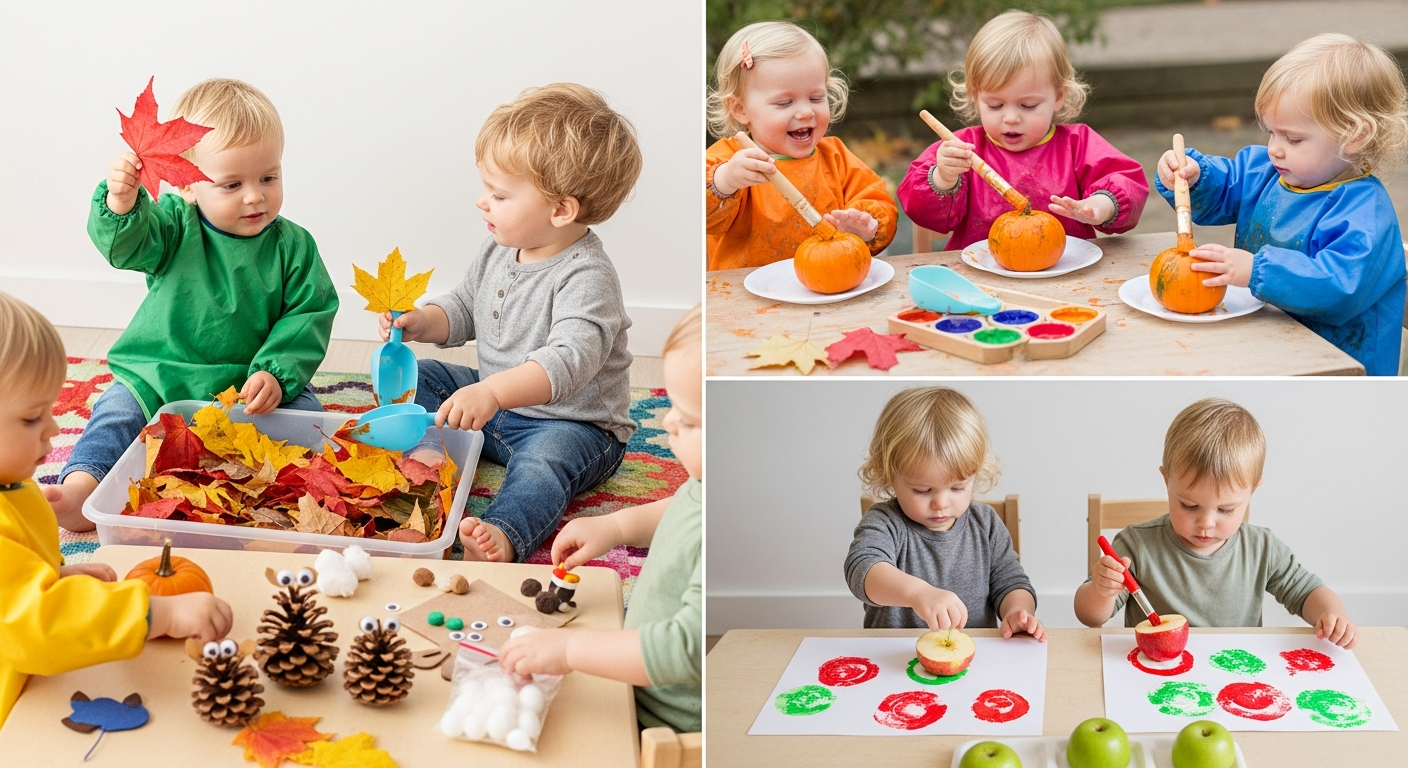
Table of Contents
- Introduction
- The Power of Sensory Play in Speech Development
- 1. The Leafy Letter Collage
- 2. Apple Print Banners
- 3. The Pumpkin Pasta Sensory Craft
- 4. Coffee Filter Fall Leaves
- 5. Scarecrow Expression Faces
- 6. Alphabet Pumpkins
- 7. Sunflower Noodle Craft
- 8. Fall Puffy Paint Trees
- 9. Acorn Math Sticky Wall
- 10. The Fall Unity Wreath
- Supporting Your Child's Journey with Speech Blubs
- Speech-Boosting Tips for Craft Time
- Creating Joyful Family Learning Moments
- FAQ
- Conclusion
Introduction
Did you know that nearly 25% of toddlers experience some form of speech or language delay? That is 1 in 4 children who may feel the frustration of having a world of thoughts inside them but not yet the tools to share them. As the air turns crisp and the leaves begin their vibrant transformation, we are presented with a golden opportunity to turn simple seasonal changes into powerful learning moments. Fall isn't just a time for sweaters and pumpkin spice; for a developing child, it is a sensory playground waiting to be explored.
At Speech Blubs, we believe every child deserves to speak their mind and heart. Our founders started this journey because they navigated their own speech struggles as children, and they wanted to build the joyful, effective tool they wished they had back then. We understand that "smart screen time" should be a bridge to real-world interaction, not a replacement for it. That is why we advocate for blending digital learning with hands-on activities.

In this post, we will explore a variety of engaging fall toddler crafts that do more than just decorate your fridge. We will dive into how these activities foster fine motor skills, sensory processing, and most importantly, language development. From leafy collages to pumpkin pasta art, we’ll show you how to use these moments to build confidence and joy in your little one’s communication journey. By the end of this guide, you will have a toolkit of creative ideas and a clear understanding of how to pair them with the Speech Blubs app to support your child's growth.
Crafting with your toddler is about creating a rich environment where words and actions meet. Our thesis is simple: when we engage a child’s senses through play and artistic expression, we lower the pressure of "learning" and open the door to natural, confident communication.
The Power of Sensory Play in Speech Development
Before we jump into the glue and glitter, it is essential to understand why these fall toddler crafts are so beneficial. Speech development is not just about the mouth; it is a whole-body experience. When a toddler squishes a leaf, smells a cinnamon stick, or feels the sticky texture of a glue stick, they are building neural pathways that support cognitive and linguistic growth.
The Role of Mirror Neurons
At the heart of our methodology is the concept of "video modeling." This is based on the science of mirror neurons—specialized brain cells that fire both when we perform an action and when we observe someone else performing that same action. When your child watches a peer in the Speech Blubs app making a "B" sound or a "Moo" sound, their brain is actually practicing that sound along with them.
You can replicate this during craft time. By sitting across from your child and modeling an action—like "patting" the paper or "tearing" a leaf—you are triggering those same mirror neurons. This is why we emphasize adult co-play. Our research-backed approach places us in the top tier of speech apps because we focus on this natural imitation, which is the foundation of all human communication.

Building Vocabulary Through Action
Every craft activity is an opportunity to introduce "power words." These aren't just nouns like "leaf" or "pumpkin," but action verbs and descriptive adjectives.
- Verbs: Push, pull, stick, tear, cut, pour, stir.
- Adjectives: Crunchy, soft, wet, sticky, bright, bumpy.
By narrating your child’s actions in real-time, you are providing them with a linguistic map of their world. For a parent whose 3-year-old "late talker" loves animals, the "Animal Kingdom" section of our app can be used to practice "Crunch like a squirrel!" while you play with dry leaves. This connection between the screen and the physical world is what makes "smart screen time" so effective.
1. The Leafy Letter Collage
This craft is a wonderful way to combine a nature walk with early literacy and speech practice. It focuses on letter recognition and the tactile sensation of different leaf textures.
How to do it:
- Nature Walk: Head outside with a small basket. Encourage your child to find leaves of different colors—red, yellow, orange, and brown. Use this time to practice "Go" and "Stop" as you walk.
- Preparation: On a large piece of cardstock, draw the first letter of your child's name in a thick, bold outline.
- The Craft: Apply glue inside the letter. Have your child press the leaves onto the glue.
Speech Connection: While you work, focus on the letter sound. If the letter is "S," emphasize the /s/ sound. "Sssss-ticky leaves on the Sssss." This repetitive, phoneme-focused play is a core part of how we help children build foundational communication skills. If you are unsure if your child is reaching their milestones, you can take our quick 3-minute preliminary screener to get an assessment and a next-steps plan.
2. Apple Print Banners
Apple printing is a classic fall toddler craft that never goes out of style. It’s perfect for practicing "action-result" language.
How to do it:
- Preparation: Cut a few apples in half (vertical and horizontal cuts provide different shapes).
- Painting: Put red, green, and yellow washable paint on shallow plates.
- The Craft: Show your child how to dip the apple in the paint and "STAMP" it onto a long strip of paper or a burlap banner.
Speech Connection: Every time they press the apple down, say "Stamp!" or "Pop!" These short, explosive sounds are often the easiest for toddlers to imitate. This mirrors our "Yummy Time" section in the app, where kids learn about different foods through fun, interactive peer modeling. For kids who are more visual, seeing a peer "crunch" an apple in the app before doing this craft can provide the boost of confidence they need to try the word themselves.
3. The Pumpkin Pasta Sensory Craft
Using different textures is key for sensory-seekers. This craft uses dry pasta to create a 3D pumpkin that is as fun to touch as it is to look at.
How to do it:
- Preparation: Dye some pasta (rotini or wheels work great) orange using a bit of vinegar and food coloring in a zip-lock bag. Let it dry.
- The Base: Draw a large pumpkin shape on a piece of cardboard.
- The Craft: Let your child spread glue inside the pumpkin and pour/place the pasta on top.
Speech Connection: This is a high-sensory activity. Talk about the "bumpy" pasta or the "hard" noodles. If your child is using the Speech Blubs app on Google Play, they might already be familiar with the "Shapes & Colors" section. You can reinforce those concepts here. "What color is the pumpkin? Orange!"
4. Coffee Filter Fall Leaves
This activity introduces a bit of "magic" as colors bleed together, which is perfect for keeping a toddler’s attention.
How to do it:
- Preparation: Cut coffee filters into leaf shapes.
- Coloring: Let your child scribble on them with washable markers (red, orange, yellow).
- The Magic: Use a spray bottle filled with water to lightly mist the filters. Watch the colors spread!
Speech Connection: Use this to practice "Wait" and "More." Before spraying the water, wait for your child to make a sound or gesture. This "expectant waiting" is a powerful tool in speech therapy. It encourages the child to initiate communication to get the desired result (the water spray).
Expert Tip: Don't worry about the final product looking perfect. The value lies in the process—the conversation, the eye contact, and the shared joy of discovery.
5. Scarecrow Expression Faces
Understanding emotions and facial features is a big part of social communication.
How to do it:
- The Base: Use a paper plate as the scarecrow's face.
- The Features: Provide cut-outs for eyes, a nose, and a mouth. Use bits of yellow yarn or straw for hair.
- The Craft: Help your child glue the features on.
Speech Connection: As you add the mouth, talk about emotions. "Is the scarecrow happy? Let's give him a big smile!" You can pair this with our "Face Gym" section in Speech Blubs, which encourages kids to make different facial expressions. This helps build the muscles needed for speech while teaching the social context of communication. Many parents have shared success stories in our testimonials about how this focus on facial imitation was the breakthrough their child needed.
6. Alphabet Pumpkins
For older toddlers who are beginning to show interest in letters, this is a fantastic "seek and find" activity.
How to do it:
- Preparation: Draw several small pumpkins on a sheet of paper. Inside each, write a letter.
- The Craft: Give your child a bingo dauber or a cotton ball dipped in orange paint.
- The Game: Ask them to "find the 'B'" and "dot" it with paint.
Speech Connection: Focus on the sound of the letter, not just its name. "Find the /p/ /p/ pumpkin!" This phonological awareness is a key building block for reading later on. Speaking of reading, our Yearly Plan includes the Reading Blubs app, which is specifically designed to take these early skills to the next level.
7. Sunflower Noodle Craft
This craft is excellent for fine motor precision, which is closely linked to the brain's speech centers.
How to do it:
- The Base: A yellow circle on blue or white paper.
- The Petals: Use dried penne or bowtie pasta.
- The Center: Glue real sunflower seeds or black beans in the middle of the yellow circle.
Speech Connection: Count the seeds as you glue them. "One, two, three!" Use the word "Middle" to describe where the seeds go. If your child is working on their first words, the "Early Words" section of Speech Blubs provides a great digital companion to this physical counting and labeling activity.
8. Fall Puffy Paint Trees
Puffy paint is a sensory delight that toddlers find irresistible.
How to do it:
- The Paint: Mix equal parts shaving cream and white school glue. Add food coloring (red, orange, yellow).
- The Tree: Draw a brown trunk on cardstock.
- The Craft: Let your child use their fingers or a thick brush to "dollop" the puffy paint onto the branches as leaves.
Speech Connection: The texture of puffy paint is unique. Ask your child, "How does it feel? Squishy? Soft?" This encourages the use of descriptive language. Since this can be a bit messy, it’s a great way to practice "Clean up" or "Wash hands" afterward—functional phrases that are vital for daily communication.
9. Acorn Math Sticky Wall
Sticky walls are a "screen-free" favorite for many families because they allow for vertical play, which is great for shoulder stability and motor planning.
How to do it:
- Preparation: Tape a piece of contact paper (sticky side out) to the wall. Draw a few large acorns on it.
- The Game: Provide real acorns or brown pom-poms.
- The Craft: Have your child stick the "caps" onto the acorns.
Speech Connection: Practice "Up" and "Down" as they reach for the sticky paper. Vertical play naturally encourages kids to look up at you, facilitating better eye contact and social engagement.
10. The Fall Unity Wreath
This is a wonderful way to involve the whole family, fostering that connection we value so much at Speech Blubs.
How to do it:
- Preparation: Cut the center out of a paper plate to make a ring.
- The Leaves: Have every family member trace their hand on fall-colored construction paper and cut them out.
- The Craft: Glue the "hand-leaves" around the plate ring.
Speech Connection: This is about "Who." "Whose hand is this? Daddy's hand! Whose hand is that? [Child's Name]'s hand!" Identifying family members is a major milestone in early language.
Supporting Your Child's Journey with Speech Blubs
While these fall toddler crafts are powerful tools, we know that many parents look for additional, structured support. That is where Speech Blubs comes in. Our app is designed to be a powerful supplement to your child's overall development plan and, when applicable, professional therapy.
We focus on fostering a love for communication and building the confidence a child needs to try new sounds. We don't promise that your child will be giving public speeches in a month; instead, we celebrate the small, joyful victories—the first time they imitate a "pop," the first time they ask for "more," and the reduction in frustration that comes when they feel understood.
Transparency in Our Plans
We believe in building trust with parents, which is why we are transparent about our pricing. We offer two main paths:
- Monthly Plan: For $14.99 per month, you get access to our library of over 1,500 activities.
- Yearly Plan: For $59.99 per year, which breaks down to just $4.99 per month.
The Yearly Plan is the clear best choice for families committed to their child's progress. Not only do you save 66%, but you also receive:
- A 7-day free trial to ensure it's the right fit for your family.
- The Reading Blubs app at no extra cost, helping your child transition from speech to literacy.
- Early access to all new updates and features.
- 24-hour support response time from our dedicated team.
The Monthly plan does not include the free trial, the extra app, or the priority support. We encourage you to sign up for the Yearly plan on our website to unlock the full suite of features and start your journey today.
Speech-Boosting Tips for Craft Time
To get the most out of your fall toddler crafts, keep these therapeutic strategies in mind:
- Narrate the Process: Instead of asking "What are you doing?", describe it. "You are sticking the red leaf. Pat, pat, pat!"
- Use the "One-Word-Up" Rule: If your child is silent, use one word. If they use one word, you use two. This keeps the language level just slightly above theirs, making it achievable but challenging.
- Face-to-Face Interaction: Get down on their level. Physical proximity and eye contact are essential for them to see how your mouth moves when you speak.
- Incorporate "Smart Screen Time": Use Speech Blubs for 10-15 minutes before your craft. If you are going to make a "Cotton Ball Apple Tree," watch the "Yummy Time" section first. This primes their brain for the vocabulary they are about to use.
- Embrace the Mess: Sensory play can be messy, but that's where the learning happens! The feeling of glue or paint provides feedback to the brain that helps with body awareness.
Creating Joyful Family Learning Moments
Our mission at Speech Blubs is to empower children to speak their minds and hearts. We know that the journey can sometimes feel overwhelming, especially if you are worried about your child's progress. But remember, you are your child's best teacher and most important playmate.
These fall toddler crafts are more than just a way to pass a rainy afternoon. They are a way to connect, to laugh, and to build a foundation of communication that will last a lifetime. By combining these hands-on activities with the scientific principles of our Speech Blubs app on the Apple App Store, you are giving your child a powerful, multi-sensory learning experience.
FAQ
At what age can my toddler start using glue sticks for crafts? Most toddlers can begin experimenting with glue sticks around 2 years old. It is a great way to build "pincer grasp" and fine motor strength. Always supervise closely to ensure the glue stays on the paper and out of their mouths! For younger children, a "sticky wall" with contact paper is a great glue-free alternative.
What if my child doesn't want to follow the craft instructions? That is perfectly okay! At this age, the goal is "process art," not a perfect result. If you are trying to make a tree but they just want to pile all the leaves in a corner, follow their lead. Use that moment to talk about "piles," "big," or "hidden." Communication happens best when the child is interested and engaged.
How does Speech Blubs differ from just watching cartoons? Cartoons are passive; children sit and watch without a requirement to interact. Speech Blubs is "active" or "smart" screen time. Our video modeling technique encourages children to respond, imitate, and interact with the peers on the screen. It is designed to be a "co-play" tool where you and your child use the app together to spark real-world conversation.
We live in a place where the leaves don't change color. Can we still do these crafts? Absolutely! You can use construction paper, felt, or even sponges dipped in paint to create "leaves." You can also use this as a learning opportunity to look at pictures of fall in books or in the Speech Blubs app and talk about how the weather is different in different places.
Conclusion
Fall is a season of change, and it can also be a season of incredible growth for your child’s communication skills. Through these fall toddler crafts, you are providing the sensory input and linguistic environment your child needs to thrive. Whether you are stamping apples, sticking noodles, or exploring nature together, you are building the "heart and mind" connections that define our mission.
Remember that progress takes time, and every "pop," "moo," and "more" is a reason to celebrate. You don't have to do this alone. We are here to support you with a tool that blends science, play, and joy into one seamless experience.
Ready to see the difference for yourself? Download Speech Blubs on the App Store or Google Play to begin your journey. For the best value and the most comprehensive support, we recommend choosing the Yearly Plan. You'll get a 7-day free trial, the Reading Blubs app, and the peace of mind that comes with having a scientifically-backed tool at your fingertips. Let's make this fall the season your child finds their voice!
About the author