
15 Best Toddler Arts and Crafts Supplies for Creative Play
 By Speech Blubs Team•Feb 20, 2026•12 min.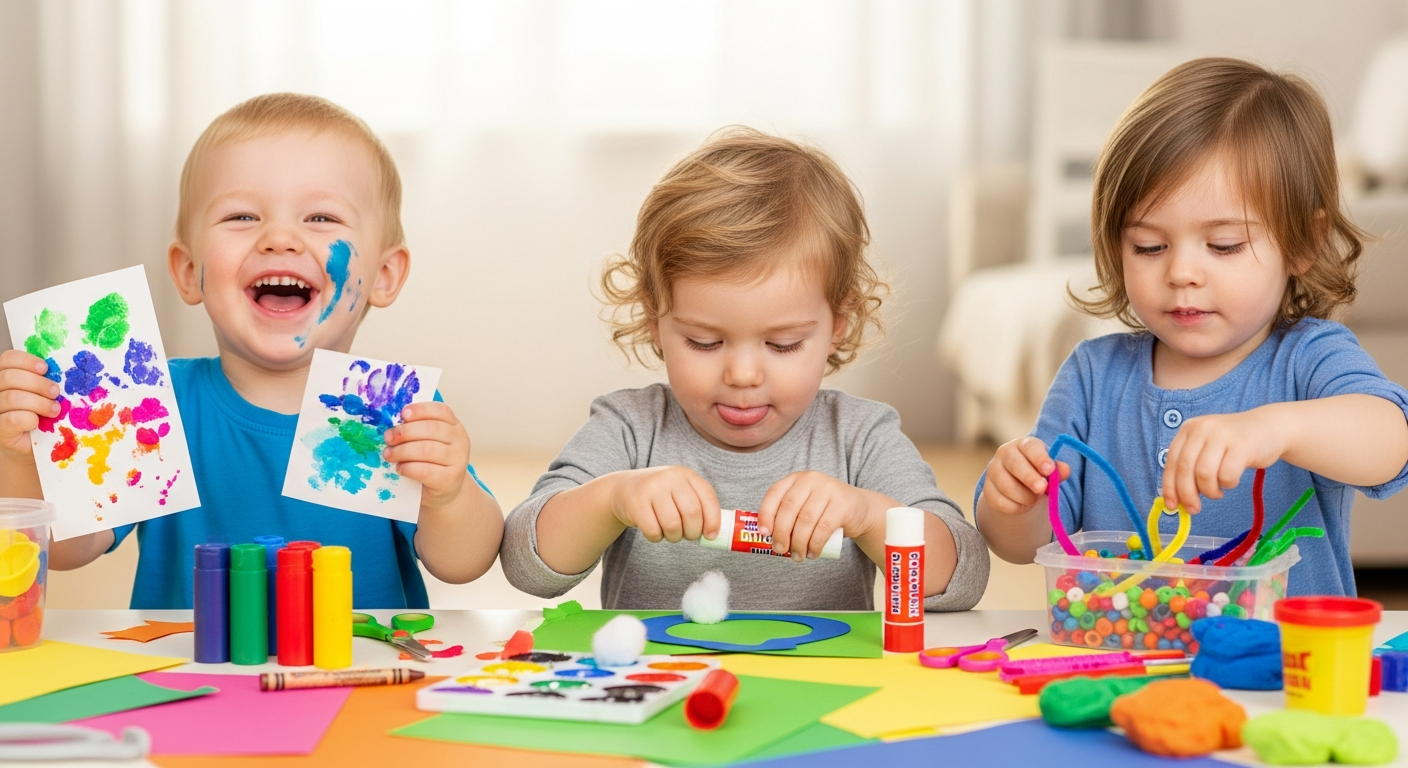
Table of Contents
- Introduction
- The Connection Between Art and Speech
- Drawing and Painting Essentials
- Crafting Supplies for Fine Motor Development
- Sensory and 3D Art Tools
- Organizing Your Art Space for Success
- Managing the Mess Without Losing Your Mind
- Why "Smart Screen Time" is Part of the Mix
- Understanding the Value of Your Support
- Frequently Asked Questions
- Conclusion
Introduction
Have you ever walked into your living room only to find your two-year-old has decided that the beige sofa is actually a blank canvas for their latest masterpiece? While the initial shock might send you reaching for the stain remover, that moment—mess and all—is actually a huge milestone. It represents the very beginning of your child’s desire to communicate, express themselves, and explore the world through their own two hands.
At Speech Blubs, we believe that every scribble, paint smudge, and glue-covered popsicle stick is a step toward a child learning to "speak their minds and hearts." Our founders, who all navigated speech challenges in their own childhoods, created our platform because they knew that communication isn't just about words; it’s about the joy of connection. Choosing the right toddler arts and crafts supplies isn't just about keeping them busy for twenty minutes; it's about building the foundational skills they need for language, confidence, and motor control.

In this guide, we will explore the essential tools you need to build a vibrant, age-appropriate art space. We’ll cover everything from mess-free drawing tools to sensory staples, while explaining how these activities mirror the developmental work we do in our "smart screen time" experiences. By the end of this post, you’ll have a clear list of supplies that foster creativity without requiring a professional cleaning crew every time your child gets inspired.
If you’re wondering where your child currently stands in their developmental journey, we recommend taking our quick 3-minute preliminary screener. It involves just 9 simple questions and provides an assessment and next-steps plan to help you support your little artist's growth.
The Connection Between Art and Speech
Before we dive into the bin of supplies, it’s helpful to understand why we, as speech experts, care so much about arts and crafts. Speech is a complex motor task. It requires fine motor control of the lips, tongue, and jaw. Interestingly, the brain regions responsible for fine motor skills in the hands are closely linked to those responsible for speech. When your toddler peels a sticker or holds a chunky crayon, they are strengthening the neural pathways that will eventually help them articulate difficult sounds.
Moreover, art provides a low-pressure environment for language expansion. When you sit with your child and say, "Look at the blue paint! It’s sticky and cold," you are flooding them with descriptive vocabulary. This is a core principle of our methodology at Speech Blubs. We use scientific principles like video modeling, where children watch their peers perform actions and make sounds. Just as watching a peer on a screen helps a child try a new word, watching you draw a circle encourages them to try it too.
Drawing and Painting Essentials
When starting out, the goal is to set your child up for success. Toddlers don't yet have the hand strength to use thin colored pencils or hard crayons effectively. They need "success-oriented" tools that provide vibrant colors with very little pressure.

1. Dot Markers
Dot markers are often the "gateway" to art for many families. They look like chunky bingo daubers and are perfect for little hands that haven't mastered a pencil grip. They provide an immediate, satisfying burst of color without the dripping mess of traditional liquid paint. For a child working on "pointing" or "tapping" motions, these are excellent.
2. Tempera Paint Sticks
If you want the look of paint with the convenience of a glue stick, tempera paint sticks are your best friend. They glide across paper and cardboard with incredible smoothness. Because they dry almost instantly, you don’t have to worry about the "wet painting" taking up your entire kitchen counter for three hours.
3. Washable Markers
Not all markers are created equal. Look for "ultra-washable" varieties. For toddlers, we recommend the "pipsqueak" or shorter, thicker versions. These are easier for small palms to grip. At Speech Blubs, we love these because you can use them to practice "stop and go" games—draw a line, say "STOP!", and wait for your child to mimic the word before drawing again.
4. Watercolor Palettes
Watercolors are a fantastic way to teach patience and process. A great tip we’ve seen work wonders is teaching your child to "count to 10" while swishing their brush in the paint. This ensures they get enough pigment and also sneaks in some early math practice!
5. Oil Pastels
Many parents overlook oil pastels, thinking they are for older kids. However, because they are so soft, they are actually much easier for toddlers to use than standard wax crayons. The colors are incredibly bold, which provides the visual "reward" that keeps a child engaged in the activity.
Crafting Supplies for Fine Motor Development
Crafting is where we really see those fine motor skills shine. These supplies focus on the "pincer grasp"—the ability to pick things up with the thumb and forefinger—which is a direct precursor to writing.
6. Dot Stickers
Dot stickers are arguably the greatest toddler art supply of all time. They are cheap, portable, and 100% mess-free. Peeling the sticker off the sheet is a significant challenge for a two-year-old. It requires focus, bilateral coordination (using both hands), and persistence.
7. Washi Tape or Painter's Tape
Tearing tape is a sensory delight. You can use blue painter’s tape to create "roads" on the floor for toy cars or let your child stick pieces of colorful washi tape onto a piece of cardboard. It’s a great way to practice the concept of "sticky" vs. "smooth."
8. Child-Safe Scissors
It can be nerve-wracking to give a toddler scissors, but learning to snip is a major developmental milestone. Start with plastic safety scissors that only cut paper, not hair or skin. Snipping small strips of paper helps build the muscles in the hand that are essential for later school years.
9. Glue Sticks (The Purple Kind!)
We highly recommend the glue sticks that go on purple and dry clear. This visual cue helps toddlers see exactly where they’ve applied the glue. It reduces frustration and helps them understand the cause-and-effect of sticking one object to another.
10. Contact Paper
If you aren't ready for the mess of liquid glue, contact paper (sticky back plastic) is a "magic" supply. Tape a piece to the wall or table with the sticky side facing out, and let your child press bits of tissue paper, leaves, or yarn onto it. It creates a beautiful stained-glass effect and is completely glue-free!
Sensory and 3D Art Tools
Art isn't just 2D. Exploring shapes and textures in three dimensions is vital for spatial awareness.
11. Play Dough
Play dough is a staple for a reason. It is a powerhouse for developing hand strength. At Speech Blubs, we often suggest using play dough alongside our app. For a parent whose 3-year-old "late talker" loves animals, the "Animal Kingdom" section of our app offers a fun, motivating way to practice "moo" and "baa" sounds. You can then transition to the table and make those same animals out of dough, reinforcing the vocabulary in a tactile way.
12. Sensory Bin Bases
While not strictly "art," sensory bins often lead to creative play. Keeping bags of dried rice, beans, or pom-poms on hand allows you to set up an "invitation to play" in seconds. You can hide plastic letters in a bin of rice and have your child "find the A" or "find the B," turning art time into a literacy and speech lesson.
13. Recyclables (The "Free" Supplies)
Never underestimate the power of an empty cereal box or a paper towel roll. To a toddler, a cardboard box is a blank canvas, a drum, a hat, or a tunnel. Using recyclables teaches children that creativity isn't limited to what you buy at a store; it’s about how you see the world.
Organizing Your Art Space for Success
You don't need a dedicated craft room to foster a love for art. In fact, many parents find that a small "art cart" or a specific drawer in the kitchen works best. The key is accessibility. If the supplies are buried at the top of a closet, they won't get used. If they are out and organized, art becomes a natural part of the day.
We recommend using clear bins so your child can see what’s inside. This encourages them to make choices—an essential part of building independence. When your child points to the bin of markers and says "blue," they are practicing functional communication in a real-world setting.
To see how other families have integrated these types of developmental activities and used Speech Blubs to overcome speech plateaus, check out our parent testimonials.
Managing the Mess Without Losing Your Mind
The biggest barrier to toddler art is the fear of the mess. However, with a few strategic tools, you can contain the chaos:
- Plastic Trays: Use a simple baking sheet or a plastic craft tray to define the workspace. If the paint stays on the tray, it doesn't get on the table.
- Art Smocks: An old oversized T-shirt works just as well as an expensive smock.
- Heavy Paper: Toddlers tend to be "heavy-handed" with paint and glue. Using thick construction paper or cardstock prevents the paper from tearing and reduces frustration.
Remember, the goal of these activities isn't to create a perfect product. It's about the process. In the world of speech therapy and child development, we focus on the joy of the attempt. Whether your child is trying to say a new word or trying to draw a circle, the encouragement they receive from you is what builds their confidence.
Why "Smart Screen Time" is Part of the Mix
While we love "hands-on" art, we also know that modern parenting requires a balance. We created Speech Blubs to be a "smart" alternative to passive screen time like cartoons. Instead of just watching a show, your child is interacting with peers through video modeling, practicing facial movements, and learning new sounds.
Our approach is rooted in the idea of "co-play." We encourage parents to sit with their children while using the app, just as you would sit with them while they paint. This creates a powerful tool for family connection. By blending digital learning with physical art activities, you are providing a holistic environment for your child to thrive.
Ready to see how our unique methodology can support your child's journey? Download Speech Blubs on the App Store or find us on Google Play to begin.
Understanding the Value of Your Support
We want to be transparent about how you can best access our resources. We offer two main paths for families:
- Monthly Plan: For $14.99 per month, you get full access to our speech-boosting activities.
- Yearly Plan: This is our best value option at $59.99 per year, which breaks down to just $4.99 per month.
When you choose the Yearly plan, you aren't just saving 66%. You also unlock exclusive features that aren't available on the monthly plan, including:
- A 7-day free trial to explore the app risk-free.
- Access to the Reading Blubs app, which focuses on early literacy.
- Early access to all new updates and content.
- A 24-hour support response time from our dedicated team.
We believe every child deserves the tools to communicate effectively, and we’ve priced our Yearly plan to be an affordable, high-value investment in your child’s future.
Frequently Asked Questions
What are the best mess-free art supplies for toddlers?
The best mess-free options include dot stickers, washi tape, and water-reveal pads (like Water Wow). If you want to use paint, tempera paint sticks are the closest you can get to a "mess-free" painting experience because they dry almost instantly.
When should I start introducing art supplies to my child?
Most children are ready to explore basic art supplies around 12 to 18 months, as soon as they stop putting everything in their mouths. Start with edible-safe play dough or large, chunky crayons. Always supervise art time to ensure safety.
How do arts and crafts help with speech delay?
Art activities build fine motor skills, which are neurologically linked to the motor skills needed for speech. They also provide a natural setting for "language modeling," where parents describe actions, colors, and textures, helping the child build their receptive and expressive vocabulary.
My child just scribbles; is that okay?
Yes! Scribbling is a vital developmental stage. It shows that your child understands they can make a mark on the world. Over time, these scribbles will turn into lines, then circles, and eventually letters. The key is to praise the effort and the process rather than looking for a recognizable picture.
Conclusion
Building a collection of toddler arts and crafts supplies is one of the most rewarding things you can do for your child’s development. From the fine motor strength built by peeling dot stickers to the vocabulary expanded while mixing watercolors, every creative moment is a building block for their future communication skills.
At Speech Blubs, we are honored to be a part of that journey. Whether you are using our app to practice new sounds or using this list to stock your first art trolley, our goal is to help your child find their voice. We don't promise overnight miracles, but we do promise a joyful, science-backed way to support your child's growth.
Are you ready to take the next step? We invite you to create your account and begin your 7-day free trial today. For the most comprehensive experience—including the Reading Blubs app and our full suite of features—be sure to select the Yearly plan. It’s the most cost-effective way to provide your child with "smart screen time" that truly makes a difference. Let’s start creating, playing, and speaking together!
About the author