
15 Creative Snowflake Toddler Craft Ideas for Winter
 By Speech Blubs Team•Feb 23, 2026•14 min.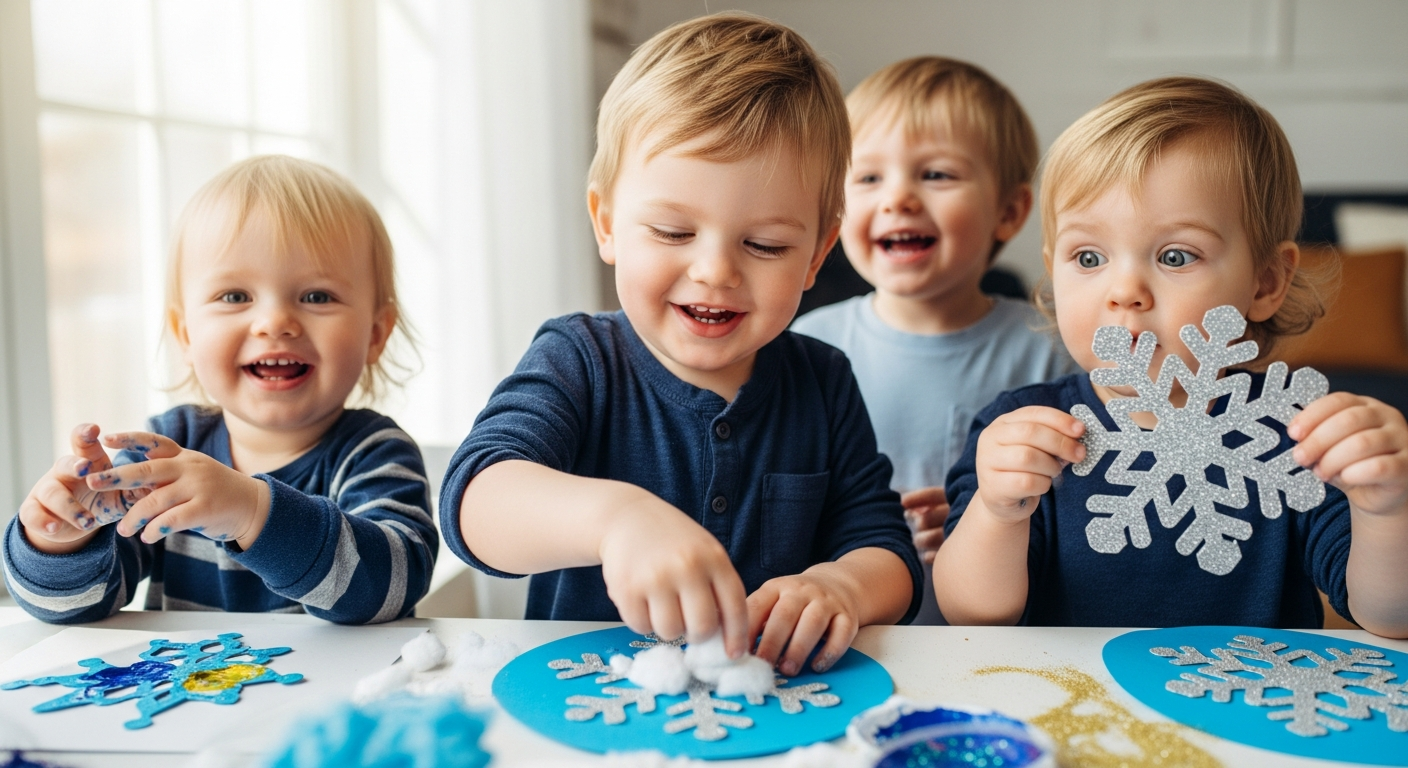
Table of Contents
- Introduction
- Why Crafting is Key for Language Development
- 15 Fun and Easy Snowflake Toddler Craft Ideas
- Beyond the Craft: Winter Books for Language Building
- Enhancing Craft Time with Speech Blubs
- Realistic Expectations and the Joy of the Process
- How to Talk to Your Toddler During Crafting
- FAQ
- Conclusion
Introduction
Have you ever watched your toddler’s face the first time they see a dusting of snow on the windowsill? That wide-eyed wonder is one of the most magical parts of early childhood. But as many parents know, those long January afternoons—especially that "witching hour" between naptime and dinner—can quickly turn from magical to messy if we don't have a plan. At Speech Blubs, we believe that every moment is an opportunity for connection, and what better way to bond than by creating a winter wonderland right at your kitchen table?
The purpose of this guide is to provide you with a curated list of engaging snowflake toddler craft ideas that do more than just decorate your fridge. We will explore how these activities build fine motor skills, expand vocabulary, and foster the confidence your child needs to "speak their minds and hearts." From sensory-rich cotton ball flakes to classic coffee filter art, we’ve gathered the best ways to keep little hands busy and little minds growing.

In this post, we’ll cover various crafting techniques, pair them with the best winter-themed books for language development, and show you how to turn craft time into a "smart screen time" supplement. We believe that because every snowflake is unique, every child’s learning journey is too. By the end of this article, you’ll have a full toolkit of winter activities designed to reduce frustration and create joyful family learning moments.
Why Crafting is Key for Language Development
Before we dive into the glue and glitter, it’s important to understand the "why" behind these activities. As experts in child development, we know that speech isn't just about the mouth; it’s about the whole child. When a toddler engages in a snowflake toddler craft, they are practicing "joint attention"—the ability to focus on an object with another person. This is a fundamental building block for communication.
For example, imagine a parent whose 3-year-old "late talker" is obsessed with textures. While making a cotton ball snowflake, the parent can narrate the experience: "Soft cotton," "Sticky glue," "White snow." This "parallel talk" helps the child map words to physical sensations. Our mission at Speech Blubs is to empower children to find their voices through these types of playful, science-based interactions.
The Connection Between Hands and Speech
Did you know that the parts of the brain responsible for fine motor skills (like picking up a tiny sequin) are located right next to the areas responsible for speech? By strengthening those finger muscles through crafting, you are indirectly supporting the neurological pathways used for articulation.
Our company was born from the personal experiences of our founders, who all grew up with speech problems. They created the tool they wished they had—one that blends scientific principles with play. Whether you are using our app or making a paper plate snowflake, you are providing an immediate, effective, and joyful solution for the 1 in 4 children who need speech support.

15 Fun and Easy Snowflake Toddler Craft Ideas
1. Sparkly Popsicle Stick Snowflakes
This is a classic for a reason. It’s sturdy, easy to hold, and allows for endless customization.
- Materials: 4 popsicle sticks per flake, hot glue (for adult prep), white glue, sequins, and glitter.
- The Process: Pre-glue the sticks into a star shape. Let your toddler use "dabber" markers to color the sticks. Once dry, let them go wild with the glue and "shake-shake-shake" the glitter or sequins over the top.
- Speech Tip: Practice the "S" sound with words like "Sparkly," "Silver," and "Stuck!"
2. Coffee Filter Absorption Art
This craft feels like a science experiment.
- Materials: White coffee filters, washable markers, a spray bottle with water.
- The Process: Have your child scribble on the filter with blue and purple markers. Then, let them spray the filter with water and watch the colors bleed together like a real winter sky. Once dry, an adult can fold and cut it into a snowflake.
- Speech Tip: This is great for teaching cause and effect. "Look! The water makes the color run!"
3. Cotton Ball "Soft" Snowflakes
Perfect for younger toddlers who are still developing their pincer grasp.
- Materials: Blue construction paper, glue sticks, cotton balls.
- The Process: Draw a simple snowflake outline on the paper. Have your toddler pull apart the cotton balls (great for motor skills!) and stick them onto the lines.
- Speech Tip: Emphasize the word "soft." Compare the "soft" cotton to a "hard" table.
4. Q-Tip Painted Snowflakes
Q-tips are the perfect size for toddler hands and encourage a proper grip.
- Materials: Dark paper, white paint, Q-tips.
- The Process: Instead of a brush, use Q-tips to "dot" a snowflake pattern.
- Speech Tip: This is a perfect time to practice the "D" sound. "Dot, dot, dot!"
5. Paper Towel "Magic" Snowflakes
Similar to the coffee filter craft, but using the rectangular shape of paper towels to create a "snowy banner."
- Materials: Paper towels, liquid watercolors or food coloring mixed with water, eye droppers.
- The Process: Use the eye dropper to place drops of color on the towel.
- Language Moment: Use words like "drop," "wet," and "soak."
6. Marshmallow Construction Snowflakes
For the child who loves to build (and maybe snack a little).
- Materials: Mini marshmallows and toothpicks (use blunt-edged ones or supervise closely).
- The Process: Use the marshmallows as connectors for the toothpicks to build 3D snowflake structures.
- Speech Tip: For a child who loves food-based play, the "Yummy Time" section of Speech Blubs offers a fun, motivating way to practice "mhm" and "ah" sounds while you craft!
7. Resist Art Snowflakes
This feels like magic to a toddler.
- Materials: White crayons, white paper, blue watercolor paint.
- The Process: Draw snowflakes with the white crayon (press hard!). Then, have your child paint over the entire paper with blue watercolor. The snowflakes will "appear" through the paint.
- Speech Tip: Use the word "Where?" "Where did the snowflake go? There it is!"
8. Paper Plate Ring Snowflakes
A great way to use up leftover party supplies.
- Materials: Paper plates, scissors, yarn, glitter.
- The Process: Cut the center out of a paper plate. Paint the outer ring and sprinkle with glitter. Cut a small paper snowflake and hang it in the center of the ring with yarn.
- Developmental Benefit: Hanging the snowflake requires "crossing the midline," a physical development milestone.
9. Handprint Snowflakes
A wonderful keepsake for the scrapbook.
- Materials: White paper, blue paint or a pencil for tracing.
- The Process: Trace your child’s hand six times. Cut them out and glue them together at the wrists, forming a circle. The fingers become the points of the snowflake!
- Speech Tip: Count the fingers together. "One, two, three, four, five!"
10. Cork Painted Snowflakes
Upcycle those old wine corks into stamps.
- Materials: Corks, white paint, blue paper.
- The Process: Dip the end of the cork into paint and stamp it in a snowflake pattern.
- Speech Tip: Practice the "P" sound. "Pop, pop, pop" goes the cork!
11. Highlighter "Glow" Snowflakes
If you have a blacklight, this is a game-changer.
- Materials: Fluorescent highlighters, white paper.
- The Process: Draw snowflakes with highlighters. If you have a blacklight, turn off the lights and watch them glow!
- Sensory Play: This is a high-contrast activity that is very engaging for children with sensory processing needs.
12. Salt Painting Snowflakes
- Materials: Glue, table salt, watercolors.
- The Process: "Draw" a snowflake with a bottle of glue. Pour salt over the wet glue and shake off the excess. Then, touch a wet paintbrush to the salt and watch the color travel along the lines.
- Speech Tip: Use the word "Go!" to encourage the color to move.
13. Masking Tape Resist
- Materials: Masking tape, blue paper, white paint.
- The Process: Place strips of tape in a snowflake pattern. Let the toddler paint over everything. Once dry, peel off the tape to reveal the crisp blue lines underneath.
- Language Tip: Practice "On" and "Off."
14. Button Snowflakes
- Materials: Blue buttons of various sizes, glue, cardstock.
- The Process: Glue buttons in a snowflake shape.
- Developmental Benefit: Sorting buttons by size or shade of blue is a great pre-math skill.
15. Window Cling Snowflakes
- Materials: Puff paint or "window paint," plastic sheet protectors.
- The Process: Draw snowflakes with puff paint on a plastic sheet. Let dry for 24 hours, then peel them off and stick them to the window!
- Connection: This allows the child to see their work every day, building confidence.
Beyond the Craft: Winter Books for Language Building
Crafting is even more powerful when paired with storytelling. Reading together is a screen-free alternative to passive viewing (like cartoons) and a powerful tool for family connection. Here are some of our favorite winter books that pair perfectly with a snowflake toddler craft:
- The Mitten by Jan Brett: A beautiful tale of animals squeezing into a lost mitten. Use this to practice animal sounds! If your child loves the bear or the fox, you can find similar characters in our "Animal Kingdom" section to practice those sounds further.
- Snowmen at Night by Caralyn and Mark Buehner: This book taps into a child’s imagination by imagining what snowmen do while we sleep. It's a great "secret" to share with your little one.
- Un-Brella by Scott Franson: A wordless picture book. This is a goldmine for language development because it forces you and your child to describe what is happening. "Is she wearing a swimsuit in the snow? Oh no!"
- Snowbots by Aaron Reynolds: A fun, funky book about robots having a snow day. It’s full of great rhymes, which help children hear the rhythms of speech.
For more ideas on how to support your child's communication journey, you can see what other parents are saying about their child's success on our parent testimonials page.
Enhancing Craft Time with Speech Blubs
While crafting is a tactile, wonderful way to spend an afternoon, we know that parents also need tools they can rely on when they need to get things done (like that dinner we mentioned earlier!). This is where Speech Blubs comes in as a powerful supplement to your child's overall development plan.
Our unique approach uses "video modeling," a science-backed methodology where children learn by watching and imitating their peers. Unlike passive cartoons, our "smart screen time" encourages kids to participate, mimic sounds, and interact with the screen. It's the digital version of you showing your child how to glue a sequin onto a popsicle stick.
If you’re unsure where to start, you can take our preliminary screener. It’s a quick 3-minute assessment with 9 simple questions that provides a next-steps plan for your child’s development.
Why the Yearly Plan is Your Best Bet
We want to be transparent about our pricing because we value the trust of our community. We offer two main paths:
- Monthly Plan: $14.99 per month.
- Yearly Plan: $59.99 per year.
The Yearly Plan is the clear favorite for families committed to seeing progress. Not only does it save you 66% (breaking down to just $4.99/month), but it also includes:
- A 7-day free trial to explore all our features risk-free.
- The Reading Blubs app, which helps transition your child from speaking to reading.
- Early access to new updates and a 24-hour support response time.
The Monthly plan does not include these additional benefits. To give your child the full suite of tools to succeed, we highly recommend the Yearly plan. You can create your account and begin your free trial today.
Realistic Expectations and the Joy of the Process
At Speech Blubs, we avoid overpromising. We won't tell you that a single snowflake toddler craft or one week with our app will result in your child giving public speeches. Development is a marathon, not a sprint.
Instead, our focus is on building the foundational skills:
- Fostering a love for communication: Making it fun, not a chore.
- Building confidence: That "I did it!" moment when a craft is finished.
- Reducing frustration: Giving them the tools to express their needs so they don't have to rely on tantrums.
- Creating joyful family learning moments: These are the memories that last.
Our method is backed by research, placing us in the top tier of speech apps worldwide with a high MARS scale rating. We use mirror neurons—the brain's "imitation cells"—to help kids learn naturally from other kids.
How to Talk to Your Toddler During Crafting
If you're looking to maximize the speech benefits of your snowflake toddler craft, try these strategies:
1. The Power of "Wait"
Give your child the glue, but wait for them to ask for the sequins. This "communication temptation" encourages them to use a word, a sign, or a gesture to tell you what they need.
2. Narrate Everything
"I am putting the tape on. Now you are painting the blue. Brush, brush, brush." You are providing a rich linguistic environment without demanding they speak.
3. Offer Choices
"Do you want the blue glitter or the silver glitter?" Choices empower toddlers and give them a reason to use their voice.
4. Use the App as a Model
Before you start your "Animal" themed craft, watch a few videos in the Speech Blubs app. Let your child see another child making the "Brrr" sound for cold. Then, as you touch the "cold" paint, mimic that sound together. You can download Speech Blubs on the App Store or get it on Google Play to start this modeling today.
FAQ
1. What is the best age to start a snowflake toddler craft? Most of these crafts are ideal for children aged 18 months to 4 years. For younger toddlers, focus on sensory-heavy crafts like cotton balls or finger painting. For older toddlers, try more complex tasks like Q-tip painting or "resist" art. Always supervise glue and small parts!
2. My child is a "late talker." Will these crafts really help? Yes! Crafting supports joint attention, fine motor skills, and vocabulary building. While crafts alone aren't a replacement for professional therapy, they are a powerful, joyful supplement. Pairing these activities with the "video modeling" in Speech Blubs can further encourage imitation and sound production.
3. How can I make crafting less messy? We recommend using a large plastic tray or an under-the-bed storage container to contain glitter and sequins. You can also do "low-mess" crafts like the highlighter snowflakes or the masking tape resist. Remember, the "mess" is often where the most sensory learning happens!
4. Can Speech Blubs be used alongside professional speech therapy? Absolutely. Many speech-language pathologists (SLPs) recommend Speech Blubs as a tool for "homework" between sessions. It keeps children engaged in speech practice through play, which can make your therapist's job even easier.
Conclusion
Winter doesn't have to be a season of cabin fever. By embracing the unique beauty of each snowflake toddler craft, you are doing so much more than filling an afternoon; you are building the bridges of communication that will help your child "speak their minds and hearts." Whether you are stamping with corks, reading about a magical umbrella, or practicing new sounds with a peer on a screen, you are giving your child the gift of confidence.
At Speech Blubs, we are honored to be a part of your family’s journey. Our mission is to provide an immediate, effective, and joyful solution for the millions of children who need a little extra support. We encourage you to make these winter months a time of connection and growth.
Ready to take the next step in your child's speech journey? Start your 7-day free trial today by downloading the app or signing up on our website. Remember to choose the Yearly plan to unlock the best value, including the Reading Blubs app and early access to all our latest features.
Download on the App Store | Get it on Google Play | Sign Up via Web
About the author