
15 Creative Toddler Color Learning Activities to Try
 By Speech Blubs Team•Feb 23, 2026•14 min.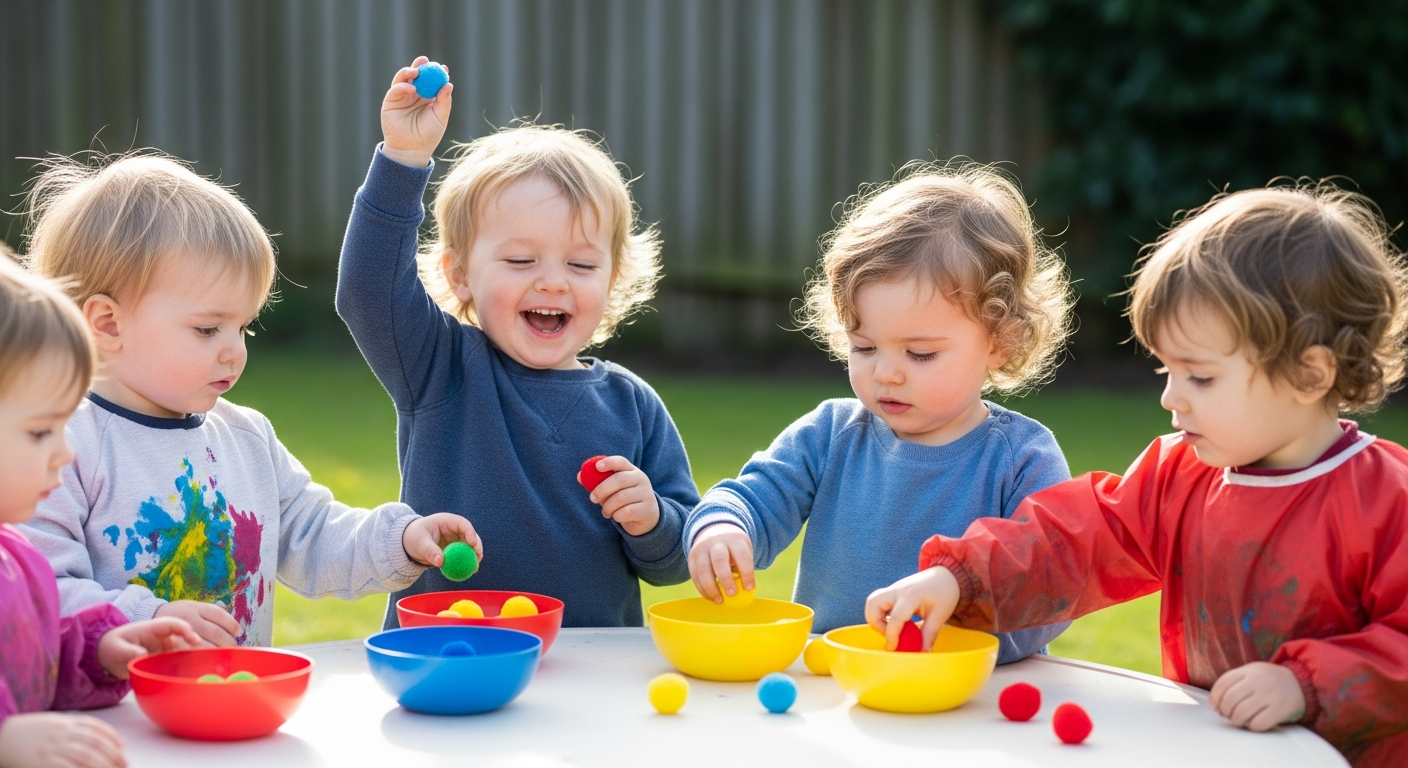
Table of Contents
- Introduction
- The Developmental Significance of Color Recognition
- Setting Realistic Expectations
- Top Toddler Color Learning Activities for Home
- Why Video Modeling is a Game Changer
- Choosing the Right Path for Your Child
- Creating Joyful Family Moments
- Practical Tips for Success
- FAQs
- Conclusion
Introduction
Have you ever handed your toddler a bright green apple, only for them to look you dead in the eye and proudly exclaim, “Blue!”? If so, you are definitely not alone. For a toddler, the world is a dizzying kaleidoscope of shades and tints, and learning to navigate this vibrant landscape is a major developmental milestone. But why is it that they seem to fixate on one color for weeks, or struggle to tell red from orange when they can perfectly identify every character in their favorite book?
The truth is, learning colors is much more than a simple vocabulary exercise; it is a complex cognitive process that involves categorization, visual perception, and linguistic mapping. It’s one of the first ways children learn to organize the world around them. At Speech Blubs, we understand that this journey can sometimes be frustrating for both parents and children, especially if progress feels slow. Our mission is to empower children to speak their minds and hearts by turning these learning moments into joyful, shared experiences. We were founded by people who grew up with speech challenges themselves, and we’ve dedicated our lives to creating the "smart screen time" tools we wish we had as kids.

In this post, we are going to dive deep into the world of toddler color learning activities. We’ll explore why colors matter, how to teach them naturally through play, and provide you with a comprehensive list of hands-on activities that you can start today. We will also discuss how our unique video modeling methodology can help bridge the gap between seeing a color and saying its name. Our goal is to help you foster a love for communication and build your child’s confidence, one rainbow at a time.
The Developmental Significance of Color Recognition
Before we jump into the activities, it’s important to understand what is happening inside your child’s brain. Color recognition is a building block for many other skills. When a child learns to differentiate between "the red block" and "the blue block," they are practicing the foundational logic of sorting and classification. This is a precursor to mathematical thinking and scientific observation.
Moving Beyond Vocabulary
Teaching colors isn’t just about the words. It involves understanding:
- Pure Hues: Identifying the primary colors (red, blue, yellow).
- Tints and Shades: Recognizing that a light pink and a dark maroon both fall under the "red" family.
- Color Mixing: Understanding how colors interact to create new ones (secondary colors).
At Speech Blubs, we believe in a holistic approach. Our method is backed by science, focusing on how children learn by watching and imitating their peers. This "video modeling" triggers mirror neurons in the brain, making the transition from observation to verbalization much smoother. While these activities are a powerful supplement, we always encourage parents to see them as a way to create joyful family learning moments rather than a rigid academic requirement.
Setting Realistic Expectations
It is easy to get caught up in comparisons. Maybe your neighbor's child knew their colors at eighteen months, while your three-year-old is still guessing. It’s important to remember that every child develops at their own pace. We don’t promise that your child will be a master of the color wheel in a week. Instead, we focus on the benefits of the process: reducing frustration, developing key foundational skills, and building a strong parent-child bond.

If you are ever concerned about your child's progress or want a baseline of where they currently stand, we recommend taking our quick 3-minute preliminary screener. It consists of 9 simple questions and provides you with a personalized assessment and a next-steps plan to support your child’s unique journey.
Top Toddler Color Learning Activities for Home
The best way to teach is through play. You don't need expensive kits or complex printables. Most of these activities use items you already have in your junk drawer or pantry.
1. The Classic Sticker Sort
Stickers are a toddler’s best friend. This activity is fantastic for developing fine motor skills while reinforcing color identity.
- How to do it: Tape several pieces of colored construction paper to a wall at your child's eye level. Give them a sheet of colored dot stickers. Ask them to "help the stickers find their homes" by matching the sticker color to the paper color.
- Why it works: It’s a full-body movement activity that requires focus and precision.
2. The Color Parking Lot
For a parent whose toddler is obsessed with vehicles, the "Color Parking Lot" is a game-changer. Imagine a 3-year-old "late talker" who isn't interested in flashcards but will play with cars for hours. This activity meets them exactly where they are.
- How to do it: Draw a "parking lot" on a piece of cardboard or poster board. Use markers to color each parking space a different color. Ask your child to park the red car in the red spot and the blue truck in the blue spot.
- Pro Tip: Narrate the action. "Oh, look! The yellow taxi is going into the yellow garage. Vroom vroom!"
3. Pom-Pom Color Sort with a Twist
Pom-poms are inexpensive and versatile.
- How to do it: Set out an empty egg carton and paint the bottom of each well a different color. Give your child a bowl of mixed pom-poms.
- The Twist: Once they master the fingers, introduce kitchen tongs or a large tweezer. This builds the hand strength needed for eventually holding a pencil or using scissors.
4. Sensory Rainbow Rice Bin
Sensory play is a powerful way to engage a child's brain.
- How to do it: To make rainbow rice, mix dry white rice with a few drops of food coloring and a teaspoon of white vinegar in a baggie. Shake it up and let it dry.
- Activity: Place the rice in a large bin and hide "treasures" of the same colors inside. Ask your child to find all the "hidden green gems."
5. The "Color Bath"
Turn bath time into a learning laboratory. This is a great screen-free alternative to passive evening viewing.
- How to do it: Use bath drops or a tiny bit of food coloring to turn the bathwater a specific color (e.g., blue). Add only blue toys—blue boats, blue cups, blue ducks.
- Outcome: This immerses the child in a single hue, helping them identify the variations in that specific color family.
6. Shaving Cream Mixing
If you don't mind a little mess, this is a crowd favorite.
- How to do it: Squirt two dollops of shaving cream on a plastic tray. Add a drop of red food coloring to one and yellow to the other.
- The Magic: Let your child use their hands to mix them together. Watch their eyes go wide as the cream turns orange right before their eyes!
7. Outdoor Color Scavenger Hunt
Nature is the best classroom.
- How to do it: Take a walk outside with a bucket. Tell your child, "Today, we are looking for things that are yellow like the sun!"
- Observation: They might find a yellow leaf, a dandelion, or a yellow pebble. This helps them generalize color concepts beyond their toys and into the real world.
8. Color Hop
Get those wiggles out!
- How to do it: If you have a driveway, use sidewalk chalk to draw large colored circles. If you're indoors, use colored pillows or construction paper taped to the floor.
- The Game: Call out a color, and your child has to jump onto it. "Jump to Red! Now hop to Blue!"
9. Magnetic Letter Sort
Many parents already have magnetic letters on the fridge.
- How to do it: Instead of focusing on the letters themselves, ask your child to group them by color. Create a "Red Pile" and a "Blue Pile" on the floor or the refrigerator door.
10. DIY Color Books
Creating a personalized book can foster a love for reading and communication.
- How to do it: Staple together a few pieces of paper. On each page, help your child glue pictures cut from old magazines or grocery flyers that match a specific color.
- Connection: This becomes a "smart" alternative to cartoons, as they are looking at a book they helped create.
11. Edible Color Sorting
Snack time is a prime learning opportunity.
- How to do it: Use multi-colored snacks like cereal loops or fruit pieces (blueberries, strawberries, mango).
- Activity: Ask your child to "eat all the green ones first." It makes eating a fun, interactive game.
12. "Red Light, Green Light"
This classic game teaches more than just colors; it teaches impulse control and listening skills.
- How to do it: When you say "Green Light," the child runs. When you say "Red Light," they must stop.
- Expansion: Add "Yellow Light" for walking slowly.
13. Flashlight Color Find
This is a perfect activity for a rainy afternoon or before bed.
- How to do it: Dim the lights and give your child a flashlight. Ask them to "shine the light on something purple."
- Engagement: The novelty of the flashlight keeps them engaged far longer than a standard sorting task.
14. Toy "Car Wash"
Water play is always a win for toddlers.
- How to do it: Set up two basins of water. One with "dirty" toys and one with soapy "clean" water.
- Activity: Ask the child to "wash all the yellow blocks."
15. The Speech Blubs "Color Study"
Sometimes, the best way to learn is to see other children doing it. This is where Speech Blubs on the App Store or Google Play becomes your best ally.
- How to do it: Within our app, we have sections dedicated to colors where kids watch other kids (our "Blubbers") say the names of colors and interact with them.
- Why it's unique: Your child isn't just watching a cartoon; they are watching a peer. This builds the confidence to try the words themselves.
Why Video Modeling is a Game Changer
Traditional methods of teaching often involve an adult sitting across from a child, which can sometimes feel like "drilling." For many kids, this creates a pressure to perform that leads to shutdown. Speech Blubs changes the dynamic. By using video modeling, we tap into a child’s natural instinct to imitate other children.
When your child sees a "peer" on the screen successfully identifying a color, it feels attainable. Our scientific methodology is designed to make screen time "smart." Instead of a passive experience, our app encourages active participation. We offer a screen-free alternative to the mindless loop of cartoons by providing a tool that fosters family connection. We encourage you to sit with your child, mimic the sounds together, and celebrate every attempt at a new word.
Choosing the Right Path for Your Child
We know that every family's budget and needs are different. That’s why we offer two clear options to access our library of over 1,500 activities and our unique video modeling technology.
- Monthly Plan: $14.99 per month. This is a great way to test the waters and see how your child responds to the app.
- Yearly Plan: $59.99 per year. This is the clear best choice for families committed to their child’s development. It breaks down to just $4.99 per month—a 66% savings compared to the monthly rate.
The Yearly plan isn't just about the lower price; it includes exclusive high-value features that help your child excel:
- A 7-day free trial so you can explore everything risk-free.
- The extra Reading Blubs app, which focuses on early literacy and phonics.
- Early access to all our newest updates and sections.
- Priority 24-hour support response time.
To get the full suite of features and the best possible value, we recommend creating your account on our website and selecting the Yearly plan.
Creating Joyful Family Moments
At the end of the day, these toddler color learning activities are about more than just "red, yellow, and blue." They are about the giggle when the shaving cream turns orange. They are about the pride on your child's face when they finally park the car in the right spot. They are about the moment your child looks at you and finally has the words to speak their mind and heart.
We view our app as a powerful supplement to your child's overall development. Whether you are using it alongside professional therapy or as a way to jumpstart learning at home, the goal is the same: building communication through joy. Don’t just take our word for it—read the success stories from thousands of parents who have seen their children’s confidence soar.
Practical Tips for Success
To make the most of these activities, keep these three things in mind:
- Follow the Child’s Lead: If they are bored with the stickers, move to the cars. Forcing an activity usually leads to resistance.
- Narrate Everything: "You chose the green crayon! Now you are drawing a green tree." Constant, low-pressure exposure is key.
- Keep it Brief: Toddlers have short attention spans. Five minutes of high-quality play is better than thirty minutes of frustration.
"Learning is most effective when it is a byproduct of play. When a child is engaged and having fun, their brain is primed to soak up new information like a sponge."
FAQs
1. What colors should I teach my toddler first?
It is usually best to start with the three primary colors: red, blue, and yellow. These are the most distinct and easiest for young eyes to differentiate. Once they have a solid grasp on these, you can introduce green, orange, and purple. Don't worry about nuances like "teal" or "magenta" until they are much older!
2. My toddler identifies everything as the same color. Is this normal?
Yes, absolutely. This is often called "color overextension." Your child has learned that things have colors, but they haven't quite mapped the specific names to the specific hues yet. It’s a sign that their brain is working on the concept! Keep modeling the correct names without making them feel "wrong."
3. How can I tell if my child is colorblind?
True colorblindness is difficult to diagnose in toddlers because their color naming skills are still developing. However, if your child consistently struggles to differentiate between red and green even after significant exposure and practice, it may be worth mentioning to your pediatrician at their next check-up.
4. Is screen time okay for teaching colors?
Not all screen time is created equal. Passive viewing, like watching cartoons, doesn't usually require the child to engage or speak. However, "smart screen time" like Speech Blubs uses video modeling to encourage active participation, imitation, and verbalization. When used as a supplement to hands-on play and family interaction, it can be a very effective tool.
Conclusion
Teaching your child about colors is a magical journey that literally unlocks the world to them. From the simple joy of a "Color Bath" to the high-tech, scientifically-backed approach of video modeling, there are endless ways to support your child's growth. Remember that you are your child's first and best teacher. By incorporating these toddler color learning activities into your daily routine, you are doing more than teaching vocabulary—you are building the foundation for a lifetime of confident communication.
We invite you to join the Speech Blubs family and take the next step in your child's developmental journey. Our app is designed to be a partner in your parenting, providing you with the tools to make learning fun, effective, and stress-free.
Ready to see the difference for yourself? Download Speech Blubs on the App Store or Google Play today to begin your journey. For the best experience and the most comprehensive toolset, be sure to select the Yearly plan. You'll get a 7-day free trial, the Reading Blubs app, and significant savings, all while giving your child the gift of "smart screen time." Let’s help your little one speak their mind and heart together!
About the author