
15+ Creative Toddler Fall Crafts With Leaves for Home Fun
 By Speech Blubs Team•Feb 20, 2026•18 min.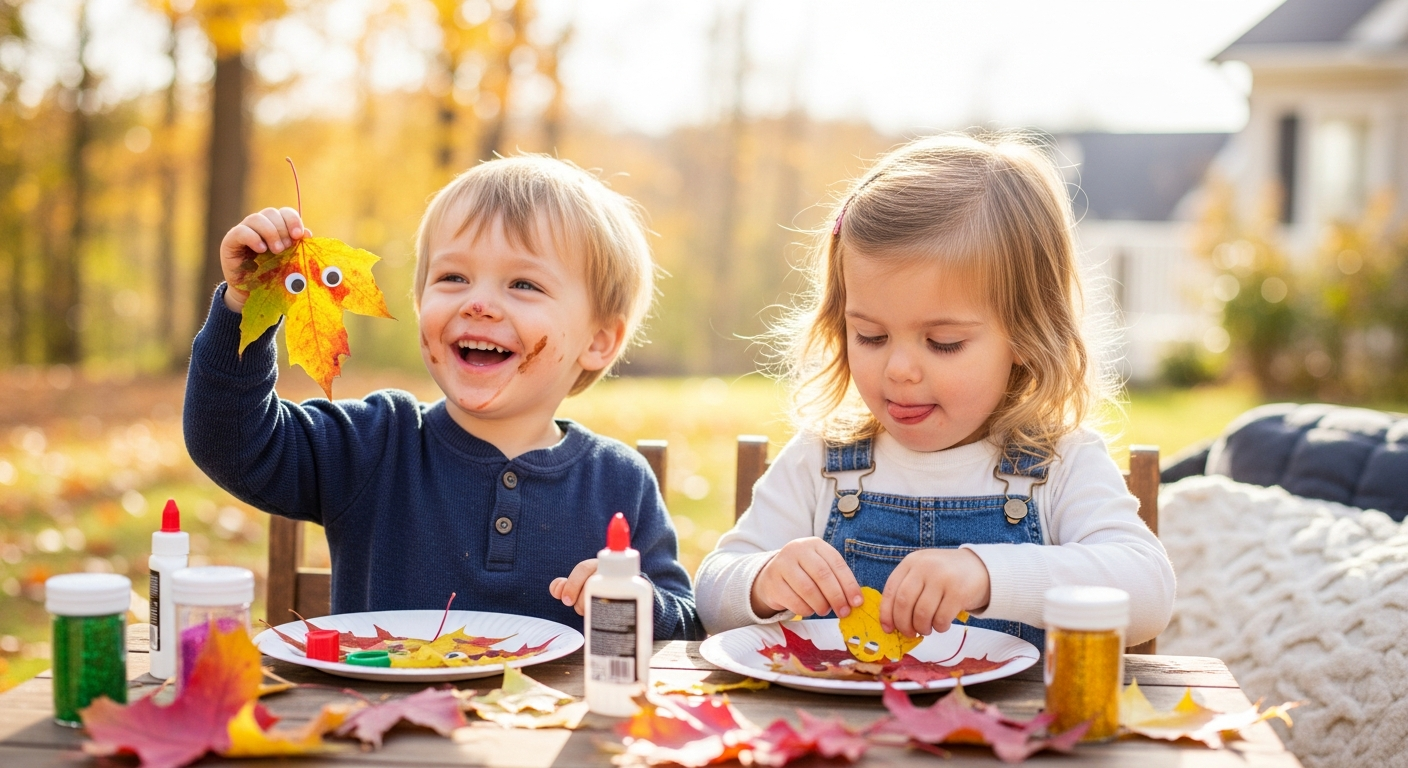
Table of Contents
- Introduction
- Why Toddler Fall Crafts With Leaves Are Essential for Development
- Preparing for Your Leaf Craft Adventure
- 1. The Classic Leaf Collage
- 2. Leaf Animals and Characters
- 3. Nature Confetti (The Glitter Alternative)
- 4. Leaf Suncatchers for Sunny Windows
- 5. Leaf Printing and Stamping
- 6. The Leaf Mask for Roleplay
- 7. Leaf Sorting: A Cognitive Challenge
- 8. Leaf Lanterns for Cozy Evenings
- 9. Leaf Rubbings: The "Magic" Reveal
- 10. The Leaf Crown
- 11. Leaf Pounding Art
- 12. Leaf Mobile
- 13. Finger Painting a Fall Tree
- 14. Leaf Ghosts for Halloween
- 15. The Leaf Sensory Bin
- How Speech Blubs Complements Your Crafting
- Understanding the Value of Speech Blubs
- Realistic Expectations and the Power of Co-Play
- Conclusion
- Frequently Asked Questions
Introduction
Have you ever watched a toddler discover a pile of crunchy, golden autumn leaves for the first time? There is a specific kind of magic in that moment—the wide-eyed wonder, the tentative first stomp, and the infectious giggle that follows the "crunch." At Speech Blubs, we believe these everyday moments of wonder are the perfect foundation for learning. Our mission is to empower children to speak their minds and hearts, and there is no better way to spark a conversation than through the vibrant, tactile world of nature.

Fall is a sensory symphony for a developing child. The changing colors, the unique textures of different tree species, and the crisp air provide endless opportunities for "smart screen time" to meet real-world exploration. In this post, we are going to dive deep into a world of toddler fall crafts with leaves that go beyond simple art projects. We will explore how these activities build fine motor skills, boost vocabulary, and create those joyful family learning moments that stay with you forever. From leaf animals to nature confetti, we have curated a list of activities that are easy for parents and exhilarating for kids.
Our company was born from the personal experiences of our founders, who all grew up with speech problems. They created the tool they wished they had—a bridge between play and progress. By the end of this article, you will have a full toolkit of leaf-based activities and a clear understanding of how to use them to foster your child’s love for communication.
Why Toddler Fall Crafts With Leaves Are Essential for Development
Before we jump into the "how-to," let’s talk about the "why." Crafting with natural materials like leaves isn't just a way to pass a rainy Tuesday afternoon; it is a multi-sensory educational experience. When a child picks up a leaf, they are practicing their pincer grasp—a foundational fine motor skill needed for writing. When they describe a leaf as "bumpy," "yellow," or "crunchy," they are expanding their descriptive vocabulary.
At Speech Blubs, we focus on the power of peer-led learning through our unique "video modeling" methodology. Just as children learn by watching and imitating their peers in our app, they learn by imitating you during craft time. By sitting together and saying, "Look, I am gluing the red leaf," you are providing a linguistic map for them to follow. We provide a screen-free alternative to passive viewing (like cartoons) by encouraging kids to take what they see on the screen and apply it to the world around them.

If you are ever unsure about where your child stands in their development, we recommend taking our quick 3-minute preliminary screener. It involves just 9 simple questions and provides an assessment and a next-steps plan to help you support your little one’s journey.
Preparing for Your Leaf Craft Adventure
The best toddler fall crafts with leaves start with a "treasure hunt." Before you start gluing and painting, head outside!
The Nature Walk
Take a basket or a small bag and go for a walk in your neighborhood or a local park. This is a great time to practice "following directions" and "labeling." You can ask your child, "Can you find a leaf that is orange?" or "Let’s find a big leaf!" This builds foundational communication skills while burning off some of that toddler energy.
Tips for Leaf Collection
- Dryness Matters: Try to go out on a dry day. Wet leaves are harder to glue and can grow mold if you try to preserve them.
- Variety is Key: Look for different shapes (maple, oak, birch) and a spectrum of colors.
- Freshness: Collect leaves that have recently fallen. If they are already very "crispy," they will crumble during the crafting process.
- Flattening: If you want your projects to look professional, let the leaves sit inside a heavy book overnight. This flattens them out and makes them much easier for tiny hands to glue onto paper.
1. The Classic Leaf Collage
This is the perfect entry-point for toddler fall crafts with leaves. It requires very little setup but offers a massive payoff in terms of creative expression.
What you need:
- A variety of pressed leaves
- Heavy cardstock or a piece of cardboard
- Non-toxic school glue or Mod Podge
- A small paintbrush
How to do it: For a toddler, squeezing a glue bottle can be frustrating. Instead, pour some glue into a small dish and let them "paint" the glue onto the paper. Then, encourage them to press their favorite leaves onto the sticky spots. As they work, narrate the process: "You put the green leaf next to the yellow one!" This type of parallel talk is a cornerstone of speech development.
2. Leaf Animals and Characters
For a parent whose 3-year-old "late talker" loves animals, the "Animal Kingdom" section of the Speech Blubs app offers a fun, motivating way to practice "moo" and "baa" sounds. You can bring that digital fun into the physical world by making leaf animals!
Activity Idea: Look at a leaf and ask your child, "What does this look like?" A wide maple leaf might look like a lion’s mane or a fox's face. A long, thin leaf could be a bird’s feather or a fish’s body. Add some googly eyes or draw a nose with a marker to bring the character to life. This encourages symbolic play, which is a critical precursor to complex language.
3. Nature Confetti (The Glitter Alternative)
We know that many parents have a love-hate relationship with glitter. It’s pretty, but it stays in your carpet for a decade. Enter: Nature Confetti.
How to make it: Gather the most colorful leaves you can find. Give your toddler a hole punch (the single-hole variety is easiest for them to grip). Let them punch holes into the leaves. The result is a pile of vibrant, biodegradable "confetti" in shades of crimson, gold, and burnt orange.
This is an incredible fine motor workout. If your child finds the hole punch too difficult, they can simply tear the leaves into tiny pieces. You can then use this confetti to decorate other crafts or even use it as a sensory bin filler.
4. Leaf Suncatchers for Sunny Windows
When the autumn sun hits these suncatchers, your living room will transform into a kaleidoscope of fall colors.
Materials:
- Clear contact paper (sticky-back plastic)
- Leaves (thinner ones work best)
- Construction paper for a "frame"
Steps:
- Cut two squares of contact paper.
- Peel the backing off one and lay it sticky-side up on the table.
- Have your child place leaves all over the sticky surface.
- Once they are satisfied, place the second sheet of contact paper on top, trapping the leaves inside.
- Cut a frame out of construction paper and tape it to the window.
This activity is great for visual stimulation and helps children understand concepts like "sticky," "smooth," and "see-through."
5. Leaf Printing and Stamping
Toddlers love cause-and-effect activities. Leaf printing is a wonderful way to show them how textures can be transferred from nature to paper.
How to do it:
- Paint the "bumpy" side of a leaf (the side with the veins) with fall-colored washable paint.
- Press the leaf firmly onto a piece of white paper.
- Gently peel it back to reveal a perfect skeletal print of the leaf.
You can encourage your child to try different colors. If you’re looking for more ways to engage your child's curiosity, check out the research behind our methodology. Our approach is backed by science, placing us in the top tier of speech apps worldwide. We utilize "mirror neurons," which fire when a child watches another child perform an action, making leaf printing a great "watch and do" activity.
6. The Leaf Mask for Roleplay
Is your child a fan of superheroes or forest creatures? A leaf mask is a quick and easy way to spark a whole afternoon of pretend play.
Instructions: Cut a simple mask shape out of a cereal box or heavy cardstock. Cut two holes for the eyes. Let your toddler glue leaves all over the mask to create a "forest spirit" look. Attach a craft stick to the bottom so they can hold it up to their face, or use elastic string.
Roleplay is essential for social-emotional development. It allows children to step into someone else’s shoes and practice different social scenarios in a safe, fun way.
7. Leaf Sorting: A Cognitive Challenge
Toddler fall crafts with leaves don't always have to involve glue. Sometimes, the best activity is a simple sorting game.
The Game: Place three bowls on the floor. Label them "Red," "Yellow," and "Green" (you can use a piece of colored paper in each bowl as a visual cue). Ask your child to sort their leaf collection into the correct bowls.
This builds categorization skills and color recognition. If they get stuck, you can say, "Hmm, this leaf looks like the sun. Where does the sun-colored leaf go?" This helps them make associations and improves cognitive flexibility.
8. Leaf Lanterns for Cozy Evenings
As the days get shorter, these lanterns provide a warm, comforting glow.
What you need:
- Clean glass jars (like old jelly jars)
- Pressed leaves
- Mod Podge and a brush
- Battery-operated tea lights
How to do it: Apply a layer of Mod Podge to the outside of the jar. Stick the leaves onto the jar and then apply another layer of Mod Podge over the top to seal them. Once dry, place the tea light inside. This is a beautiful way to create "joyful family learning moments" that the whole family can enjoy during dinner or bedtime stories.
9. Leaf Rubbings: The "Magic" Reveal
This is a classic for a reason. There is something truly "magical" for a toddler when they see a leaf pattern appear out of nowhere.
Steps:
- Place a leaf on a flat surface, vein-side up.
- Place a piece of thin white paper over the leaf.
- Give your child a crayon (with the paper wrapper removed) and show them how to rub it sideways across the paper.
- Watch as the veins and edges of the leaf magically appear on the paper!
This activity requires a bit more coordination and pressure control, making it a great challenge for older toddlers who are working on their pre-writing skills.
10. The Leaf Crown
Every toddler deserves to be the King or Queen of the Forest.
How to make it: Cut a long strip of construction paper that fits around your child’s head. Let them decorate the strip with leaves, seeds, and even "nature confetti." Staple or tape the ends together to create a crown.
Wearing the crown can lead to fun prompts: "What does the Forest King say?" or "Where does the Leaf Queen live?" These open-ended questions are vital for encouraging longer sentences and creative thinking.
11. Leaf Pounding Art
This is a slightly more advanced (and louder!) version of toddler fall crafts with leaves, but it’s incredibly satisfying.
Materials:
- Fresh, juicy leaves (vibrant greens and reds work best)
- White cotton fabric or heavy paper
- A child-safe mallet or a smooth stone
Method: Place the leaves on the fabric and cover them with a piece of parchment paper. Let your toddler "pound" the leaves. The natural pigments in the leaves will transfer to the fabric, creating a beautiful, organic print. Note: Adult supervision is required for the pounding part!
12. Leaf Mobile
Bring the outdoors in by creating a hanging mobile of fall treasures.
How to do it: Find a sturdy stick on your walk. Tie several pieces of string to the stick. Help your toddler tie or tape leaves, pinecones, and feathers to the strings. Hang it from the ceiling or a doorway. This creates a wonderful visual focus and can be a great conversation starter: "Which leaf is the highest?" "Which one is spinning?"
13. Finger Painting a Fall Tree
If your toddler is in a "messy" phase, this is the craft for them.
Steps:
- Draw a simple tree trunk and branches on a large piece of paper.
- Instead of using brushes, let your child use their fingers or even their whole hand to "stamp" leaves onto the branches using red, orange, and yellow paint.
- To add a "smart" twist, you can use real leaves as stamps on the tree!
This activity is excellent for sensory exploration. If you want to see how other parents are using creative play to support their kids, read some of our parent testimonials.
14. Leaf Ghosts for Halloween
Since fall also means Halloween, you can turn your leaves into "spooky" (but cute) ghosts.
Instructions: Find large, broad leaves and paint them entirely white. Once the paint is dry, use a black marker to draw two eyes and a mouth. You can string them together to make a "ghostly" garland. This is a great way to introduce the concept of "emotions"—is the ghost happy, sad, or scared?
15. The Leaf Sensory Bin
Sometimes the best craft is just a box full of nature.
Setup: Fill a large plastic bin with a variety of leaves, sticks, acorns, and even some small plastic toy animals. Give your child spoons, cups, and tongs. Let them "dig" and "pour." This is an open-ended play experience that builds fine motor strength and encourages independent play.
For a child who is struggling with specific sounds, you can hide "sound cards" in the leaves for them to find. If you’re ready to start a structured but fun learning journey, download Speech Blubs on the App Store or get it on Google Play.
How Speech Blubs Complements Your Crafting
At Speech Blubs, we don't just want to give your child another screen to stare at. We want to provide a "smart screen time" experience that acts as a powerful tool for family connection. While you are working on your toddler fall crafts with leaves, you can use our app to reinforce the concepts you’re exploring.
For example, if you are making a leaf lion, you can open the "Animal Kingdom" section of the app and watch a peer model a lion’s roar. This "video modeling" is incredibly effective because children are naturally motivated to imitate other children. It reduces frustration and builds the confidence they need to try new sounds and words.
We focus on fostering a love for communication, not just hitting clinical milestones. Our founders’ own journeys with speech therapy taught them that the best progress happens when the child is having fun. That is why our app is filled with over 1,500 activities, face filters, and educational games that feel like play but are built on solid scientific principles.
Understanding the Value of Speech Blubs
We are committed to providing an immediate, effective, and joyful solution for the 1 in 4 children who need speech support. To make our tool accessible to as many families as possible, we offer two straightforward pricing plans.
Transparent Pricing:
- Monthly Plan: $14.99 per month. This is a great way to test the waters and see how your child responds to the app.
- Yearly Plan: $59.99 per year. This is our clear best-value choice, breaking down to just $4.99 per month—a 66% savings compared to the monthly rate.
Why Choose the Yearly Plan?
The Yearly plan isn't just more affordable; it includes exclusive, high-value features that support your child’s long-term development:
- 7-Day Free Trial: You can explore the full range of content risk-free.
- Reading Blubs App: Access to our additional app specifically designed to help toddlers transition from speaking to reading.
- Priority Support: Enjoy a 24-hour support response time and early access to all new updates and features.
The Monthly plan does not include the free trial or the Reading Blubs app. We encourage you to choose the Yearly plan to ensure your child has the full suite of tools they need to "speak their minds and hearts." Ready to get started? Create your account and begin your 7-day free trial today.
Realistic Expectations and the Power of Co-Play
When engaging in toddler fall crafts with leaves or using the Speech Blubs app, it’s important to maintain realistic expectations. Every child develops at their own pace. We don't promise that your child will be giving public speeches in a month. Instead, we focus on the foundational wins:
- A reduction in communication-based frustration.
- The building of confidence in social settings.
- The development of key pre-literacy and speech skills.
- The creation of joyful, connected family moments.
Think of our app as a powerful supplement to your child’s overall development plan. Whether they are in professional therapy or you are just looking for ways to boost their learning at home, co-play is the secret ingredient. Sit with them while they use the app. Squeal with them when they see a funny filter. Crunch leaves with them in the backyard. You are their first and most important teacher.
Conclusion
Autumn provides a fleeting but magnificent window of opportunity to engage your child's senses. These toddler fall crafts with leaves are more than just art—they are gateways to language, fine motor mastery, and cognitive growth. By taking the time to explore the textures, colors, and sounds of the season, you are showing your child that the world is a place worth talking about.
At Speech Blubs, we are honored to be a part of that journey. Whether you are building a leaf crown or practicing your first "B" sounds in the app, remember that the goal is connection, not perfection. Embrace the mess, celebrate the small victories, and enjoy the beauty of this season with your little one.
Take the first step today by downloading the app and seeing the difference that "smart screen time" can make. Remember, the Yearly plan offers the most comprehensive experience, including a free trial and our Reading Blubs app. Let’s help your child speak their mind and heart, one leaf at a time.
Download Speech Blubs on the App Store or Google Play to begin your journey today!
Frequently Asked Questions
1. How can I keep the leaves from crumbling in my toddler's crafts?
To prevent leaves from becoming too brittle, it’s best to use them shortly after collecting or to "press" them. You can place the leaves between two pieces of parchment paper and tuck them inside a heavy book for 24–48 hours. This flattens them and helps them retain a bit of flexibility. For long-term preservation, some parents dip leaves in melted beeswax or use Mod Podge to seal them.
2. Is Speech Blubs a replacement for traditional speech therapy?
Speech Blubs is designed to be a powerful supplement to a child's overall development plan. It is an excellent tool for home practice and can be used alongside professional therapy to reinforce skills in a fun, low-pressure environment. If you have serious concerns about your child's speech, we always recommend consulting with a certified Speech-Language Pathologist (SLP).
3. My toddler has a short attention span. Will these crafts work?
Absolutely! The key to crafting with toddlers is to keep the sessions short and process-oriented. It’s okay if they only glue two leaves and then want to run around. The goal is the sensory experience and the verbal interaction with you. If they lose interest in a craft, you can try a different sensory activity like a leaf bin or a quick 5-minute session on the Speech Blubs app to keep them engaged.
4. What makes the Yearly plan better than the Monthly plan?
The Yearly plan is our best-value option, saving you 66% compared to the monthly price. Crucially, the Yearly plan includes a 7-day free trial, which allows you to explore all features risk-free. It also includes the Reading Blubs app, early access to updates, and 24-hour support response times—features not available with the Monthly subscription.
About the author